Abstract Prints (2049)
Abstract prints represent a revolutionary departure in Japanese printmaking, emerging primarily through the sosaku-hanga (creative prints) movement of the mid-twentieth century. While traditional ukiyo-e and shin-hanga were rooted in representational imagery, abstract works embraced non-figurative composition, exploring color, texture, and form for their own expressive potential. The abstract turn in Japanese printmaking gained international recognition in the 1950s and 1960s, when artists like Yoshida Hodaka, Maki Haku, and Tajima Hiroyuki won major prizes at the Sao Paulo and Venice Biennales. These artists developed distinctive approaches to abstraction — from Maki's layered cement-and-ink surfaces to Tajima's vibrant geometric compositions — that drew on Japanese aesthetic principles while engaging with global modernist movements. The woodblock medium proved uniquely suited to abstract expression, offering possibilities for textural experimentation through woodgrain impression, selective inking, and the interaction between handmade washi paper and carved surfaces. Many abstract printmakers exploited the material qualities of the block itself, allowing the wood's natural grain to become an active compositional element rather than merely a vehicle for an image.
Artists Known for Abstract

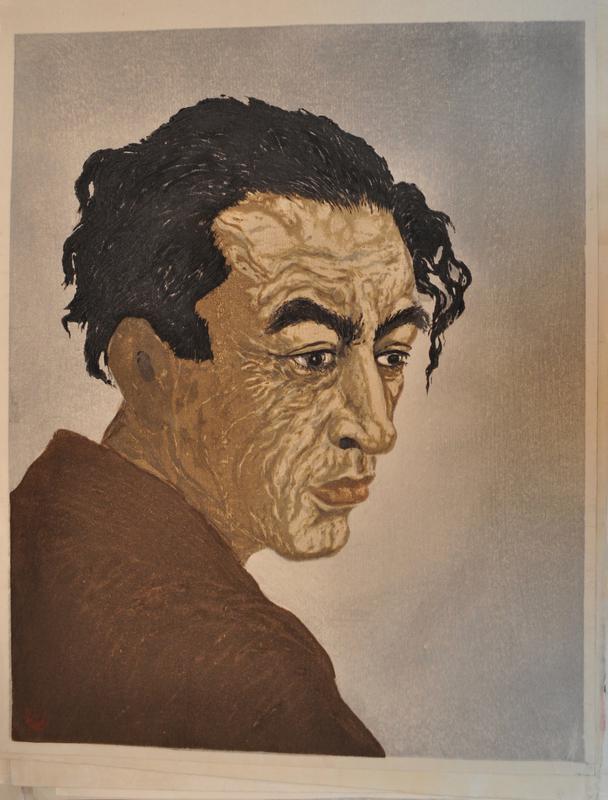


Espace No 41
1964

A Clear Day
1963
Color woodblock print

Intersection
1955
Color woodblock print
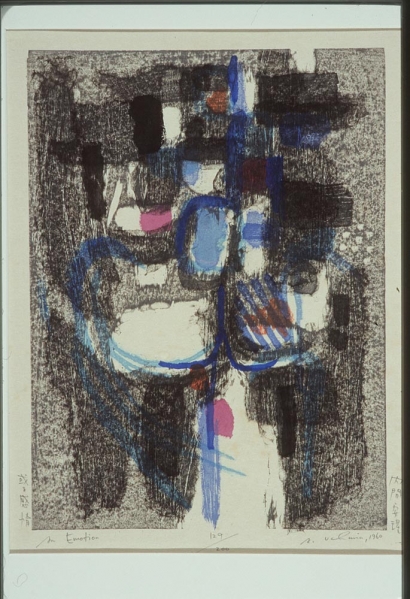
Ansei Uchima
Woodblock print
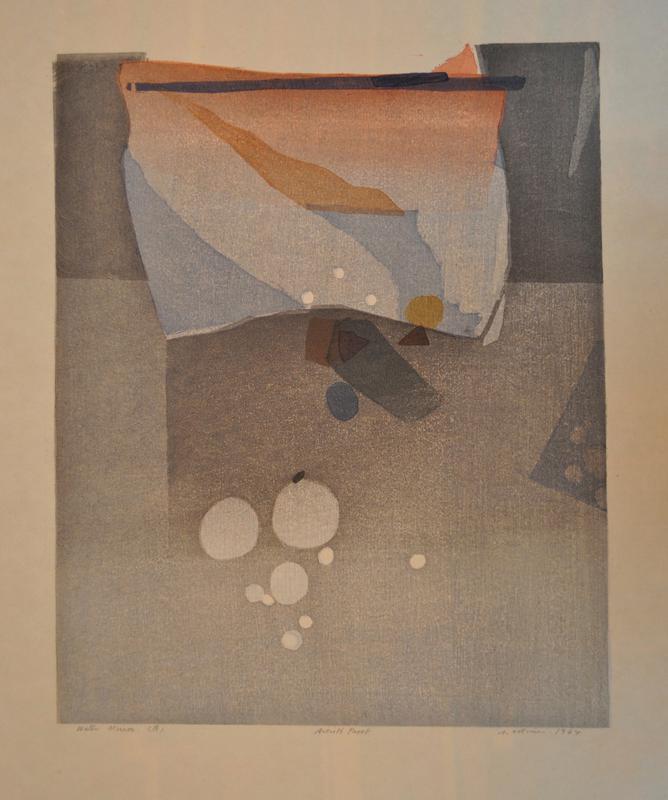
Water Mirror (B)
1962
Woodblock print, ink and color on paper
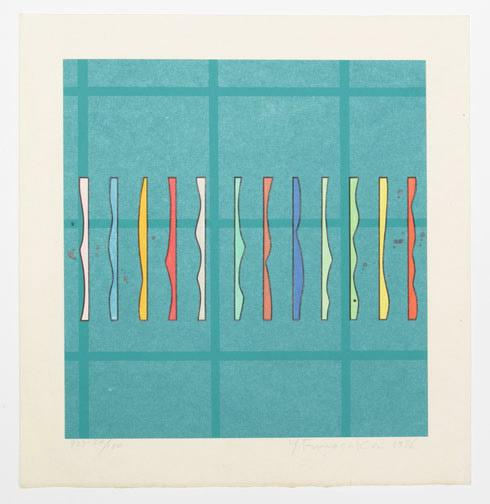
933 (ed. 20/100)
1986
Woodblock print
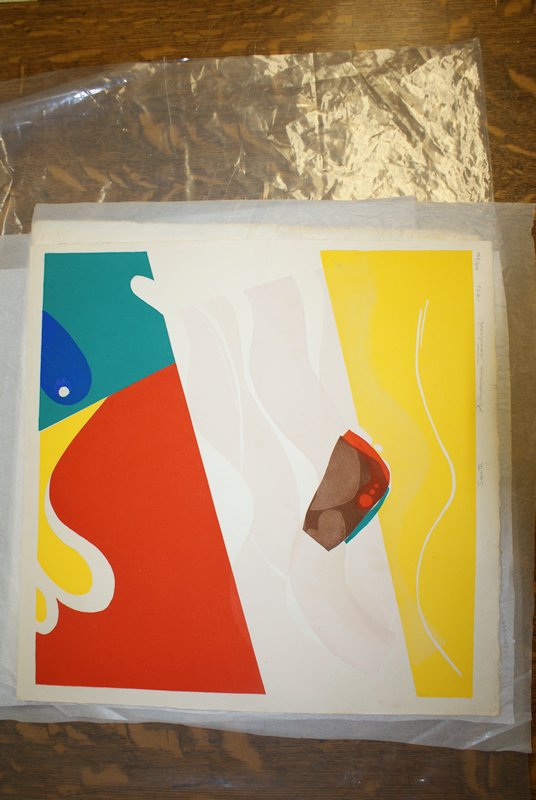
South
1971
Woodblock print, ink and color on paper
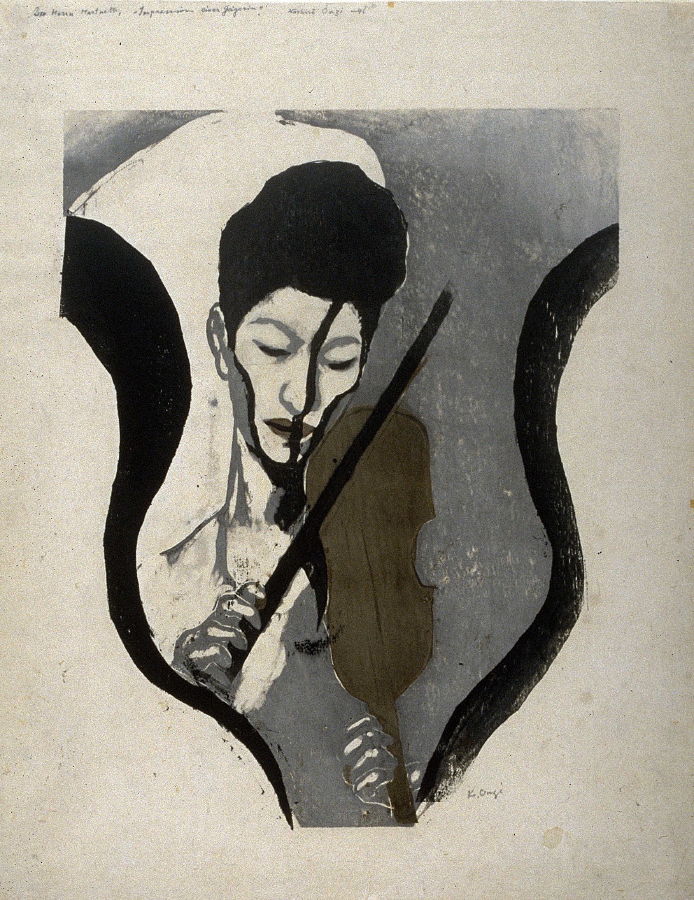
Impression of a Violinist
ヴァイオリニストの印象
1946
Color woodblock print
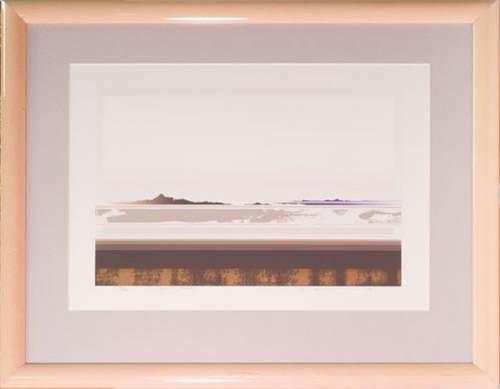
White Diary (34/45)
Woodblock print

Flow
1955
Color woodblock print

L'Amour
1957
Color woodblock print
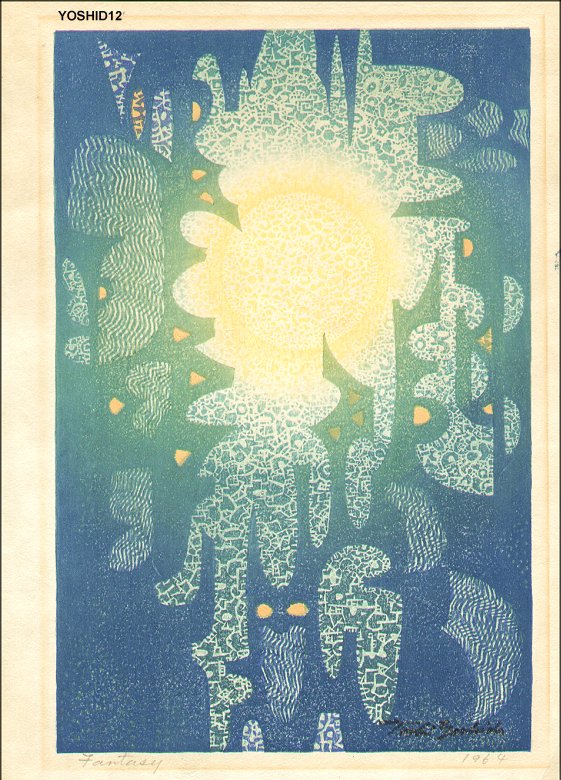
Fantasy
Woodblock print
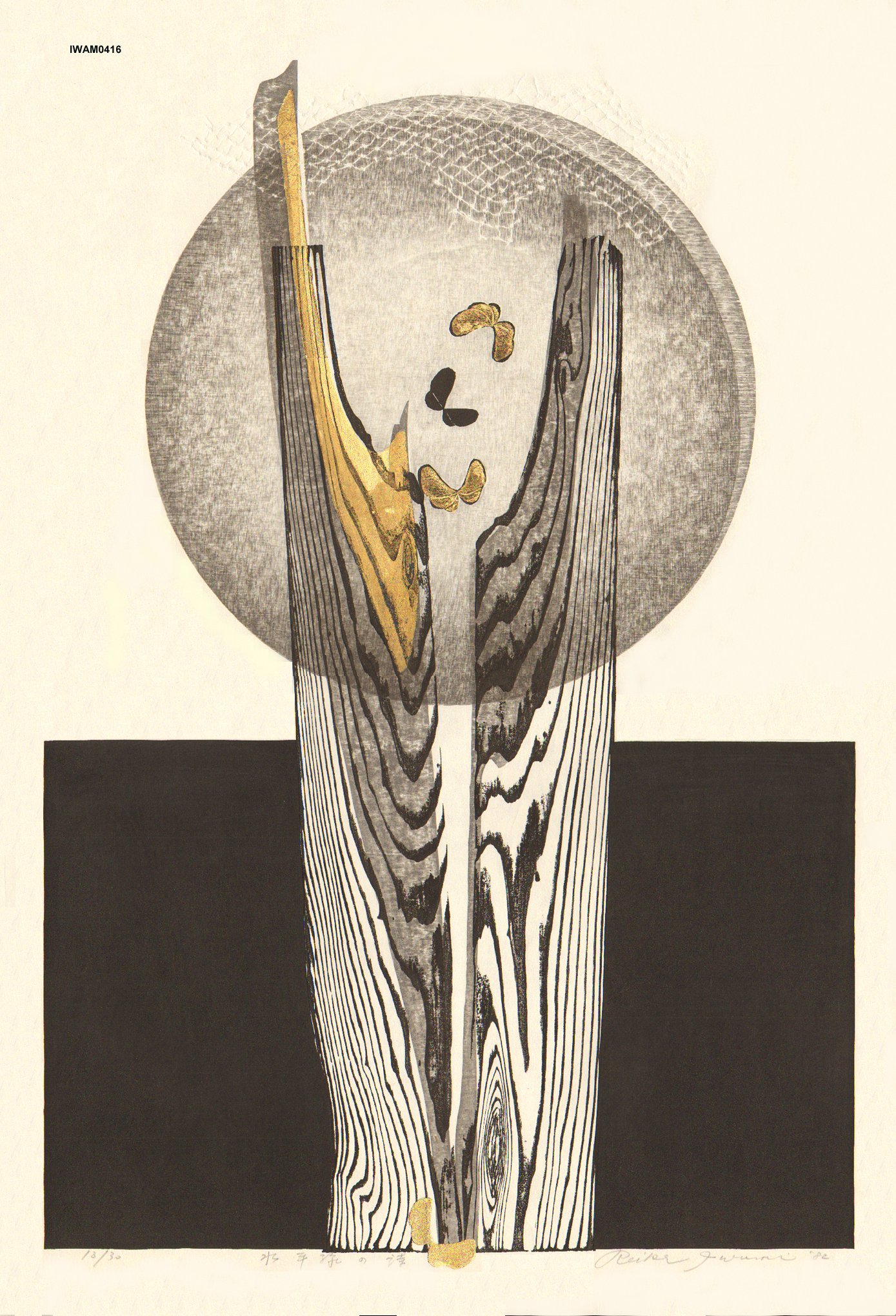
Poem of the Horizon
13/30, 1982
Woodblock print

Armoured Men (Yoroeru otokotachi)
1974
Color woodblock print; edition 8/50

Untitled
2002

Mitate No.100 - End of Endless Circle (Musubi)
2016
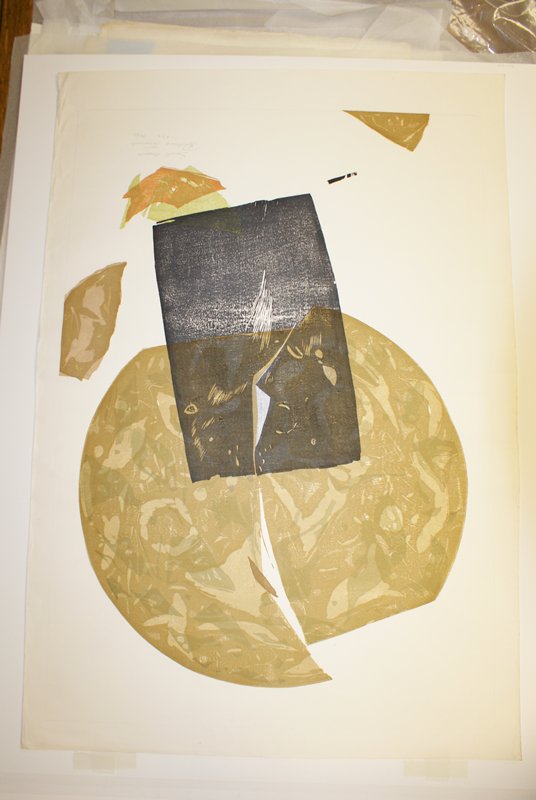
Saint's Answer
1964
Woodblock print, ink and color on paper
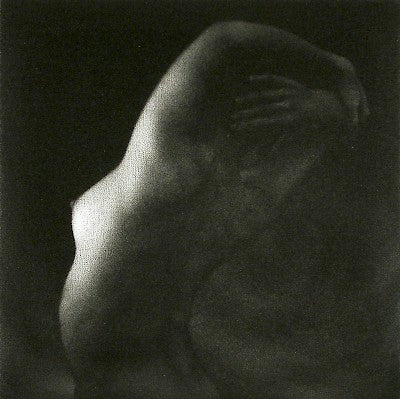
Tromb
2001
Mezzotint
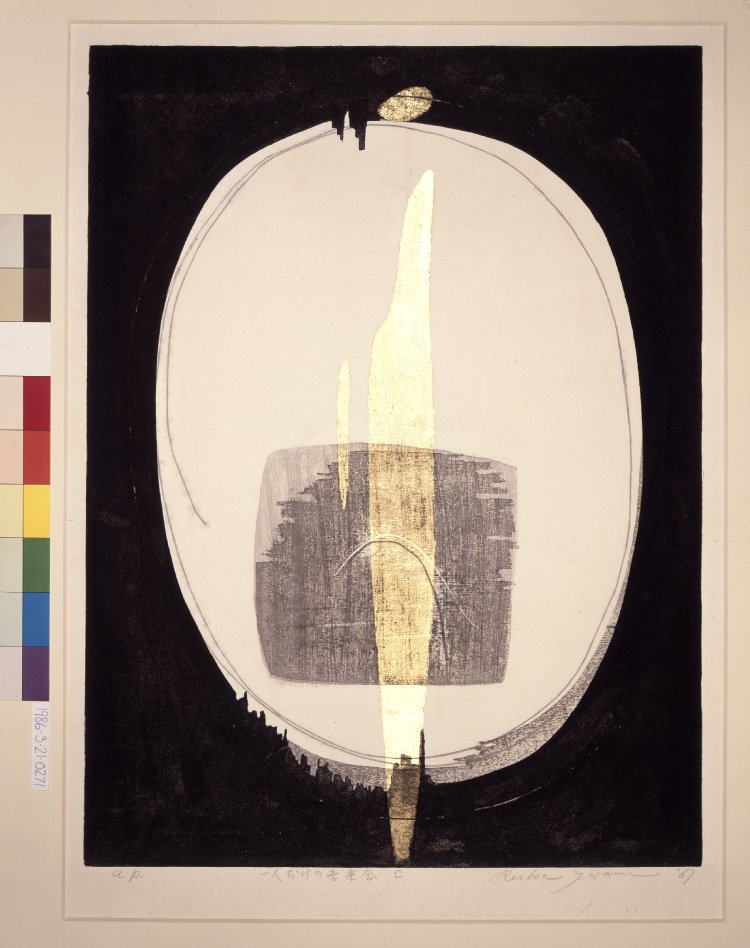
Hitori dake no ongakkai, C (Concert of One, C)
1967
Woodblock print
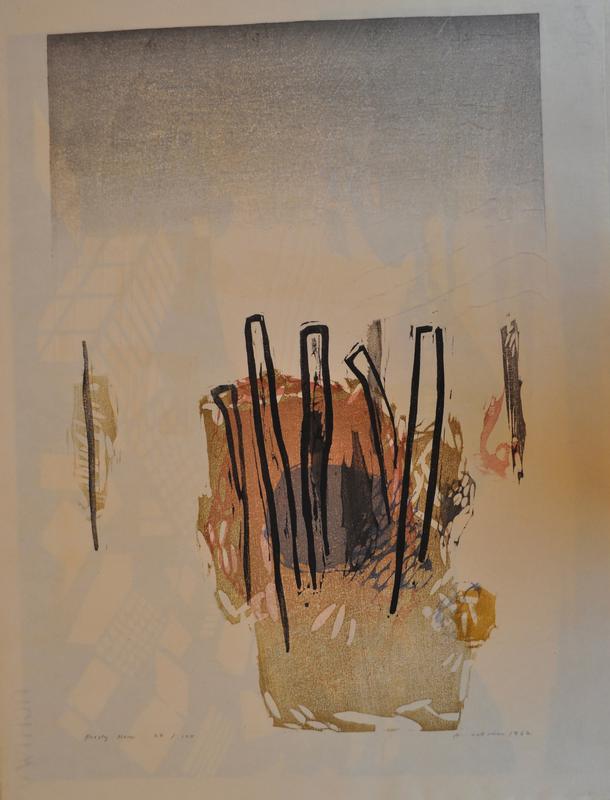
Frosty Morn
1962
Woodblock print, ink and color on paper with embossing
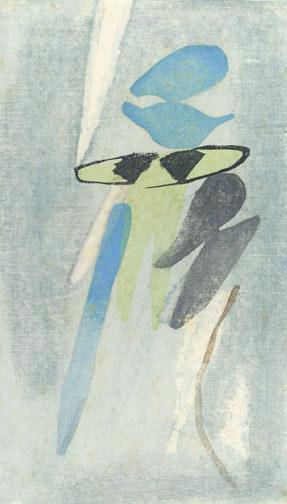
Rumor
Woodblock print
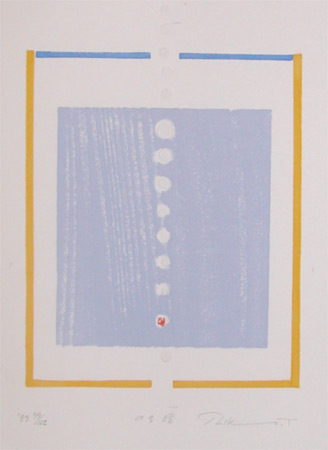
Day
Woodblock print
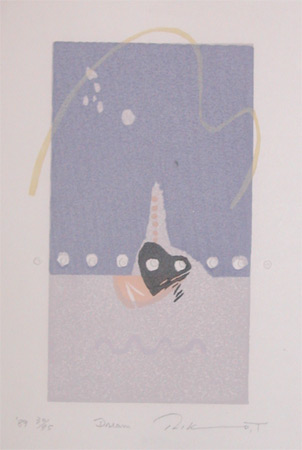
Dream
Woodblock print
Sugibashira (Barking) (100/100)
Woodblock print
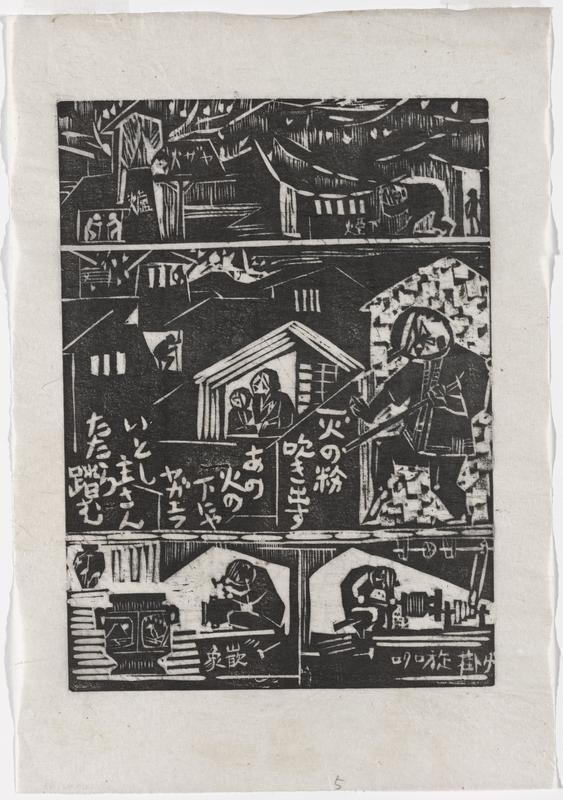
Second song (part 4)
July 1957
Woodblock print, ink on paper
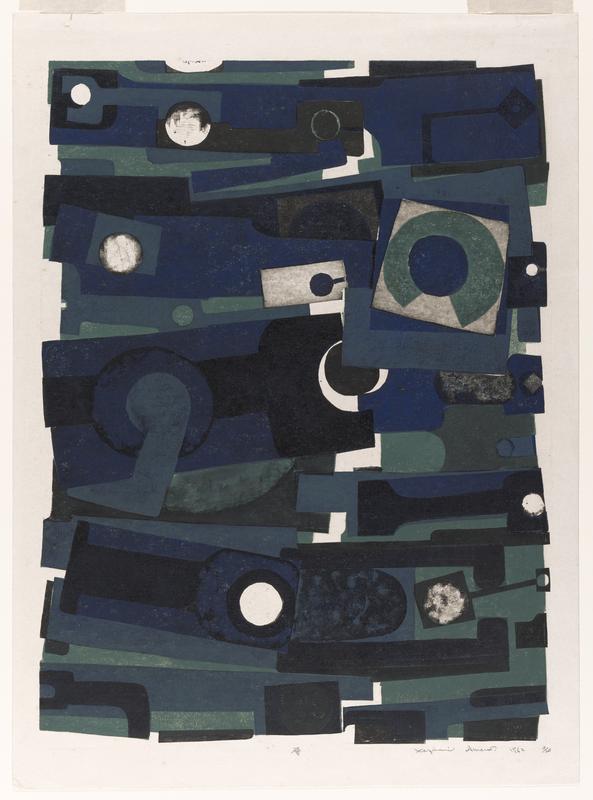
Layers
1962
Woodblock print, ink and color on paper
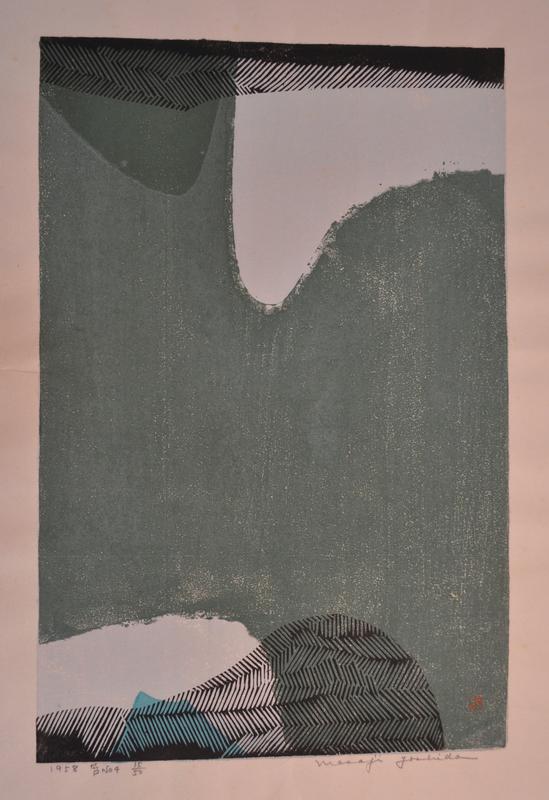
Moss No. 4
1958
Woodblock print, ink and color on paper
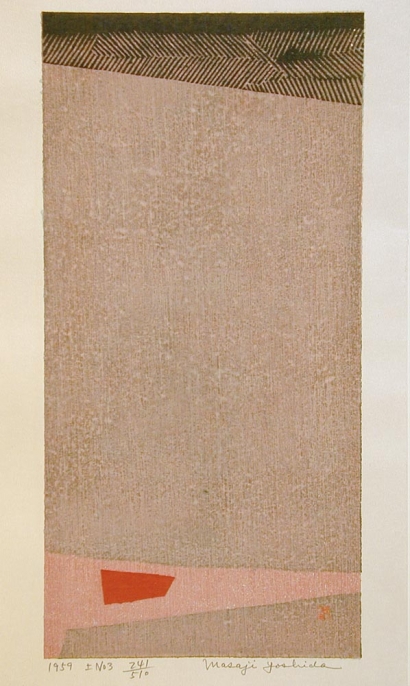
.......No.3
Woodblock print
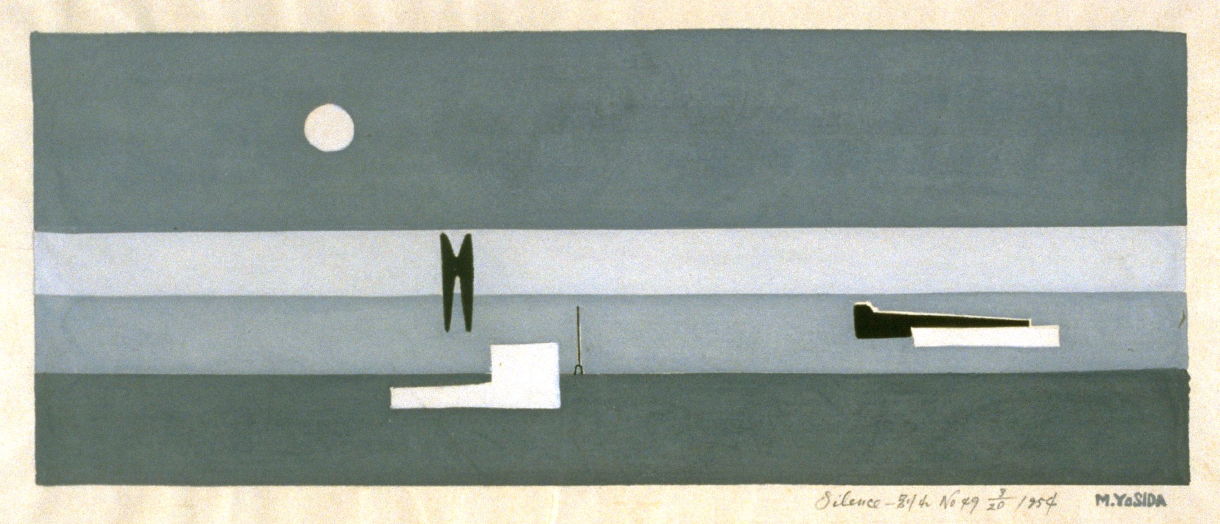
Silence
Woodblock print
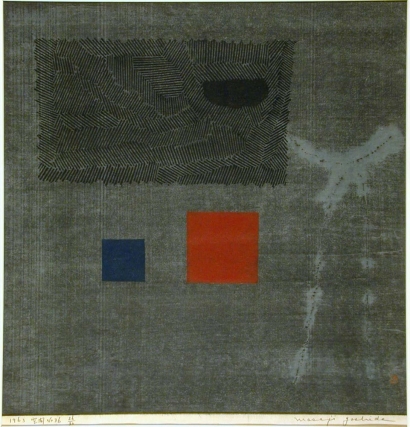
Space No. 36
Woodblock print

Space No. 37
1963
Woodblock print, ink and color on paper

Composition with Leaves
Woodblock print

Space
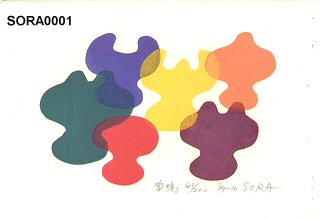
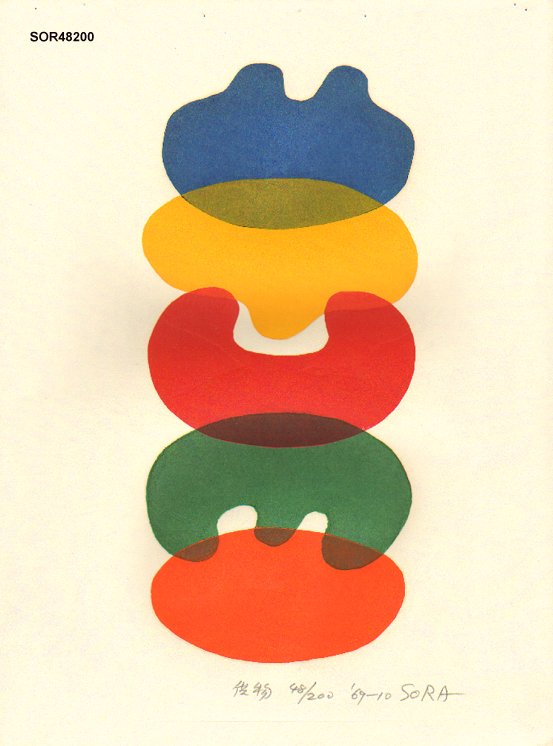
Family S 69-10
Woodblock print
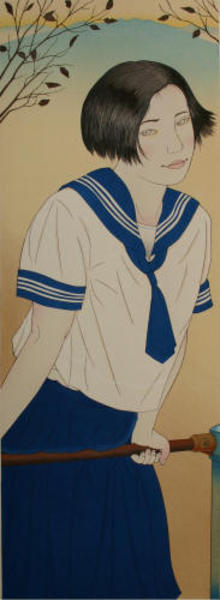
Offering
Woodblock print
First Love 10
Woodblock print
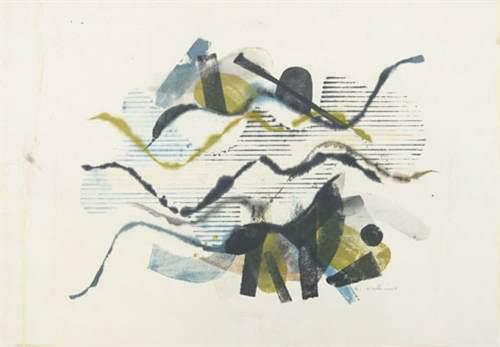
Hymns
Woodblock print

Surface K.I. - 3
1987
Color woodblock print; artist’s proof
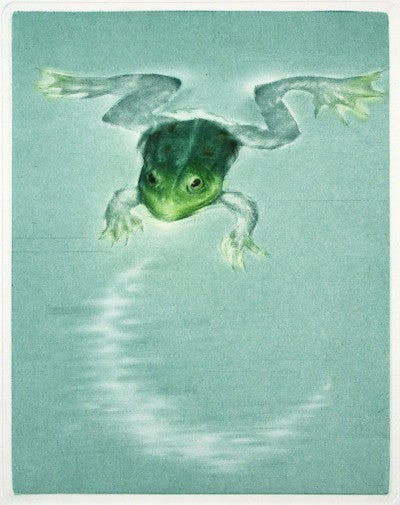
Croissant
2009
Mezzotint with color
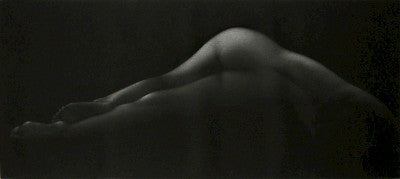
Arche
Mezzotint
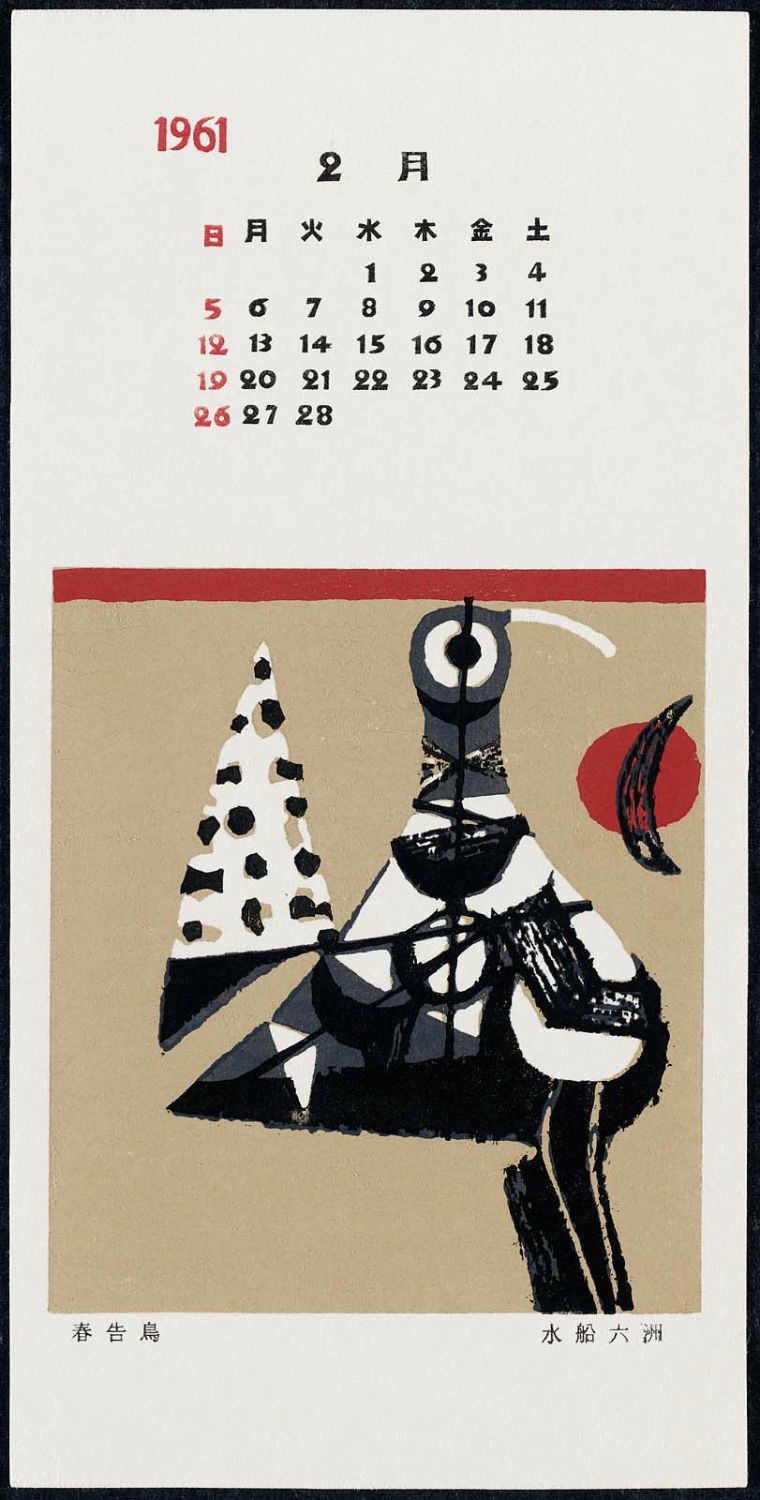
Shunkokucho
Woodblock print
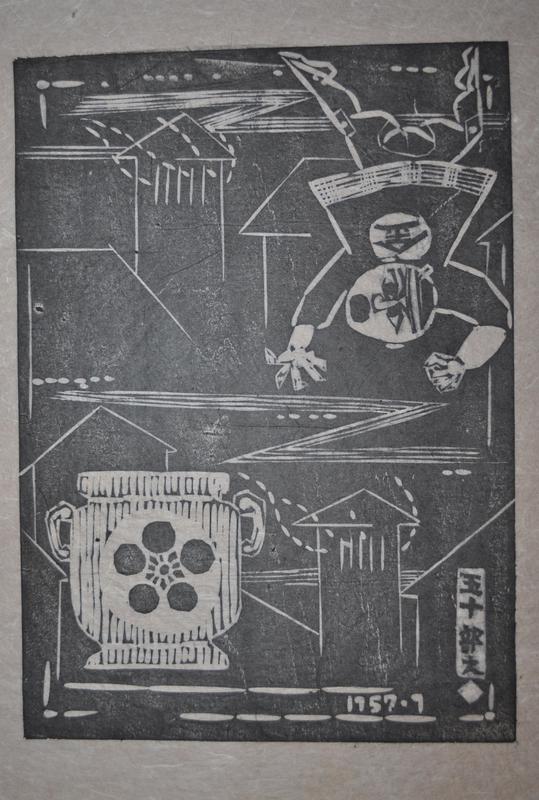
Back cover (part 10)
July 1957
Woodblock print, ink on paper
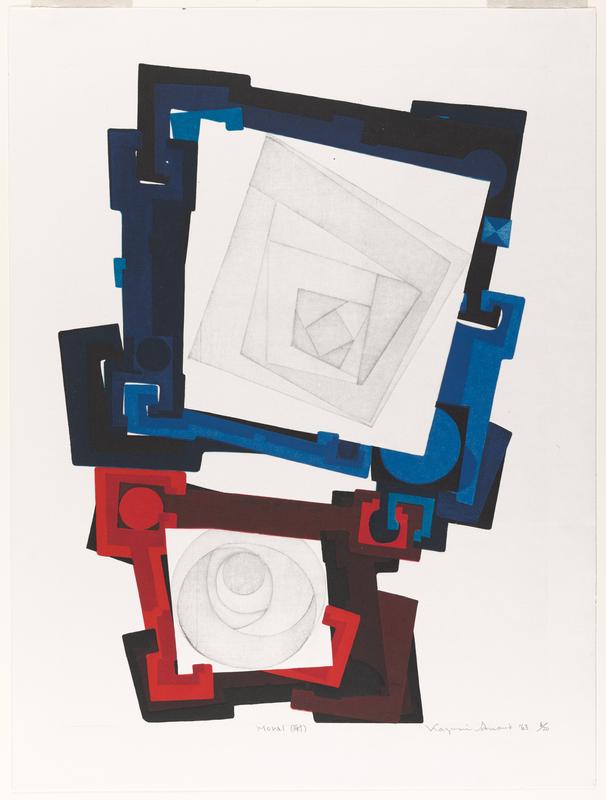
Moral (Endurance)
1963
Woodblock print, ink and color on embossed paper
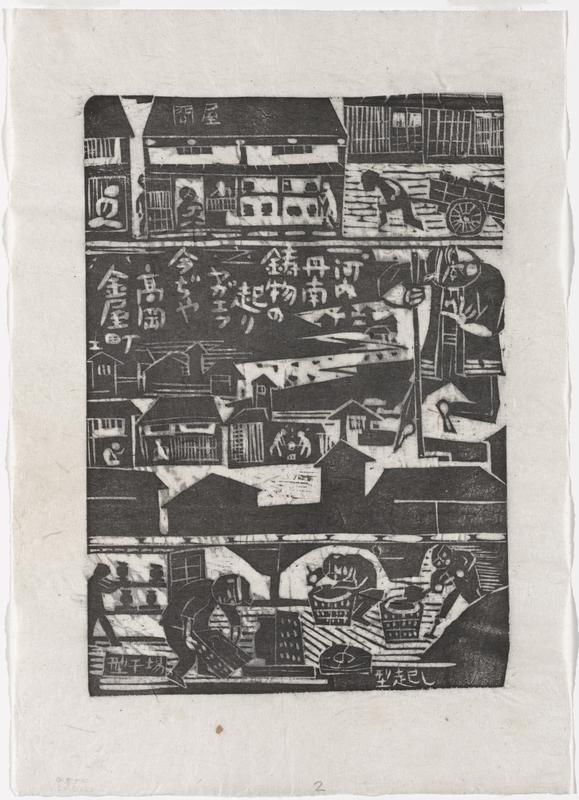
First song (part 3)
July 1957
Woodblock print, ink on paper
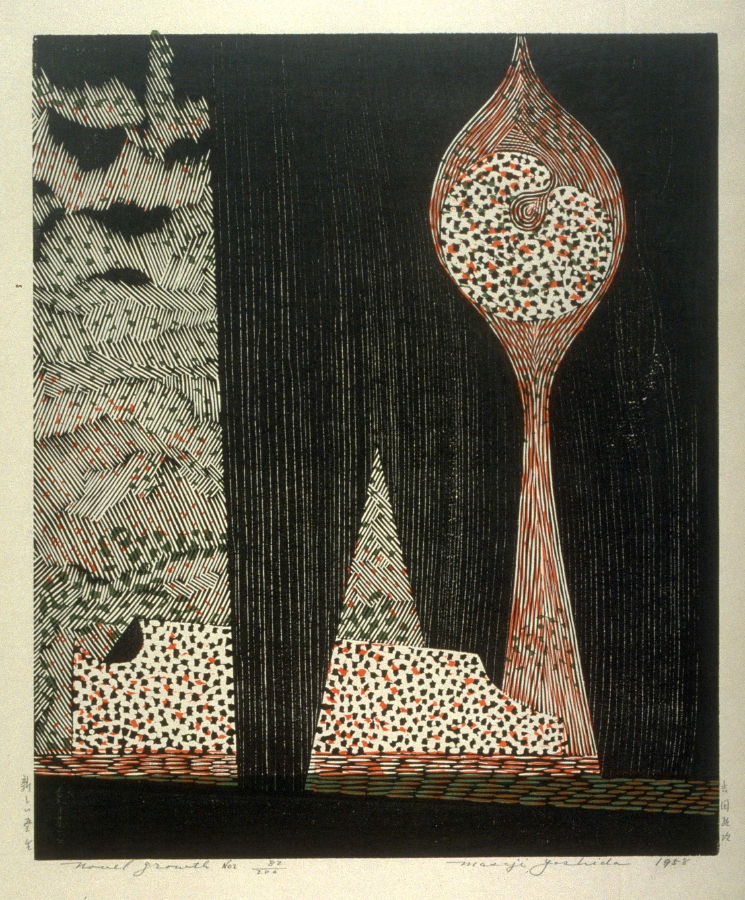
Novel Growth No. 2
Woodblock print

Ancient No. 1 (Mukashi No. 1)
1960
Color woodblock print; edition 4/20
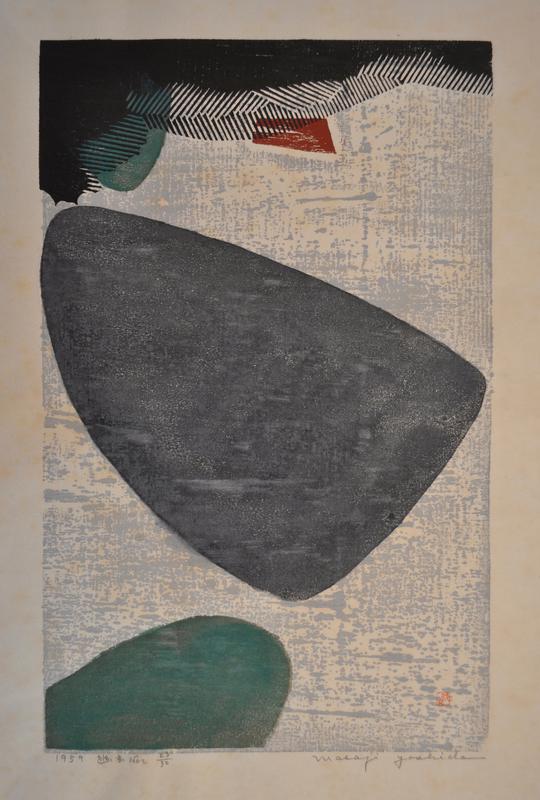
Transcendence No. 2
1959
Woodblock print, ink and color on paper

Blossoms
2003
Woodblock print
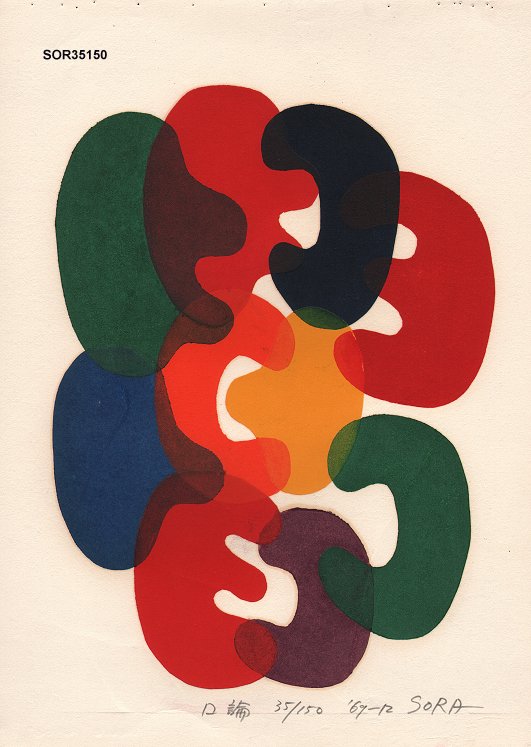
Twelve Rings
Woodblock print
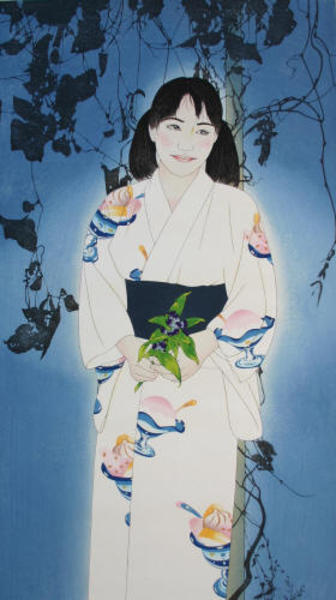
First Love 14
Woodblock print
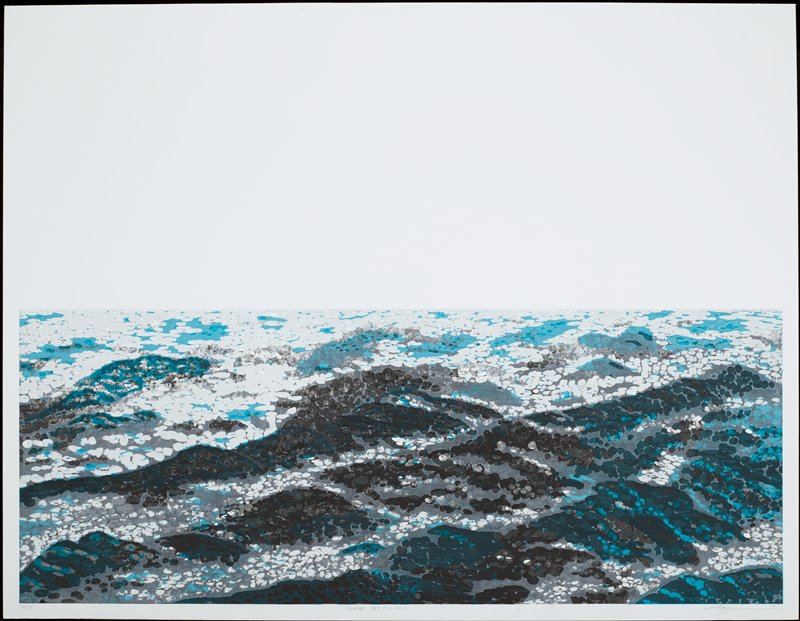
Water 107 Y-P.N.B.W.
2012
Woodblock print, ink and color on paper
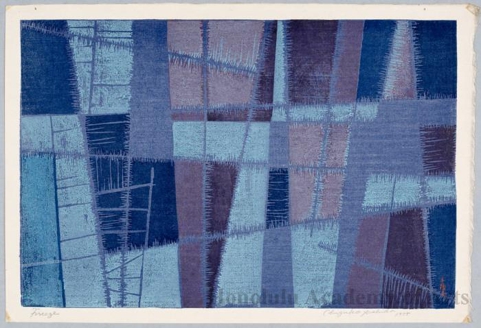
Freeze
Woodblock print
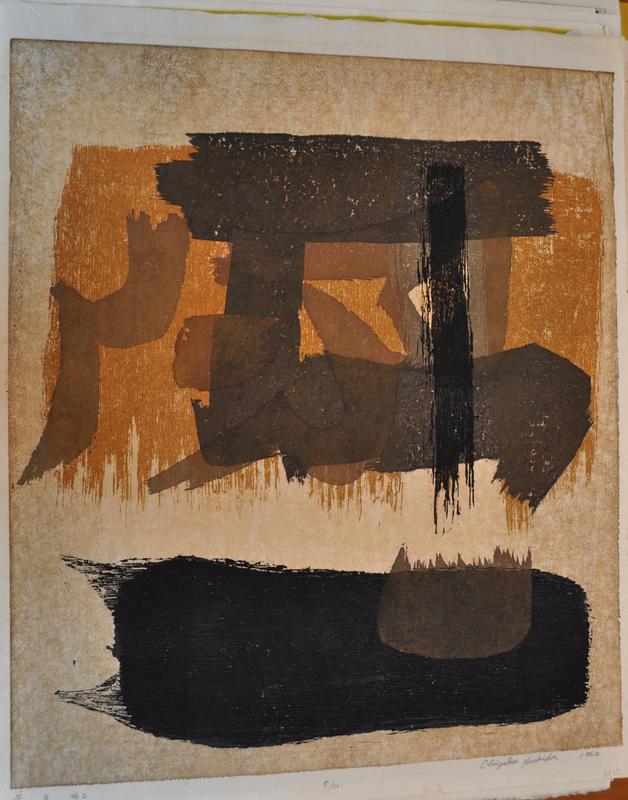
Passed Days
1962
Woodblock print, ink and color on paper
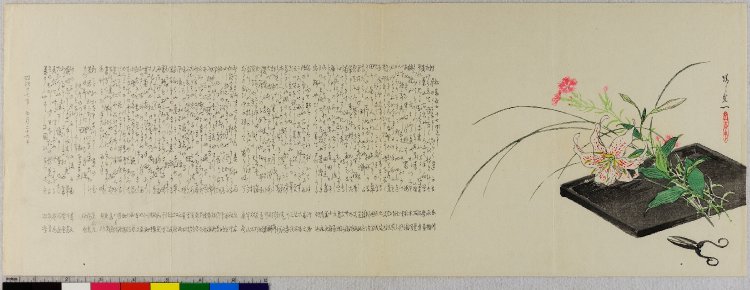
Untitled (tsuchiya-koitsu)
Woodblock print
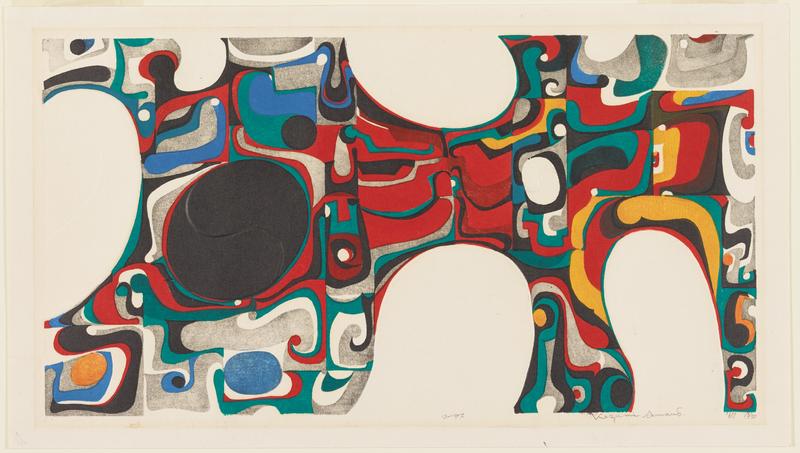
Chorus
1967
Woodblock print, ink and color on paper with embossing
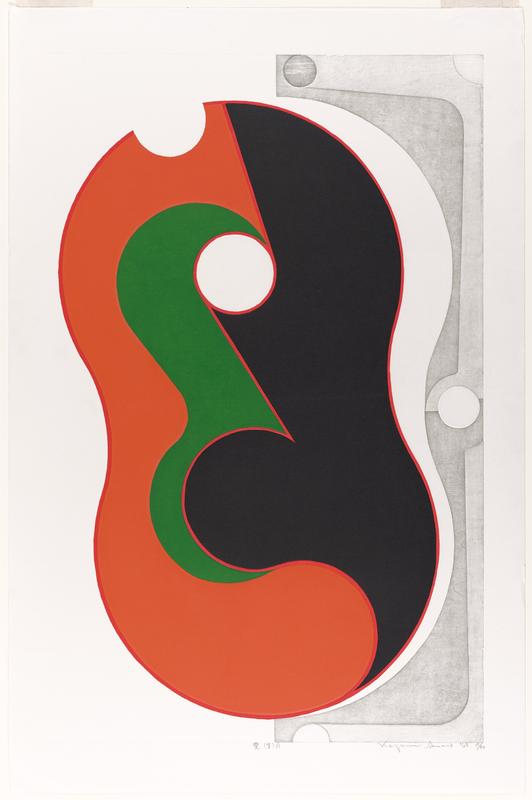
Mold (Life) A
1968
Woodblock print, ink and color on paper
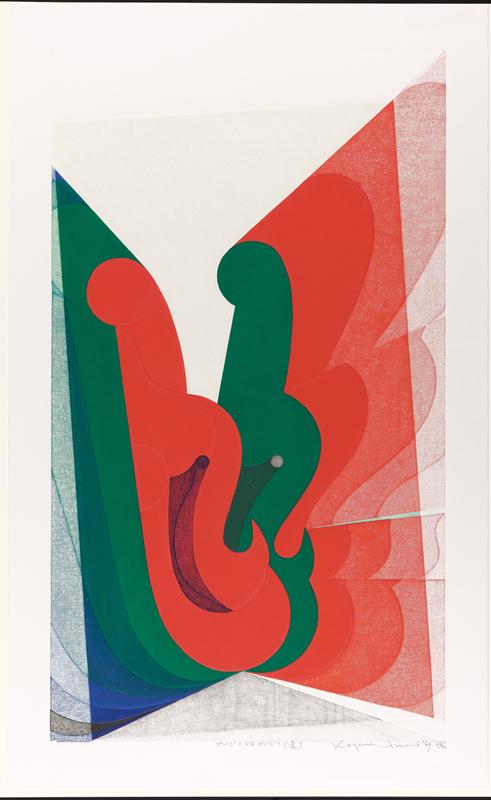
From Gauge (Return)
1969
Woodblock print, ink and color on embossed paper
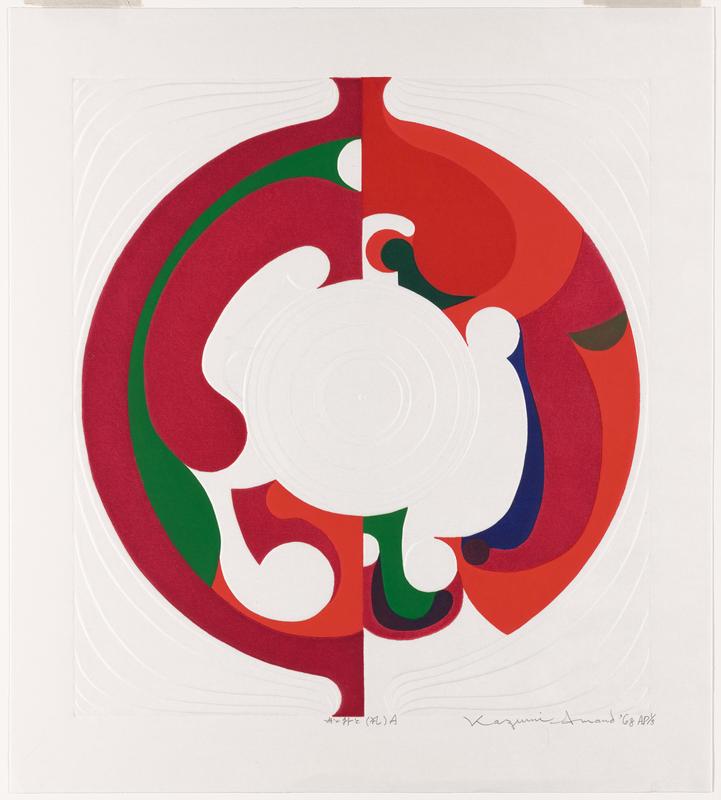
Inside and Outside (Round) A
1968
Woodblock print, ink and color on paper with embossing
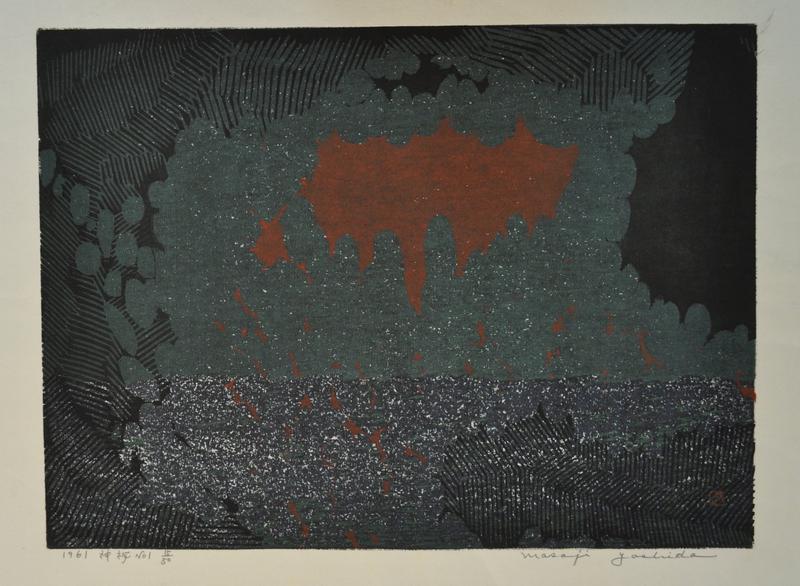
Mystery No. 1
1961
Woodblock print, ink and color on paper
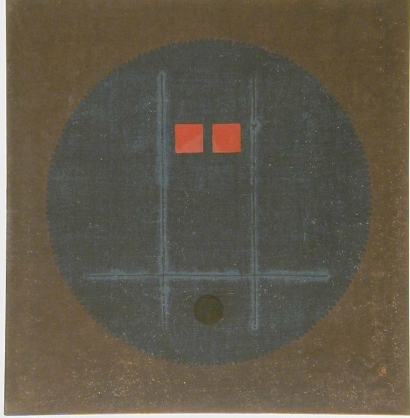
Kukan No. 52
Woodblock print
Related Subjects
Frequently Asked Questions
Abstract prints represent a revolutionary departure in Japanese printmaking, emerging primarily through the sosaku-hanga (creative prints) movement of the mid-twentieth century. While traditional ukiyo-e and shin-hanga were rooted in representational imagery, abstract works embraced non-figurative composition, exploring color, texture, and form for their own expressive potential.
Maki Haku, Onchi Koshiro, and Nana Shiomi are among the artists most associated with abstract in our collection. Browse the full list of artists who explored this subject above.
Hanga currently catalogues 2049 prints tagged with abstract, spanning ukiyo-e, shin-hanga, and sōsaku-hanga traditions where applicable.