
Biography
Amano Kunihiro (天野邦弘, 1929–2020) was a postwar sōsaku-hanga woodblock printmaker whose distinctive output sat at the meeting point of abstract design and figurative reference to the natural world — particularly the fishing villages, coastlines, and seabirds of northern Japan. He was born in 1929 in Hirosaki, in Aomori Prefecture at the far northern tip of Honshū. Although his family moved to Tokyo when he was young, he spent part of the war years back in Aomori, where he attended the Aomori Prefectural Technical School, and he absorbed the agrarian and maritime imagery of the Tōhoku region that would later dominate his prints. His formal art training was modest. In the early postwar period he took classes for roughly three years at Musashino Art University (Musashino Bijutsu Daigaku), but he is consistently described in collection records as essentially self-taught in woodblock printmaking, working through the medium largely on his own outside the conventional academic studio. He made his exhibition debut with the Nihon Hanga Kyōkai (Japan Print Association) in 1955 and soon gained international visibility. He was selected for the first Tokyo International Print Biennale in 1957 and continued to exhibit internationally through the 1960s, including at the Ljubljana Biennial of Graphic Arts in 1963. His early prints relied heavily on the visible grain of the woodblock itself, treating the natural texture of the plank as a compositional element; as his technique matured he moved toward a flattened, geometrically organized vocabulary in which figural references to fish, birds, boats, the sea, and shore landscapes were progressively distilled into semi-abstract shapes set against carefully tuned grounds. Technically he is unusual among sōsaku-hanga printmakers in his preference for oil-based pigment on the woodblock — rather than the water-based pigments traditionally associated with mokuhanga — combined with embossing (blind printing) and the occasional incorporation of motifs adapted from traditional Japanese textile patterns such as obi designs, which lend his later prints a flat, decorative quality that recalls Edo dyed-textile design as much as it does midcentury international abstraction. Collectors have noted that his natural-form motifs sometimes carry a discreet symbolic charge, a feature that distinguishes him from the more austere members of the postwar abstract print generation. Amano remained a member of both the Nihon Hanga Kyōkai and the Kokugakai (the National Painting Association, which has long included a strong print division) throughout his career, and worked in editions that grew from around fifty in the 1960s and 1970s to runs of approximately 120 in his later years. He died in 2020. His prints are held in many international collections, including the Library of Congress in Washington, the National Museum of Modern Art in Tokyo, the Museum of Fine Arts in Boston, the Smithsonian's National Museum of Asian Art, the Art Institute of Chicago, and the British Museum. Within the broader story of postwar Japanese print he is one of the most consistent representatives of a regional, nature-bound strain of abstraction — closer in spirit to the Aomori-rooted, folk-inflected work of Munakata Shikō than to the more rigorously international abstraction of figures like Hagiwara Hideo — and his work stands as evidence that sōsaku-hanga's commitment to self-drawn, self-carved, self-printed practice continued to produce serious mature art well into the late twentieth century.
Key Facts
- Active Period
- 1929–2020
- Nationality
- 🇯🇵Japan
- Movement
- Contemporary Mokuhanga
- Works Indexed
- 70
Frequently Asked Questions
Amano Kunihiro (天野邦弘, 1929–2020) was a postwar sōsaku-hanga woodblock printmaker whose distinctive output sat at the meeting point of abstract design and figurative reference to the natural world — particularly the fishing villages, coastlines, and seabirds of northern Japan. He was born in 1929 in Hirosaki, in Aomori Prefecture at the far northern tip of Honshū. Although his family moved to Tokyo when he was young, he spent part of the war years back in Aomori, where he attended the Aomori Prefectural Technical School, and he absorbed the agrarian and maritime imagery of the Tōhoku region that would later dominate his prints. His formal art training was modest. In the early postwar period he took classes for roughly three years at Musashino Art University (Musashino Bijutsu Daigaku), but he is consistently described in collection records as essentially self-taught in woodblock printmaking, working through the medium largely on his own outside the conventional academic studio. He made his exhibition debut with the Nihon Hanga Kyōkai (Japan Print Association) in 1955 and soon gained international visibility. He was selected for the first Tokyo International Print Biennale in 1957 and continued to exhibit internationally through the 1960s, including at the Ljubljana Biennial of Graphic Arts in 1963. His early prints relied heavily on the visible grain of the woodblock itself, treating the natural texture of the plank as a compositional element; as his technique matured he moved toward a flattened, geometrically organized vocabulary in which figural references to fish, birds, boats, the sea, and shore landscapes were progressively distilled into semi-abstract shapes set against carefully tuned grounds. Technically he is unusual among sōsaku-hanga printmakers in his preference for oil-based pigment on the woodblock — rather than the water-based pigments traditionally associated with mokuhanga — combined with embossing (blind printing) and the occasional incorporation of motifs adapted from traditional Japanese textile patterns such as obi designs, which lend his later prints a flat, decorative quality that recalls Edo dyed-textile design as much as it does midcentury international abstraction. Collectors have noted that his natural-form motifs sometimes carry a discreet symbolic charge, a feature that distinguishes him from the more austere members of the postwar abstract print generation. Amano remained a member of both the Nihon Hanga Kyōkai and the Kokugakai (the National Painting Association, which has long included a strong print division) throughout his career, and worked in editions that grew from around fifty in the 1960s and 1970s to runs of approximately 120 in his later years. He died in 2020. His prints are held in many international collections, including the Library of Congress in Washington, the National Museum of Modern Art in Tokyo, the Museum of Fine Arts in Boston, the Smithsonian's National Museum of Asian Art, the Art Institute of Chicago, and the British Museum. Within the broader story of postwar Japanese print he is one of the most consistent representatives of a regional, nature-bound strain of abstraction — closer in spirit to the Aomori-rooted, folk-inflected work of Munakata Shikō than to the more rigorously international abstraction of figures like Hagiwara Hideo — and his work stands as evidence that sōsaku-hanga's commitment to self-drawn, self-carved, self-printed practice continued to produce serious mature art well into the late twentieth century.
Amano Kunihiro was active from 1929 to 2020. They were associated with the Contemporary Mokuhanga movement.
Amano Kunihiro's work was shaped by the Contemporary Mokuhanga tradition in Japanese woodblock printmaking. Contemporary Mokuhanga: Contemporary mokuhanga (literally "wood-block print") encompasses artists working from approximately 1970 to the present who continue or reinvent traditional Japanese woodblock printing techniques.
Amano Kunihiro's prints frequently feature abstract, landscapes, night scenes, birds & flowers, animals, moonlight.
Original prints by Amano Kunihiro can be found in collections including Ohmi Gallery, Art Institute of Chicago, Minneapolis Institute of Art, Japanese Art Open Database.
Woodblock Prints by Amano Kunihiro (70)
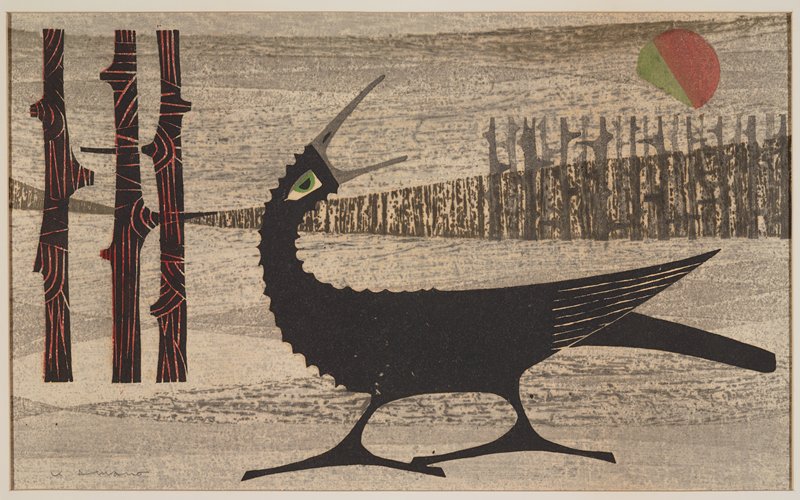
Crying Bird
December 1957
Woodblock print, ink and color on paper

Winter (Fuyu)
1957
Color woodblock print
Fish - C
1957
Woodblock print, ink and color on paper

Dusk (Yugure)
1957
Color woodblock print
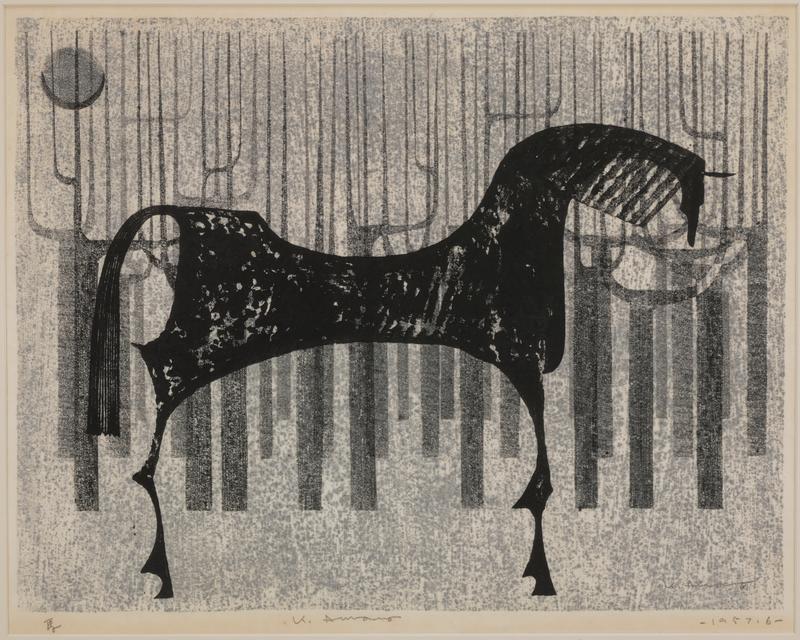
Horse
1957
Woodblock print, ink on paper

Fishes (Sakana)
1958
Color woodblock print; edition 17/50

Waning Moon
1960
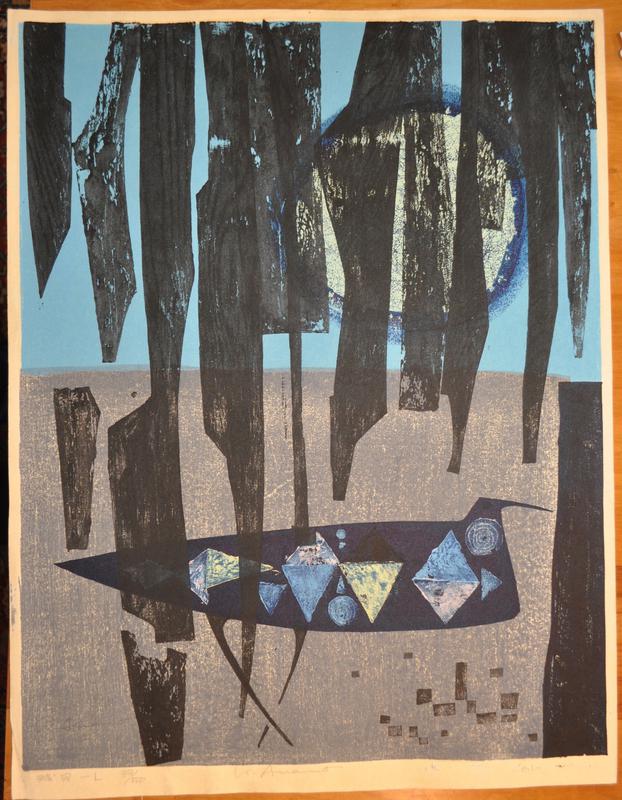
Morning Moon - L
1961
Woodblock print, ink and color on paper
![Blue Moon (A) [Aoi tsuki (A)] by Amano Kunihiro](https://www.artic.edu/iiif/2/103681af-b044-e195-3439-3583a07539fd/full/843,/0/default.jpg)
Blue Moon (A) [Aoi tsuki (A)]
1962
Color woodblock print; edition 1/50
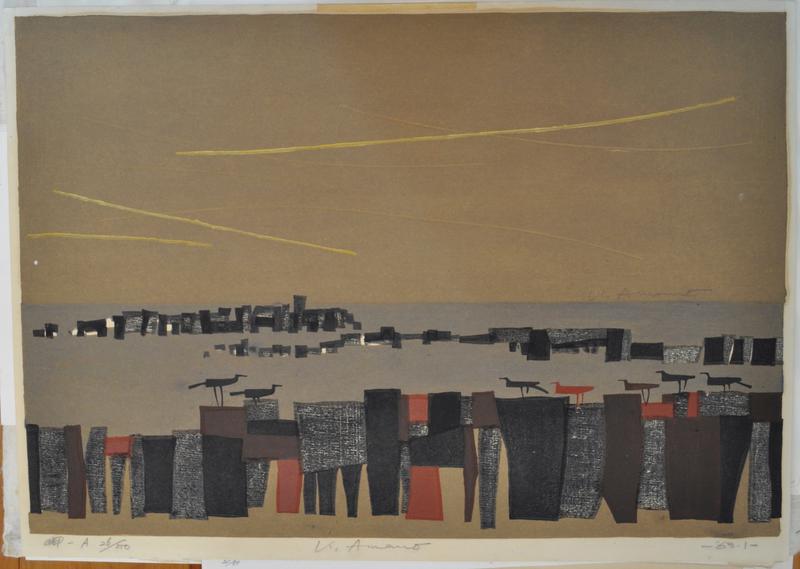
Cape - A
January 1963
Woodblock print, ink and color on paper

Enclosure (3)
1965
Color woodblock print; edition 10/30

Enclosure 32
1967
Color woodblock print; edition 7/50

Fossil "A Flower and the Birds" (8)
1968
Color lithograph with embossing; edition 9/60

Fossil 16
1970
Color woodblock print; edition 10/60
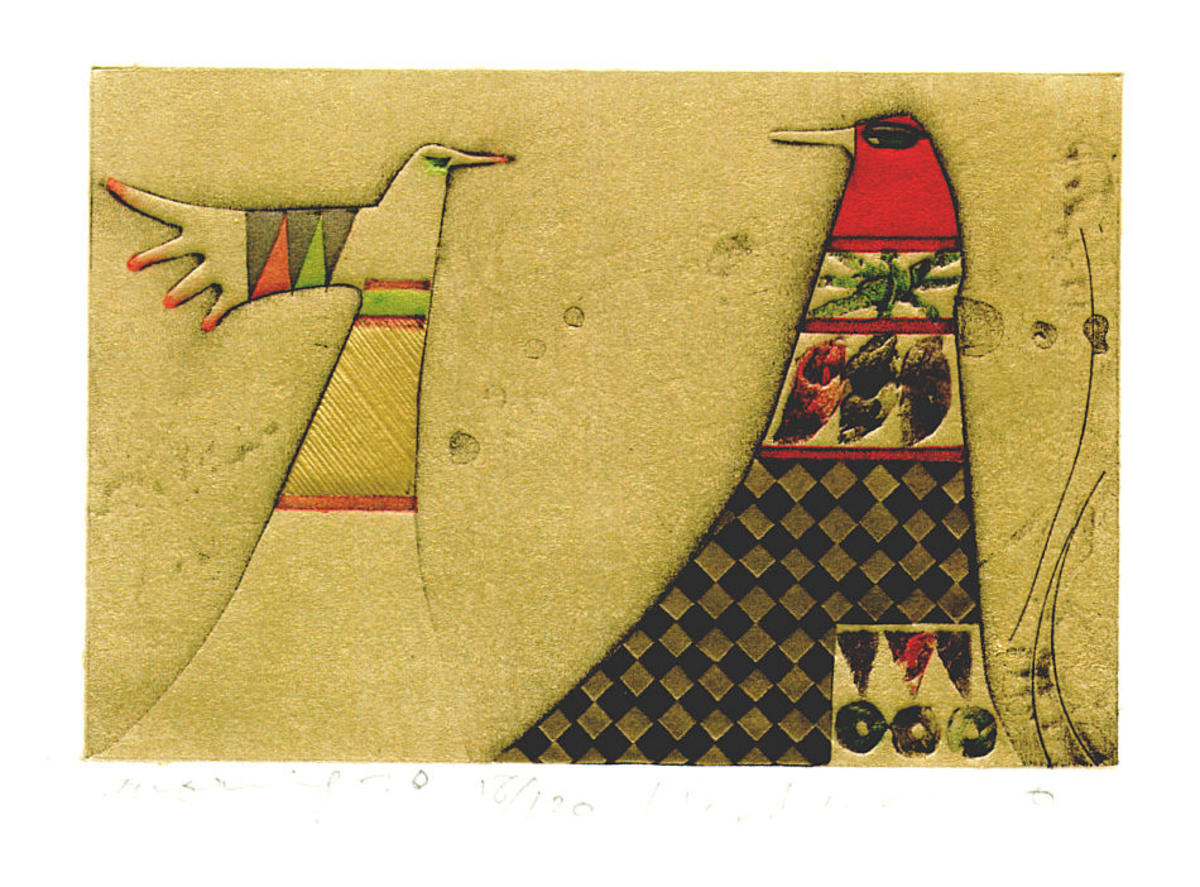
Morning 30
Woodblock print
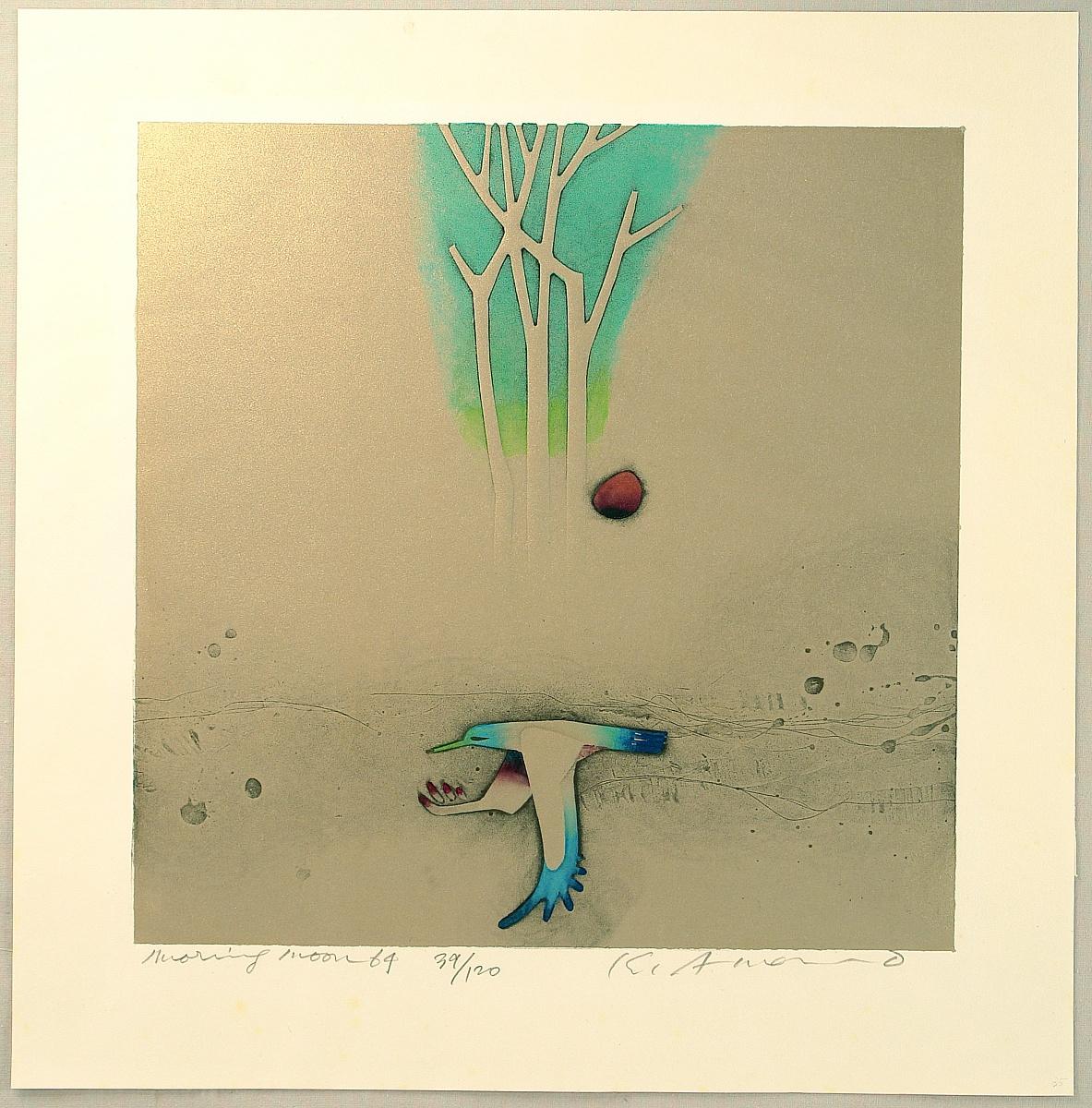
Morning Moon
Woodblock print
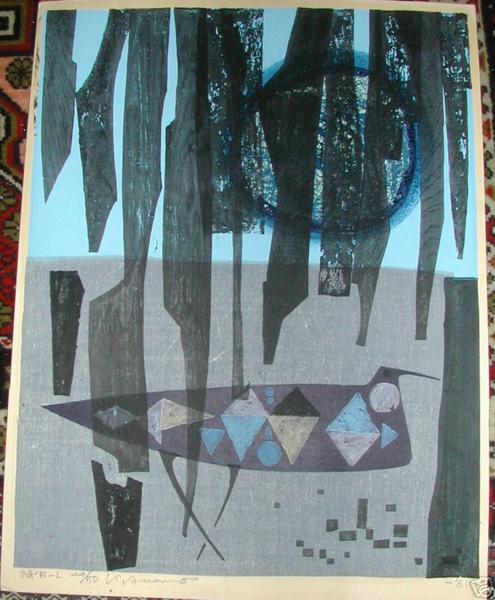
Abstract bird in forest
Woodblock print
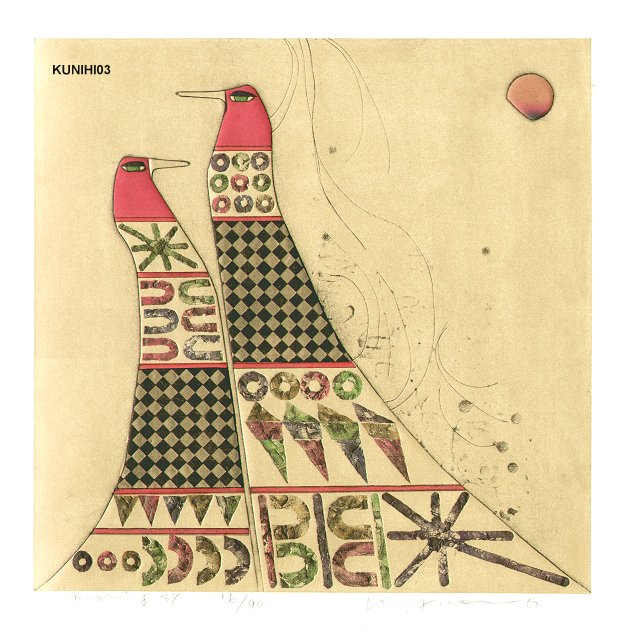
Morning 38
Woodblock print
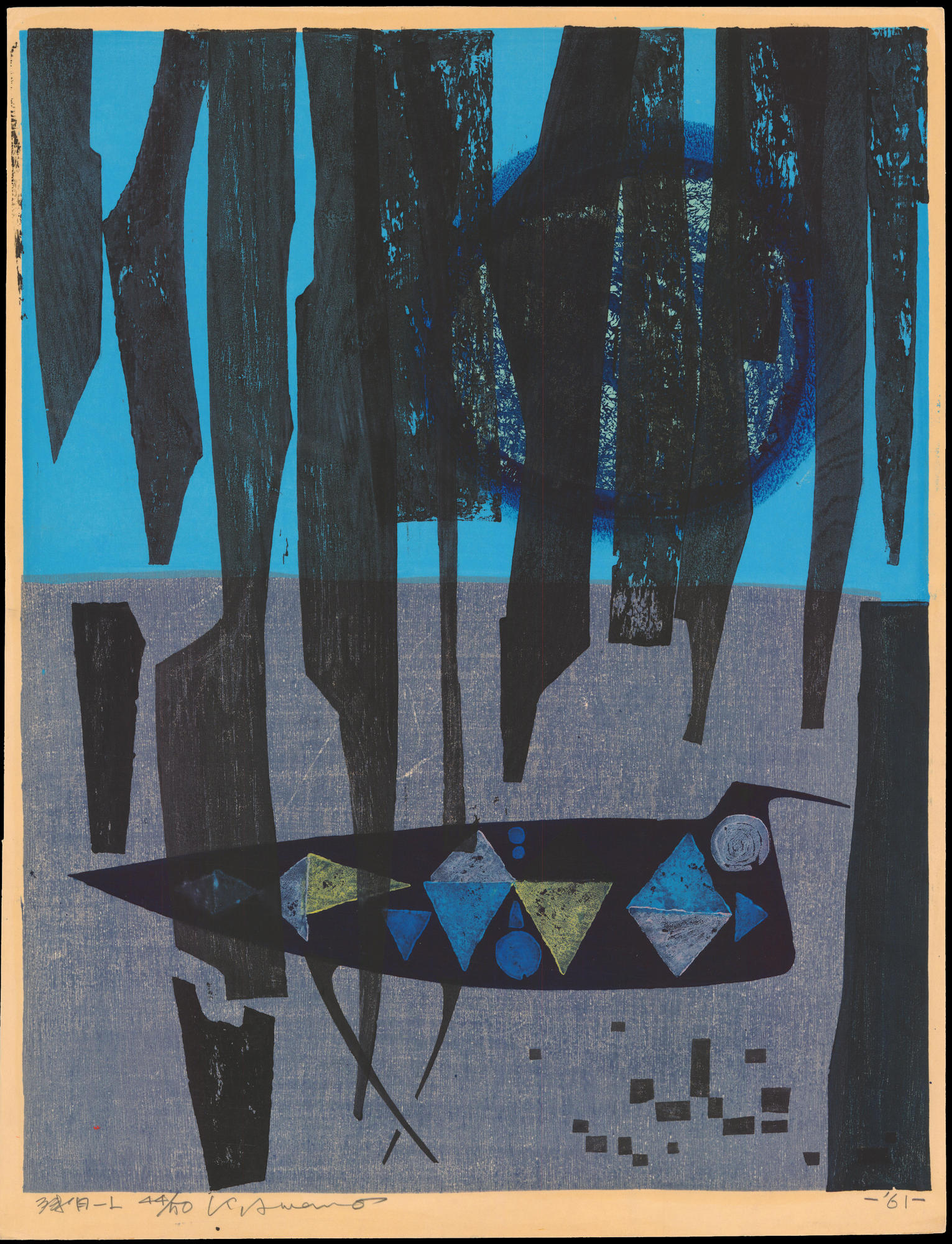
Amano, Kunihiro
Woodblock print
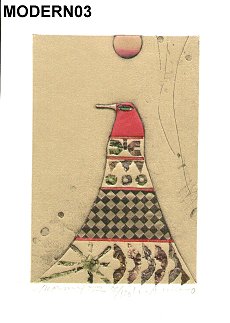
Morning 32
Woodblock print

Sawamura Dantaro as a court lady with fan and iris.
Unknown
Color woodblock print
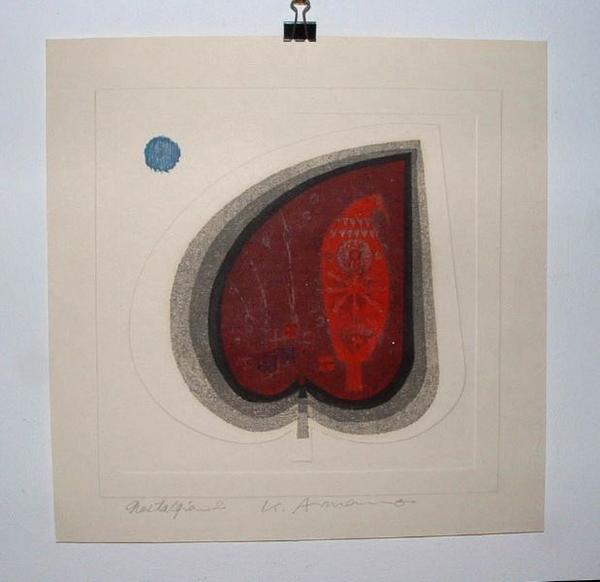
Nostalgia 2
Woodblock print
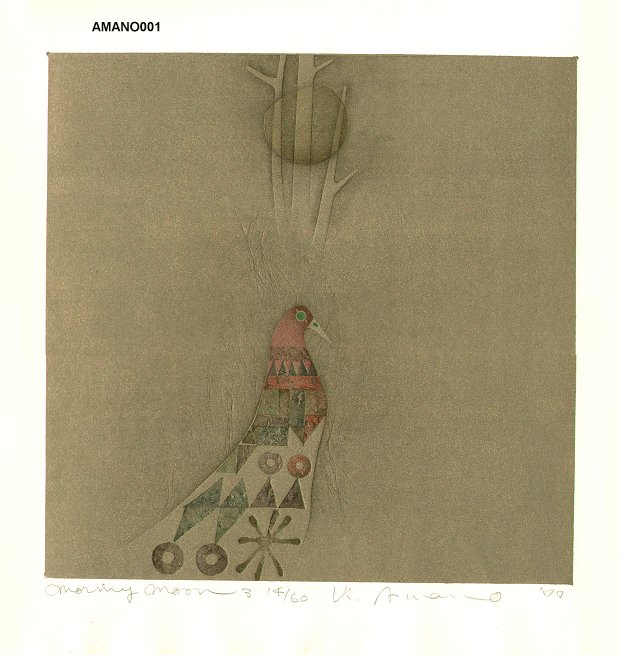
Morning Moon 3
Woodblock print
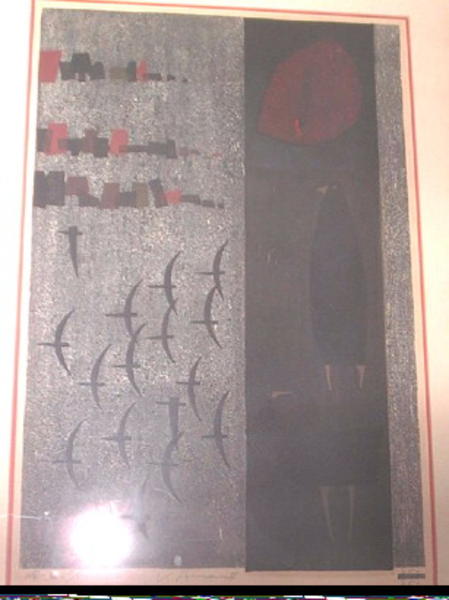
Untitled (amano-kunihiro)
Woodblock print