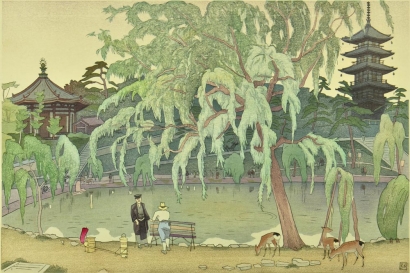
Biography
Hiromitsu Nakazawa (中沢弘光, 1874–1964) was a Japanese painter and printmaker who worked at the intersection of Western-influenced oil painting and the emerging sosaku-hanga (creative prints) movement. Born in 1874 in Tokyo, Nakazawa was a generation older than most sosaku-hanga practitioners and came to printmaking from a well-established career as a Western-style (yoga) painter.
Nakazawa studied under the prominent yoga painter Kuroda Seiki at the Tokyo School of Fine Arts, where he received thorough training in European painting techniques including oil, watercolor, and drawing from life. He became a respected painter who exhibited regularly at government-sponsored art salons and was known for his landscapes and figure compositions rendered in an Impressionist-influenced style.
His involvement with printmaking came as an extension of his broader artistic practice. Nakazawa created prints that reflected his painterly sensibility, applying Western compositional principles and atmospheric effects to the woodblock medium. While his prints were relatively few in number compared to his painting output, they demonstrated the potential for cross-fertilization between Western painting traditions and the emerging Japanese creative print movement.
Nakazawa lived to the age of ninety, witnessing the full arc of Japan's modern art history from the Meiji era through the postwar period. His primary legacy rests on his painting career, but his engagement with printmaking links him to the broader story of sosaku-hanga's development as a movement that attracted artists from diverse backgrounds and traditions.
Key Facts
- Active Period
- 1874–1964
- Nationality
- 🇯🇵Japan
- Movement
- Sōsaku-hanga
- Works Indexed
- 52
Frequently Asked Questions
Hiromitsu Nakazawa (中沢弘光, 1874–1964) was a Japanese painter and printmaker who worked at the intersection of Western-influenced oil painting and the emerging sosaku-hanga (creative prints) movement. Born in 1874 in Tokyo, Nakazawa was a generation older than most sosaku-hanga practitioners and came to printmaking from a well-established career as a Western-style (yoga) painter.
Hiromitsu Nakazawa was active from 1874 to 1964. They were associated with the Sōsaku-hanga movement.
Hiromitsu Nakazawa's work was shaped by the Sōsaku-hanga tradition in Japanese woodblock printmaking. Sōsaku-hanga: ## What is sōsaku-hanga? Sōsaku-hanga (創作版画, "creative prints") was a twentieth-century Japanese print movement defined by a single commitment: the artist must design, carve, and print every work alone.
Hiromitsu Nakazawa's prints frequently feature temples & shrines, landscapes, rivers & lakes, bijin-ga, trees, urban scenes.
Original prints by Hiromitsu Nakazawa can be found in collections including Japanese Art Open Database, wbp, Art Gallery of Greater Victoria, Honolulu Museum of Art.
Woodblock Prints by Hiromitsu Nakazawa (52)

Sanjo Bridge, Kyoto
Mokuhanga (Japanese woodblock)

Dotonbori Osaka
Mokuhanga (Japanese woodblock)
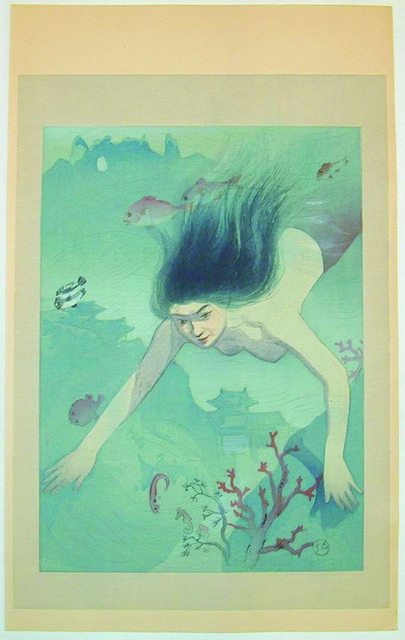
The Heroine Matsukaze, from the series Complete Works of Chikamatsu Manzaemon
Color woodblock print
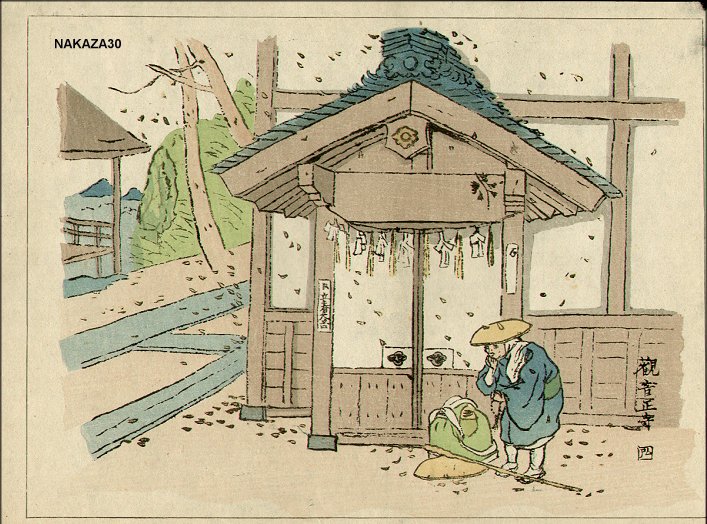
Kannnon Syoji Temple
Woodblock print
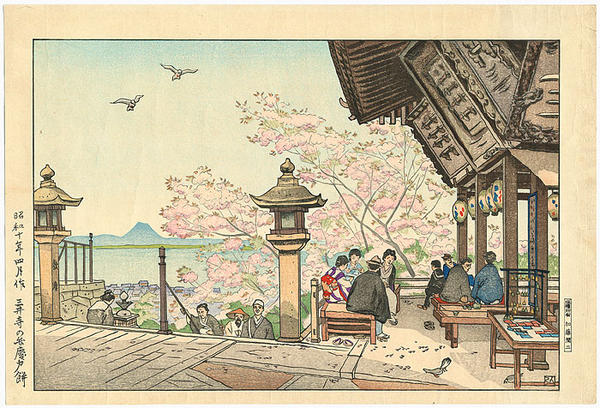
People eating Benkei Chikara mochi under cherry blossoms at Mii Temple — 三井寺の弁慶力餅
Woodblock print
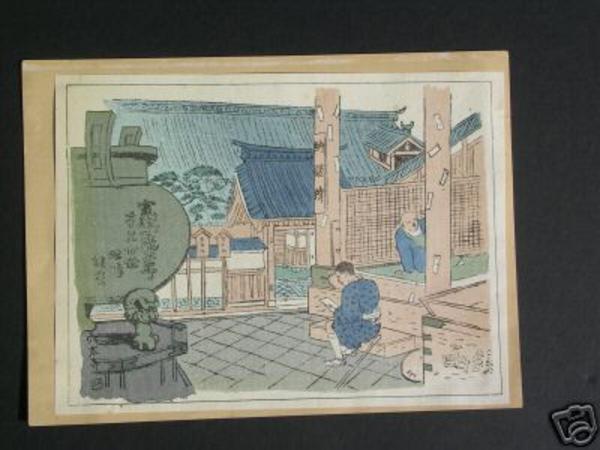
Inside a Temple or Shrine
Woodblock print
Watercolours of the Maiji Period — 明治期の水彩画
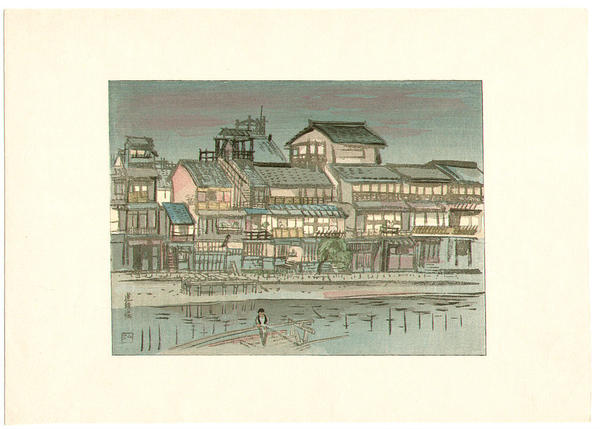
Doton-bori
Woodblock print
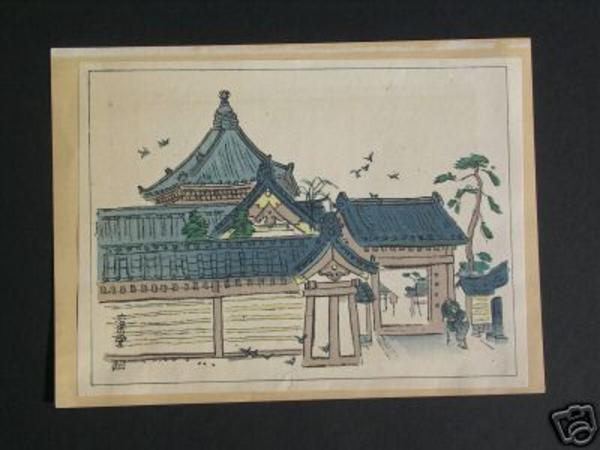
Temple Shrine 1
Woodblock print

river near Yoshino (Nara)
Mokuhanga (Japanese woodblock)

The starting way to Tsubosaka Temple
Mokuhanga (Japanese woodblock)

Tokyo City view
Mokuhanga (Japanese woodblock)

Heroine Matsukaze
Mokuhanga (Japanese woodblock)

Sleeping Girl
Mokuhanga (Japanese woodblock)

Shisendo Shrine
Mokuhanga (Japanese woodblock)

Willow tree at Sarusawa pond (Nara)
Mokuhanga (Japanese woodblock)

Willow tree at Sarusawa pond (Nara)
Mokuhanga (Japanese woodblock)

Chikara-mochi cakes at Miidera Temple
Mokuhanga (Japanese woodblock)

Kyongju Village
Mokuhanga (Japanese woodblock)

Kiyomizu-dera Temple
Mokuhanga (Japanese woodblock)

Kasuga Shrine maiden
Mokuhanga (Japanese woodblock)

Chikara-mochi cakes at Miidera Temple
Mokuhanga (Japanese woodblock)

Arashiyama
Mokuhanga (Japanese woodblock)
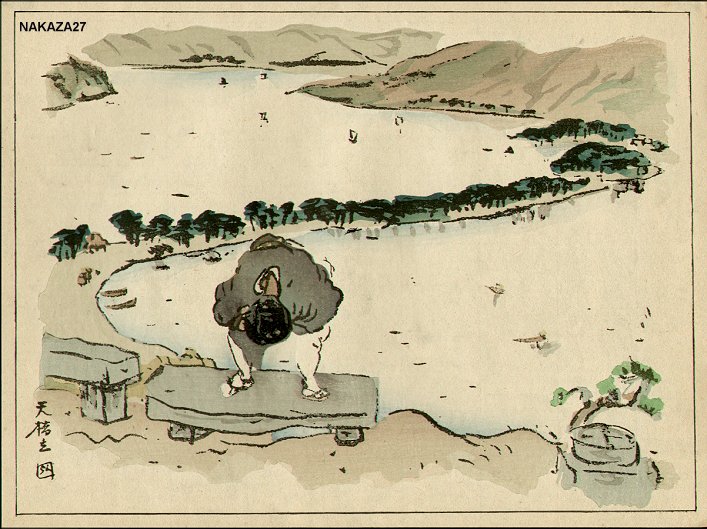
Amano-Hashidate
Woodblock print