
Biography
Yoshitoshi Mori (森義利, 1898–1992) was a Japanese artist best known for the bold kappazuri stencil prints he produced in the second half of his long life, work that made him a distinctive figure associated with the sōsaku-hanga (creative print) movement. He was born on October 31, 1898, in the Nihonbashi district of Tokyo — in the home of his grandfather — and grew up surrounded by the commercial culture of the old city, an environment that would later shape the subjects of his art.
Contrary to the image of a self-taught outsider, Mori received substantial formal training. He studied brush drawing from around 1915 and graduated in 1923 from the Japanese-style painting division of the Kawabata School of Fine Arts (Kawabata Gagakkō). He apprenticed under the print artist Yamakawa Shūhō and, crucially, came into the orbit of the mingei (folk craft) movement: he studied stencil-dyeing with the textile artist Serizawa Keisuke and became a frequent visitor to the Japan Folk Crafts Museum and its founder, Yanagi Sōetsu. For many years Mori worked chiefly in stencil-dyed textiles (katazome) rather than in prints.
It was relatively late that he turned fully to printmaking. He began making kappazuri stencil prints in 1951, at the age of fifty-six, and committed himself to prints entirely around 1960. In 1962 he left the craftsmen's division of the Kokugakai as tensions grew with Serizawa over the boundary between art and craft, and thereafter he pursued stencil printmaking on his own terms.
His signature subject matter drew from the world of Edo-period popular culture: kabuki theater, sumo wrestling, festival scenes, folk tales, and the daily life of Tokyo's merchants and craftsmen. Kabuki actors in dramatic mie poses, sumo wrestlers locked in combat, festival-goers carrying portable shrines through crowded streets, and shopkeepers at work filled his compositions with narrative energy and humor.
Mori's technique was as distinctive as his subjects. Growing directly out of his katazome stencil-dyeing background, his kappazuri method built up images from hand-cut stencils, and he worked in a bold, graphic style characterized by thick outlines, flat planes of saturated color, and simplified forms that recalled both traditional folk painting and modern graphic design. His figures were sturdy and expressive, their costumes rendered in vivid patterns of red, indigo, gold, and black, with a textile-like density unusual among print artists.
Over the decades Mori took part in numerous international print exhibitions, showing abroad repeatedly between the late 1950s and the 1970s. He remained independent of Japan's art associations until 1982, when he joined the Japan Print Association, and in 1984 he received an honorary doctorate in art from the University of Maryland — the first Japanese artist to be so honored. He continued producing prints into his nineties, working almost until the end of his life.
Mori died in 1992 at the age of ninety-three, shortly after his final solo exhibition, having produced a body of work remarkable for both its consistency of vision and its exuberant celebration of traditional Japanese popular culture — a version of old Tokyo preserved in stencil and pigment.
Key Facts
- Active Period
- 1898–1992
- Nationality
- 🇯🇵Japan
- Movement
- Sōsaku-hanga
- Works Indexed
- 128
Frequently Asked Questions
Yoshitoshi Mori (森義利, 1898–1992) was a Japanese artist best known for the bold kappazuri stencil prints he produced in the second half of his long life, work that made him a distinctive figure associated with the sōsaku-hanga (creative print) movement. He was born on October 31, 1898, in the Nihonbashi district of Tokyo — in the home of his grandfather — and grew up surrounded by the commercial culture of the old city, an environment that would later shape the subjects of his art.
Yoshitoshi Mori was active from 1898 to 1992. They were associated with the Sōsaku-hanga movement.
Yoshitoshi Mori's work was shaped by the Sōsaku-hanga tradition in Japanese woodblock printmaking. Sōsaku-hanga: ## What is sōsaku-hanga? Sōsaku-hanga (創作版画, "creative prints") was a twentieth-century Japanese print movement defined by a single commitment: the artist must design, carve, and print every work alone.
Yoshitoshi Mori's prints frequently feature warriors, figures, stencil print, daily life, kabuki, urban scenes.
Original prints by Yoshitoshi Mori can be found in collections including japancoll, wbp, Art Institute of Chicago, mfa.
Series by Yoshitoshi Mori
Woodblock Prints by Yoshitoshi Mori (128)
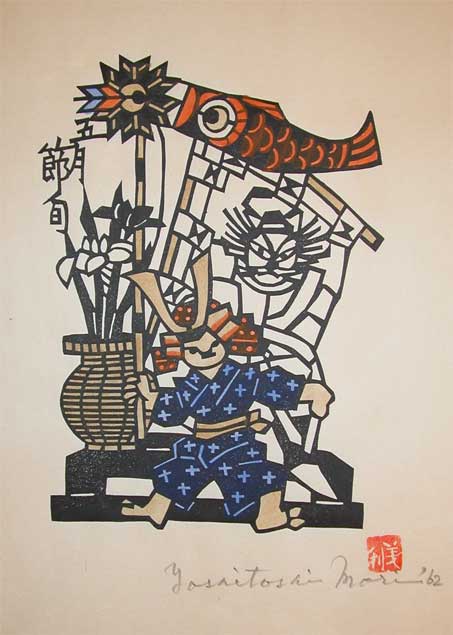
May; Boy's Festival
Woodblock print
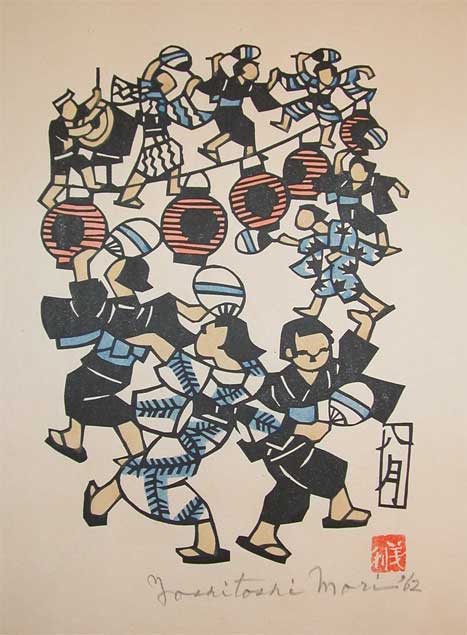
August; Obon Dance
Woodblock print
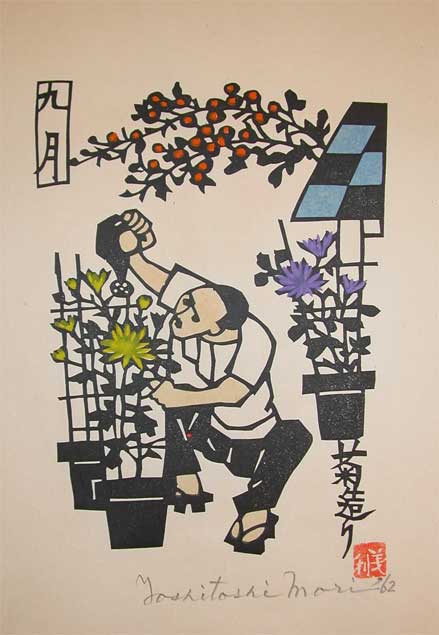
September; Chrysanthemums
Woodblock print

Boddhisattva
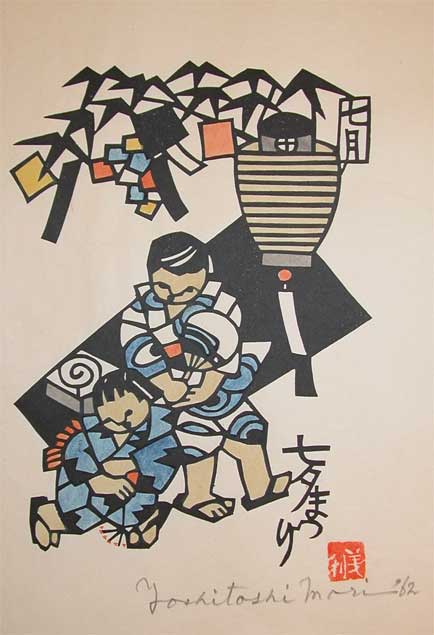
July; Star Festival
Woodblock print

Kabuki Actor with Flower

Dojyoji

(untitled)

Ghosts Appearing at Daimotsu-no-ura

The Dance of Gioh
Mokuhanga (Japanese woodblock)

An Ornamental Hairpin Pin
Mokuhanga (Japanese woodblock)

Samurai Swinging a Sword
Mokuhanga (Japanese woodblock)

Mori Yoshitoshi - Kawanakajima
Mokuhanga (Japanese woodblock)

Otokonosuke
Mokuhanga (Japanese woodblock)

Afternoon Nap (B)
Mokuhanga (Japanese woodblock)

Nude Combing her hair
Mokuhanga (Japanese woodblock)

Kuruma Arasoi (A Quarrel of Vehicles)
Mokuhanga (Japanese woodblock)

Warrior God
Mokuhanga (Japanese woodblock)

Murasaki Shikibu
Mokuhanga (Japanese woodblock)

Benkei And Yoshitsune
Mokuhanga (Japanese woodblock)
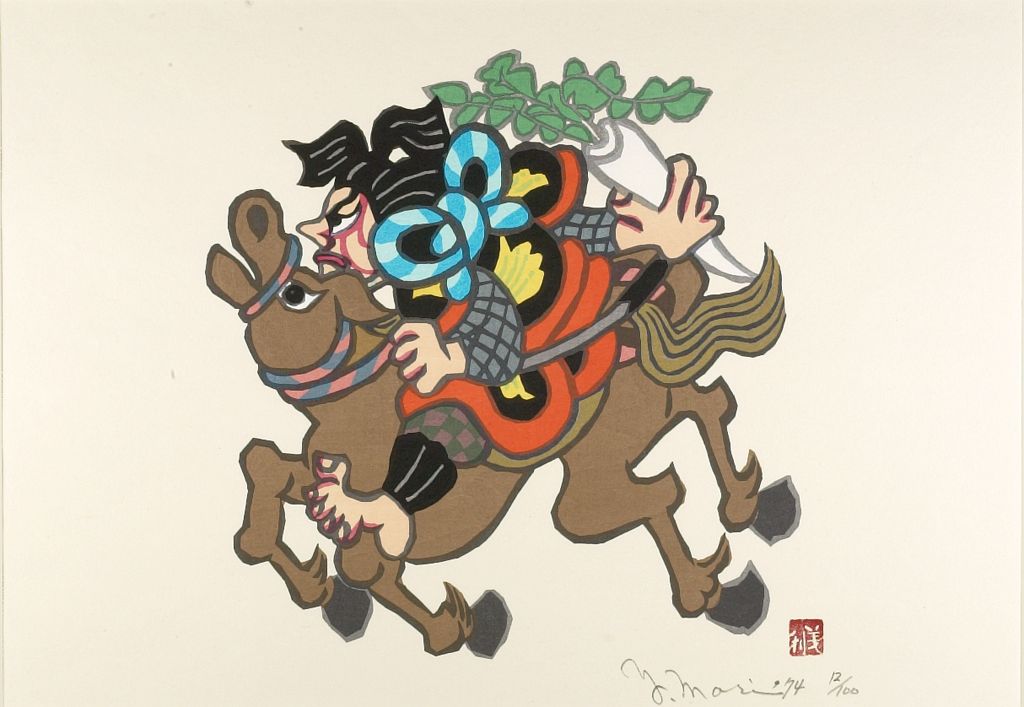
Goro, Shôwa period, dated 1974
Woodblock print
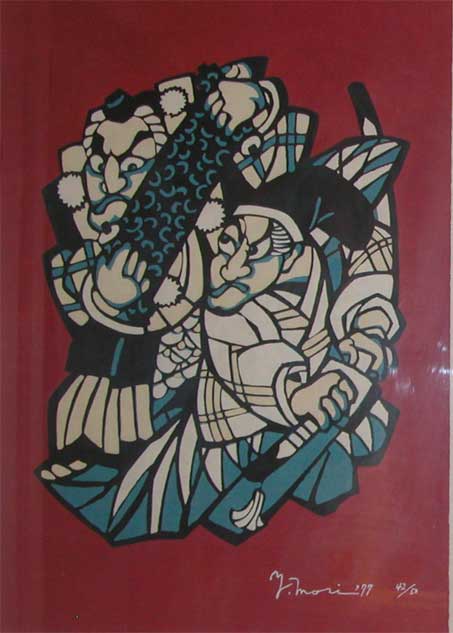
Kanjincho
Woodblock print
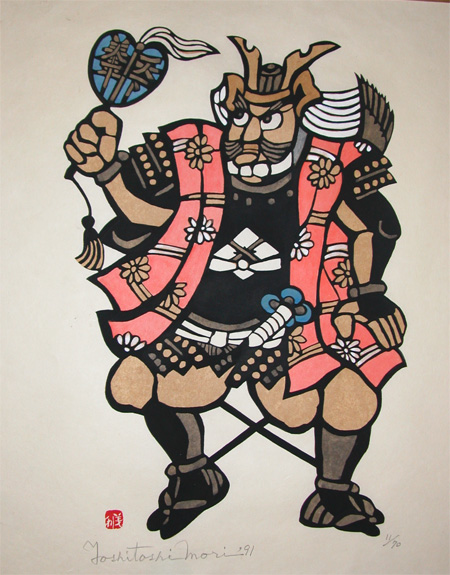
Samurai with War Fan
Woodblock print
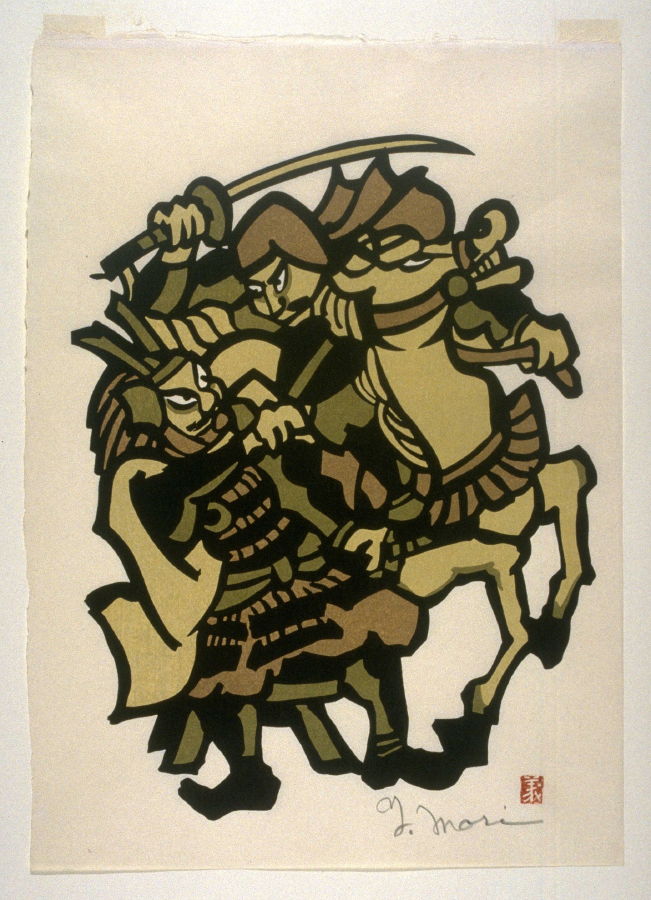
Two Warriors Fighting
Woodblock print