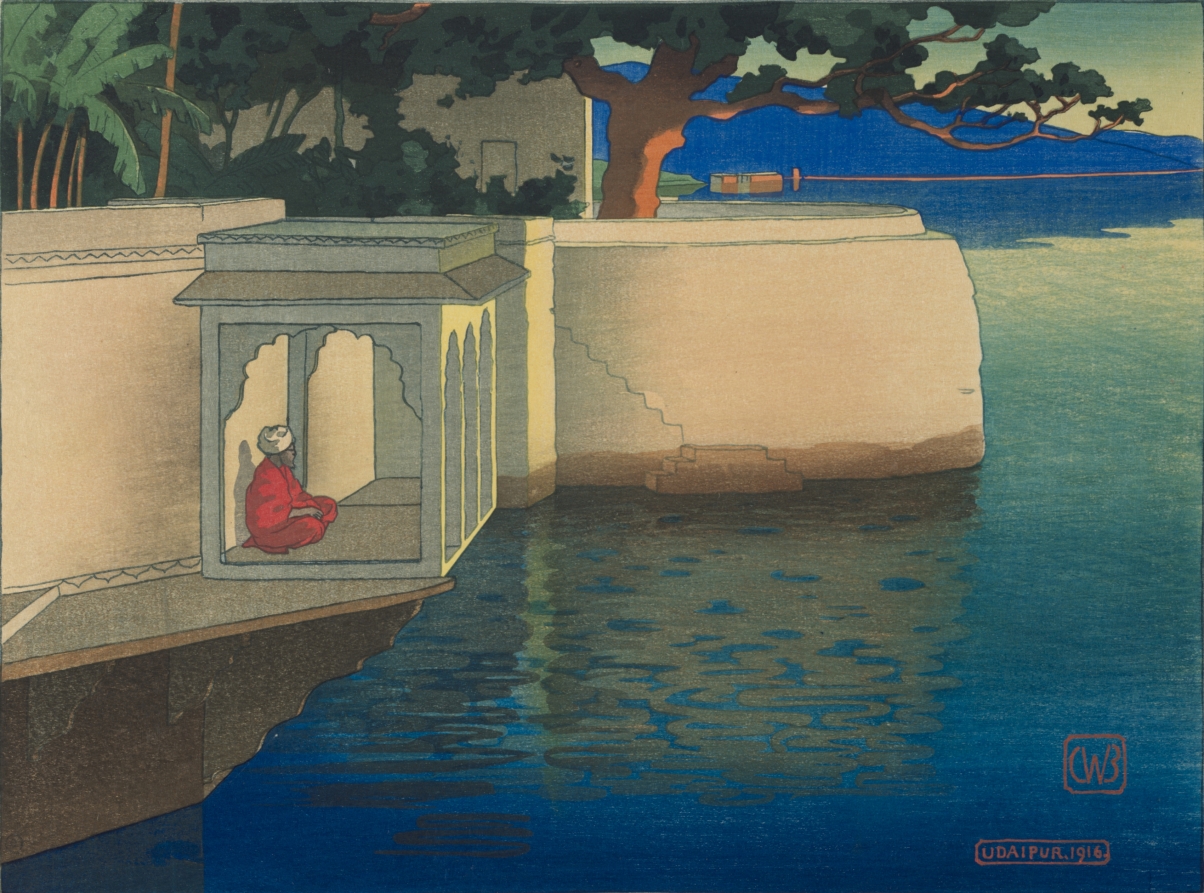
Udaipur
- Date:
- 1916
- Medium:
- color woodcut
- Source:
- Cleveland Museum of Art
More Prints by Charles W. Bartlett

More Rivers & Lakes Prints

Lake Chuzenji, Nikko (Nikko Chuzenjiko)
Nikko Chuzenjiko
1930
Color woodblock print; oban

Lake Kugushi in Wakasa Province (Wakasa Kugushiko), from the series Souvenirs of Travel I (Tabi miyage dai isshu)"
Wakasa Kugushiko
1920
Color woodblock print; oban

Gosai Canal in Niigata (Niigata Gosaibori), from the series "Souvenirs of Travel, Second Series (Tabi miyage dai nishu)"
Niigata Gosaibori
1921
Color woodblock print; oban

The Hori River at Obama (Obama Horikawa), from the series "Souvenirs of Travel, First Series (Tabi miyage dai isshu)"
Obama Horikawa
1920
Color woodblock print; oban
Featured in Collections
Curated cross-cuts that include this print.
Frequently Asked Questions
Udaipur was created by Charles W. Bartlett in 1916.
Udaipur depicts rivers & lakes, architecture, and travel scenes.