
Eitai Bridge
- Medium:
- Mokuhanga (Japanese woodblock)
- Image courtesy of
- Saru Gallery
Description
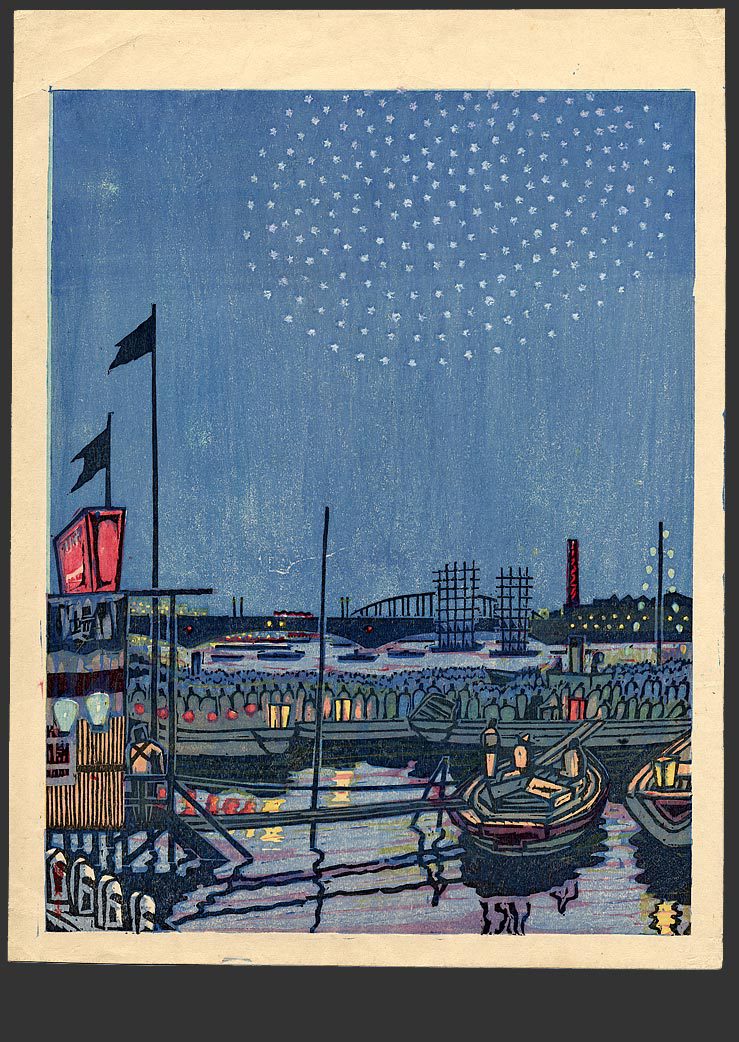
Eitai-bashi spans the Sumida River near its mouth in eastern Tokyo, a much-rebuilt crossing that historically connected Nihonbashi to Fukagawa and was reconstructed in steel after the 1923 Great Kanto Earthquake. Fujimori's print treats the bridge as a geometric structure within the cityscape rather than a romantic emblem—the steel truss form, with its repeating diagonals and verticals, suits the sosaku-hanga preference for clear linear carving and flat color planes. The composition likely views the bridge from one bank or from the river itself, with the Sumida rendered through bokashi gradations and the architecture in firm blocks of color. The Sumida and its bridges had been a subject for ukiyo-e printmakers since Hiroshige's Hundred Famous Views of Edo, but a sosaku-hanga handling reframes the same geography through the modernist concerns of the 1920s and 1930s, when the city's reconstructed infrastructure became a recurring subject. The print belongs alongside Tsukishima as part of Fujimori's documentation of working waterfront Tokyo.
More Prints by Fujimori Shizuo
More Bridges Prints
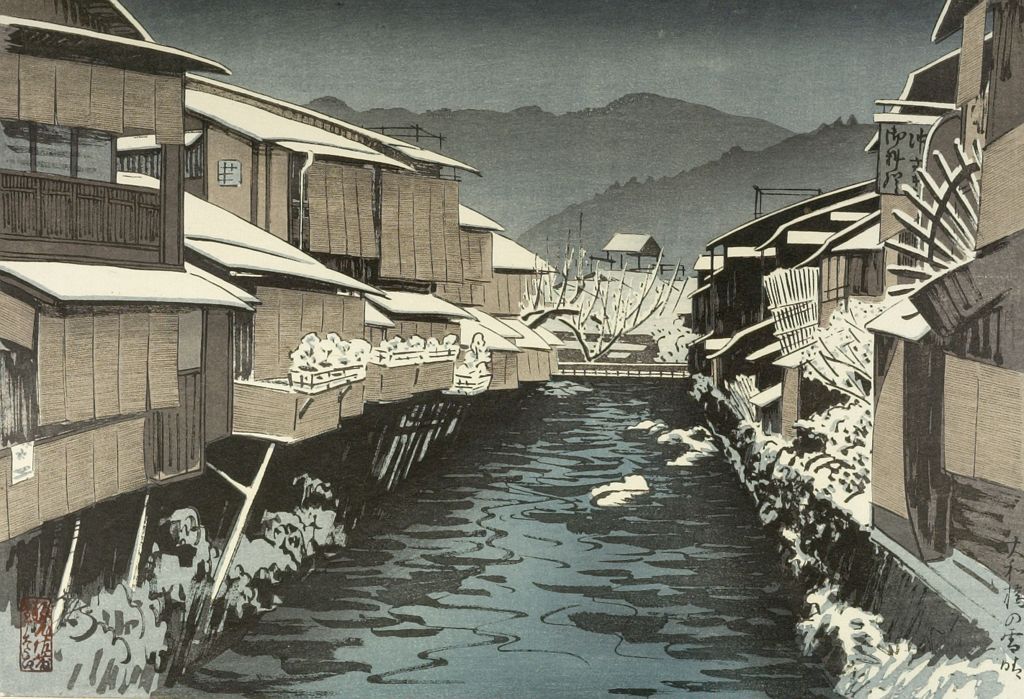
Fair Weather After Snow at Yamato Bridge, Kyoto (Yamato bashi no yukibare), Taishô period, dated 1924
Woodblock print
![Mount Fuji on a Moonlit Night, Kawai Bridge (Tsukiyo no Fuji [Kawaibashi]), from the series "Selection of Views of the Tokaido (Tokaido fukei senshu)" by Kawase Hasui](https://www.artic.edu/iiif/2/d0960668-1e73-339a-b182-fb995a54bff0/full/843,/0/default.jpg)
Mount Fuji on a Moonlit Night, Kawai Bridge (Tsukiyo no Fuji [Kawaibashi]), from the series "Selection of Views of the Tokaido (Tokaido fukei senshu)"
1947
Color woodblock print; oban

Shin Ohashi Bridge (Shin Ohashi), from the series "Twenty View of Tokyo (Tokyu nijukkei)"
1926
Color woodblock print; oban

Sacred Bridge in Nikko (Nikko Shinkyo)
1930
Color woodblock print; oban
Featured in Collections
Curated cross-cuts that include this print.
Frequently Asked Questions
Eitai Bridge was created by Fujimori Shizuo (藤森静雄).
Eitai Bridge depicts bridges.