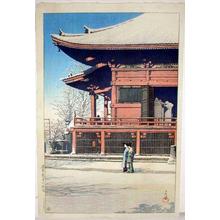
Asakusa Kannon in the Snow
by Kawase Hasui
- Medium:
- Woodblock print
- Source:
- Japanese Art Open Database
- Image courtesy of
- Japanese Art Open Database
Description
Senso-ji temple in Asakusa, popularly known as Asakusa Kannon after the bodhisattva Kannon enshrined within, was among the most frequently depicted landmarks in Hasui's Tokyo work. This snow scene belongs to a recurring subject type in which the famous Kaminarimon gate, the Nakamise shopping approach, or the main hall pagoda emerges through a curtain of falling or freshly settled snow. Hasui's snow prints are technically demanding: the white of the snow is the bare washi itself, shaped by careful negative carving, while the surrounding tones are built up in layers of transparent pigment to suggest the grey luminosity of overcast winter light. Human figures—umbrella-carrying pedestrians or pilgrims—are often reduced to small silhouettes, their scale emphasizing the architectural grandeur of the temple. The composition exemplifies Hasui's ability to transform a familiar urban site through seasonal atmosphere.
More Prints by Kawase Hasui
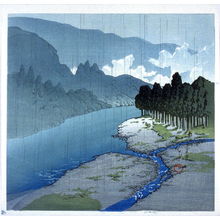
More Snow Scenes Prints
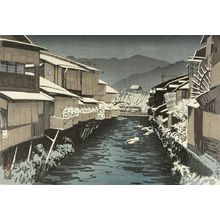
Fair Weather After Snow at Yamato Bridge, Kyoto (Yamato bashi no yukibare), Taishô period, dated 1924
Woodblock print

The Compound of the Tenman Shrine at Kameido in the Snow (Kameido Tenmangu keidai no yuki), from the series "Famous Places in the Eastern Capital (Toto meisho)"
c. 1832/38
Color woodblock print; oban

Miyajima in Snow (Yuki no Miyajima)
Yuki no Miyajima
1929
Color woodblock print; oban
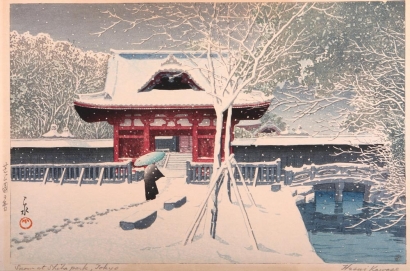
Evening Snow at Shiha Park, Tokyo
1932
Woodblock print
Featured in Collections
Curated cross-cuts that include this print.
Frequently Asked Questions
Asakusa Kannon in the Snow was created by Kawase Hasui (川瀬巴水).
Asakusa Kannon in the Snow depicts snow scenes.