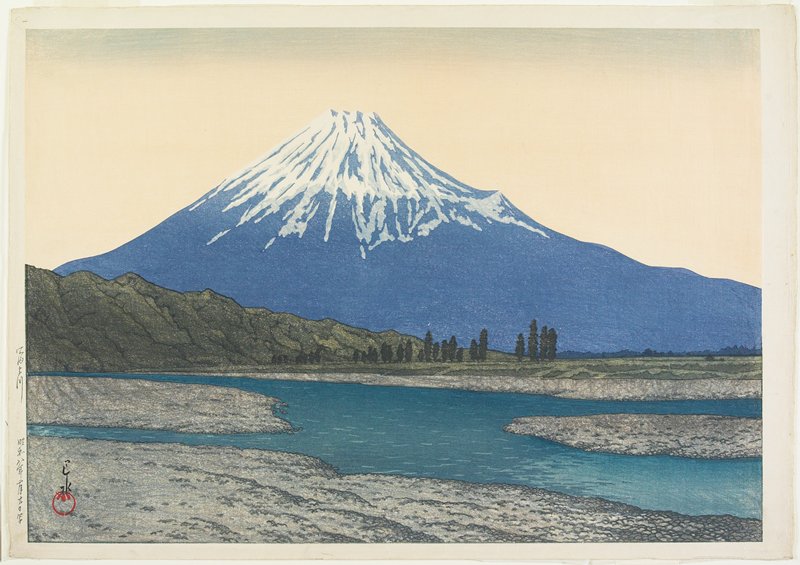
Fuji River
by Kawase Hasui
- Date:
- February 1933
- Medium:
- Woodblock print, ink and color on paper
- Format:
- Oban
- Dimensions:
- 36 × 51.6 cm
- Publisher:
- Watanabe Shozaburo
- Edition:
- Published by Watanabe Shozaburo
- Source:
- Minneapolis Institute of Art
Description
Fuji River, published in February 1933, depicts the Fuji River — one of Japan's three fastest rivers, running from the Kai mountains through a steep gorge to Suruga Bay with Mount Fuji visible to the east — in the winter clarity of February when the river runs cold and fast over its rocky bed. The Fuji River's gorge provided Hasui a vigorous, dramatic composition: white water threading between dark boulders, the steep valley walls rising on either side, with Fuji possibly visible above the canyon rim. The bokashi sky and Mount Fuji tag indicate this is among Hasui's most kinetically charged river subjects.
More Prints by Kawase Hasui

More Rivers & Lakes Prints

Lake Chuzenji, Nikko (Nikko Chuzenjiko)
Nikko Chuzenjiko
1930
Color woodblock print; oban

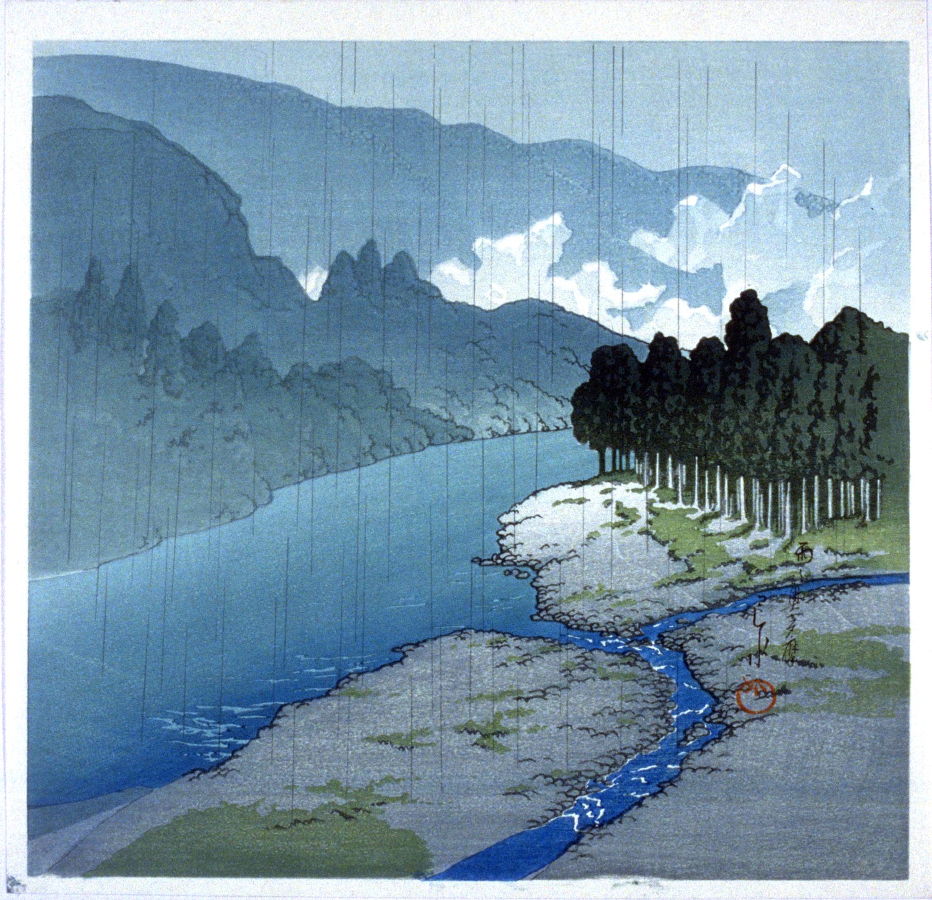
Lake Kugushi in Wakasa Province (Wakasa Kugushiko), from the series Souvenirs of Travel I (Tabi miyage dai isshu)"
Wakasa Kugushiko
1920
Color woodblock print; oban

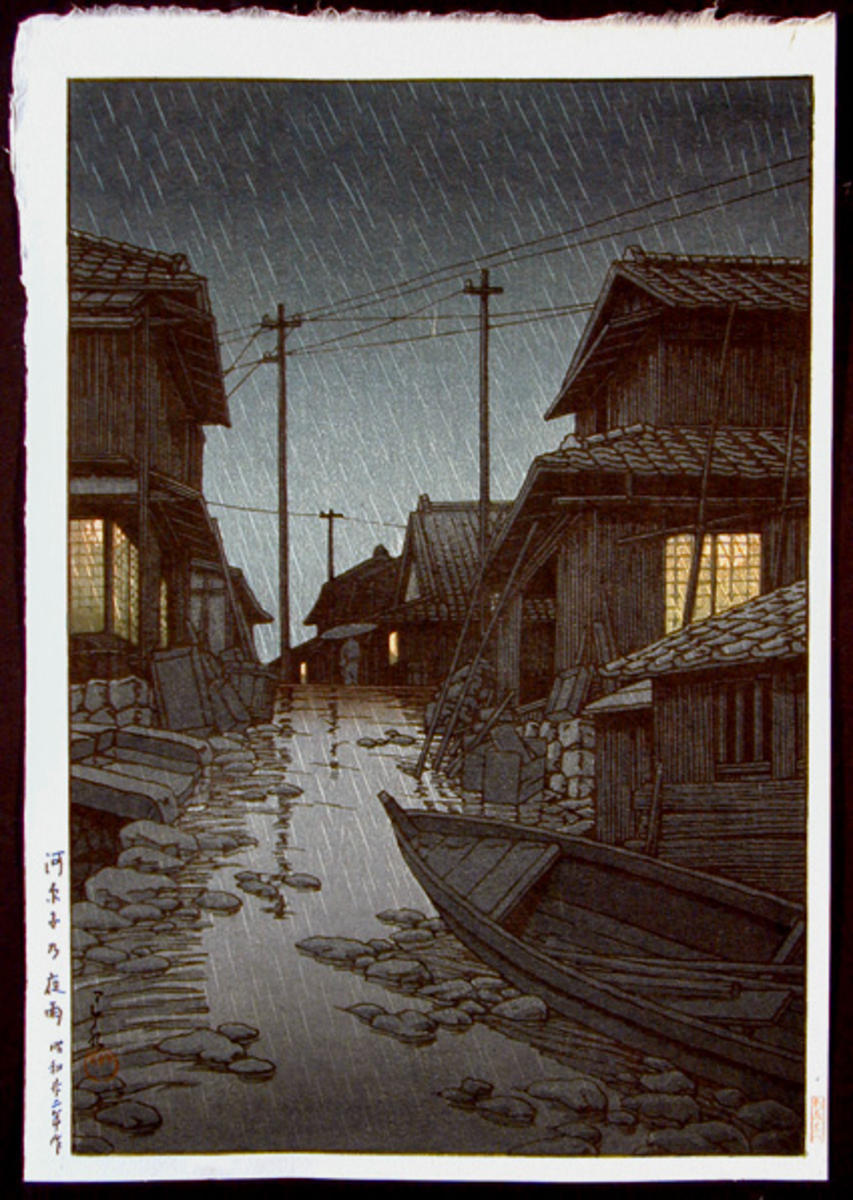
Gosai Canal in Niigata (Niigata Gosaibori), from the series "Souvenirs of Travel, Second Series (Tabi miyage dai nishu)"
Niigata Gosaibori
1921
Color woodblock print; oban

The Hori River at Obama (Obama Horikawa), from the series "Souvenirs of Travel, First Series (Tabi miyage dai isshu)"
Obama Horikawa
1920
Color woodblock print; oban
Featured in Collections
Curated cross-cuts that include this print.
Frequently Asked Questions
Fuji River was created by Kawase Hasui (川瀬巴水) in February 1933.
Fuji River uses Bokashi, on woodblock print, ink and color on paper.
Fuji River was published by Watanabe Shozaburo (February 1933).
Fuji River depicts rivers & lakes and mount fuji, set at Mount Fuji.
Fuji River measures 36 × 51.6 cm (Oban format).