
Moon over Akebi Bridge (Akebibashi no tsuki)
by Kawase Hasui
- Date:
- 1935
- Medium:
- Color woodblock print
- Format:
- Oban
- Publisher:
- Watanabe Shozaburo
- Edition:
- Published by Watanabe Shozaburo
- Source:
- Art Institute of Chicago
Description
Akebi Bridge — a small span in Tokyo or the surrounding area — takes on a luminous quality under a full moon in this 1935 print, the bridge's reflection extending across dark water. The Akebibashi no tsuki composition uses the bridge as a middle-ground element that connects the moonlit sky above to the reflected moon below, the arch of the bridge echoing the arc of the moon's reflection in the water. Bokashi gradations in the sky build around the moon's halo.
More Prints by Kawase Hasui

More Landscapes Prints

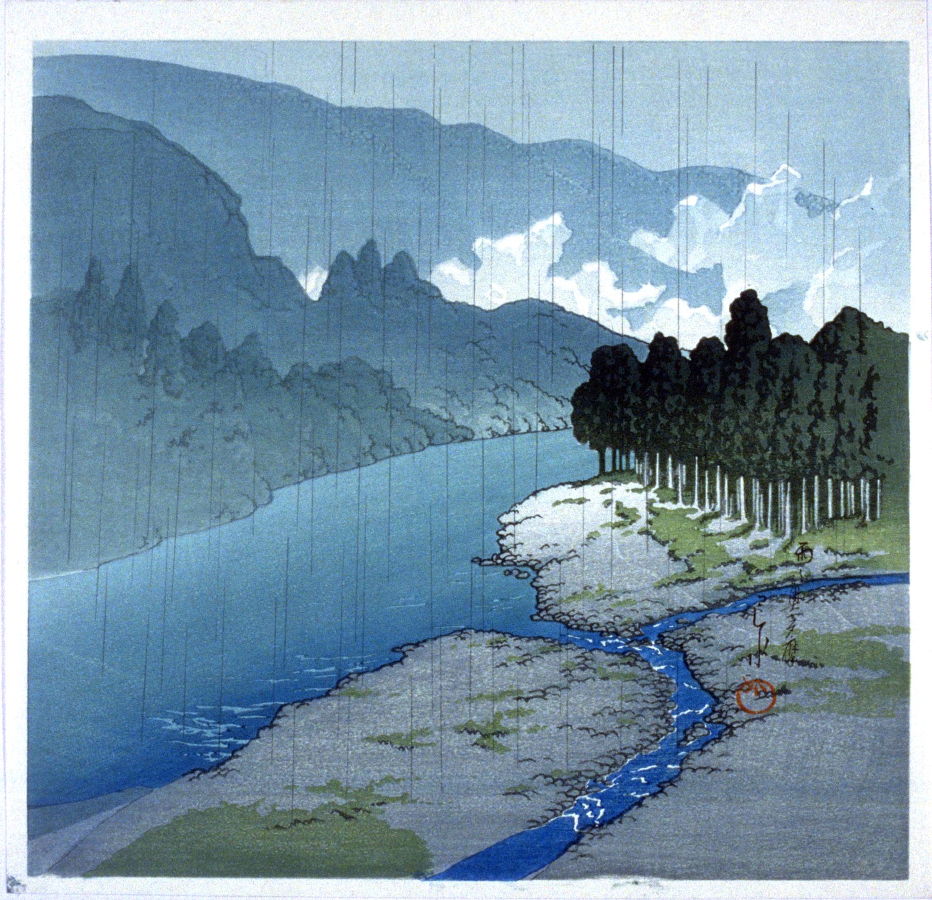
Lake Kugushi in Wakasa Province (Wakasa Kugushiko), from the series Souvenirs of Travel I (Tabi miyage dai isshu)"
Wakasa Kugushiko
1920
Color woodblock print; oban
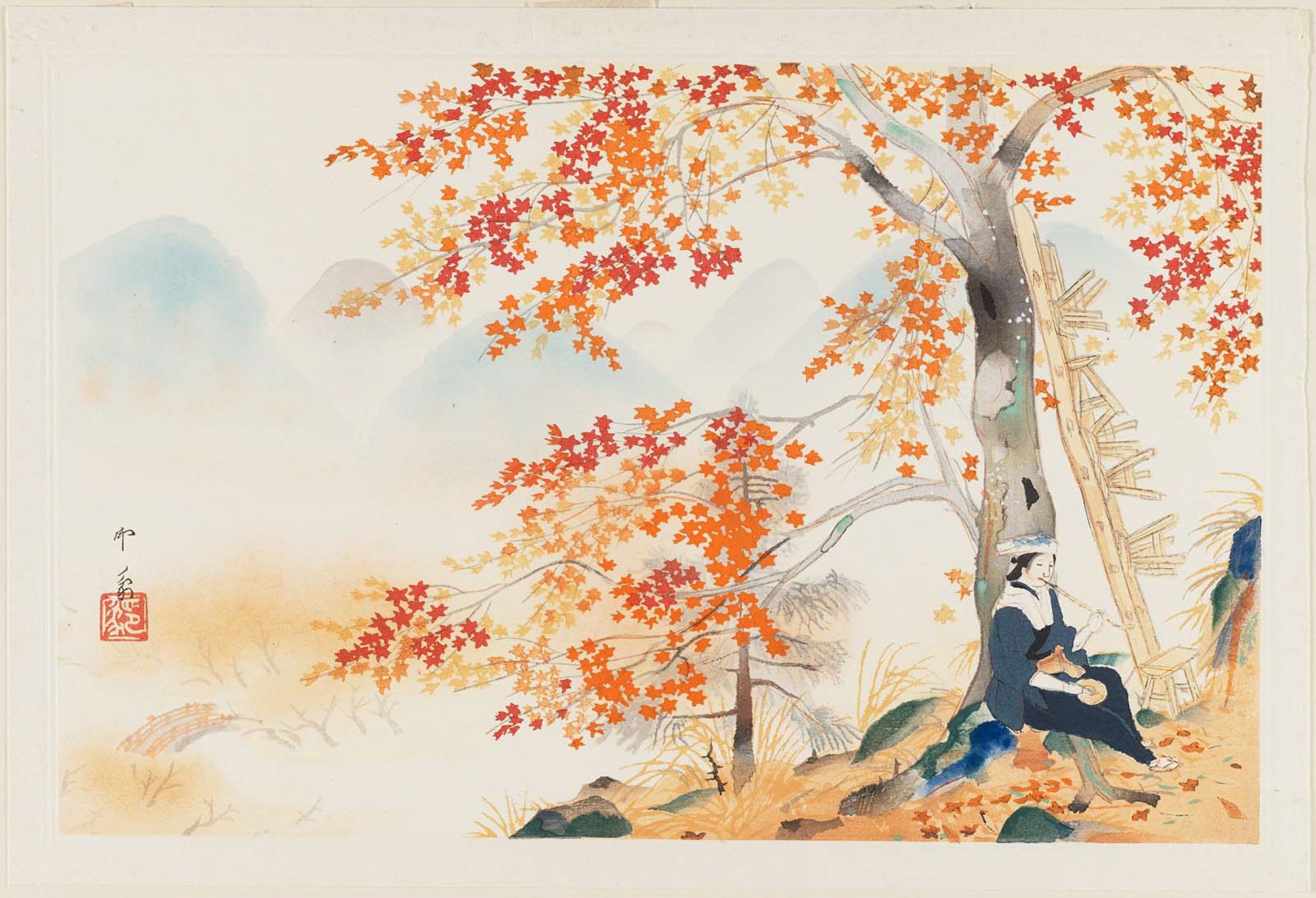
Autumn Maple Leaves at Takao, from the album Eight Views of Kyoto (Kyôto hakkei)
Woodblock print

The Beach at Kaiganji in Sanuki Province (Sanuki Kaiganji no hama), from the series "Collection of Views of Japan II, Kansai Edition (Nihon fukei shu II Kansai hen)"
1934
Color woodblock print; oban

Tea Kettle, section of a sheet from the series "Mirror of Stone Rubbings of Views of the Provinces" (Kohon meihitsu ishizuri kagami)
n.d.
Woodblock print; ishizuri-e, section of harimaze sheet
Featured in Collections
Curated cross-cuts that include this print.
Frequently Asked Questions
Moon over Akebi Bridge (Akebibashi no tsuki) was created by Kawase Hasui (川瀬巴水) in 1935.
Moon over Akebi Bridge (Akebibashi no tsuki) uses Bokashi, on color woodblock print.
Moon over Akebi Bridge (Akebibashi no tsuki) was published by Watanabe Shozaburo (1935).
Moon over Akebi Bridge (Akebibashi no tsuki) depicts landscapes, bridges, and moonlight.