
Senju Waterfall, Akame (Akame Senjudaki)
Akame Senjudaki
by Kawase Hasui
- Date:
- 1951
- Medium:
- Color woodblock print
- Format:
- Oban
- Dimensions:
- 24.6 × 36.5 cm
- Publisher:
- Watanabe Shozaburo
- Edition:
- Published by Watanabe Shozaburo
- Source:
- Art Institute of Chicago
Description
Senju Waterfall at Akame, published in 1951, depicts the Senjudaki — the "thousand-handed Kannon waterfall" — one of the forty-eight waterfalls strung along the Akame gorge in Mie Prefecture. The Akame waterfall system, fed by the Nagashiro River through a narrow volcanic gorge dense with moss and fern, is one of Japan's most celebrated waterfall landscapes, and Senjudaki — the largest and most powerful of the forty-eight — plunges over a wide basalt ledge into a deep green pool. Hasui's 1951 depiction captures the fall's theatrical volume, the white cascade contrasting with the dark rock walls and overhanging forest.
More Prints by Kawase Hasui

More Landscapes Prints

Lake Kugushi in Wakasa Province (Wakasa Kugushiko), from the series Souvenirs of Travel I (Tabi miyage dai isshu)"
Wakasa Kugushiko
1920
Color woodblock print; oban
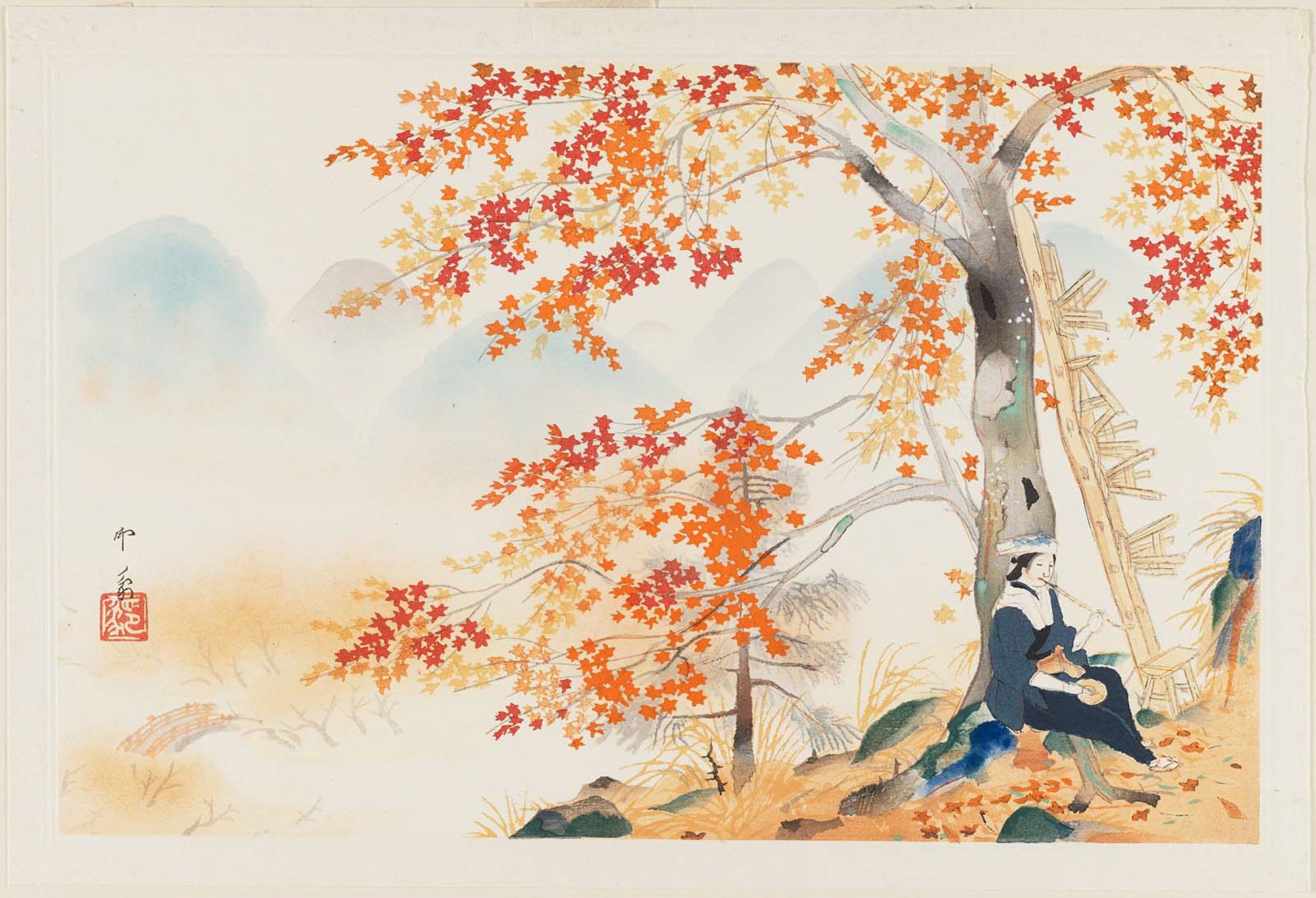
Autumn Maple Leaves at Takao, from the album Eight Views of Kyoto (Kyôto hakkei)
Woodblock print

The Beach at Kaiganji in Sanuki Province (Sanuki Kaiganji no hama), from the series "Collection of Views of Japan II, Kansai Edition (Nihon fukei shu II Kansai hen)"
1934
Color woodblock print; oban

Tea Kettle, section of a sheet from the series "Mirror of Stone Rubbings of Views of the Provinces" (Kohon meihitsu ishizuri kagami)
n.d.
Woodblock print; ishizuri-e, section of harimaze sheet
Featured in Collections
Curated cross-cuts that include this print.
Frequently Asked Questions
Senju Waterfall, Akame (Akame Senjudaki) (Akame Senjudaki) was created by Kawase Hasui (川瀬巴水) in 1951.
Senju Waterfall, Akame (Akame Senjudaki) uses Bokashi, Nishiki-e, and Moku-hanga, on color woodblock print.
Senju Waterfall, Akame (Akame Senjudaki) was published by Watanabe Shozaburo (1951).
Senju Waterfall, Akame (Akame Senjudaki) depicts landscapes, waterfalls, and rivers & lakes.
Senju Waterfall, Akame (Akame Senjudaki) measures 24.6 × 36.5 cm (Oban format).