
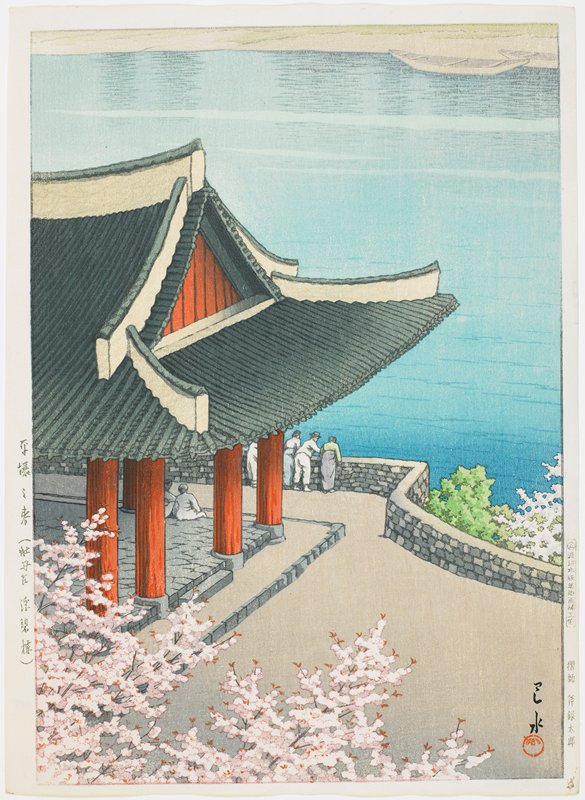
Spring in Daigo, Kyoto (Daigo no haru Kyoto)
by Kawase Hasui
- Date:
- 1950
- Medium:
- Color woodblock print
- Format:
- Oban
- Publisher:
- Watanabe Shozaburo
- Edition:
- Published by Watanabe Shozaburo
- Source:
- Art Institute of Chicago
Description
Daigo in the southeastern hills of Kyoto is known for the Daigoji temple complex and for its cherry blossom avenue leading up the hillside — one of the finest flower-viewing spots in Kansai. This 1950 print captures Daigo in spring, the cherry trees in bloom along the approach to the temple, the hillside above in the tender green of early spring. The spring season at Daigo has an ancient tradition of aristocratic flower-viewing, and Hasui's composition places him in that lineage.
More Prints by Kawase Hasui


More Spring Prints

Featured in Collections
Curated cross-cuts that include this print.
Frequently Asked Questions
Spring in Daigo, Kyoto (Daigo no haru Kyoto) was created by Kawase Hasui (川瀬巴水) in 1950.
Spring in Daigo, Kyoto (Daigo no haru Kyoto) uses Bokashi, on color woodblock print.
Spring in Daigo, Kyoto (Daigo no haru Kyoto) was published by Watanabe Shozaburo (1950).
Spring in Daigo, Kyoto (Daigo no haru Kyoto) depicts spring, set at Kyoto.