
The Kabuki Theater (Kabukiza)
Kabukiza
by Kawase Hasui
- Date:
- May 1926
- Medium:
- Color woodblock print
- Format:
- Oban
- Dimensions:
- 22.6 × 33.3 cm
- Publisher:
- Watanabe Shozaburo
- Edition:
- Published by Watanabe Shozaburo
- Source:
- Art Institute of Chicago
Description
The Kabuki Theater (Kabukiza), published in May 1926, depicts the third incarnation of the Kabukiza theater in Tokyo's Ginza district — the ornate pseudo-Momoyama-style facade rebuilt in 1924-1925 with its distinctive Chinese-influenced gabled rooflines and traditional decorative details, standing just a year old when Hasui depicted it. The Kabukiza as architectural subject rather than theatrical subject is characteristic of Hasui's approach: the building itself, with its decorated facades and prominent position on Ginza's Harumi-dori, is treated as a landmark rather than a performance venue. The May date suggests the theater's lively late-spring program season.
More Prints by Kawase Hasui

More Kabuki Prints
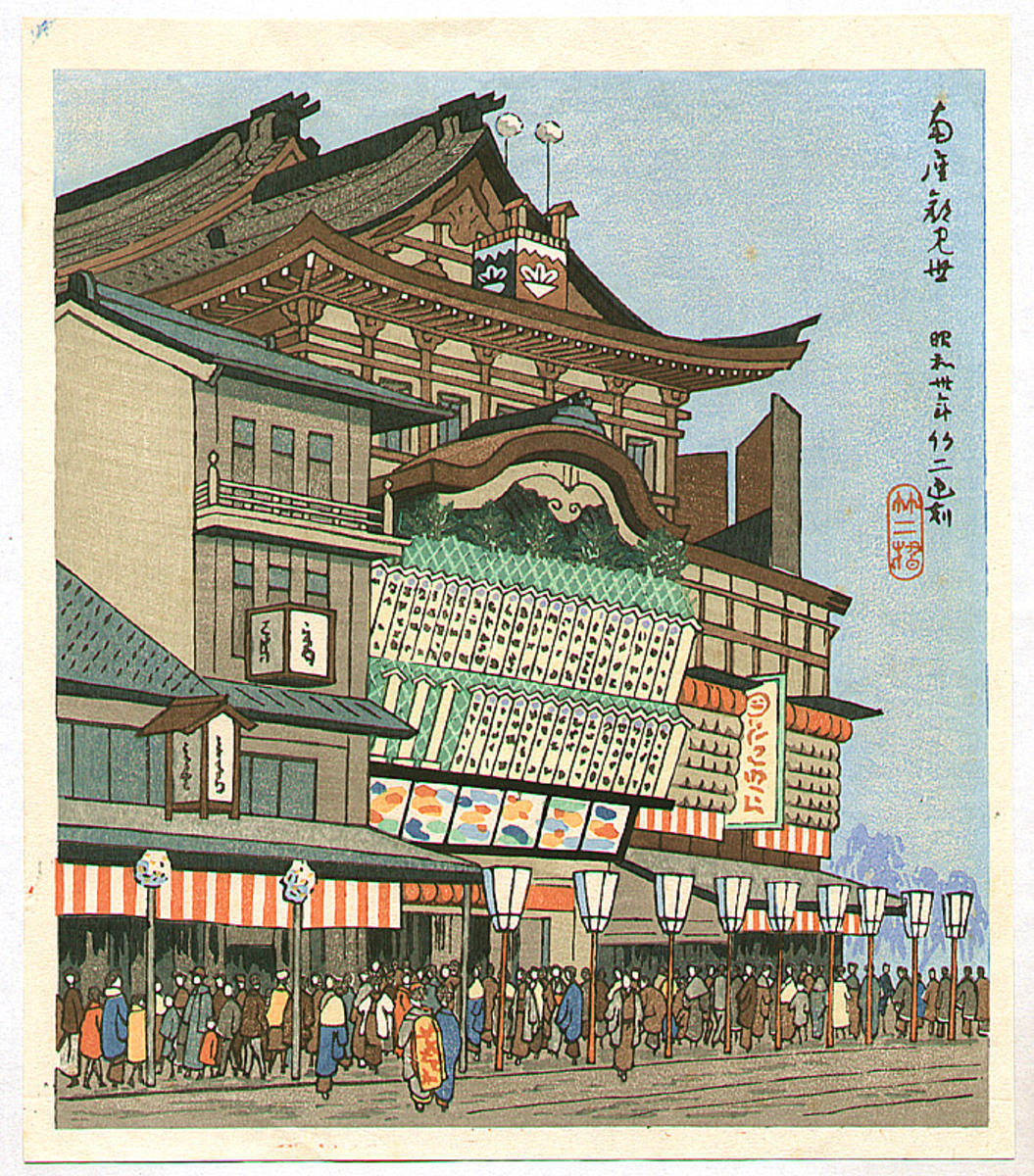
Kabuki Theater
歌舞伎
Woodblock print
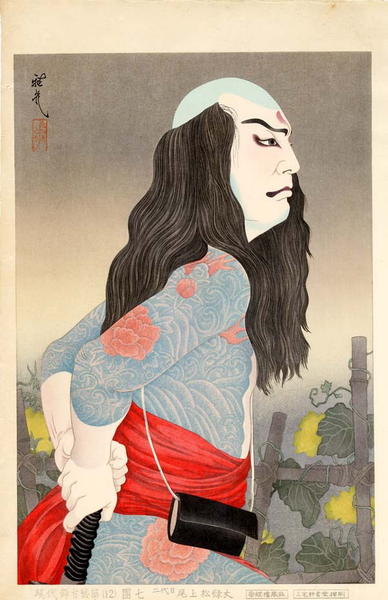
Onoe Shoroku II as the tattooed villain Danshichi
1955
Woodblock print

View of Kabuki Theater from Matsuya (Ginza Matsuya yori Kabukiza), no. 3 from the series "Pictures of Ginza, First Series (Gashu Ginza dai isshu)"
1928
Color lithograph

Distant View of Mitsukoshi Movie Theater in Shinjuku from the Sixth Floor of Hoteiya (Hoteiya rokkai kara Shinjuku Mitsukoshi Musashi no kan enbo zu), no. 1 from the series "Scenery of Shinjuku (Gashu Shinjuku fukei)"
1930
Color lithograph
Featured in Collections
Curated cross-cuts that include this print.
Frequently Asked Questions
The Kabuki Theater (Kabukiza) (Kabukiza) was created by Kawase Hasui (川瀬巴水) in May 1926.
The Kabuki Theater (Kabukiza) uses Bokashi, Nishiki-e, and Moku-hanga, on color woodblock print.
The Kabuki Theater (Kabukiza) was published by Watanabe Shozaburo (May 1926).
The Kabuki Theater (Kabukiza) depicts kabuki.
The Kabuki Theater (Kabukiza) measures 22.6 × 33.3 cm (Oban format).