
Zojoji Temple in Shiba (Shiba Zojoji), from the series "Twenty Views of Tokyo (Tokyo nijukkei)"
Shiba Zojoji
by Kawase Hasui
- Series:
- Twenty Views of Tokyo (print 1 of 20)
- Date:
- 1925
- Medium:
- Color woodblock print
- Format:
- Oban
- Dimensions:
- 23.9 × 36.2 cm
- Publisher:
- Watanabe Shozaburo
- Edition:
- Published by Watanabe Shozaburo
- Source:
- Art Institute of Chicago
Description
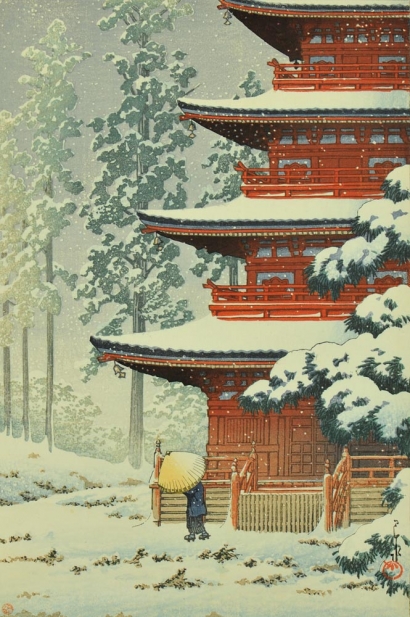
A snow-covered pine tree drapes heavy, snow-laden boughs across the upper portion of the composition, framing a large red temple building with a white snow-capped roof and railed upper balcony in the background. Snow falls in scattered white flecks against the dark blue-grey sky, and a single figure in a blue kimono and wide conical straw hat walks through the snow-covered courtyard in the foreground. The palette is dominated by deep red, white, and blue-grey tones, evoking a quiet, muffled winter scene at Zojoji Temple in Shiba, by Kawase Hasui, 1925, color woodblock print.
More Prints by Kawase Hasui

More Landscapes Prints

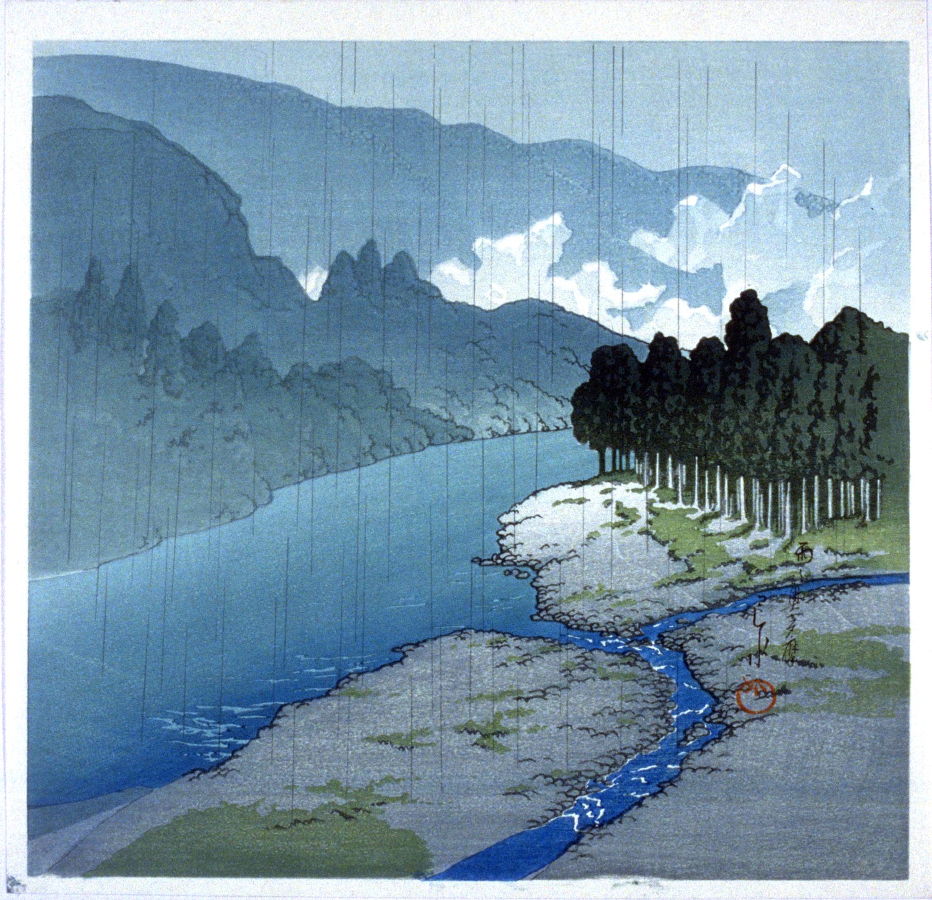
Lake Kugushi in Wakasa Province (Wakasa Kugushiko), from the series Souvenirs of Travel I (Tabi miyage dai isshu)"
Wakasa Kugushiko
1920
Color woodblock print; oban
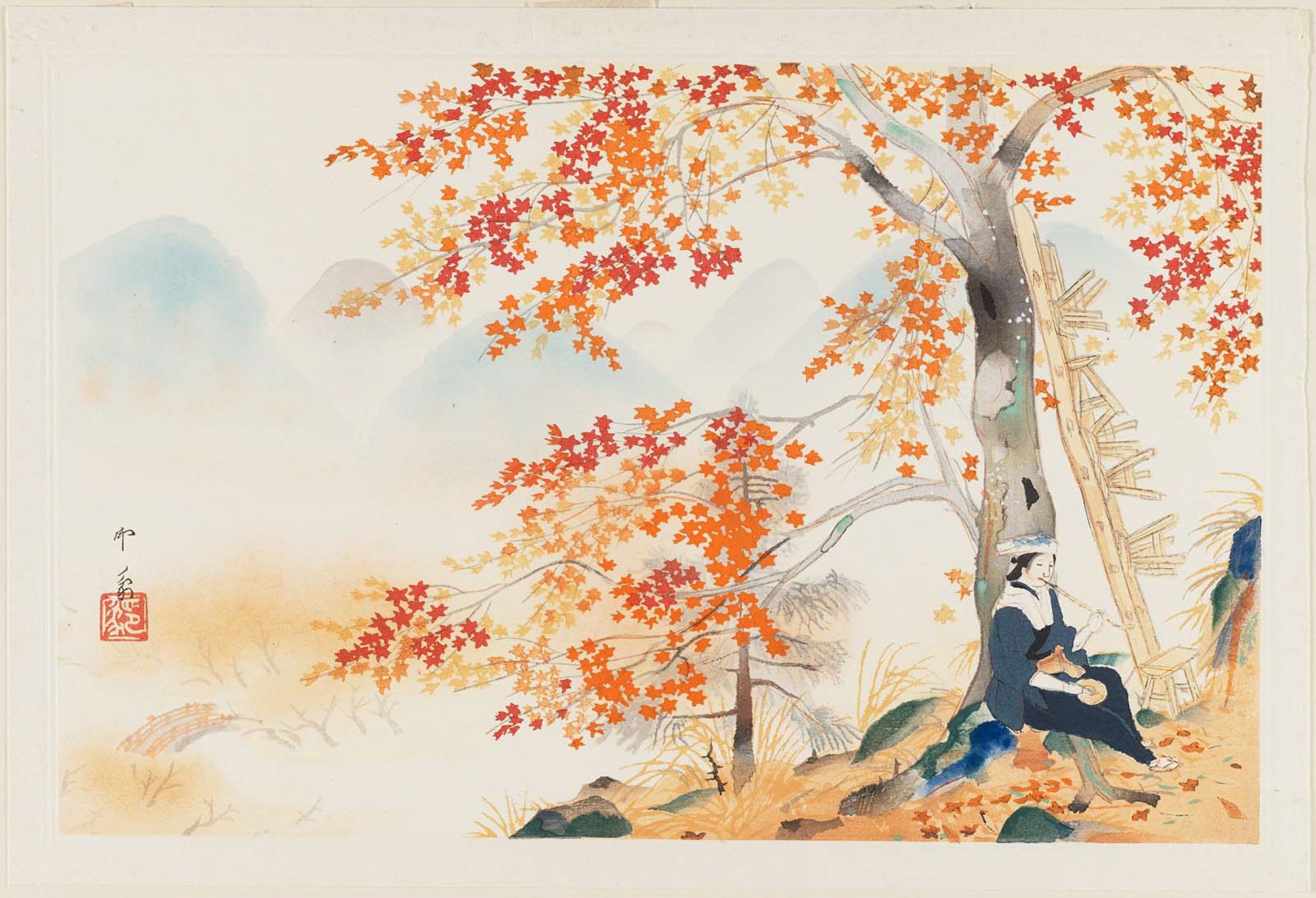
Autumn Maple Leaves at Takao, from the album Eight Views of Kyoto (Kyôto hakkei)
Woodblock print

The Beach at Kaiganji in Sanuki Province (Sanuki Kaiganji no hama), from the series "Collection of Views of Japan II, Kansai Edition (Nihon fukei shu II Kansai hen)"
1934
Color woodblock print; oban

Tea Kettle, section of a sheet from the series "Mirror of Stone Rubbings of Views of the Provinces" (Kohon meihitsu ishizuri kagami)
n.d.
Woodblock print; ishizuri-e, section of harimaze sheet
Featured in Collections
Curated cross-cuts that include this print.
Frequently Asked Questions
Zojoji Temple in Shiba (Shiba Zojoji), from the series "Twenty Views of Tokyo (Tokyo nijukkei)" (Shiba Zojoji) was created by Kawase Hasui (川瀬巴水) in 1925.
Yes — Zojoji Temple in Shiba (Shiba Zojoji), from the series "Twenty Views of Tokyo (Tokyo nijukkei)" is part of the Twenty Views of Tokyo series (print 1 of 20) by Kawase Hasui.
Zojoji Temple in Shiba (Shiba Zojoji), from the series "Twenty Views of Tokyo (Tokyo nijukkei)" uses Bokashi, Nishiki-e, and Moku-hanga, on color woodblock print.
Zojoji Temple in Shiba (Shiba Zojoji), from the series "Twenty Views of Tokyo (Tokyo nijukkei)" was published by Watanabe Shozaburo (1925).
Zojoji Temple in Shiba (Shiba Zojoji), from the series "Twenty Views of Tokyo (Tokyo nijukkei)" depicts landscapes, edo & tokyo, and temples & shrines, set at Tokyo, Zojoji Temple, Shiba.
Zojoji Temple in Shiba (Shiba Zojoji), from the series "Twenty Views of Tokyo (Tokyo nijukkei)" measures 23.9 × 36.2 cm (Oban format).