
Nagisa beach
by Maeda Masao
- Medium:
- Mokuhanga (Japanese woodblock)
- Image courtesy of
- Saru Gallery
Description
Nagisa simply means shore or strand in Japanese, and a print so titled likely depicts a stretch of coastline rather than a named beach. Tagged as a seascape, the composition probably divides the sheet into bands — wet sand in the foreground, breaking surf, a band of darker offshore water, and a low horizon under sky. This kind of seascape gives the printer room for extensive bokashi work: graduated tones in sky and water are achieved by wiping pigment on the block before each impression, and the success of the print depends on the consistency of that hand-wiped gradation across the edition. Maeda's seascapes tend to be relatively spare, with the woodgrain of the cherry block reading through thin printings of blue or grey to suggest the texture of moving water. The subject sits inside the meisho-e tradition only loosely — without a place name it becomes a more universal scene — and reflects the sosaku-hanga willingness to design prints around mood rather than a recognized famous view.
More Prints by Maeda Masao
More Seascapes Prints
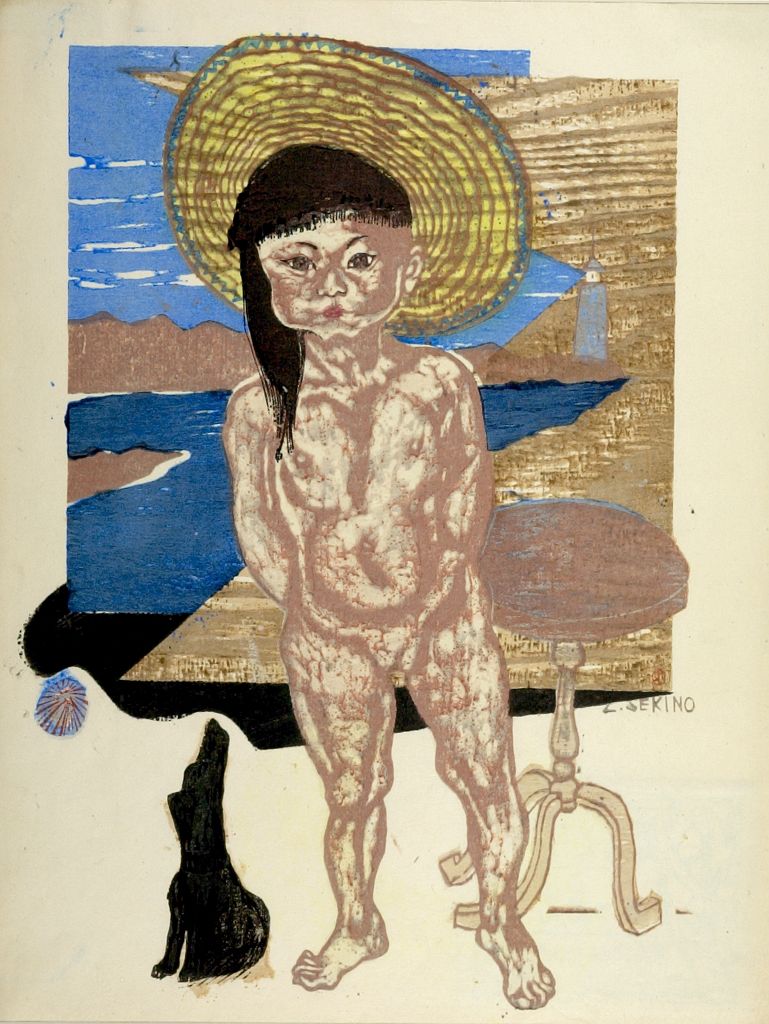
Child of the Sea
1940
Woodblock print

The Beach at Kaiganji in Sanuki Province (Sanuki Kaiganji no hama), from the series "Collection of Views of Japan II, Kansai Edition (Nihon fukei shu II Kansai hen)"
1934
Color woodblock print; oban

Pacific Ocean, Awa Province (Boshu Taikai), from the series "Souvenirs of Travel, Third Series (Tabi miyage dai sanshu)"
Boshu Taikai
1925
Color woodblock print; oban

Pine Beach at Miho (Miho no Matsubara), from the series "Selection of Views of the Tokaido (Tokaido fukei senshu)"
September 1931
Color woodblock print; oban
Featured in Collections
Curated cross-cuts that include this print.
Frequently Asked Questions
Nagisa beach was created by Maeda Masao (前田政雄).
Nagisa beach depicts seascapes.