
This second view of Nakajima-kōen suggests Maeda returned to the Sapporo park more than once, treating it as a recurring subject in the manner of older [meisho-e](/glossary/meisho-e) series that depicted a single location across multiple seasons or vantages. Where the first print might have favored the pond, this variant could shift the angle — toward the willows, the Hassō-an tea house glimpsed through trees, or the snow-covered grounds in a winter view, given Sapporo's heavy seasonal contrast. The repetition fits Maeda's wider habit of working close to home: Hokkaido scenery recurs throughout his catalogue, and Sapporo specifically anchors many of his urban-park and street subjects. Technically, a second take on the same site allowed him to experiment — different palettes, different ratios of solid color to woodgrain texture, perhaps a sparer keyblock or a more saturated overprint of [bokashi](/glossary/bokashi) in the foliage. As a [sosaku-hanga](/glossary/sosaku-hanga) designer-printer, he had the freedom to issue these variant impressions as he saw fit, untethered from a publisher's demand for a single definitive view.
![[Garden of] Taj Mahal, No. 1 (Taji Maharu no niwa, dai ichi) by Hiroshi Yoshida](https://www.artic.edu/iiif/2/230993a7-d4f0-c979-c267-127d48e1ef1c/full/843,/0/default.jpg)
Taji Maharu no niwa, dai ichi
1931
Color woodblock print; oban

January 1938
Woodblock print, ink and color on paper

1938
Color woodblock print; oban
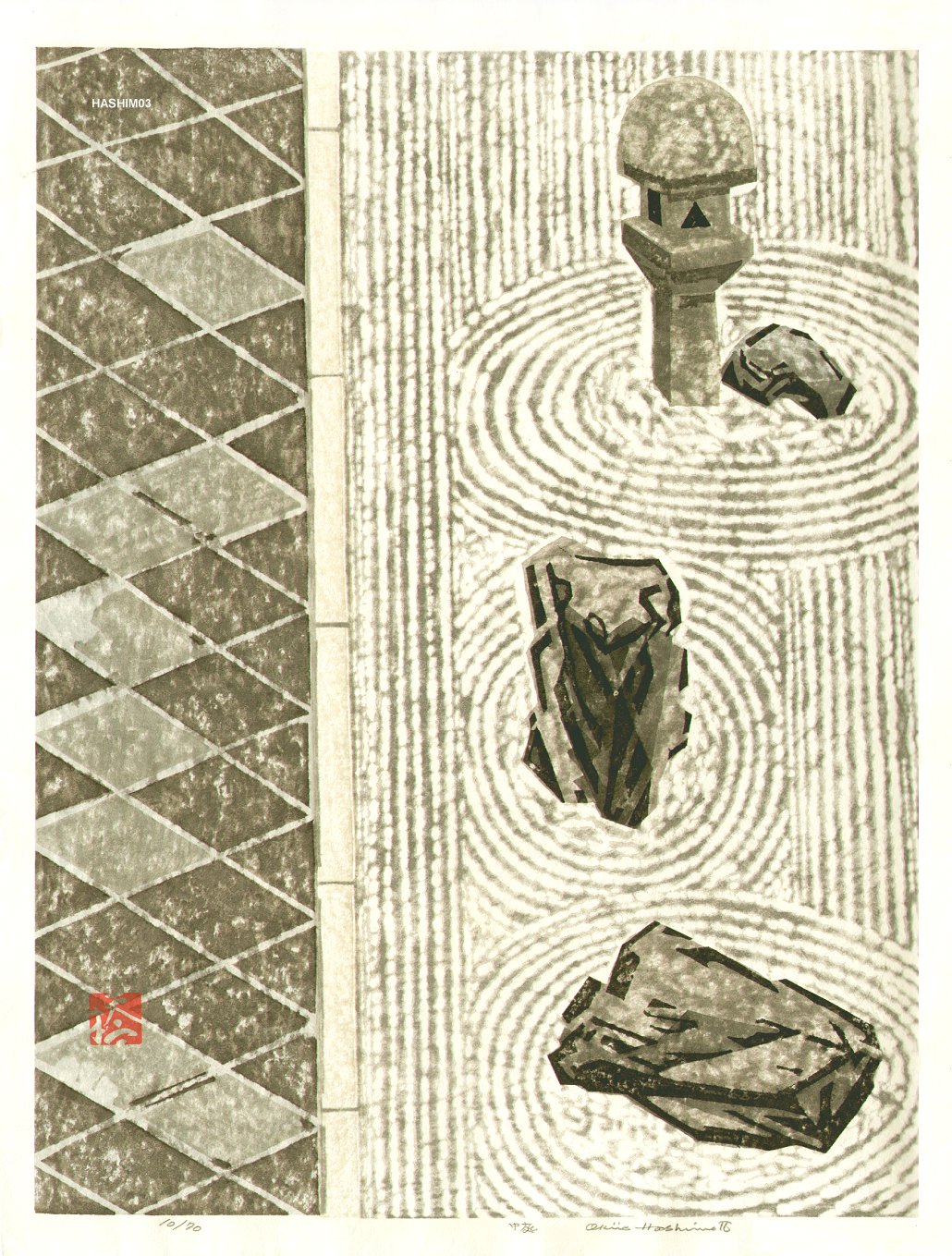
10/70, 1966
Woodblock print
Curated cross-cuts that include this print.
Nakajima park was created by Maeda Masao (前田政雄).
Nakajima park depicts gardens.


