
Shinjuku Park
by Maeda Masao
- Medium:
- Mokuhanga (Japanese woodblock)
- Image courtesy of
- Saru Gallery
Description
Shinjuku Park almost certainly depicts Shinjuku Gyoen, the former imperial garden in central Tokyo whose grounds combine French formal, English landscape, and Japanese garden traditions across more than fifty hectares. Maeda's print likely frames a Japanese-garden corner of the park, with a pond, a curving path, and the dark masses of pruned pines or maples set against a cleared lawn. As a sosaku-hanga printmaker, Maeda would have carved and printed the blocks himself, allowing him to introduce passages of bokashi where water meets shore and where seasonal foliage shifts in tone. The subject places the print within a long tradition of urban garden views that reaches back to the meisho-e of Edo, but Maeda's compositional flattening and reduced color register align it with mid-century print practice. Within his broader catalogue, Shinjuku Park sits among the Kyoto temple gardens and the Hokkaido landscapes as evidence of his appetite for designed and natural space alike.
More Prints by Maeda Masao
More Gardens Prints
![[Garden of] Taj Mahal, No. 1 (Taji Maharu no niwa, dai ichi) by Hiroshi Yoshida](https://www.artic.edu/iiif/2/230993a7-d4f0-c979-c267-127d48e1ef1c/full/843,/0/default.jpg)
[Garden of] Taj Mahal, No. 1 (Taji Maharu no niwa, dai ichi)
Taji Maharu no niwa, dai ichi
1931
Color woodblock print; oban

Kiyozumi Garden in Moonlight
January 1938
Woodblock print, ink and color on paper

Moon over Kiyosumi Garden (Tsuki no Kiyosumien)
1938
Color woodblock print; oban
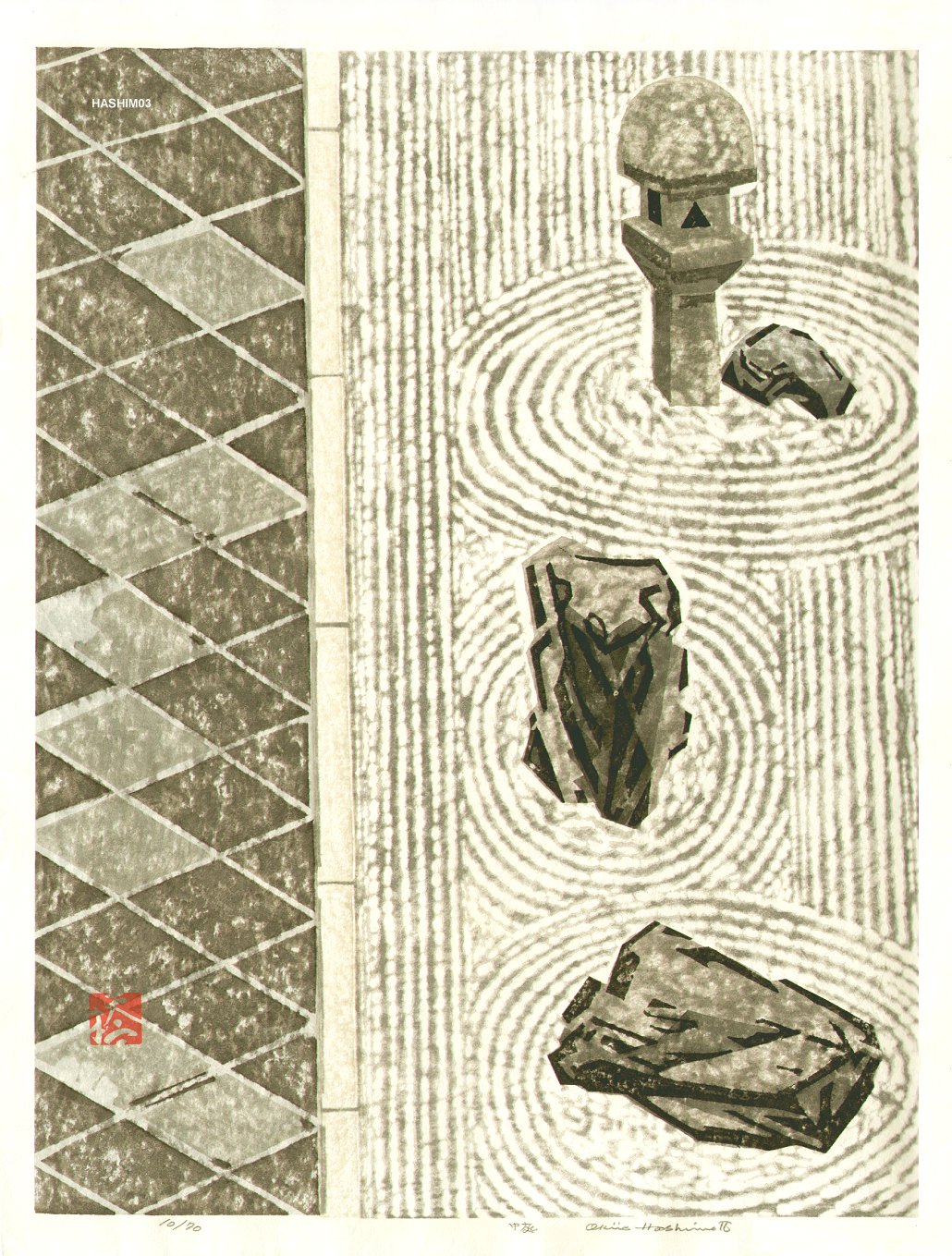
Rock garden
10/70, 1966
Woodblock print
Featured in Collections
Curated cross-cuts that include this print.
Frequently Asked Questions
Shinjuku Park was created by Maeda Masao (前田政雄).
Shinjuku Park depicts gardens.