
Stone Garden
by Maeda Masao
- Medium:
- Mokuhanga (Japanese woodblock)
- Image courtesy of
- Saru Gallery
Description
Stone Garden depicts a karesansui dry-landscape garden, the Zen gardening tradition in which raked gravel and carefully placed rocks substitute for water and islands. Maeda's treatment likely flattens the scene into broad planes of tone, using the grain of the woodblock to suggest the parallel furrows of raked gravel and reserving denser ink for the upright stones that anchor the composition. As a sosaku-hanga artist who carved and printed his own blocks, Maeda would have controlled the bokashi gradations across the gravel field directly, brushing the pigment onto the block to grade light against shadow. The subject sits within a broader mid-century interest in Zen architecture and gardens that drew both Japanese and Western printmakers to Kyoto's temple precincts. Within Maeda's output, garden views form a counterpoint to his Hokkaido landscapes: where the northern scenes rely on natural irregularity, the garden subjects impose human geometry, giving him a chance to reduce composition to its constituent shapes — circle, line, rectangle — in a manner consonant with the sosaku-hanga emphasis on personal abstraction.
More Prints by Maeda Masao
More Gardens Prints
![[Garden of] Taj Mahal, No. 1 (Taji Maharu no niwa, dai ichi) by Hiroshi Yoshida](https://www.artic.edu/iiif/2/230993a7-d4f0-c979-c267-127d48e1ef1c/full/843,/0/default.jpg)
[Garden of] Taj Mahal, No. 1 (Taji Maharu no niwa, dai ichi)
Taji Maharu no niwa, dai ichi
1931
Color woodblock print; oban

Kiyozumi Garden in Moonlight
January 1938
Woodblock print, ink and color on paper

Moon over Kiyosumi Garden (Tsuki no Kiyosumien)
1938
Color woodblock print; oban
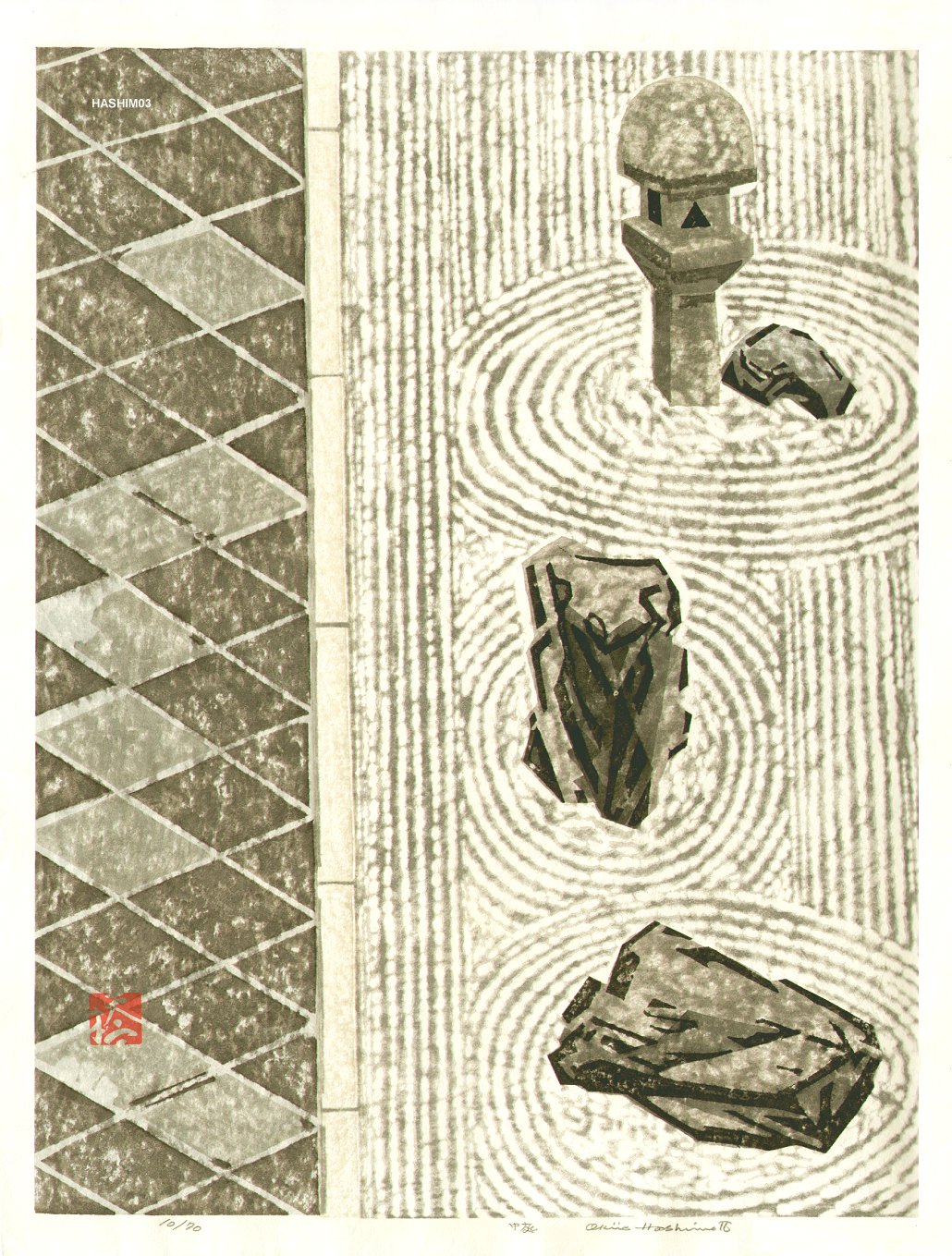
Rock garden
10/70, 1966
Woodblock print
Featured in Collections
Curated cross-cuts that include this print.
Frequently Asked Questions
Stone Garden was created by Maeda Masao (前田政雄).
Stone Garden depicts gardens.