
Geisha
- Medium:
- Mokuhanga (Japanese woodblock)
- Image courtesy of
- Saru Gallery
Description
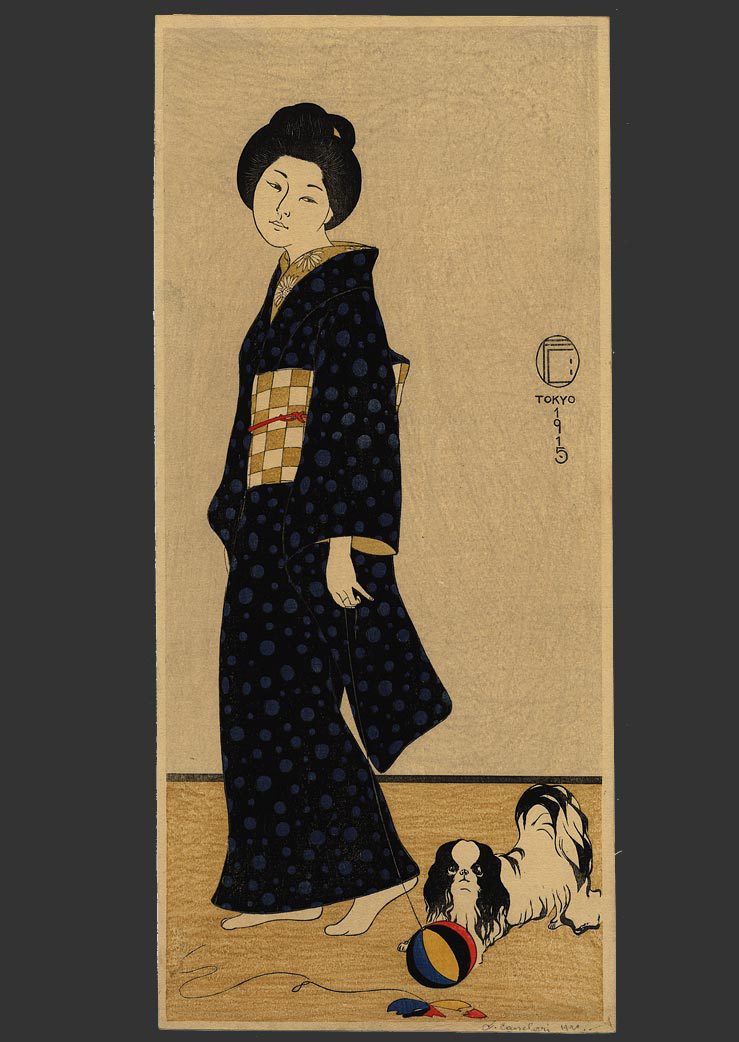
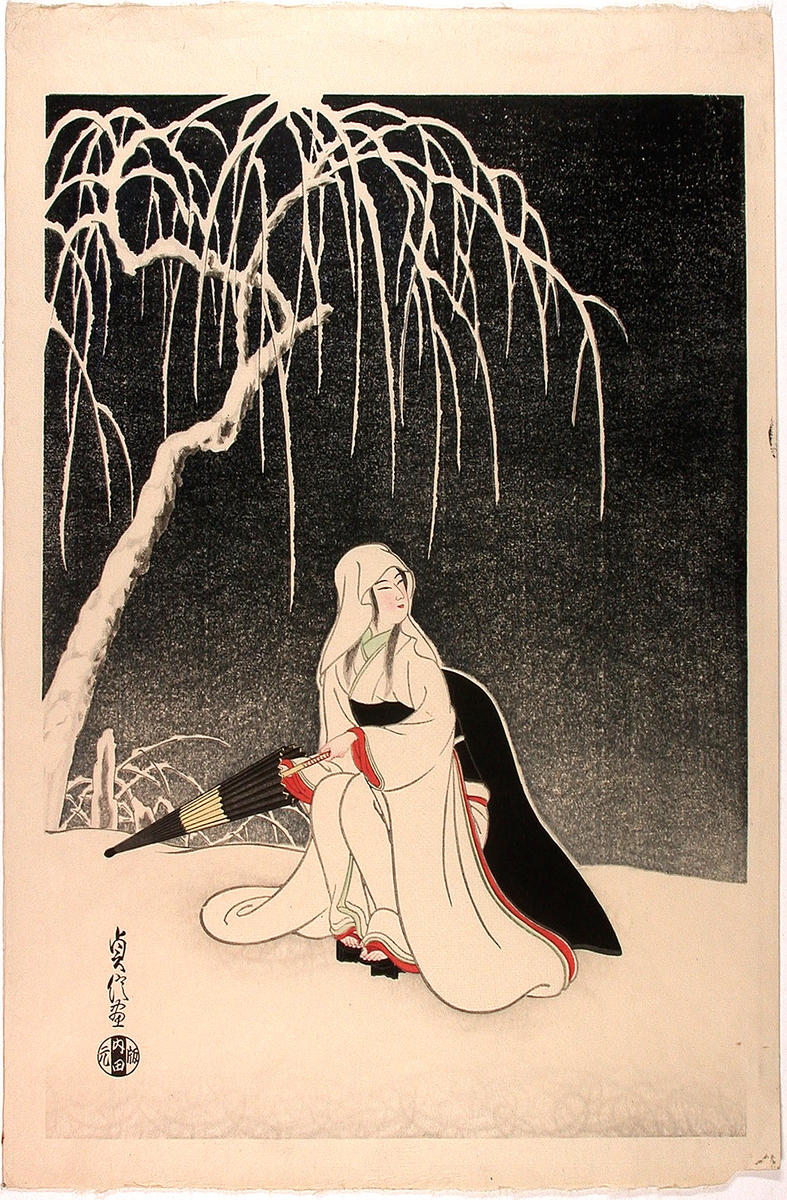
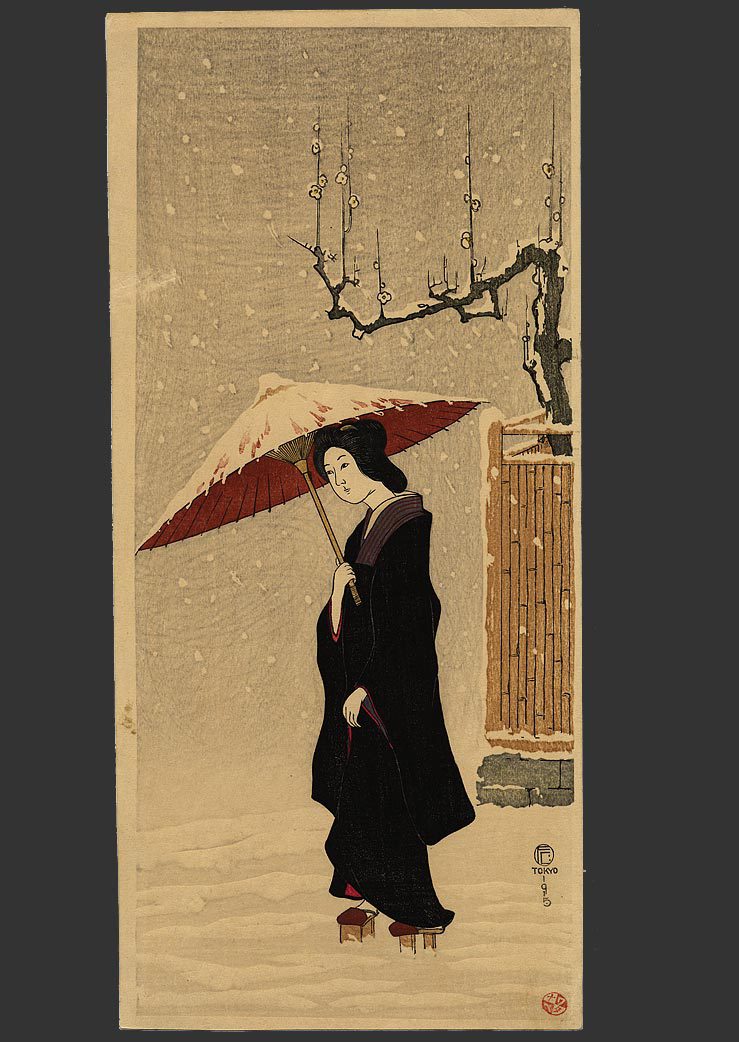
A bijin-ga subject treated in Saito's mid-century idiom. Where Utamaro and other Edo-period masters relied on intricate kimono patterning and refined facial detail, Saito reduced the figure to flat planes defined by silhouette: the rounded shape of the elaborate hairstyle, the sweeping triangle of the kimono, and the narrow vertical of the obi. Facial features are typically minimized or omitted entirely, the figure's identity carried by posture and costume alone. The natural wood grain of the printing block remains visible across the larger color areas, giving the print a tactile presence that distinguishes Saito's sosaku-hanga from the polished surfaces of commercial ukiyo-e production. Such bijin-ga subjects sit alongside his temple studies, Aizu winter landscapes, and animal prints in a body of work united by formal economy rather than thematic consistency. The treatment translates a centuries-old genre into the planar vocabulary that defined Japanese printmaking after the war.
More Prints by Saito Kiyoshi
More Bijin-ga Prints

Featured in Collections
Curated cross-cuts that include this print.
Frequently Asked Questions
Geisha was created by Saito Kiyoshi (斎藤清).
Geisha depicts bijin-ga.