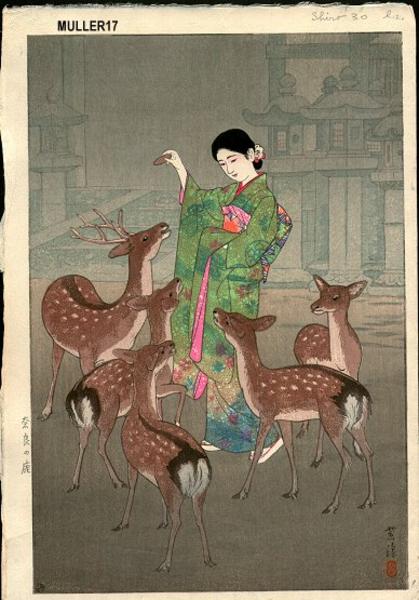
Garden in Nara
- Medium:
- Woodblock print
- Format:
- Oban
- Publisher:
- Watanabe Shozaburo
- Edition:
- Published by Watanabe Shozaburo
- Source:
- Japanese Art Open Database
Description
A traditional Nara garden unfolds in the ordered calm typical of the old capital's temple and shrine precincts, where raked gravel, aged stones, and carefully shaped pines create an atmosphere of deliberate remove from worldly distraction. Nara's gardens differ from Kyoto's in their greater austerity, shaped by the monastic traditions of Todaiji and Kasuga rather than by aristocratic or tea-culture aesthetics. Kasamatsu renders the garden as a space of composed silence, his eye drawn to the shapes that centuries of cultivation have produced.
More Prints by Shiro Kasamatsu
More Gardens Prints
![[Garden of] Taj Mahal, No. 1 (Taji Maharu no niwa, dai ichi) by Hiroshi Yoshida](https://www.artic.edu/iiif/2/230993a7-d4f0-c979-c267-127d48e1ef1c/full/843,/0/default.jpg)
[Garden of] Taj Mahal, No. 1 (Taji Maharu no niwa, dai ichi)
Taji Maharu no niwa, dai ichi
1931
Color woodblock print; oban

Kiyozumi Garden in Moonlight
January 1938
Woodblock print, ink and color on paper

Moon over Kiyosumi Garden (Tsuki no Kiyosumien)
1938
Color woodblock print; oban
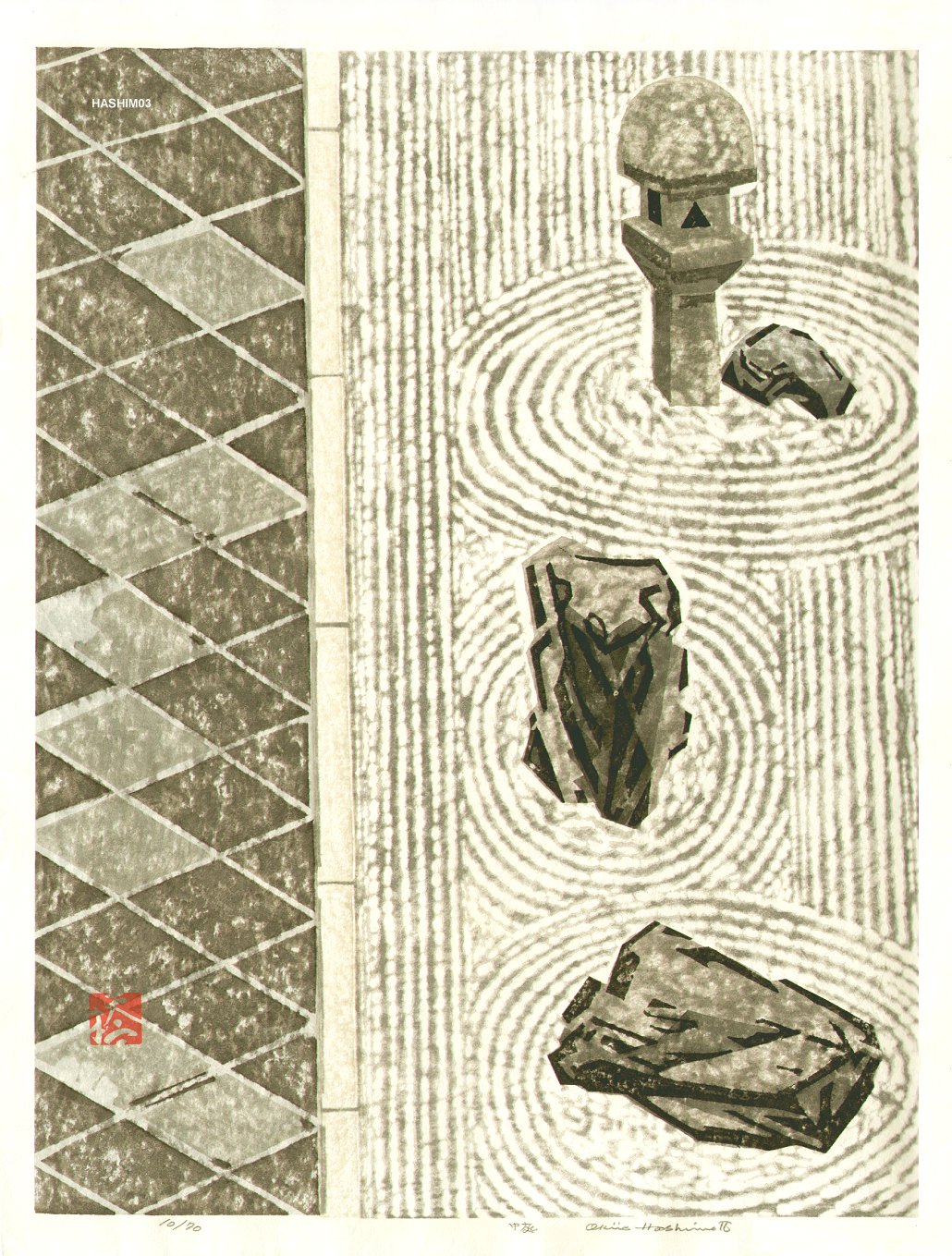
Rock garden
10/70, 1966
Woodblock print
Featured in Collections
Curated cross-cuts that include this print.
Frequently Asked Questions
Garden in Nara was created by Shiro Kasamatsu (笠松紫浪).
Garden in Nara was published by Watanabe Shozaburo.
Garden in Nara depicts gardens, set at Nara.