
Itako, the lakeside village
- Medium:
- Mokuhanga (Japanese woodblock)
- Image courtesy of
- Saru Gallery
Description
A young woman in a blue-and-white floral kimono with a red obi stands in a flat-bottomed wooden boat, poling it through rippling blue-green water with a long bamboo pole; a woven basket is slung over her back and she wears a striped bandana. Reeds and dense green foliage line the water's edge behind her, with a wooden post or gate frame visible at upper left. This is "Itako, the lakeside village" by Shiro Kasamatsu, a mokuhanga (Japanese woodblock print).
More Prints by Shiro Kasamatsu

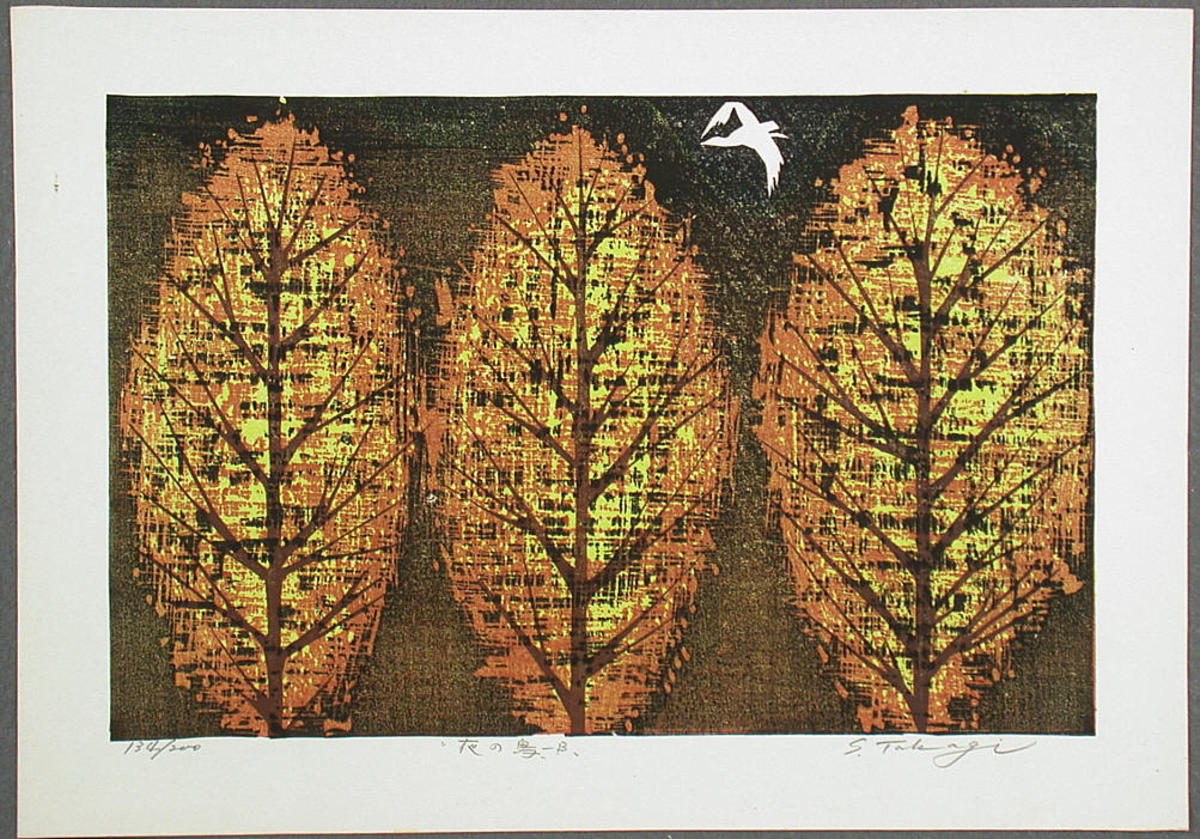
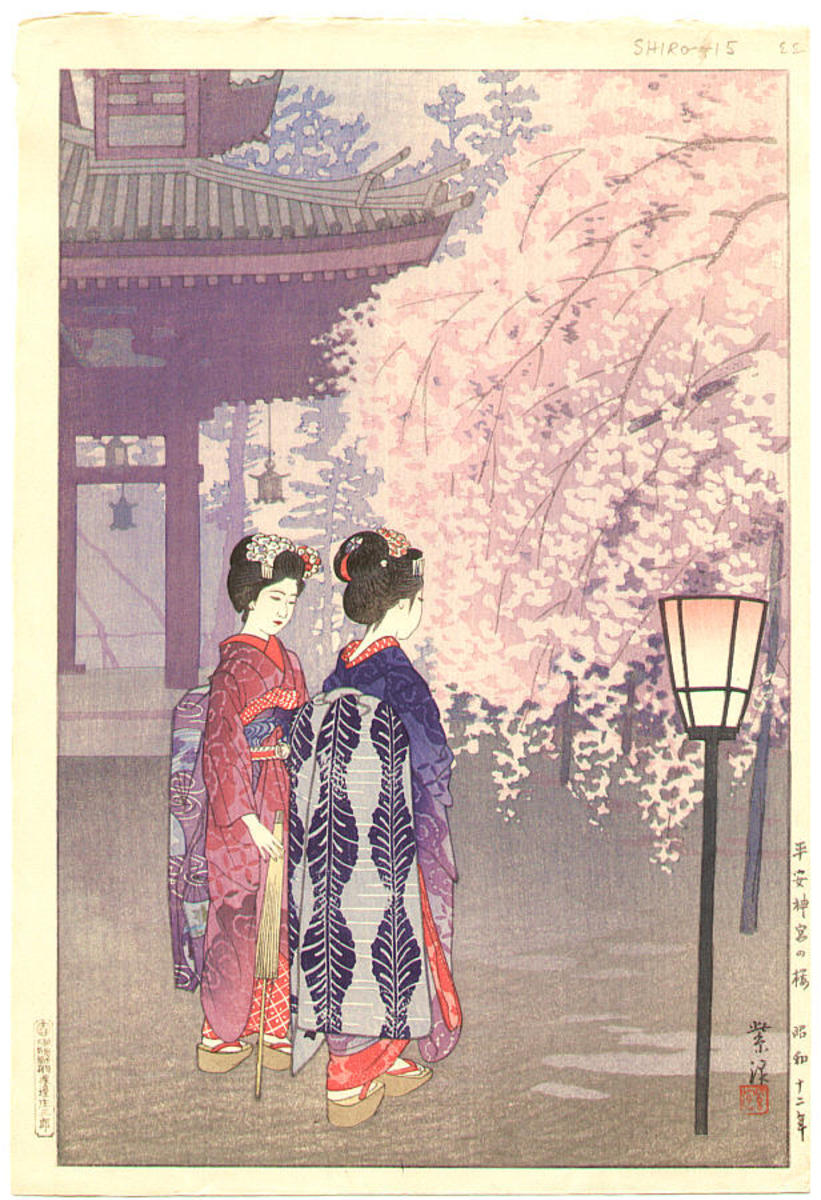
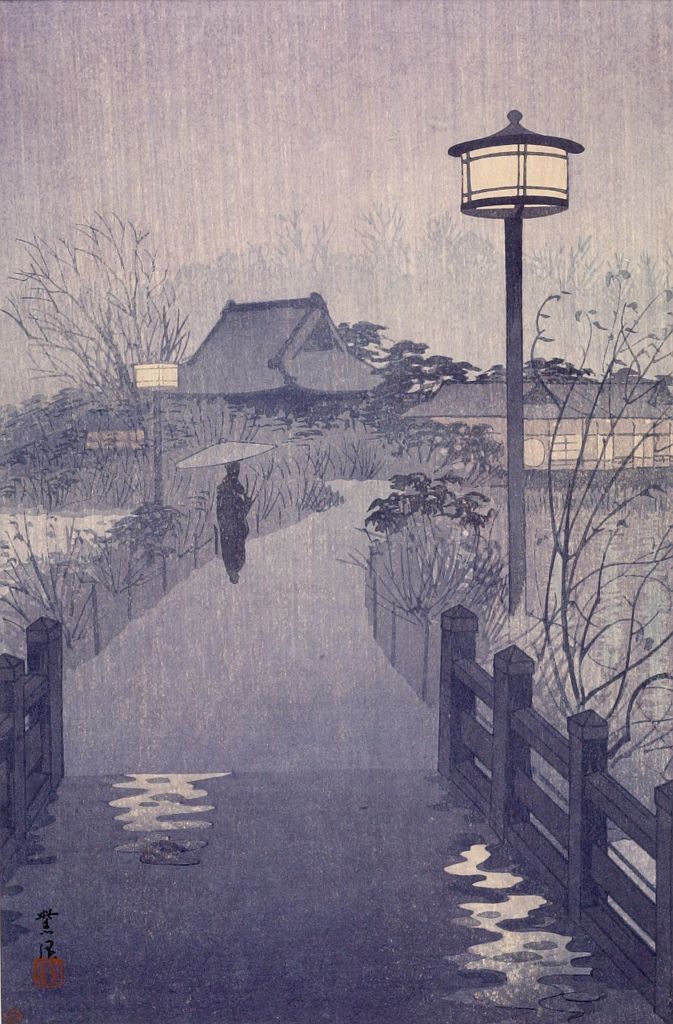
More Village Scenes Prints

A Farmhouse in Autumn, Ayashi, Miyagi Prefecture (Noka no aki (Miyagi ken Ayashi)
Noka no aki (Miyagi ken Ayashi
1946
Color woodblock print
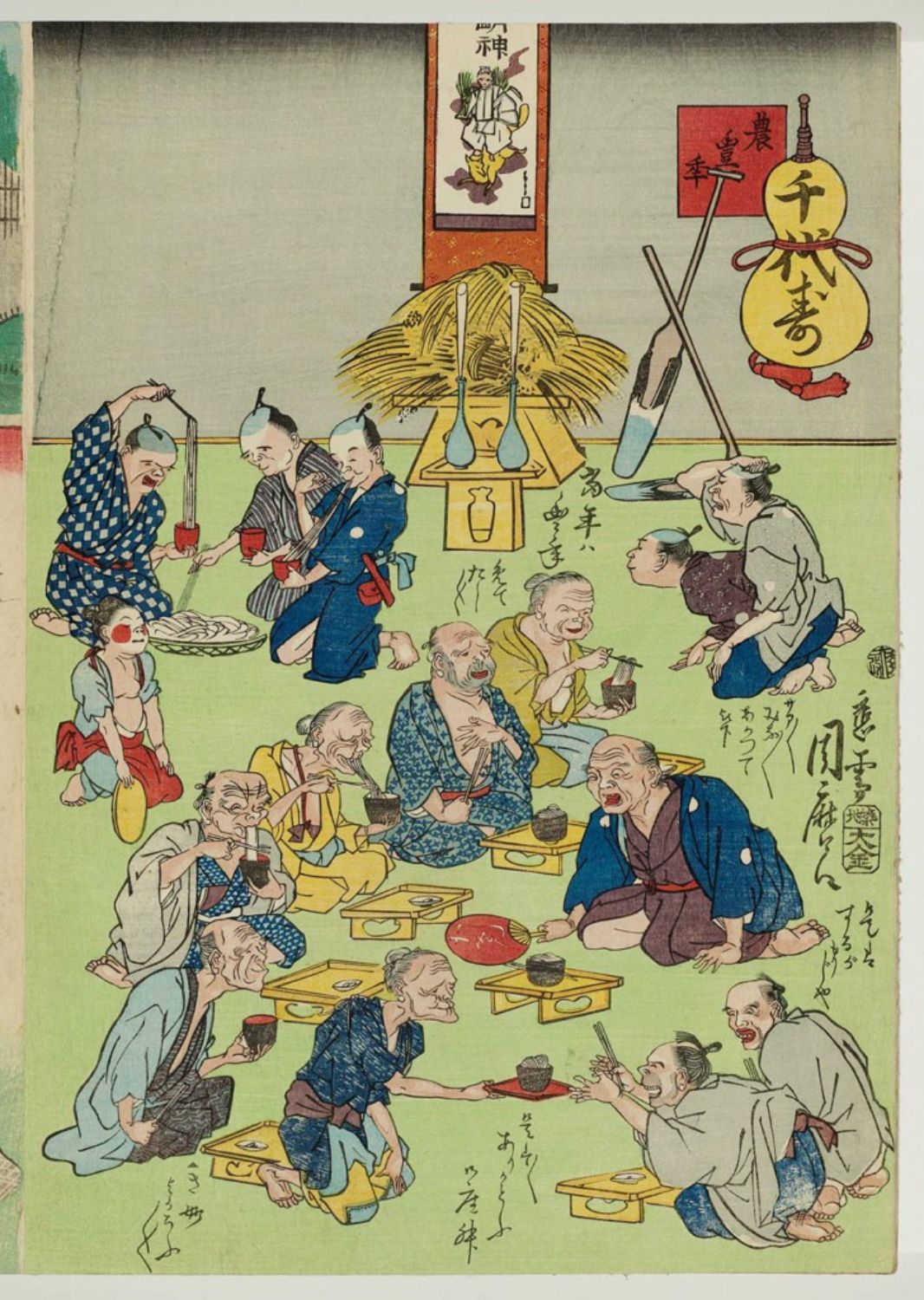
Celebrating the Good Harvest: Felicitations for a Thousand Ages (Nôhônen, Chiyo no kotobuki)
Woodblock print

Eastern Hamlet, Horyu Temple (Horyuji higashi sato)
1956
Color woodblock print
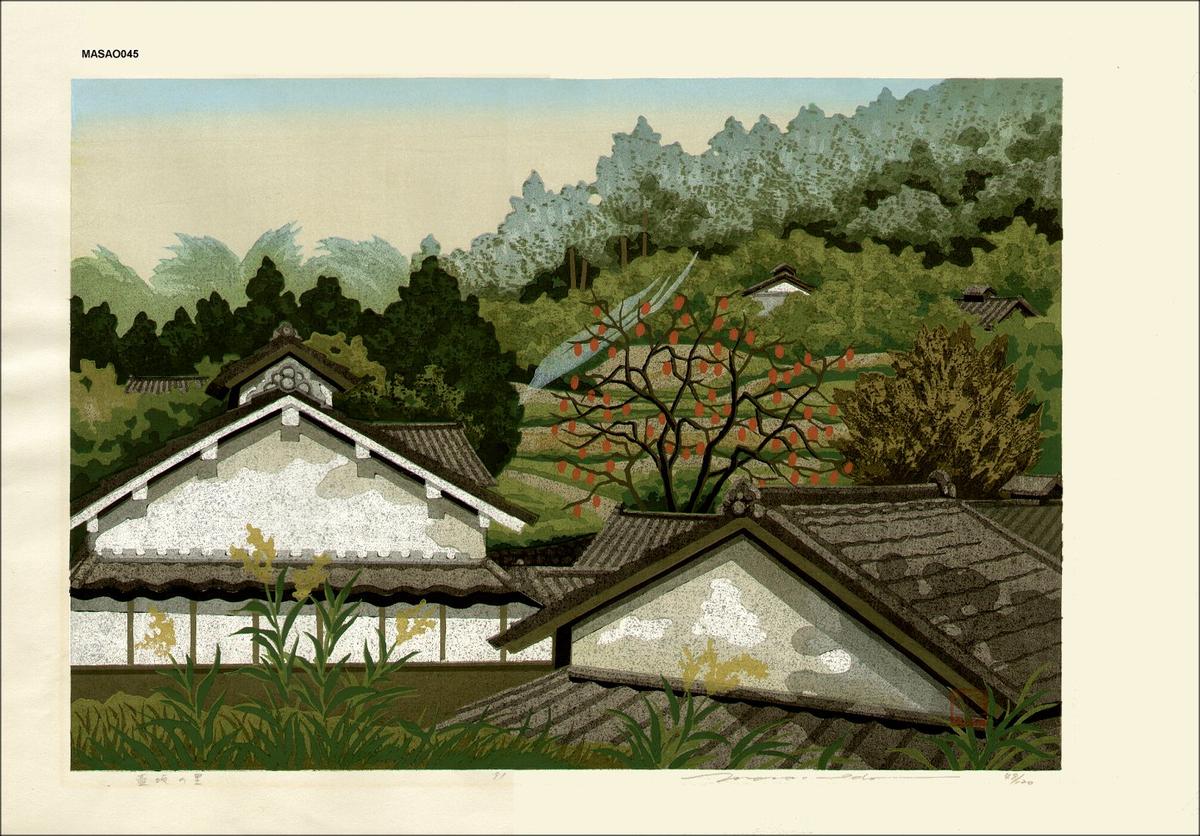
Village Scene in Nara
Woodblock print
Featured in Collections
Curated cross-cuts that include this print.
Frequently Asked Questions
Itako, the lakeside village was created by Shiro Kasamatsu (笠松紫浪).
Itako, the lakeside village depicts village scenes.