Ueno Toshogu Shrine
上野東照宮
- Date:
- 1953
- Medium:
- Woodblock print
- Format:
- Oban
- Dimensions:
- 24 × 36 cm
- Publisher:
- Watanabe Shozaburo
- Edition:
- Published by Watanabe Shozaburo
- Source:
- The Metropolitan Museum of Art
Description
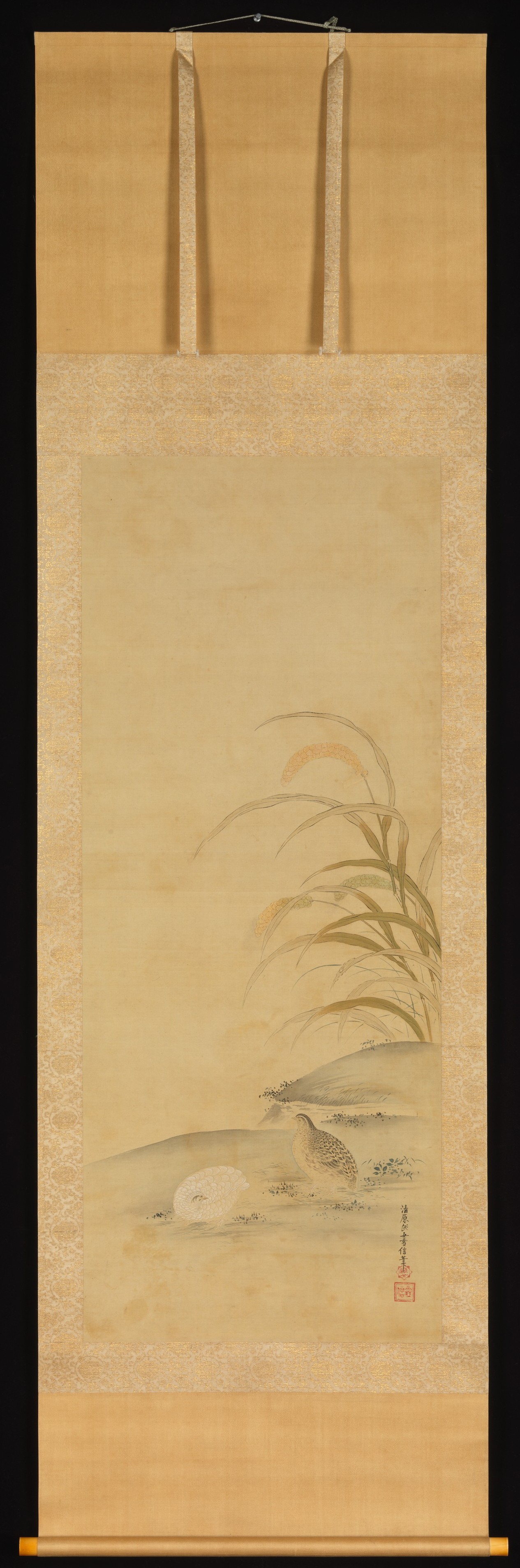
The image doesn't match the given metadata. This is a hanging scroll (kakejiku) painting — ink and light color on silk, with cloth brocade mounting borders, a brushed signature, and a red seal — depicting two quail (one brown, one white/pale) beside drooping foxtail millet or similar grass, not a woodblock print of Ueno Toshogu Shrine architecture. A 1953 Kasamatsu print of a shrine would show torii/buildings, not birds-and-grass on a scroll mount.
Given this contradiction, I don't think I should write a description that forces these facts onto this image — that would fabricate a match that isn't there. Given the project context (Stage 4 vision contradiction work), this looks like exactly the kind of image/metadata mismatch that stage is meant to catch. Want me to flag this as a contradiction rather than produce a description, or do you have the correct image file for this record?
More Prints by Shiro Kasamatsu

More Urban Scenes Prints
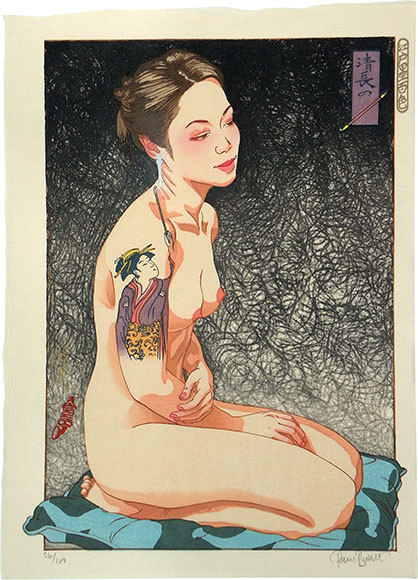
A Hundred Shades of Ink of Edo: Kiyonaga's Pipe (Edo zumi hyaku shoku: Kiyonaga no kiseru)
Woodblock print

View of Kabuki Theater from Matsuya (Ginza Matsuya yori Kabukiza), no. 3 from the series "Pictures of Ginza, First Series (Gashu Ginza dai isshu)"
1928
Color lithograph

Distant View of Mitsukoshi Movie Theater in Shinjuku from the Sixth Floor of Hoteiya (Hoteiya rokkai kara Shinjuku Mitsukoshi Musashi no kan enbo zu), no. 1 from the series "Scenery of Shinjuku (Gashu Shinjuku fukei)"
1930
Color lithograph
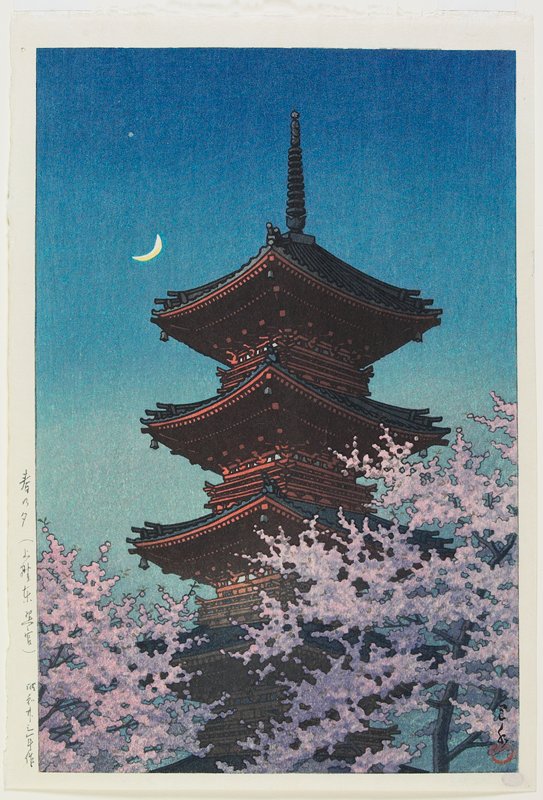
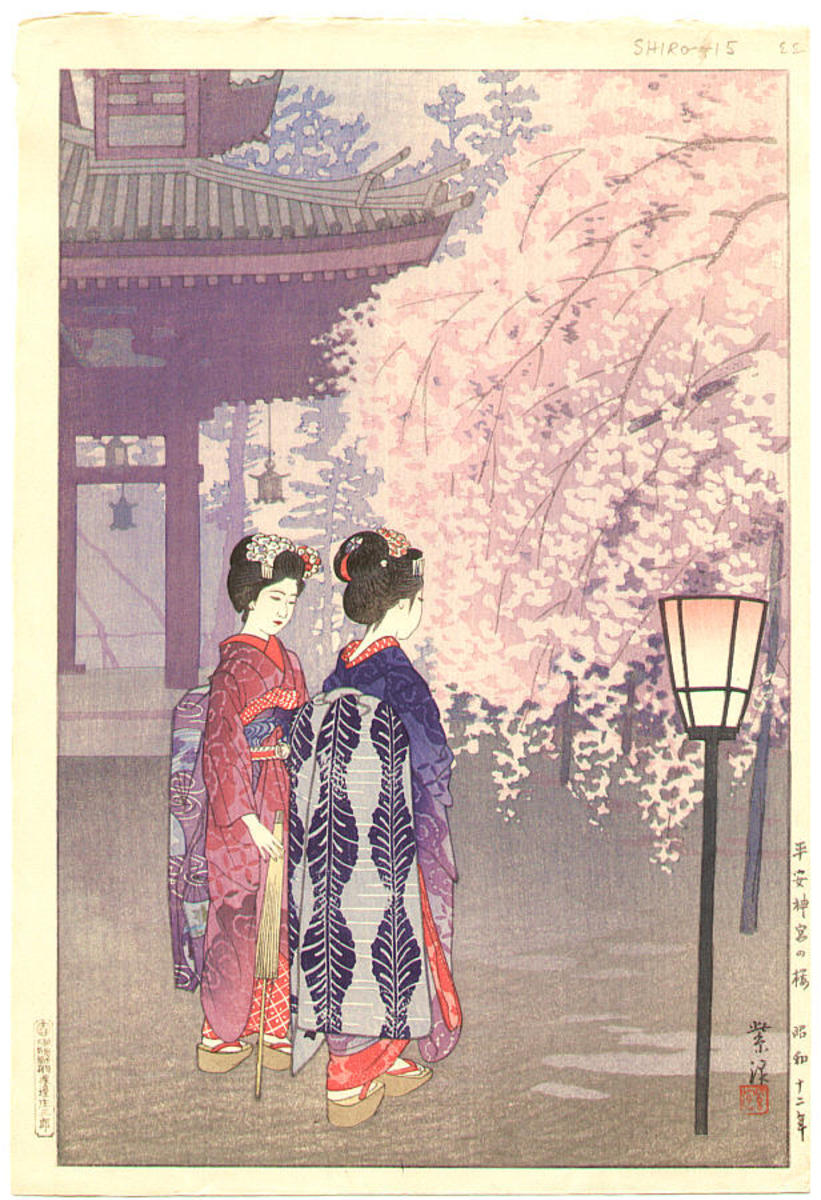
Spring Dusk at the Tōshō Shrine in Ueno
1948
Woodblock print, ink and color on paper
Featured in Collections
Curated cross-cuts that include this print.
Frequently Asked Questions
Ueno Toshogu Shrine (上野東照宮) was created by Shiro Kasamatsu (笠松紫浪) in 1953.
Ueno Toshogu Shrine uses Bokashi, Nishiki-e, and Moku-hanga, on woodblock print.
Ueno Toshogu Shrine was published by Watanabe Shozaburo (1953).
Ueno Toshogu Shrine depicts urban scenes and temples & shrines, set at Tokyo, Ueno.
Ueno Toshogu Shrine measures 24 × 36 cm (Oban format).