
Great Buddha at Kamakura
- Medium:
- Mokuhanga (Japanese woodblock)
- Image courtesy of
- Saru Gallery
Description
This print represents the Daibutsu of Kotoku-in in Kamakura, the seated bronze image of Amida Buddha cast in 1252 and standing roughly thirteen meters tall. Following the destruction of the surrounding hall by tsunami in the late fifteenth century, the figure has sat in the open air, becoming a recurring subject for both Edo-period meisho-e artists and twentieth-century printmakers. Tokuriki's composition would likely frame the seated Buddha against the wooded hills behind, employing bokashi gradation in the sky and modulated greens for the surrounding trees, with careful registration of the bronze patination through layered greys, greens, and browns. The subject suited Tokuriki particularly well: as the twelfth-generation representative of a Kyoto family with longstanding ties to Honganji Temple and Pure Land Buddhist art, he approached Buddhist iconography with an informed eye. The print sits within his broad corpus of religious subjects, which spanned major sites across Japan and continued the meisho-e tradition of documenting culturally significant places for both domestic and international audiences.
More Prints by Tomikichiro Tokuriki
Heian Shrine in the Spring
Woodblock print
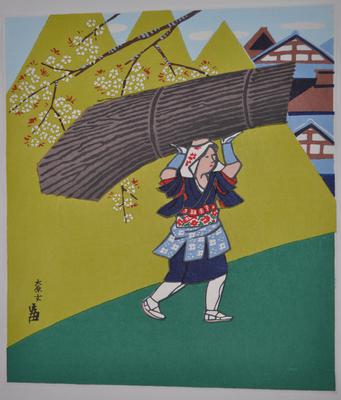
An Oharame Girl Carrying Firewood on Her Head
20th century
Woodblock print, ink and color on paper

April (Arashiyama Park, a Famous Scenic Resort)
四月 (嵐山)
second half 20th century
Woodblock print, ink and color on paper

June (Rainy Scene of the Sen-ke, Japanese Tea Ceremony Founder's House)
六月 (千家雨景)
second half 20th century
Woodblock print, ink and color on paper
More Religious Prints

The Great Buddha, Kamakura (Kamakura Daibutsu)
Kamakura Daibutsu
1930
Color woodblock print

Hall of the Great Buddha (Nara Daibutsuden)
1950
Color woodblock print
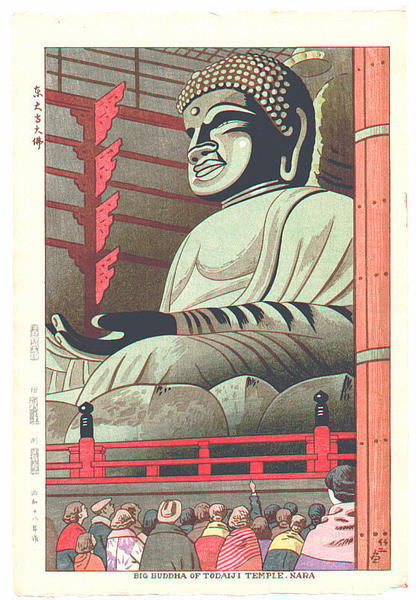
Great Buddha
大仏
Woodblock print

Clearing after a Snowfall at the Kannon Temple in Asakusa (Asakusa Kannon no yukibare), from the series "Twenty Views of Tokyo (Tokyo nijukkei)"
1926
Color woodblock print; oban
Featured in Collections
Curated cross-cuts that include this print.
Frequently Asked Questions
Great Buddha at Kamakura was created by Tomikichiro Tokuriki (徳力富吉郎).
Great Buddha at Kamakura depicts religious.