
Jo Nangu Shrine Kyoto
- Medium:
- Mokuhanga (Japanese woodblock)
- Image courtesy of
- Saru Gallery
Description
A veranda framed by a black wooden lintel and a shoji screen looks out onto a rock garden of large grey boulders, low clipped shrubs, and clustered cycads or palm trees against a rounded green hillside. The interior floor is rendered in flat yellow with a blue-bordered mat and a small lacquered box in the corner, while a low yellow bench and rope fencing sit within the garden beyond. Colors are printed in flat planes of green, grey, ochre, and yellow; the composition is signed in pencil below the image, with the title, seal, and date inscribed in the right margin. Mokuhanga woodblock print, "Jo Nangu Shrine Kyoto," by Tomikichiro Tokuriki, year unknown.
More Prints by Tomikichiro Tokuriki
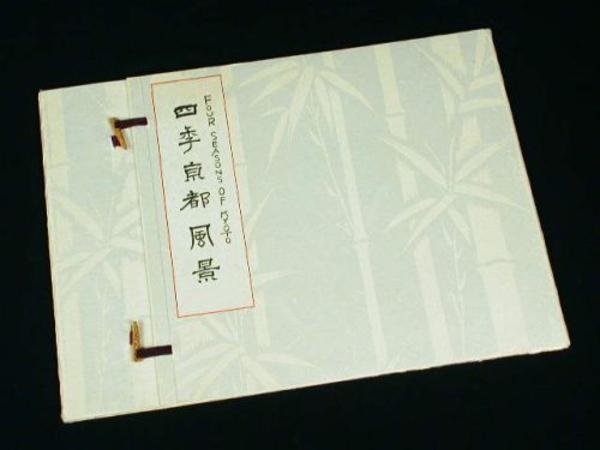
Heian Shrine in the Spring
Woodblock print
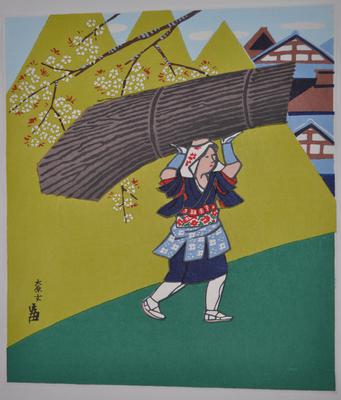
An Oharame Girl Carrying Firewood on Her Head
20th century
Woodblock print, ink and color on paper

April (Arashiyama Park, a Famous Scenic Resort)
四月 (嵐山)
second half 20th century
Woodblock print, ink and color on paper

June (Rainy Scene of the Sen-ke, Japanese Tea Ceremony Founder's House)
六月 (千家雨景)
second half 20th century
Woodblock print, ink and color on paper
More Castles Prints
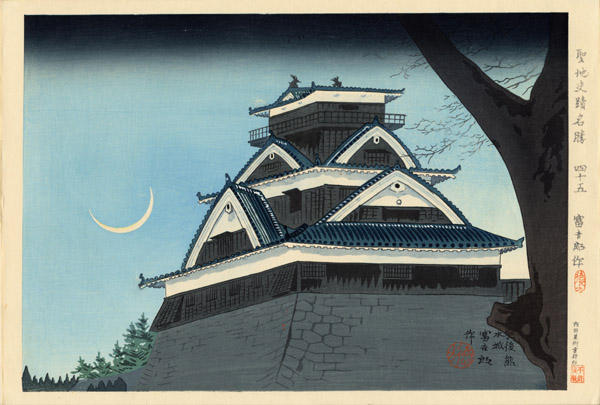
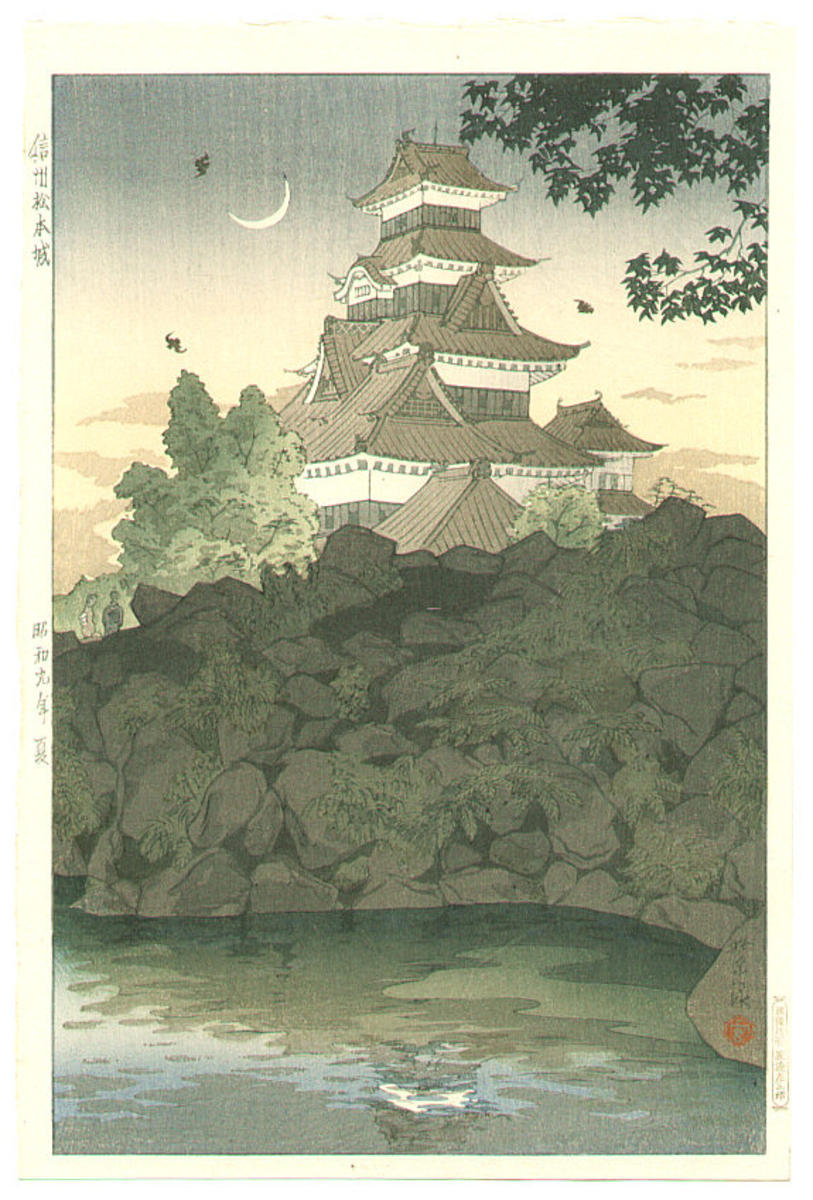


Featured in Collections
Curated cross-cuts that include this print.
Frequently Asked Questions
Jo Nangu Shrine Kyoto was created by Tomikichiro Tokuriki (徳力富吉郎).
Jo Nangu Shrine Kyoto depicts castles and temples & shrines.