
The Evening Bell at Miidera (Mii no banshō), from the series "Eight Views in Omi Province (Omi hakkei no uchi)"
- Date:
- 1837–38
- Medium:
- Color woodblock print; ōban
- Source:
- Art Institute of Chicago
Description
The Evening Bell at Miidera is a sheet from Utagawa Hiroshige's Eight Views in Omi Province, dated to 1837 and held by the Art Institute of Chicago (object 25242). The Eight Views of Omi were the Japanese version of the Chinese Xiao and Xiang Eight Views, transplanted to the shores of Lake Biwa and codified in late Heian and medieval poetry; by the early nineteenth century they had become a fixed cycle that ukiyo-e designers and painters returned to repeatedly. The evening bell at Miidera, the great Tendai temple of Onjoji, takes the theme of sound and dusk and ties it to a specific religious site overlooking the lake. Hiroshige's composition places the temple compound on a slope above the water, with the great bell tower visible among the buildings and a long view across Lake Biwa stretching toward distant mountains. The sky is graded from a warm horizon to a deeper upper zone, evoking the close of day. As an Edo ukiyo-e landscape print, the sheet is part of Hiroshige's mature engagement with poetic landscape series, and the Omi hakkei stands beside his Eight Views in the Environs of Edo as a key statement of his hakkei work. For collectors, the Miidera bell is one of the most atmospheric images in the cycle and pairs naturally with the more famous Karasaki pine and Seta bridge designs.
More Prints by Utagawa Hiroshige


More Landscapes Prints

Lake Kugushi in Wakasa Province (Wakasa Kugushiko), from the series Souvenirs of Travel I (Tabi miyage dai isshu)"
Wakasa Kugushiko
1920
Color woodblock print; oban
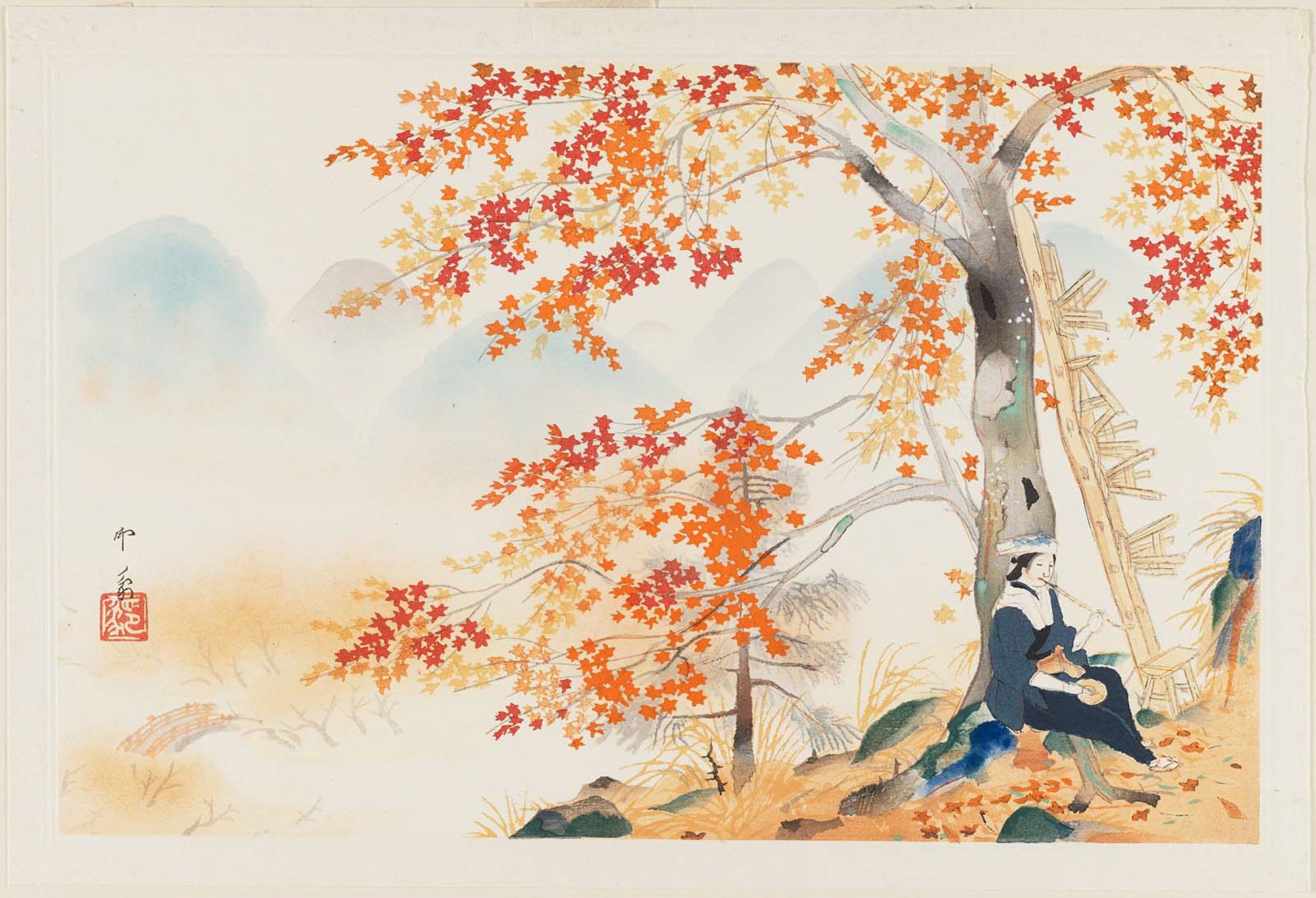
Autumn Maple Leaves at Takao, from the album Eight Views of Kyoto (Kyôto hakkei)
Woodblock print

The Beach at Kaiganji in Sanuki Province (Sanuki Kaiganji no hama), from the series "Collection of Views of Japan II, Kansai Edition (Nihon fukei shu II Kansai hen)"
1934
Color woodblock print; oban

Tea Kettle, section of a sheet from the series "Mirror of Stone Rubbings of Views of the Provinces" (Kohon meihitsu ishizuri kagami)
n.d.
Woodblock print; ishizuri-e, section of harimaze sheet
Featured in Collections
Curated cross-cuts that include this print.
Frequently Asked Questions
The Evening Bell at Miidera (Mii no banshō), from the series "Eight Views in Omi Province (Omi hakkei no uchi)" was created by Utagawa Hiroshige (歌川広重) in 1837–38.
Yes — The Evening Bell at Miidera (Mii no banshō), from the series "Eight Views in Omi Province (Omi hakkei no uchi)" is part of the Eight Views of Omi Province (Omi hakkei no uchi) series by Utagawa Hiroshige.
The Evening Bell at Miidera (Mii no banshō), from the series "Eight Views in Omi Province (Omi hakkei no uchi)" depicts landscapes, night scenes, and eight views of ōmi.