
The Temple of the Golden Pavilion (Kinkakuji), from the series "Famous Places in Kyoto (Kyoto meisho no uchi)"
- Series:
- Famous Places in Kyoto (Kyoto meisho no uchi) (print 7 of 9)
- Date:
- c. 1834
- Medium:
- Color woodblock print; oban
- Format:
- Oban
- Source:
- Art Institute of Chicago
Description
Kinkakuji — the Temple of the Golden Pavilion — appears here in a view from the "Famous Places in Kyoto" series, the gilded three-story structure reflected in the pond of its garden. Hiroshige's oban print, made around 1834, shows the temple with its characteristic golden exterior mirrored in still water, the Kinugasa hills rising behind. The pavilion had been a defining symbol of Kyoto for centuries before Hiroshige made this print.
More Prints by Utagawa Hiroshige


More Landscapes Prints

Lake Kugushi in Wakasa Province (Wakasa Kugushiko), from the series Souvenirs of Travel I (Tabi miyage dai isshu)"
Wakasa Kugushiko
1920
Color woodblock print; oban
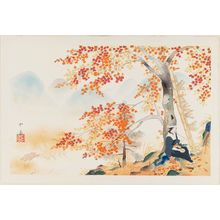
Autumn Maple Leaves at Takao, from the album Eight Views of Kyoto (Kyôto hakkei)
Woodblock print

The Beach at Kaiganji in Sanuki Province (Sanuki Kaiganji no hama), from the series "Collection of Views of Japan II, Kansai Edition (Nihon fukei shu II Kansai hen)"
1934
Color woodblock print; oban

Tea Kettle, section of a sheet from the series "Mirror of Stone Rubbings of Views of the Provinces" (Kohon meihitsu ishizuri kagami)
n.d.
Woodblock print; ishizuri-e, section of harimaze sheet
Featured in Collections
Curated cross-cuts that include this print.
Frequently Asked Questions
The Temple of the Golden Pavilion (Kinkakuji), from the series "Famous Places in Kyoto (Kyoto meisho no uchi)" was created by Utagawa Hiroshige (歌川広重) in c. 1834.
Yes — The Temple of the Golden Pavilion (Kinkakuji), from the series "Famous Places in Kyoto (Kyoto meisho no uchi)" is part of the Famous Places in Kyoto (Kyoto meisho no uchi) series (print 7 of 9) by Utagawa Hiroshige.
The Temple of the Golden Pavilion (Kinkakuji), from the series "Famous Places in Kyoto (Kyoto meisho no uchi)" depicts landscapes, temples & shrines, and kyoto, set at Kyoto.