
Ichikawa Danjūrō VII as Watanabe no Tsuna and Segawa Kikunojō V as the Female Demon, in “Modori Bridge” (Modoribashi)
- Date:
- 1833
- Medium:
- Color woodblock print; surimono
- Source:
- Art Institute of Chicago
Description
Dated 1833, this Utagawa Kunisada yakusha-e portrays Ichikawa Danjūrō VII as Watanabe no Tsuna and Segawa Kikunojō V as the Female Demon, in the dance-drama "Modori Bridge (Modoribashi)." The piece dramatizes the classical legend of Watanabe no Tsuna - one of Minamoto no Yorimitsu's four loyal retainers - encountering a beautiful woman on the Modoribashi (Returning Bridge) at Ichijō who reveals herself as a demon. Kabuki adaptations made the moment of transformation a virtuoso onnagata showcase, and Kunisada's print captures both performers at the dramatic pivot, with the masculine hero confronting his female-presenting antagonist. The Ichikawa-Segawa pairing was prestigious, combining the aragoto authority of the Danjūrō line with the onnagata refinement of the Segawa line. The Art Institute of Chicago preserves the impression (artwork 81302). As Edo ukiyo-e, the design demonstrates Kunisada's signature handling of supernatural-meets-historical kabuki material, where the printed sheet does double work: theatrical record, fan memento, and visualization of a legend that long predated the kabuki adaptation but had become inseparable from its stage realization.
More Prints by Utagawa Kunisada

The actors Ichikawa Danjuro VII as Takamoto no kitsune and Segawa Kikunojo V as Izumi no Chieda-gitsune
1818
Color woodblock print; shikishiban, surimono

Basketry Work: By the Craftsman Ichida Shōshichirō of Naniwa (Kagozaiku Naniwa saikunin Ichida Shōshichirō)
1819
Woodblock print; ink and color on paper
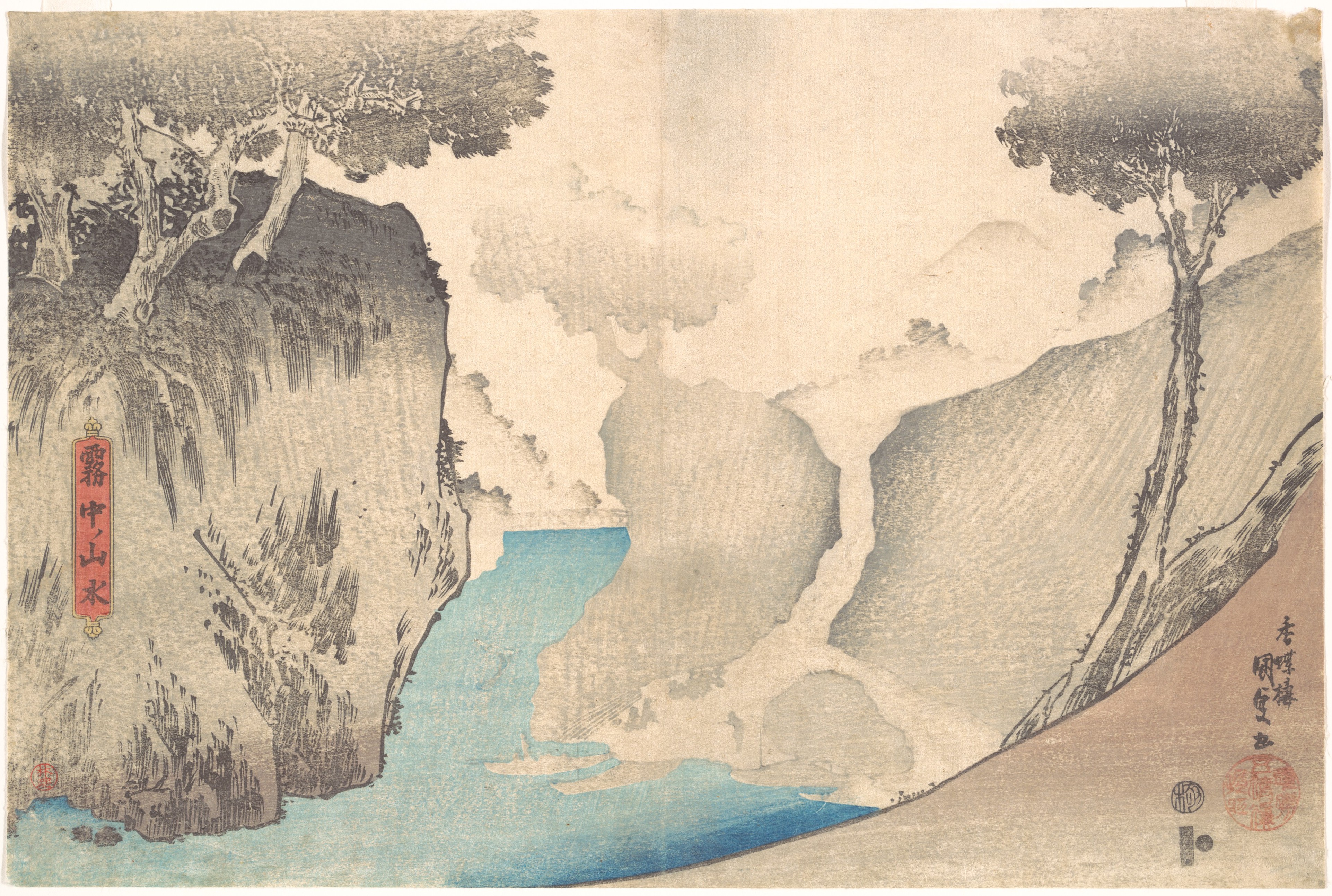
Ochanomizu in the Mist
mid-19th century
Woodblock print; ink and color on paper
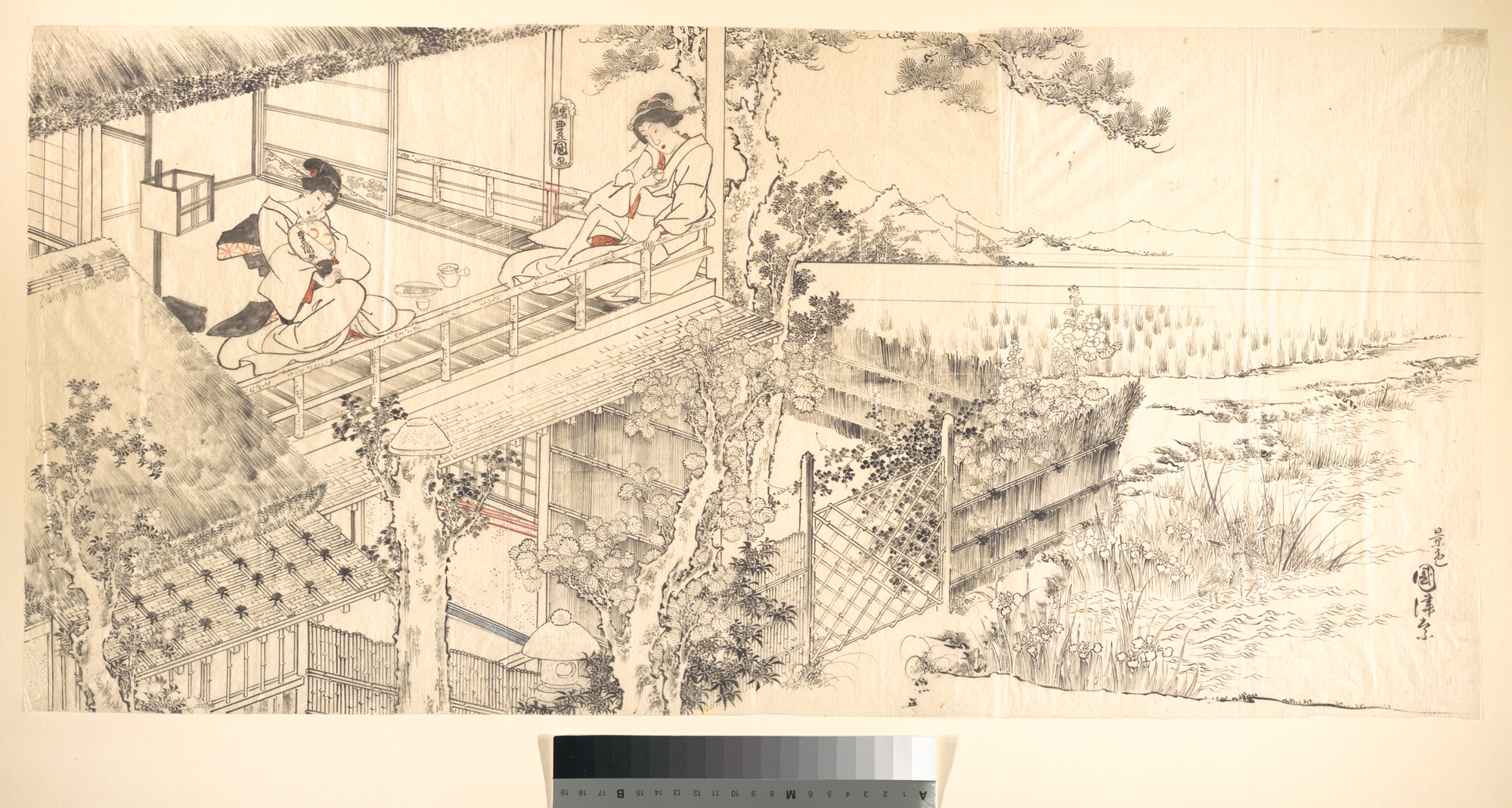
Two Courtesans Enjoying the View from a Teahouse
after 1844
Drawings intended as design for woodblock prints (triptych); ink and color on paper
More Bridges Prints
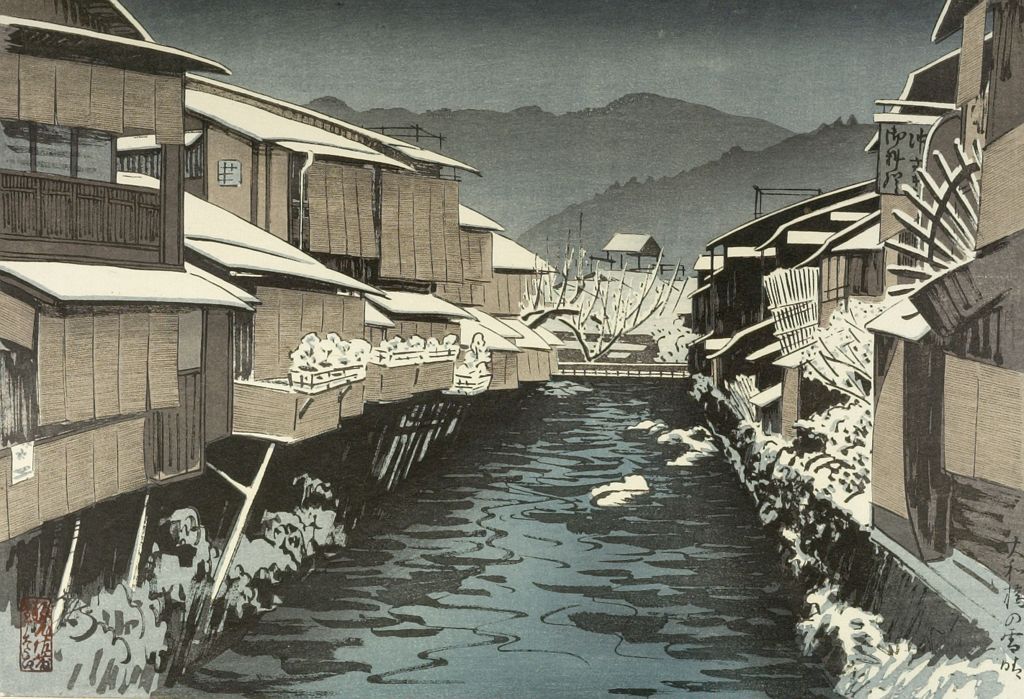
Fair Weather After Snow at Yamato Bridge, Kyoto (Yamato bashi no yukibare), Taishô period, dated 1924
Woodblock print
![Mount Fuji on a Moonlit Night, Kawai Bridge (Tsukiyo no Fuji [Kawaibashi]), from the series "Selection of Views of the Tokaido (Tokaido fukei senshu)" by Kawase Hasui](https://www.artic.edu/iiif/2/d0960668-1e73-339a-b182-fb995a54bff0/full/843,/0/default.jpg)
Mount Fuji on a Moonlit Night, Kawai Bridge (Tsukiyo no Fuji [Kawaibashi]), from the series "Selection of Views of the Tokaido (Tokaido fukei senshu)"
1947
Color woodblock print; oban

Shin Ohashi Bridge (Shin Ohashi), from the series "Twenty View of Tokyo (Tokyu nijukkei)"
1926
Color woodblock print; oban

Sacred Bridge in Nikko (Nikko Shinkyo)
1930
Color woodblock print; oban
Frequently Asked Questions
Ichikawa Danjūrō VII as Watanabe no Tsuna and Segawa Kikunojō V as the Female Demon, in “Modori Bridge” (Modoribashi) was created by Utagawa Kunisada (歌川国貞) in 1833.
Ichikawa Danjūrō VII as Watanabe no Tsuna and Segawa Kikunojō V as the Female Demon, in “Modori Bridge” (Modoribashi) depicts bridges.