
Nihonbashi Bridge (Nihonbashi)
- Date:
- 1874
- Medium:
- Source:
- Victoria and Albert Museum
Description
Nihonbashi Bridge (Nihonbashi) is a woodblock print attributed to Utagawa Kunisada and dated to 1874 in the Victoria and Albert Museum collection, where it survives as a striking example of late-Edo and early-Meiji print culture extending the legacy of one of the most prolific designers in Edo ukiyo-e. Nihonbashi, the wooden bridge that marked the origin point of the Tokaido and the symbolic center of Edo, had been a touchstone for ukiyo-e printmakers for generations, and Kunisada's treatment characteristically places human figures in the foreground rather than treating the bridge purely as topography. Working within the Utagawa school he revitalized after the death of his teacher Toyokuni I, Kunisada built his reputation on portraits of kabuki actors and beautiful women, and even his landscape-adjacent designs often serve as armatures for the elaborately patterned kimono and confident character types that defined his commercial appeal. The Victoria and Albert Museum's holdings of Kunisada are considerable, reflecting the artist's astonishing output of an estimated 20,000 designs over a six-decade career that bridged the late Bunka, Bunsei, Tenpo, and Ansei eras. While the precise publisher and series context for this sheet are best confirmed against the V&A's catalogue entry, the dating into the 1870s indicates the print circulated within the reissue economy that kept Kunisada's blocks in commercial use after his death in 1865. For collectors approaching Edo ukiyo-e through the lens of place, yakusha-e celebrity culture, or the formal vocabulary of the Utagawa school, this Nihonbashi composition is a useful entry point to Kunisada's recurring interest in linking famous Edo locations with the personalities who animated them.
More Prints by Utagawa Kunisada

The actors Ichikawa Danjuro VII as Takamoto no kitsune and Segawa Kikunojo V as Izumi no Chieda-gitsune
1818
Color woodblock print; shikishiban, surimono

Basketry Work: By the Craftsman Ichida Shōshichirō of Naniwa (Kagozaiku Naniwa saikunin Ichida Shōshichirō)
1819
Woodblock print; ink and color on paper
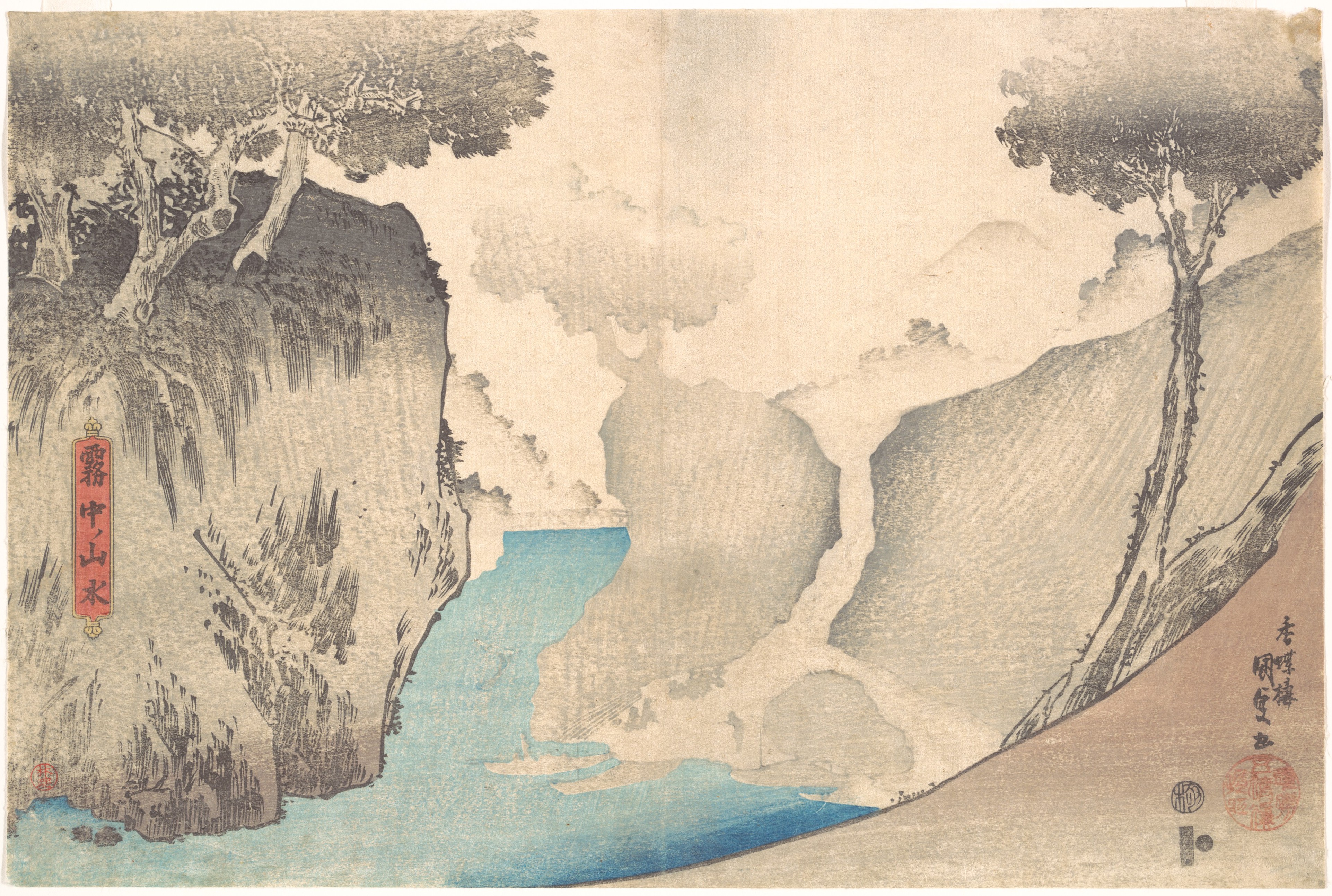
Ochanomizu in the Mist
mid-19th century
Woodblock print; ink and color on paper
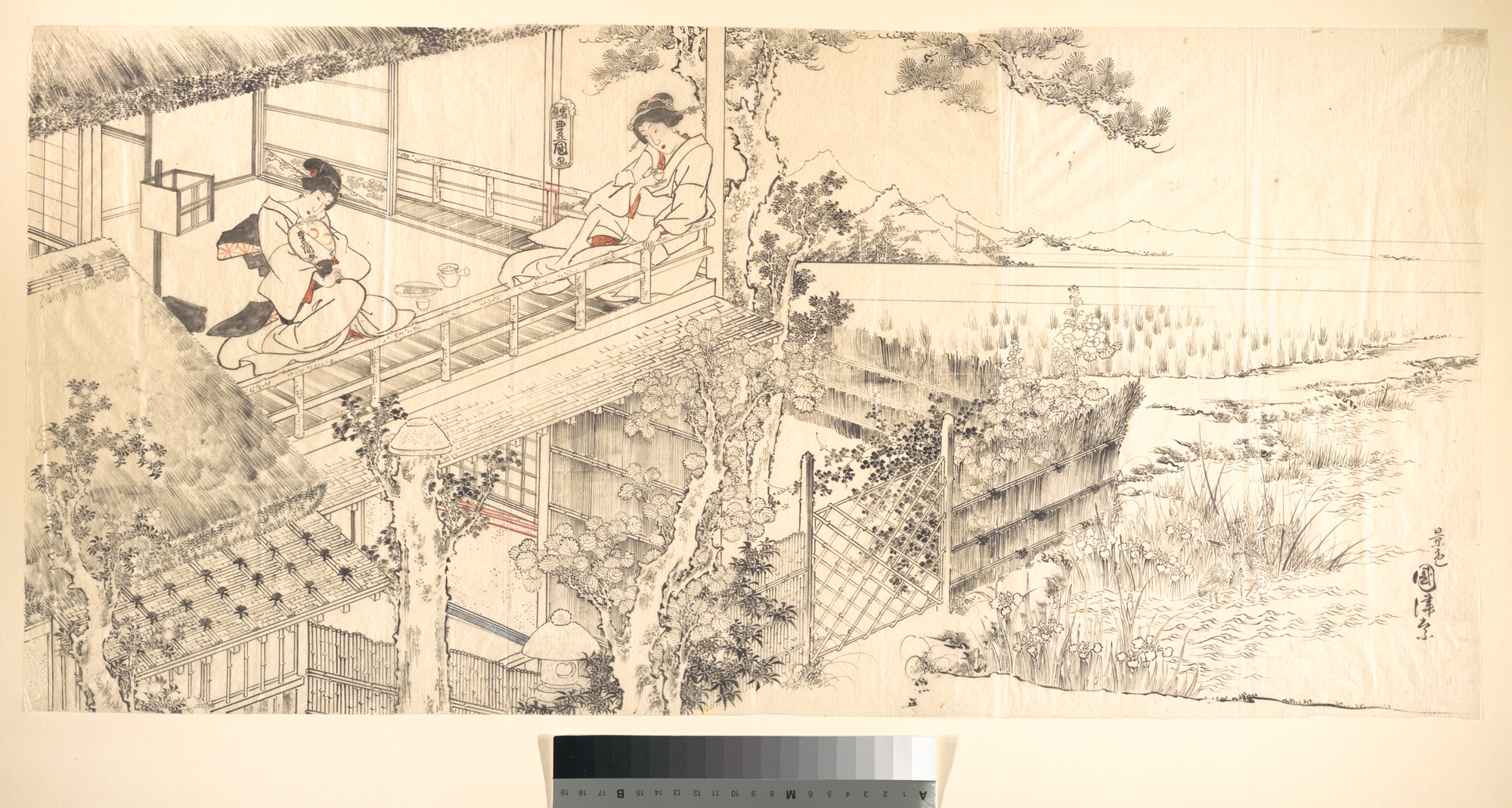
Two Courtesans Enjoying the View from a Teahouse
after 1844
Drawings intended as design for woodblock prints (triptych); ink and color on paper
More Bridges Prints
Fair Weather After Snow at Yamato Bridge, Kyoto (Yamato bashi no yukibare), Taishô period, dated 1924
Woodblock print
![Mount Fuji on a Moonlit Night, Kawai Bridge (Tsukiyo no Fuji [Kawaibashi]), from the series "Selection of Views of the Tokaido (Tokaido fukei senshu)" by Kawase Hasui](https://www.artic.edu/iiif/2/d0960668-1e73-339a-b182-fb995a54bff0/full/843,/0/default.jpg)
Mount Fuji on a Moonlit Night, Kawai Bridge (Tsukiyo no Fuji [Kawaibashi]), from the series "Selection of Views of the Tokaido (Tokaido fukei senshu)"
1947
Color woodblock print; oban

Shin Ohashi Bridge (Shin Ohashi), from the series "Twenty View of Tokyo (Tokyu nijukkei)"
1926
Color woodblock print; oban

Sacred Bridge in Nikko (Nikko Shinkyo)
1930
Color woodblock print; oban
Frequently Asked Questions
Nihonbashi Bridge (Nihonbashi) was created by Utagawa Kunisada (歌川国貞) in 1874.
Nihonbashi Bridge (Nihonbashi) depicts bridges.