
Zen temple
by Wada Sanzo
- Medium:
- Mokuhanga (Japanese woodblock)
- Image courtesy of
- Saru Gallery
Description
This print depicts a Zen Buddhist temple, likely rendering a hojo (abbot's quarters), hondo (main hall), or temple garden where the architectural geometry of tile roofs, sliding fusuma, and timber posts dominates the composition. The compositional emphasis falls on built form and human presence within sacred space rather than on devotional iconography. While Wada is most associated with his Showa Shokugyo Emaki occupational series, his temple imagery extends that documentary impulse to the religious institutions that structured ordinary Japanese life. The print likely uses a restrained palette of greys, browns, and indigos appropriate to the subdued atmosphere of a Zen monastery, with carefully calibrated keyblock printing reinforcing the orthogonal severity of temple architecture.
More Prints by Wada Sanzo
More Temples & Shrines Prints
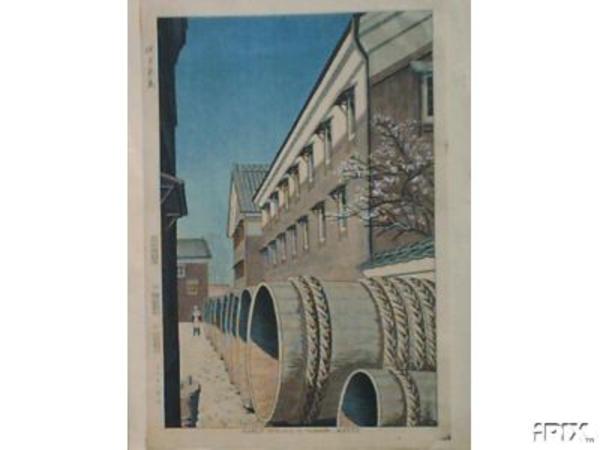
Fushimi Inari Temple
伏見稲荷
Woodblock print

The Compound of the Tenman Shrine at Kameido in the Snow (Kameido Tenmangu keidai no yuki), from the series "Famous Places in the Eastern Capital (Toto meisho)"
c. 1832/38
Color woodblock print; oban
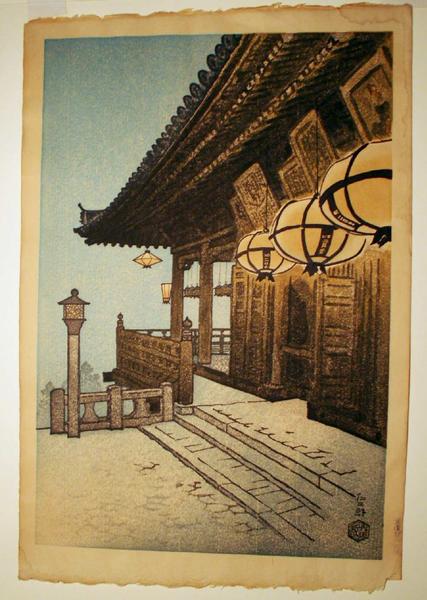
Temple with lanterns
Woodblock print

A Section of the Byodo Temple at Uji (Uji Byodoin no ichibu), from the series "Souvenirs of Travel, Second Series (Tabi miyage dai nishu)"
Uji Byodoin no ichibu
1921
Color woodblock print; oban
Featured in Collections
Curated cross-cuts that include this print.
Frequently Asked Questions
Zen temple was created by Wada Sanzo (和田三造).
Zen temple depicts temples & shrines and religious.