Arashiyama (嵐山)
15 prints by 12 artists
About Arashiyama
Arashiyama is a district on the western edge of Kyoto, in the foothills of the mountains that close off the Kyoto basin on the west, where the Hozu River emerges from its gorge and is renamed the Katsura River as it flows toward the city center, in present-day Ukyo Ward. The area takes its name, which means storm mountain, from the wooded slopes that rise above the river, and it has been a celebrated retreat and pleasure ground of the Kyoto aristocracy since at least the Heian period, when the area was the location of imperial detached palaces and the villas of the Fujiwara and Saionji families. The Togetsukyo bridge that spans the river, whose name means moon-crossing bridge and is attributed to a remark by the retired emperor Kameyama in the late thirteenth century, was first constructed in the ninth century during the early Heian period and has been rebuilt many times, with the present wooden-railed concrete-and-steel span dating to the twentieth century. The slopes above the bridge are renowned for cherry blossom in spring, when more than a thousand trees of various varieties bloom across the mountainside, and for vivid red maple in autumn, when the area becomes one of the most heavily visited destinations in the Kyoto basin. The surrounding district contains major Zen monasteries including Tenryu-ji, founded in 1339 by the shogun Ashikaga Takauji on the site of the Heian-period Kameyama detached palace as one of the great Rinzai institutions of Kyoto and now a UNESCO World Heritage Site, and Hogon-in, Daikaku-ji, and the smaller temples that extend north into the Sagano district. The Hozu-gawa boat ride from Kameoka to Arashiyama, descending the river through the gorge above the bridge, has been a popular excursion since at least the Edo period. For Japanese printmaking, Arashiyama belongs to the canonical roster of Kyoto meisho, and it appears in Utagawa Hiroshige's Famous Views of Kyoto issued around 1834, which depicts the river, the bridge, and the blossoming cherries on the slopes above. Hokusai treated Arashiyama in his depictions of the Kyoto approach to the Tokaido and in passages of his printed books, and Hasegawa Sadanobu and other Kansai-region late ukiyo-e artists produced individual sheets of the bridge and the surrounding river. With the shin-hanga revival, the district became a major subject for Kawase Hasui, Yoshida Hiroshi, Tsuchiya Koitsu, and Asano Takeji, each of whom produced one or more compositions of the bridge, the river, and the seasonal foliage, with Hasui's evening and snow Arashiyama prints among the most reproduced of his Kyoto subjects. Tokuriki Tomikichiro, a Kyoto-based sosaku-hanga artist, included Arashiyama prominently in his Eight Views of Kyoto and other Kyoto-centered series, and the postwar Kyoto sosaku-hanga circle treated the district in various seasonal compositions. The visual character of Arashiyama in prints is built on the curve of the river beneath the bridge, the foreground reeds and reflective water, the steep wooded slope behind, the seasonal blossoms or maple foliage, the boats of fishermen or pleasure parties on the river, and frequently the diffused atmospheric conditions of the western Kyoto setting. The adjacent Sagano district, treated under its own entry, continues this western Kyoto landscape into the bamboo groves and rural temples north and west of the bridge. Modern Arashiyama remains one of the most heavily visited districts of Kyoto, with the Togetsukyo bridge, the Tenryu-ji garden, the bamboo grove path, and the Kameyama Park overlook preserving the broad outlines of the meisho geography that the printmakers recorded, reached via the JR Sagano Line to Saga-Arashiyama Station, the Hankyu Arashiyama Line, or the Keifuku Randen tram.
Prints Depicting Arashiyama (15)

April (Arashiyama Park, a Famous Scenic Resort)
四月 (嵐山)
second half 20th century
Woodblock print, ink and color on paper
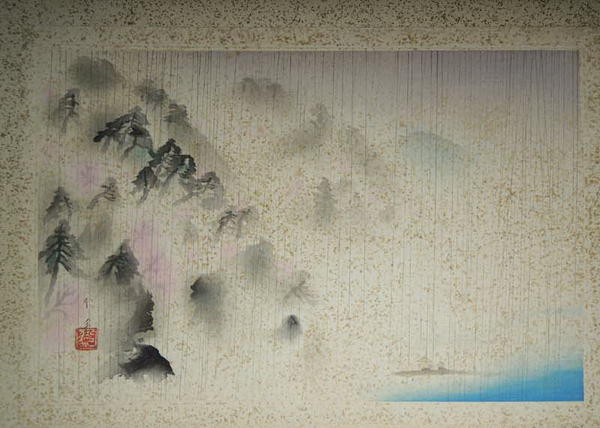
Arashiyama
Woodblock print
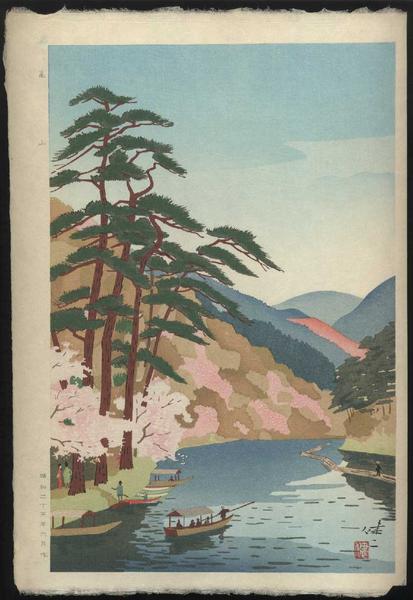
Arashiyama - 嵐山
Woodblock print
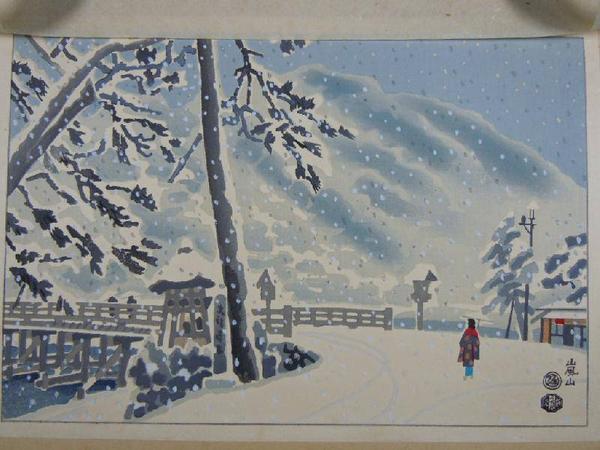
Arashiyama — 嵐山
Not set
Woodblock print

Arashiyama, from the series "Eight Scenes of Cherry Blossoms"
1935
Color woodblock print

Arashiyama, Kyoto
n.d. [1952]
Color woodblock print
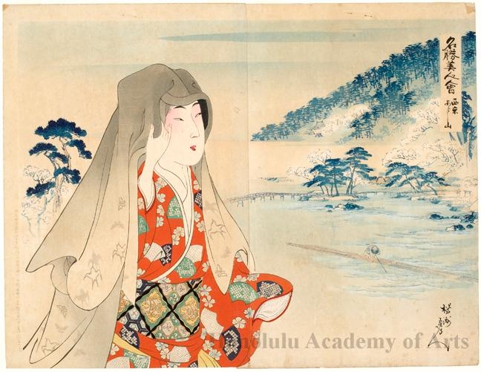
Arashiyama, Kyoto
Woodblock print
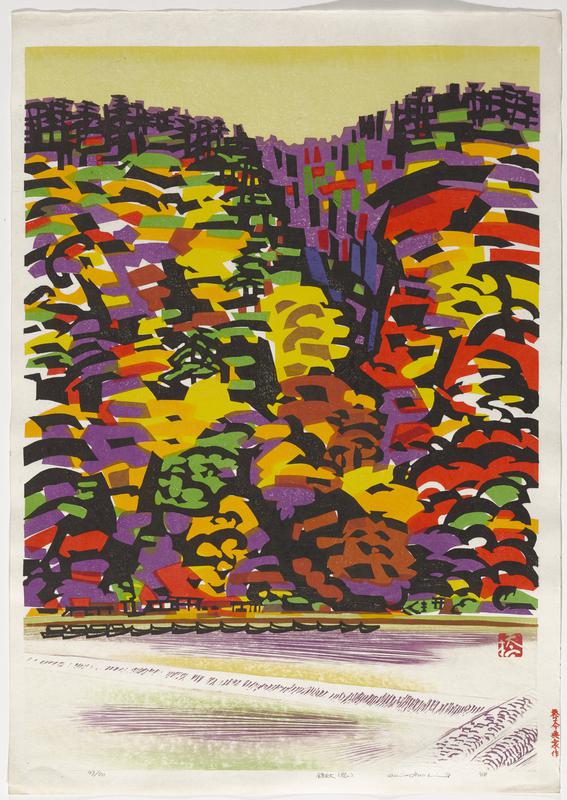
Autumn Colors, Arashiyama
1968
Woodblock print, ink and color on paper

Cherry Blossoms in Full Bloom at Arashiyama (Arashiyama manka), from the series "Famous Places in Kyoto (Kyoto meisho no uchi)"
c. 1834
Color woodblock print; oban
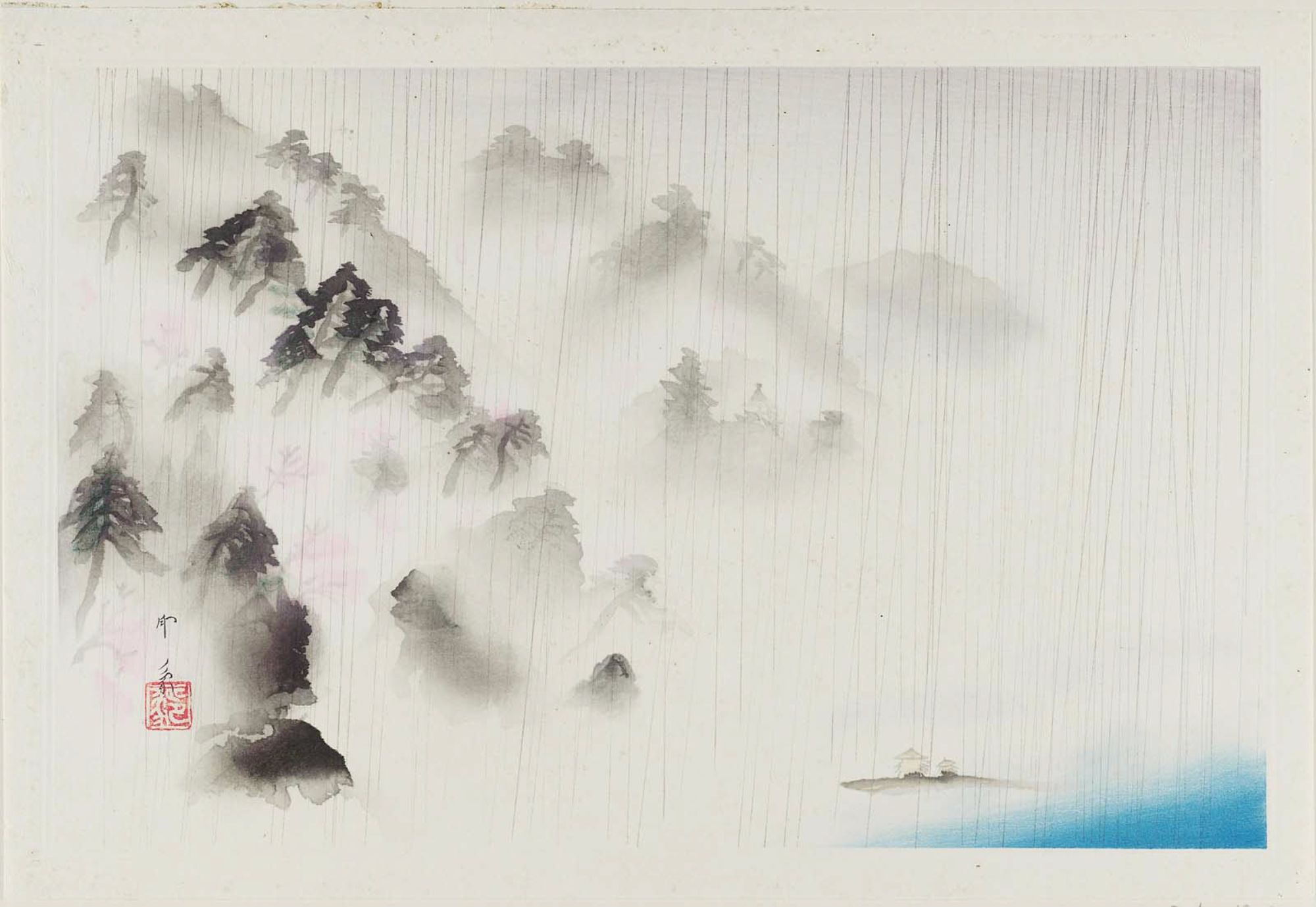
Cherry Blossoms in Rain at Arashiyama, from the album Eight Views of Kyoto (Kyôto hakkei)
Woodblock print
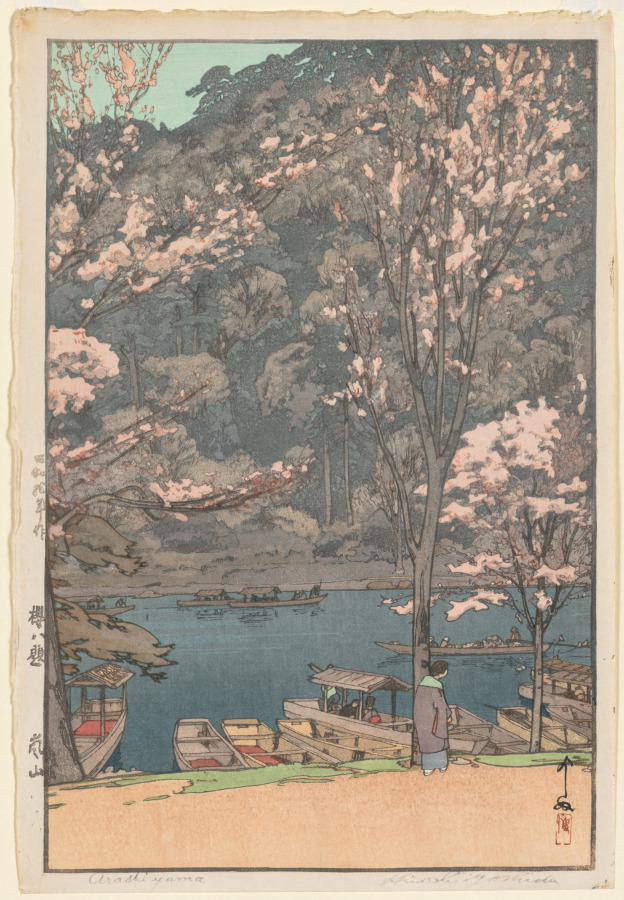
Eight Scenes of Cherry Blossom: Arashiyama
after 1935
Color woodblock print

Musashi Arashiyama
Woodblock print
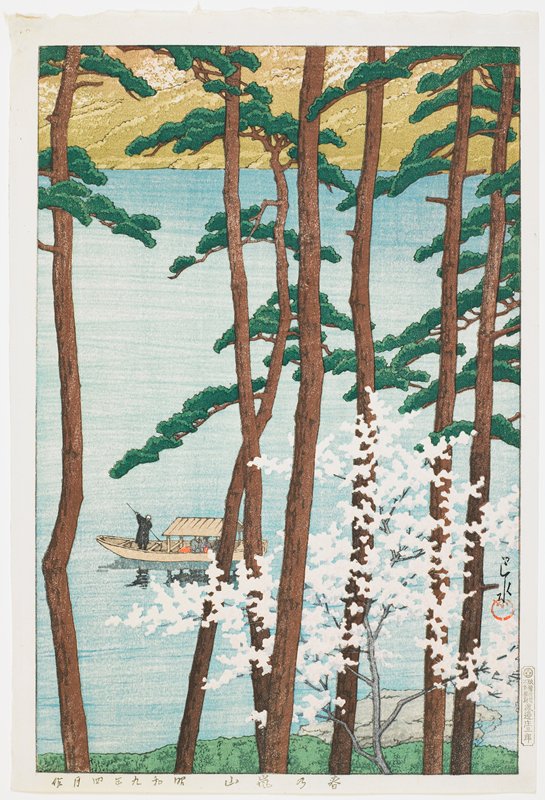
Spring in Arashiyama
April 1934
Woodblock print, ink and color on paper
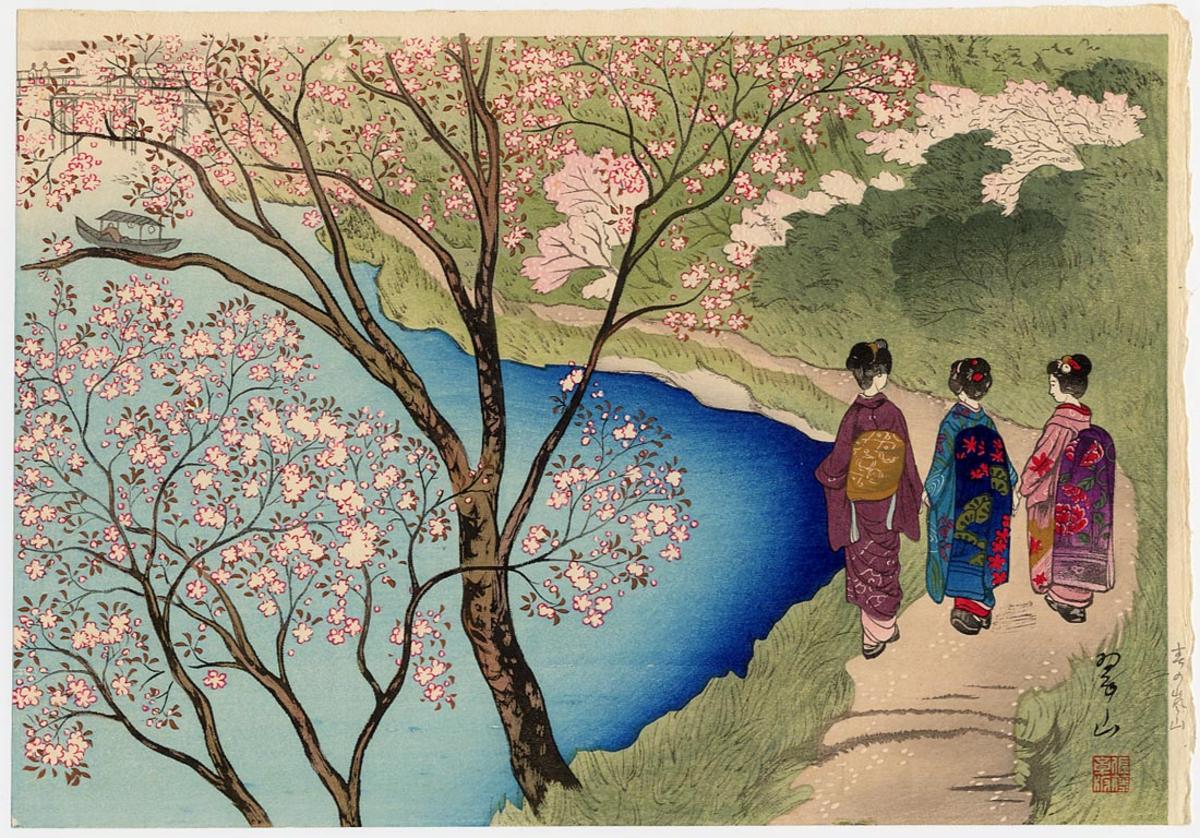
Three girls strolling at Arashiyama
Woodblock print
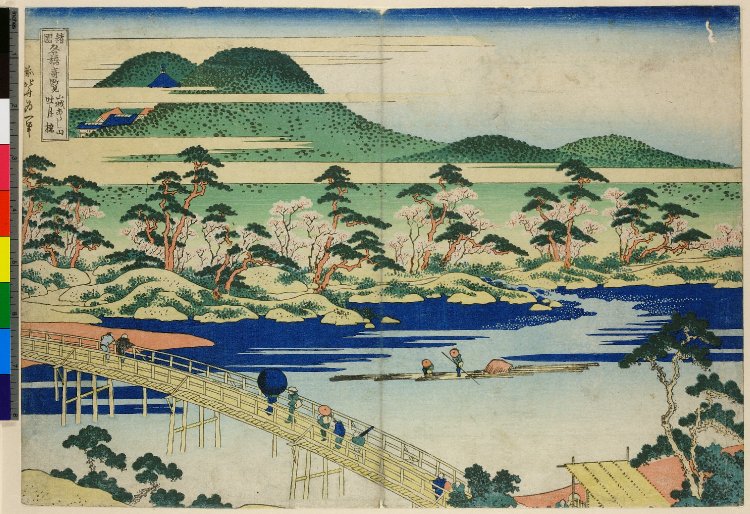
Yamashiro Arashiyama Togetsukyo / Shokoku Meikyo Kiran
Woodblock print
Artists Who Depicted Arashiyama (12)
Hiroshi Yoshida
吉田博
1876–1950

Insho Domoto
堂本印象
1891–1975
Katsushika Hokusai
葛飾北斎
1760–1849

Kawase Hasui
川瀬巴水
1883–1957
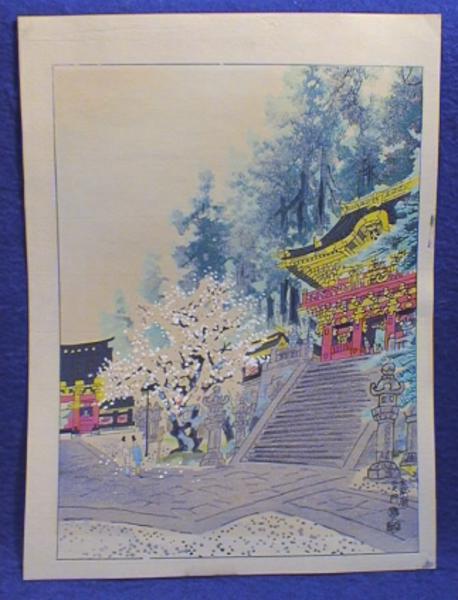
Kotozuka Eiichi
琴塚英一
1906–1979

Kusaka Kenji
日下健二
1936
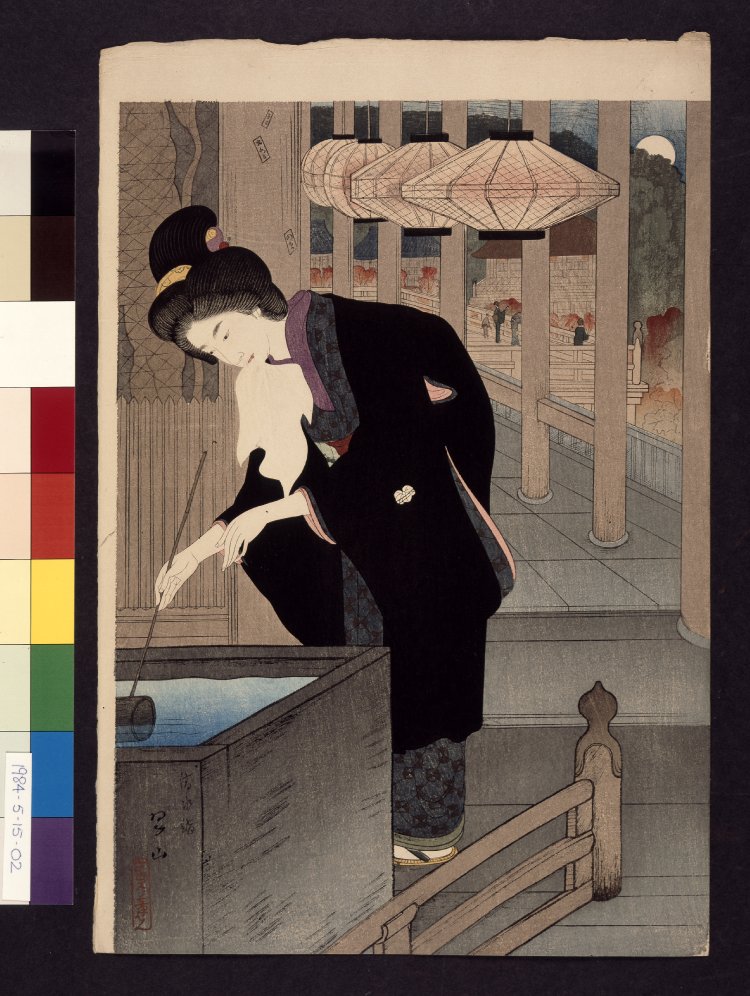
Miki Suizan
三木翠山
1883–1957

Okiie Hashimoto
橋本興家
1899–1993

Shiro Kasamatsu
笠松紫浪
1898–1991
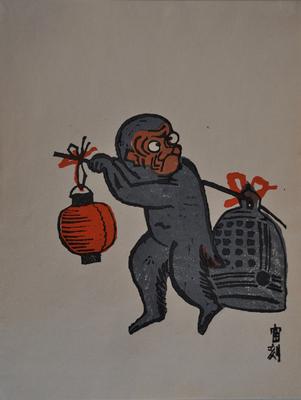
Tomikichiro Tokuriki
徳力富吉郎
1902–1999
Toyohara Chikanobu
豊原周延
1838–1912

Utagawa Hiroshige
歌川広重
1797–1858
Frequently Asked Questions
Arashiyama is a district on the western edge of Kyoto, in the foothills of the mountains that close off the Kyoto basin on the west, where the Hozu River emerges from its gorge and is renamed the Katsura River as it flows toward the city center, in present-day Ukyo Ward. The area takes its name, which means storm mountain, from the wooded slopes that rise above the river, and it has been a celebrated retreat and pleasure ground of the Kyoto aristocracy since at least the Heian period, when the area was the location of imperial detached palaces and the villas of the Fujiwara and Saionji families. The Togetsukyo bridge that spans the river, whose name means moon-crossing bridge and is attributed to a remark by the retired emperor Kameyama in the late thirteenth century, was first constructed in the ninth century during the early Heian period and has been rebuilt many times, with the present wooden-railed concrete-and-steel span dating to the twentieth century. The slopes above the bridge are renowned for cherry blossom in spring, when more than a thousand trees of various varieties bloom across the mountainside, and for vivid red maple in autumn, when the area becomes one of the most heavily visited destinations in the Kyoto basin. The surrounding district contains major Zen monasteries including Tenryu-ji, founded in 1339 by the shogun Ashikaga Takauji on the site of the Heian-period Kameyama detached palace as one of the great Rinzai institutions of Kyoto and now a UNESCO World Heritage Site, and Hogon-in, Daikaku-ji, and the smaller temples that extend north into the Sagano district. The Hozu-gawa boat ride from Kameoka to Arashiyama, descending the river through the gorge above the bridge, has been a popular excursion since at least the Edo period. For Japanese printmaking, Arashiyama belongs to the canonical roster of Kyoto meisho, and it appears in Utagawa Hiroshige's Famous Views of Kyoto issued around 1834, which depicts the river, the bridge, and the blossoming cherries on the slopes above. Hokusai treated Arashiyama in his depictions of the Kyoto approach to the Tokaido and in passages of his printed books, and Hasegawa Sadanobu and other Kansai-region late ukiyo-e artists produced individual sheets of the bridge and the surrounding river. With the shin-hanga revival, the district became a major subject for Kawase Hasui, Yoshida Hiroshi, Tsuchiya Koitsu, and Asano Takeji, each of whom produced one or more compositions of the bridge, the river, and the seasonal foliage, with Hasui's evening and snow Arashiyama prints among the most reproduced of his Kyoto subjects. Tokuriki Tomikichiro, a Kyoto-based sosaku-hanga artist, included Arashiyama prominently in his Eight Views of Kyoto and other Kyoto-centered series, and the postwar Kyoto sosaku-hanga circle treated the district in various seasonal compositions. The visual character of Arashiyama in prints is built on the curve of the river beneath the bridge, the foreground reeds and reflective water, the steep wooded slope behind, the seasonal blossoms or maple foliage, the boats of fishermen or pleasure parties on the river, and frequently the diffused atmospheric conditions of the western Kyoto setting. The adjacent Sagano district, treated under its own entry, continues this western Kyoto landscape into the bamboo groves and rural temples north and west of the bridge. Modern Arashiyama remains one of the most heavily visited districts of Kyoto, with the Togetsukyo bridge, the Tenryu-ji garden, the bamboo grove path, and the Kameyama Park overlook preserving the broad outlines of the meisho geography that the printmakers recorded, reached via the JR Sagano Line to Saga-Arashiyama Station, the Hankyu Arashiyama Line, or the Keifuku Randen tram.
Hanga catalogues 15 prints depicting Arashiyama (嵐山), by 12 different artists.
Hiroshi Yoshida, Insho Domoto, and Katsushika Hokusai are among the 12 artists who depicted Arashiyama in our collection.
Want to rate prints from Arashiyama?
Sign up to start rating