Experimental Print
c. 1980–present
About Experimental Print
Experimental print is the loose movement-category used to describe the strand of postwar Japanese printmaking that broke decisively with the inherited conventions of sōsaku-hanga to pursue abstraction, mixed media, photographic and material experimentation, and conceptual approaches — a strand that took root in the late 1940s and 1950s, peaked in the 1960s and 1970s, and continues in contemporary Japanese print practice. Its prehistory lies in the late work of Onchi Kōshirō (1891-1955), the founding theorist of sōsaku-hanga, who had produced what is conventionally identified as the first abstract print in any tradition in 1915 and who, after the war, used the First Thursday Society (Ichimoku-kai) and the Modern Print Study Society to encourage artists around him to move beyond representational landscape and into self-expressive abstraction influenced by Wassily Kandinsky, Edvard Munch, and the European avant-garde (https://www.seegreatart.art/how-onchi-koshiro-popularized-abstract-art-in-japan/). The widely cited inflection point for the movement is the 1954 turn of the oil painter Hagiwara Hideo (1913-2007) toward woodblock during a long convalescence from tuberculosis; almost immediately his prints went abstract, and he proceeded over the following decades to invent techniques unique to his practice — among them ura-zuri (double-sided printing in which pigment is pushed through the paper from behind, in 1959); inked driftwood pressed into the sheet to register relief patterns; and custom-built pads that scored the paper as they pressed it onto the block (https://www.orientations.com.hk/highlights/the-abstract-prints-of-hagiwara-hideo). Rather than work from sketches, Hagiwara visualized the image whole and carved it directly into plywood, producing a more spontaneous and tactile result; he was invited to the first International Triennial of Coloured Graphic Prints at Grenchen, Switzerland, in 1958 and later served as chief director of the Nihon Hanga Kyōkai (Japan Print Association) from 1979 to 1990, in effect institutionalizing the experimental wing of the field (https://www.orientations.com.hk/highlights/the-abstract-prints-of-hagiwara-hideo). By the mid-1950s some three hundred Japanese print artists were working in abstract idioms, and the field had splintered into a series of distinct experimental practices: Haku Maki built blocks from cement and cardboard run through etching presses, treating the woodblock as a hybrid relief object; Masaji Yoshida cut jigsaw-puzzle-like blocks from single boards and printed on unsized paper for softened color edges; Reika Iwami, Chizuko Yoshida, and others used embossing (blind printing) to introduce three-dimensional incident into otherwise minimal compositions; and a number of artists incorporated the natural grain and knots of the block as expressive elements rather than concealing them (https://www.asianartscollection.com/id/Abstraction-in-Postwar-Japanese-Printmaking/39). A further turn came in the late 1960s and 1970s, when the social and political upheavals around the renewal of the U.S.-Japan Security Treaty (Anpo), rapid urbanization, and the rise of conceptual art prompted a generation of printmakers to dismantle the boundaries between print, photography, and sculpture. Artists chemically transferred printed type and photographic images onto blocks or screens and recombined them with woodgrain and ink; in 1974 the printmaker Kimura was awarded a prize at the 9th International Biennial of Prints in Tokyo for a silkscreen depicting a photographic image of a hand holding a pencil printed on graph paper, an emblematic work of the period's interest in image-as-matter (https://artsandculture.google.com/story/photographic-images-and-matter-japanese-prints-of-the-1970s-gyeonggi-museum-of-modern-art/YQXxuq9EJhRiLA). The 1970s trend toward prints "with an extremely strong materiality, in which the image was transformed into a material," significantly expanded the field and pushed it into contact with conceptual art and the broader international print biennale circuit (https://artsandculture.google.com/story/photographic-images-and-matter-japanese-prints-of-the-1970s-gyeonggi-museum-of-modern-art/YQXxuq9EJhRiLA). Contemporary practitioners — represented in institutions such as the Smithsonian's National Museum of Asian Art exhibition Cut + Paste: Experimental Japanese Prints and Photographs — continue this experimental lineage, working at the boundaries of relief, intaglio, silkscreen, photographic transfer, and digital media (https://asia.si.edu/accessibility/accessible-exhibition-text-cut-paste-experimental-japanese-prints-and-photographs/). As a movement category, experimental print is therefore best understood not as a single school but as the postwar Japanese print field's running critical edge: an inheritance from late Onchi and Hagiwara of the idea that the print is a site of personal invention, material experimentation, and conceptual risk rather than a transmissible craft.
Experimental Print Artists (1)
Notable Works
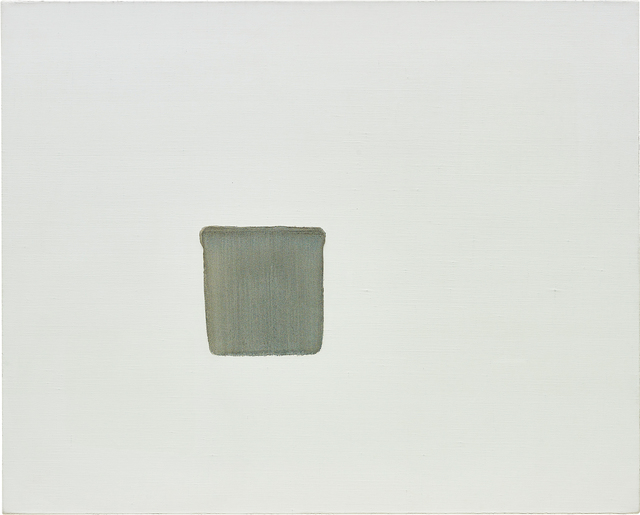
Correspondance
2000
Oil on canvas

Desert Ginza
Drypoint
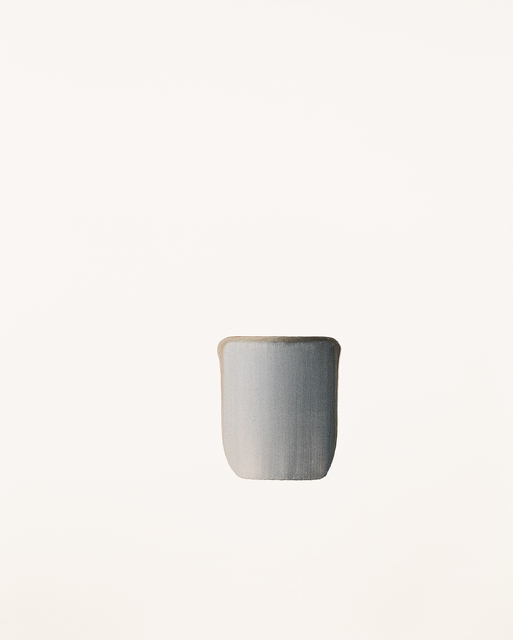
Dialogue
2012
Oil and mineral pigment on canvas
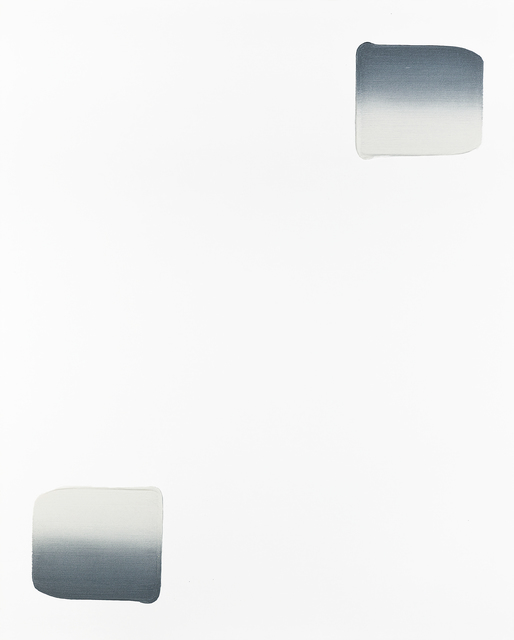
Dialogue
2013
Oil and mineral pigment on canvas

From Line
1977
Color pigment on canvas

From Lines
1974
Oil on canvas
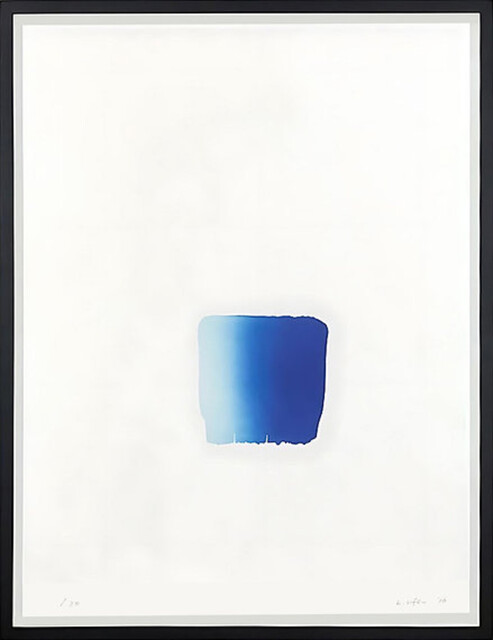
Lee Ufan Dialogue
2016
Lithograph on Arches wove paper with deckled edge.

Port of Call 1
1991
Lithograph
Frequently Asked Questions
Experimental print is the loose movement-category used to describe the strand of postwar Japanese printmaking that broke decisively with the inherited conventions of sōsaku-hanga to pursue abstraction, mixed media, photographic and material experimentation, and conceptual approaches — a strand that took root in the late 1940s and 1950s, peaked in the 1960s and 1970s, and continues in contemporary Japanese print practice. Its prehistory lies in the late work of Onchi Kōshirō (1891-1955), the founding theorist of sōsaku-hanga, who had produced what is conventionally identified as the first abstract print in any tradition in 1915 and who, after the war, used the First Thursday Society (Ichimoku-kai) and the Modern Print Study Society to encourage artists around him to move beyond representational landscape and into self-expressive abstraction influenced by Wassily Kandinsky, Edvard Munch, and the European avant-garde (https://www.seegreatart.art/how-onchi-koshiro-popularized-abstract-art-in-japan/). The widely cited inflection point for the movement is the 1954 turn of the oil painter Hagiwara Hideo (1913-2007) toward woodblock during a long convalescence from tuberculosis; almost immediately his prints went abstract, and he proceeded over the following decades to invent techniques unique to his practice — among them ura-zuri (double-sided printing in which pigment is pushed through the paper from behind, in 1959); inked driftwood pressed into the sheet to register relief patterns; and custom-built pads that scored the paper as they pressed it onto the block (https://www.orientations.com.hk/highlights/the-abstract-prints-of-hagiwara-hideo). Rather than work from sketches, Hagiwara visualized the image whole and carved it directly into plywood, producing a more spontaneous and tactile result; he was invited to the first International Triennial of Coloured Graphic Prints at Grenchen, Switzerland, in 1958 and later served as chief director of the Nihon Hanga Kyōkai (Japan Print Association) from 1979 to 1990, in effect institutionalizing the experimental wing of the field (https://www.orientations.com.hk/highlights/the-abstract-prints-of-hagiwara-hideo). By the mid-1950s some three hundred Japanese print artists were working in abstract idioms, and the field had splintered into a series of distinct experimental practices: Haku Maki built blocks from cement and cardboard run through etching presses, treating the woodblock as a hybrid relief object; Masaji Yoshida cut jigsaw-puzzle-like blocks from single boards and printed on unsized paper for softened color edges; Reika Iwami, Chizuko Yoshida, and others used embossing (blind printing) to introduce three-dimensional incident into otherwise minimal compositions; and a number of artists incorporated the natural grain and knots of the block as expressive elements rather than concealing them (https://www.asianartscollection.com/id/Abstraction-in-Postwar-Japanese-Printmaking/39). A further turn came in the late 1960s and 1970s, when the social and political upheavals around the renewal of the U.S.-Japan Security Treaty (Anpo), rapid urbanization, and the rise of conceptual art prompted a generation of printmakers to dismantle the boundaries between print, photography, and sculpture. Artists chemically transferred printed type and photographic images onto blocks or screens and recombined them with woodgrain and ink; in 1974 the printmaker Kimura was awarded a prize at the 9th International Biennial of Prints in Tokyo for a silkscreen depicting a photographic image of a hand holding a pencil printed on graph paper, an emblematic work of the period's interest in image-as-matter (https://artsandculture.google.com/story/photographic-images-and-matter-japanese-prints-of-the-1970s-gyeonggi-museum-of-modern-art/YQXxuq9EJhRiLA). The 1970s trend toward prints "with an extremely strong materiality, in which the image was transformed into a material," significantly expanded the field and pushed it into contact with conceptual art and the broader international print biennale circuit (https://artsandculture.google.com/story/photographic-images-and-matter-japanese-prints-of-the-1970s-gyeonggi-museum-of-modern-art/YQXxuq9EJhRiLA). Contemporary practitioners — represented in institutions such as the Smithsonian's National Museum of Asian Art exhibition Cut + Paste: Experimental Japanese Prints and Photographs — continue this experimental lineage, working at the boundaries of relief, intaglio, silkscreen, photographic transfer, and digital media (https://asia.si.edu/accessibility/accessible-exhibition-text-cut-paste-experimental-japanese-prints-and-photographs/). As a movement category, experimental print is therefore best understood not as a single school but as the postwar Japanese print field's running critical edge: an inheritance from late Onchi and Hagiwara of the idea that the print is a site of personal invention, material experimentation, and conceptual risk rather than a transmissible craft.
The Experimental Print movement was active from approximately 1980 to the present day.
Notable Experimental Print artists include Lee Ufan.
Experimental print is the loose movement-category used to describe the strand of postwar Japanese printmaking that broke decisively with the inherited conventions of sōsaku-hanga to pursue abstraction, mixed media, photographic and material experimentation, and conceptual approaches — a strand that took root in the late 1940s and 1950s, peaked in the 1960s and 1970s, and continues in contemporary Japanese print practice. Its prehistory lies in the late work of Onchi Kōshirō (1891-1955), the founding theorist of sōsaku-hanga, who had produced what is conventionally identified as the first abstract print in any tradition in 1915 and who, after the war, used the First Thursday Society (Ichimoku-kai) and the Modern Print Study Society to encourage artists around him to move beyond representational landscape and into self-expressive abstraction influenced by Wassily Kandinsky, Edvard Munch, and the European avant-garde (https://www.seegreatart.art/how-onchi-koshiro-popularized-abstract-art-in-japan/). The widely cited inflection point for the movement is the 1954 turn of the oil painter Hagiwara Hideo (1913-2007) toward woodblock during a long convalescence from tuberculosis; almost immediately his prints went abstract, and he proceeded over the following decades to invent techniques unique to his practice — among them ura-zuri (double-sided printing in which pigment is pushed through the paper from behind, in 1959); inked driftwood pressed into the sheet to register relief patterns; and custom-built pads that scored the paper as they pressed it onto the block (https://www.orientations.com.hk/highlights/the-abstract-prints-of-hagiwara-hideo). Rather than work from sketches, Hagiwara visualized the image whole and carved it directly into plywood, producing a more spontaneous and tactile result; he was invited to the first International Triennial of Coloured Graphic Prints at Grenchen, Switzerland, in 1958 and later served as chief director of the Nihon Hanga Kyōkai (Japan Print Association) from 1979 to 1990, in effect institutionalizing the experimental wing of the field (https://www.orientations.com.hk/highlights/the-abstract-prints-of-hagiwara-hideo). By the mid-1950s some three hundred Japanese print artists were working in abstract idioms, and the field had splintered into a series of distinct experimental practices: Haku Maki built blocks from cement and cardboard run through etching presses, treating the woodblock as a hybrid relief object; Masaji Yoshida cut jigsaw-puzzle-like blocks from single boards and printed on unsized paper for softened color edges; Reika Iwami, Chizuko Yoshida, and others used embossing (blind printing) to introduce three-dimensional incident into otherwise minimal compositions; and a number of artists incorporated the natural grain and knots of the block as expressive elements rather than concealing them (https://www.asianartscollection.com/id/Abstraction-in-Postwar-Japanese-Printmaking/39). A further turn came in the late 1960s and 1970s, when the social and political upheavals around the renewal of the U.S.-Japan Security Treaty (Anpo), rapid urbanization, and the rise of conceptual art prompted a generation of printmakers to dismantle the boundaries between print, photography, and sculpture. Artists chemically transferred printed type and photographic images onto blocks or screens and recombined them with woodgrain and ink; in 1974 the printmaker Kimura was awarded a prize at the 9th International Biennial of Prints in Tokyo for a silkscreen depicting a photographic image of a hand holding a pencil printed on graph paper, an emblematic work of the period's interest in image-as-matter (https://artsandculture.google.com/story/photographic-images-and-matter-japanese-prints-of-the-1970s-gyeonggi-museum-of-modern-art/YQXxuq9EJhRiLA). The 1970s trend toward prints "with an extremely strong materiality, in which the image was transformed into a material," significantly expanded the field and pushed it into contact with conceptual art and the broader international print biennale circuit (https://artsandculture.google.com/story/photographic-images-and-matter-japanese-prints-of-the-1970s-gyeonggi-museum-of-modern-art/YQXxuq9EJhRiLA). Contemporary practitioners — represented in institutions such as the Smithsonian's National Museum of Asian Art exhibition Cut + Paste: Experimental Japanese Prints and Photographs — continue this experimental lineage, working at the boundaries of relief, intaglio, silkscreen, photographic transfer, and digital media (https://asia.si.edu/accessibility/accessible-exhibition-text-cut-paste-experimental-japanese-prints-and-photographs/). As a movement category, experimental print is therefore best understood not as a single school but as the postwar Japanese print field's running critical edge: an inheritance from late Onchi and Hagiwara of the idea that the print is a site of personal invention, material experimentation, and conceptual risk rather than a transmissible craft.
Related Movements
Want to rate Experimental Print prints?
Sign up to start rating