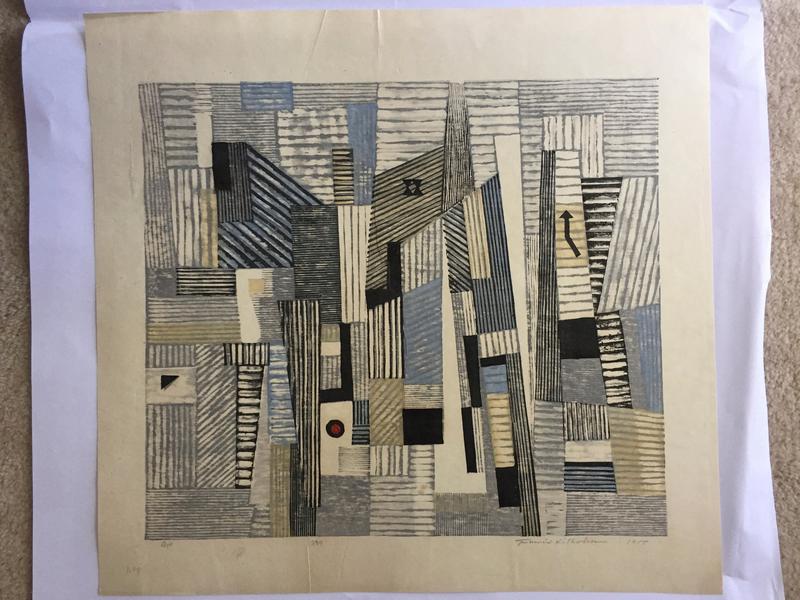
Biography
Fumio Kitaoka (北岡文雄, 1918–2007) was a Japanese sosaku-hanga printmaker whose career traced an extraordinary arc from wartime Manchuria through postwar Tokyo, Paris, and New York, producing a body of work that ranged from social-realist documentation to sophisticated abstract landscapes. Born in Tokyo in 1918, he studied oil painting under Fujishima Takeji at the Tokyo School of Fine Arts (now Tokyo University of the Arts) from 1936 to 1941, where his instructors in his final years included the printmaker Hiratsuka Un'ichi, who introduced him to woodblock technique.
After graduating, Kitaoka worked as an art teacher in Tokyo until 1945, when he was sent to occupied Manchuria to work with the Japanese government's Northeast Asia Culture Development Society. The experience proved transformative. In China he encountered contemporary social-realist monochrome prints, and the difficult journey of repatriation after Japan's surrender inspired his first major work: 'Sokoku e no Tabi' (Journey to the Homeland), a series of woodblock prints completed in 1947 that chronicled the harrowing return of Japanese civilians from Manchuria. The series depicted refugee camps, travel by wagon, nights spent sleeping outdoors, and the crowded hold of the ship that carried the evacuees home. These unflinching images rank among the most powerful visual records of postwar repatriation and established Kitaoka as an artist of serious ambition.
Upon returning to Tokyo, Kitaoka attended the evening study sessions led by Onchi Koshiro and joined the Ichimokukai (First Thursday Society), the informal gathering that served as a crucible for sosaku-hanga development. His postwar work shifted from the social realism of the repatriation series toward landscape and natural subjects rendered with increasing formal sophistication. He was drawn to the textures of the natural world — rock faces, flowing water, geological formations, and the patterns of bark and foliage — which he translated into prints of bold graphic simplification and rhythmic compositional force.
In 1955, Kitaoka moved to Paris to study wood engraving at the École des Beaux-Arts, broadening his technical vocabulary and absorbing European printmaking traditions. Nearly a decade later, from 1964 to 1965, he taught printmaking at the Minneapolis School of Art and at the Pratt Institute in Brooklyn, New York, contributing to the transmission of Japanese woodblock technique to American artists and students.
Kitaoka exhibited regularly at international print biennials and competitions throughout his career. His prints are held in the collections of the Museum of Modern Art in New York, the Museum of Fine Arts in Boston, and the Art Institute of Chicago, which holds impressions from the 'Journey to the Homeland' series. He died on April 23, 2007, having devoted much of his long life to the practice of creative woodblock printmaking.
Key Facts
- Active Period
- 1918–2007
- Nationality
- 🇯🇵Japan
- Movement
- Sōsaku-hanga
- Works Indexed
- 205
Frequently Asked Questions
Fumio Kitaoka (北岡文雄, 1918–2007) was a Japanese sosaku-hanga printmaker whose career traced an extraordinary arc from wartime Manchuria through postwar Tokyo, Paris, and New York, producing a body of work that ranged from social-realist documentation to sophisticated abstract landscapes. Born in Tokyo in 1918, he studied oil painting under Fujishima Takeji at the Tokyo School of Fine Arts (now Tokyo University of the Arts) from 1936 to 1941, where his instructors in his final years included the printmaker Hiratsuka Un'ichi, who introduced him to woodblock technique.
Fumio Kitaoka was active from 1918 to 2007. They were associated with the Sōsaku-hanga movement.
Fumio Kitaoka's work was shaped by the Sōsaku-hanga tradition in Japanese woodblock printmaking. Sōsaku-hanga: ## What is sōsaku-hanga? Sōsaku-hanga (創作版画, "creative prints") was a twentieth-century Japanese print movement defined by a single commitment: the artist must design, carve, and print every work alone.
Fumio Kitaoka's prints frequently feature landscapes, abstract, trees, seascapes, night scenes, birds & flowers.
Original prints by Fumio Kitaoka can be found in collections including wbp, Japanese Art Open Database, Minneapolis Institute of Art, Asian Collection Internet Auction.
Based on 111 recorded auction sales from 2010–2025, most Fumio Kitaoka prints sold in the $100–$200 range, with a median around $150. Top results exceeded $325. Actual prices vary widely with edition, condition, and subject.
Series by Fumio Kitaoka
Woodblock Prints by Fumio Kitaoka (205)
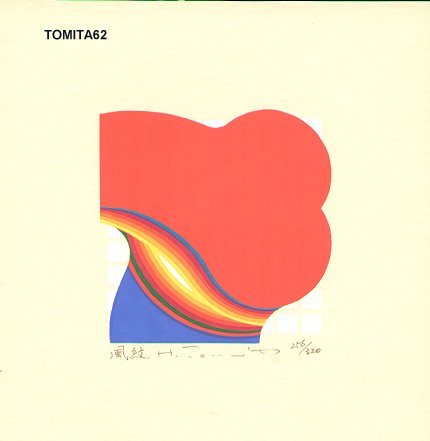
FUMON (wind crest)
Woodblock print
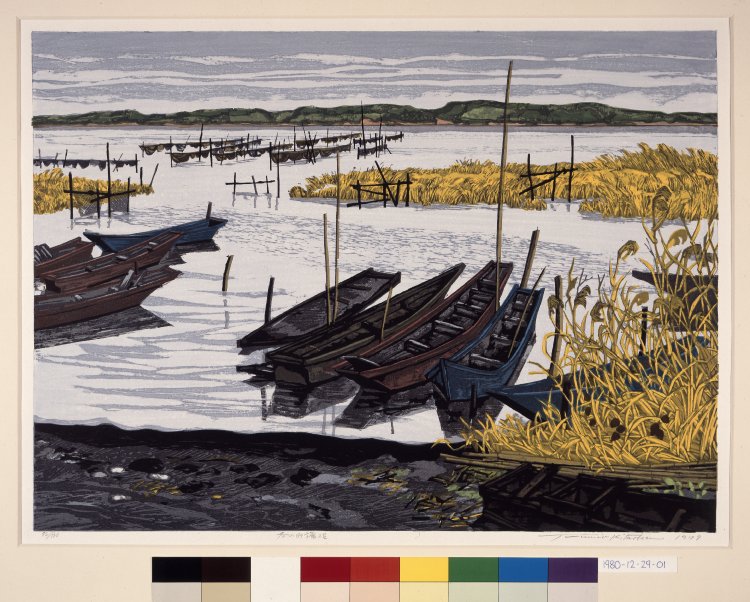
Fuyu no Inabanuma (Winter at Inabanuma)
Woodblock print
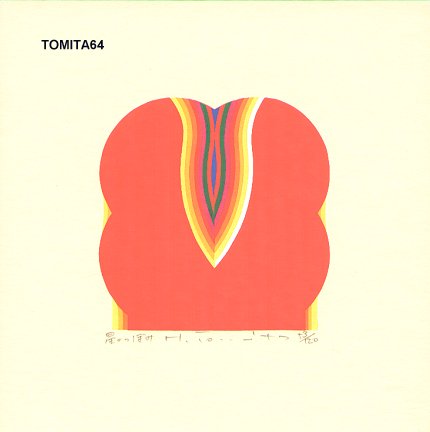
HOSHI-NO-TSUBOMI (Star bud)
Woodblock print
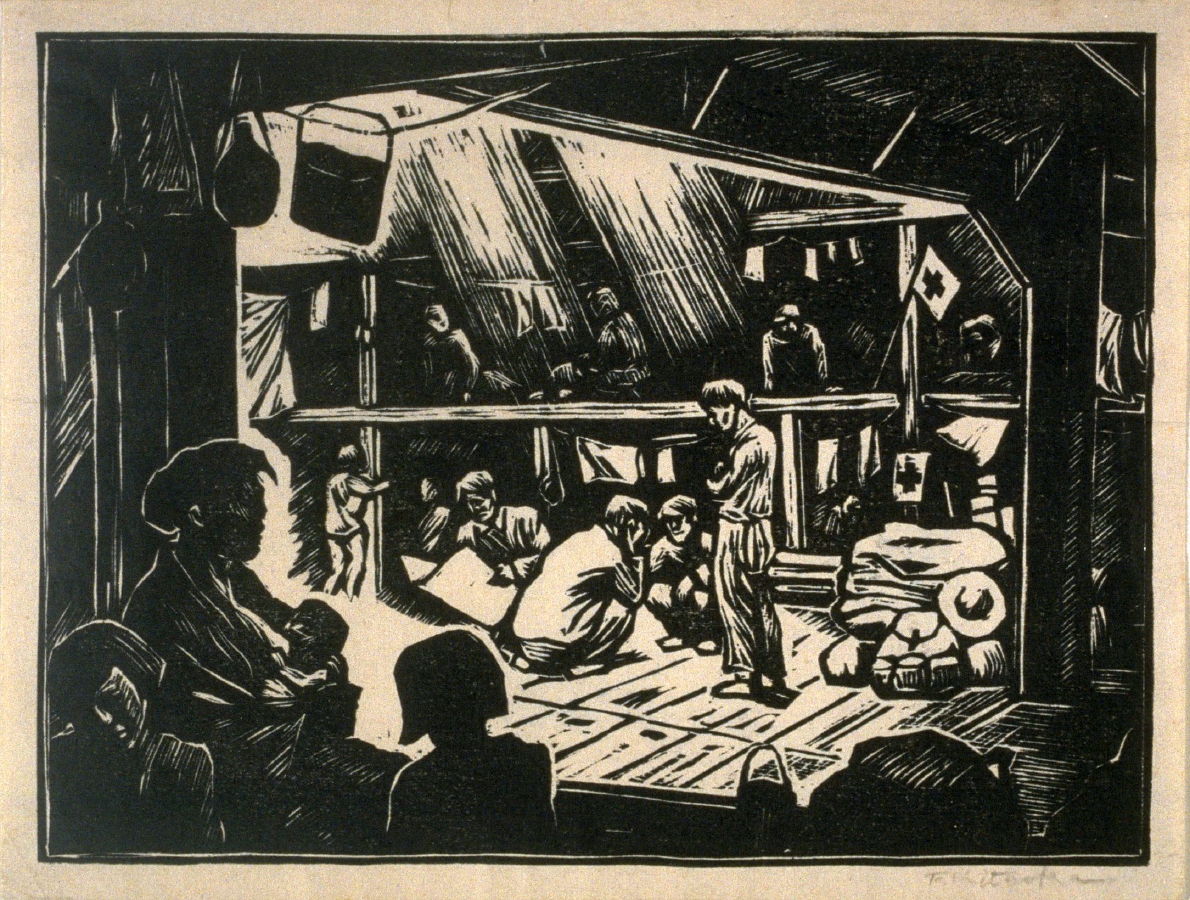
Hospital or Barracks Scene
Woodblock print
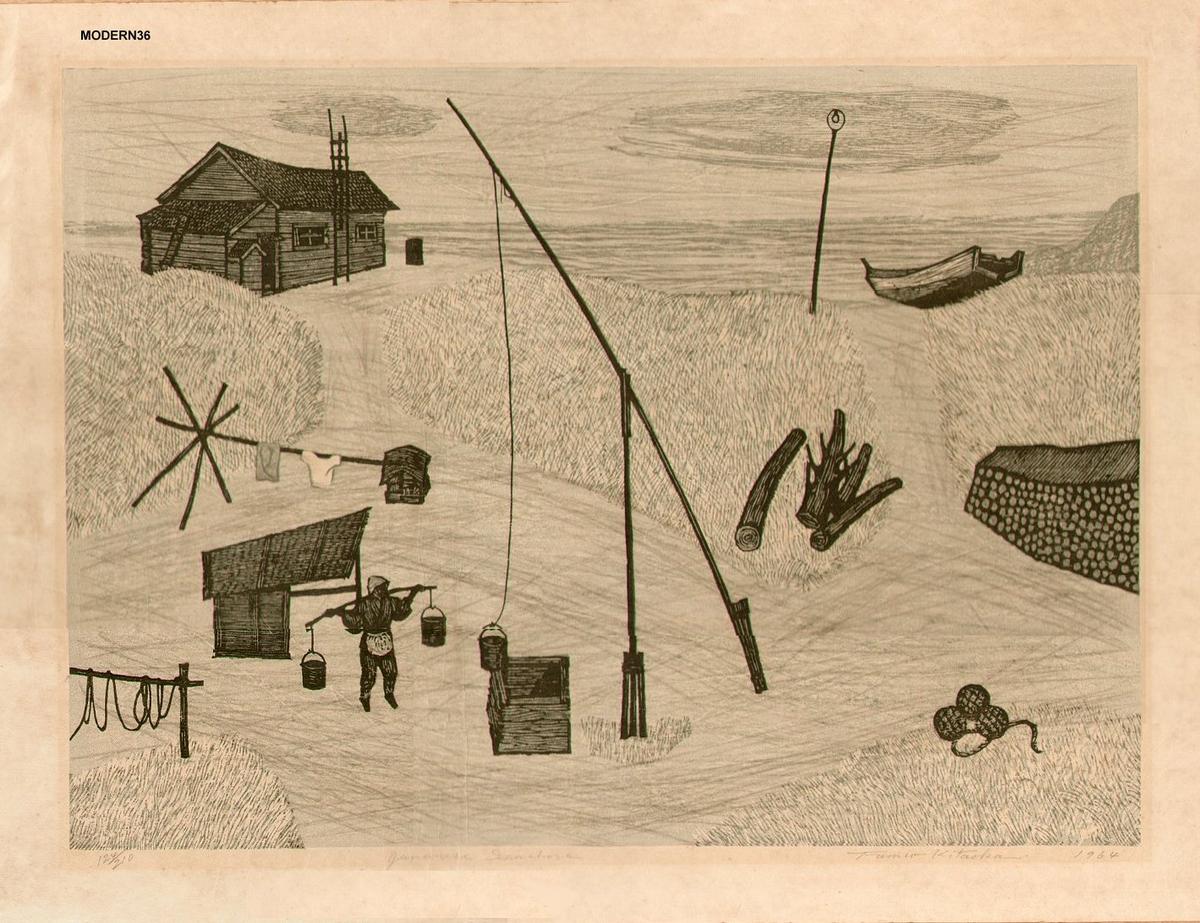
Japanese Seashore (97/210)
Woodblock print
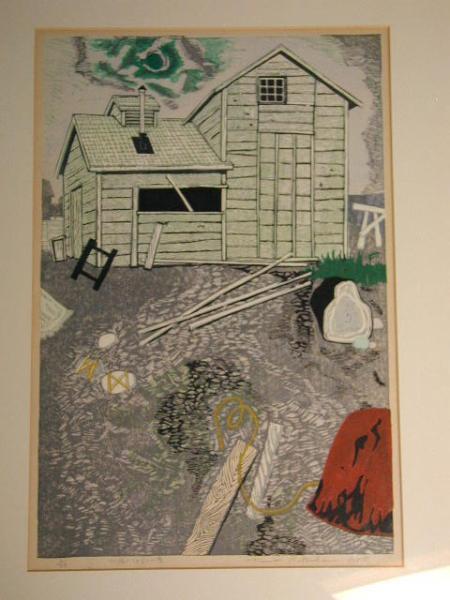
Kitaguni no Umigo no Koya — 北国の海辺の小屋
Woodblock print
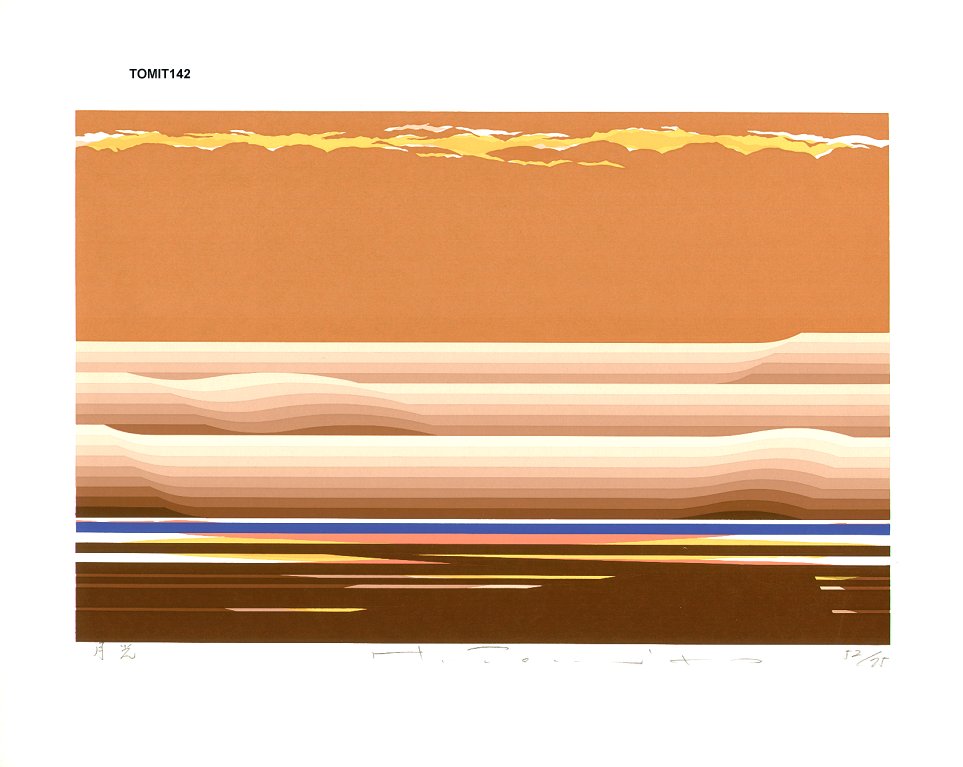
Moonlight
Woodblock print
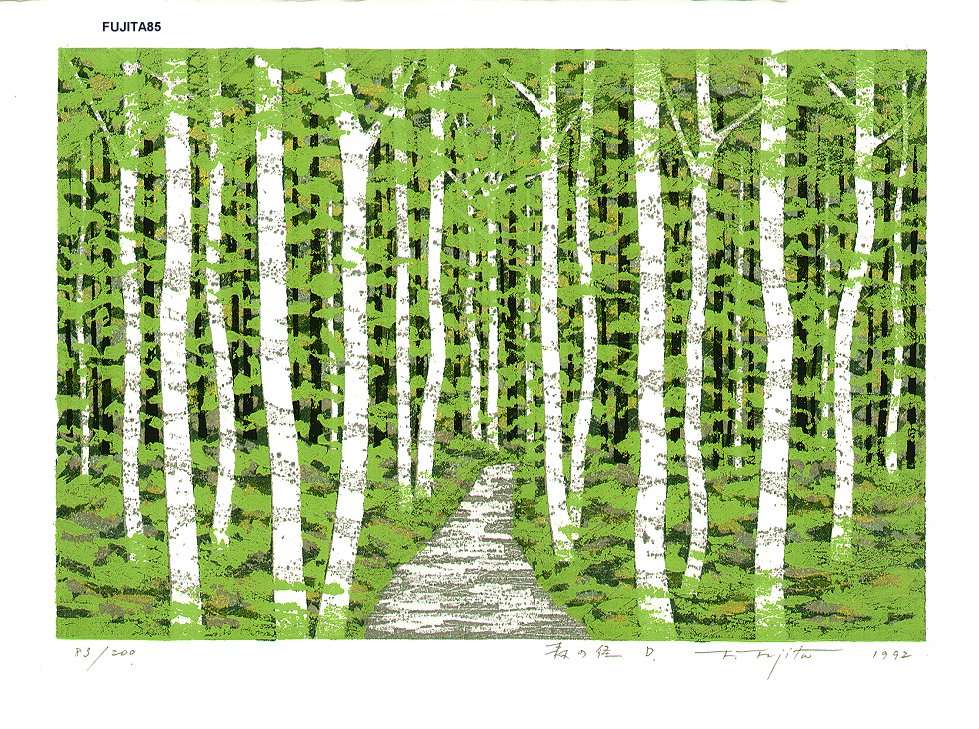
MORI-NO-MICHI D (Forest Oath D)
Woodblock print
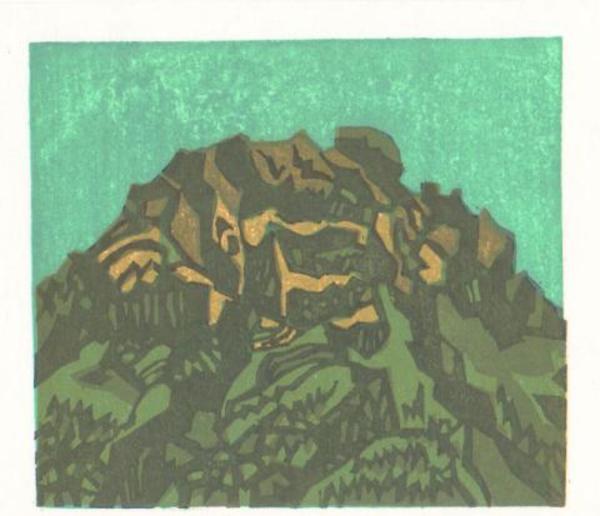
Mountain
Woodblock print
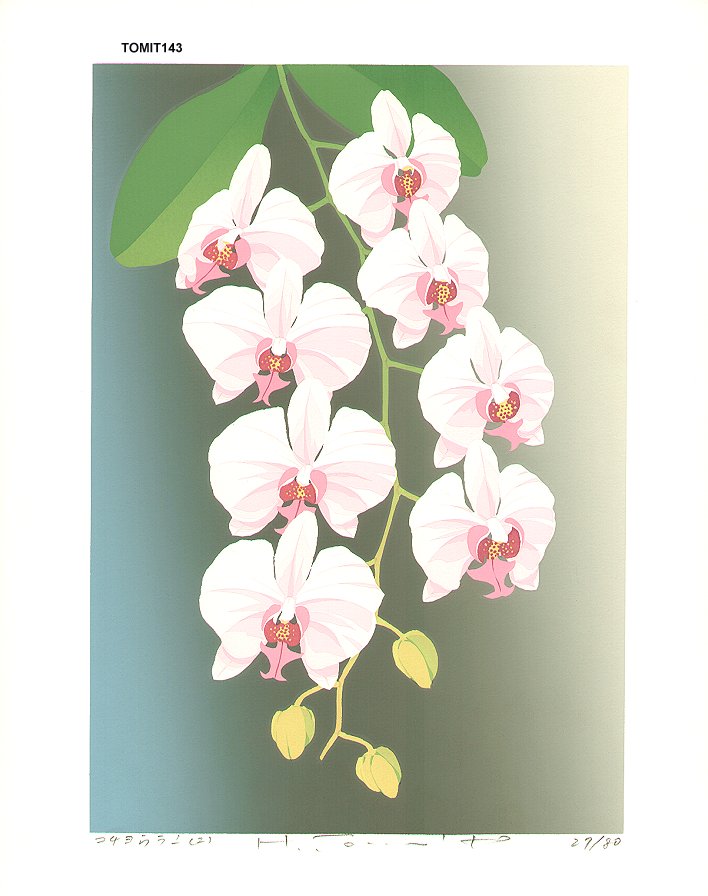
Orchis graminifolia (Orchid)
Woodblock print
BUNARIN AKI (forest of beech in autumn)
Woodblock print
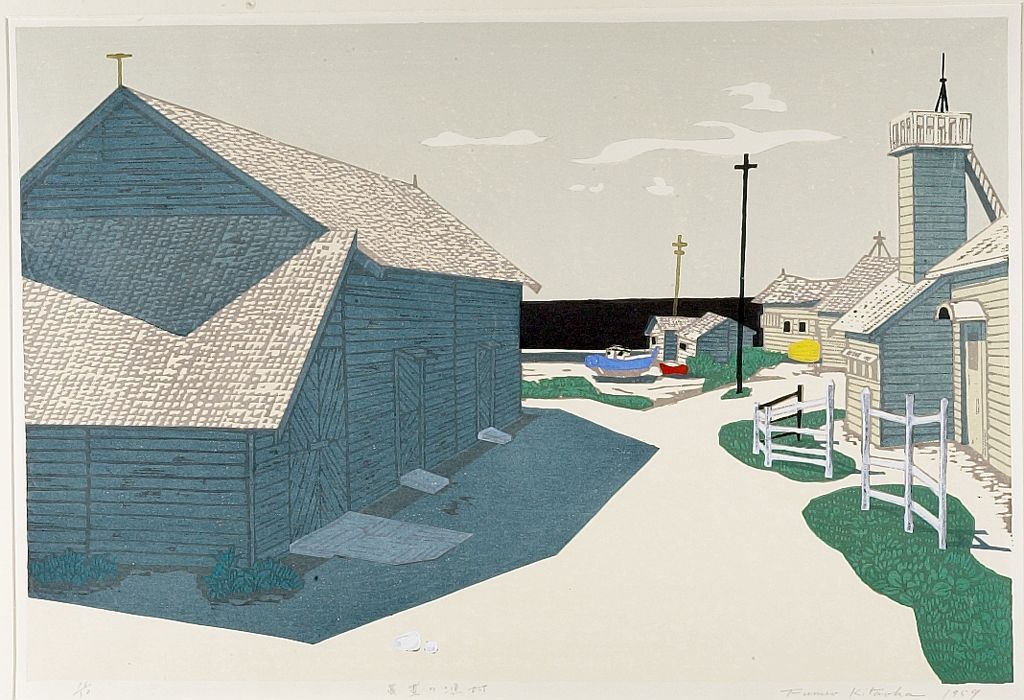
Fishing Village, Shôwa period, dated 1959
Woodblock print

SHIROIKI AKEBONO (White tree dawn)
Woodblock print
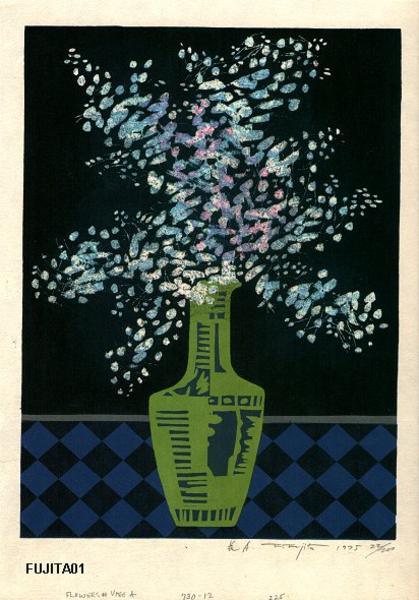
Flowers and Vase A
Woodblock print
ENOSHIMA YUKEI (Evening Scene at Enoshima)
Woodblock print

The Golden Pavilion in Spring
Mokuhanga (Japanese woodblock)
Spring of a Village among the Hills
Woodblock print

Striptease at the Nichigeki theatre
Mokuhanga (Japanese woodblock)

Car town
Mokuhanga (Japanese woodblock)
SOSHUN (early spring)
Woodblock print
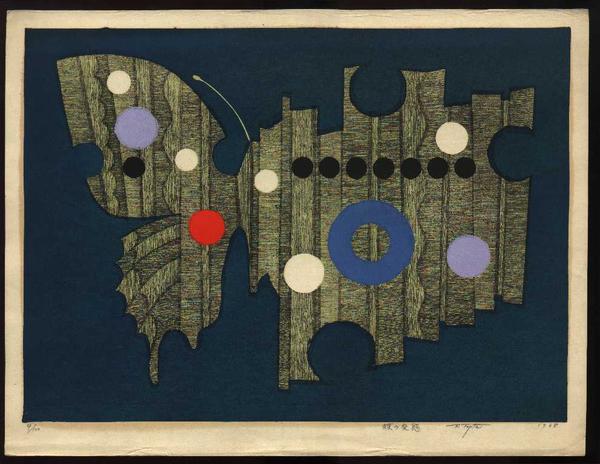
Cho no Hentai (Butterfly Transformation)
Woodblock print
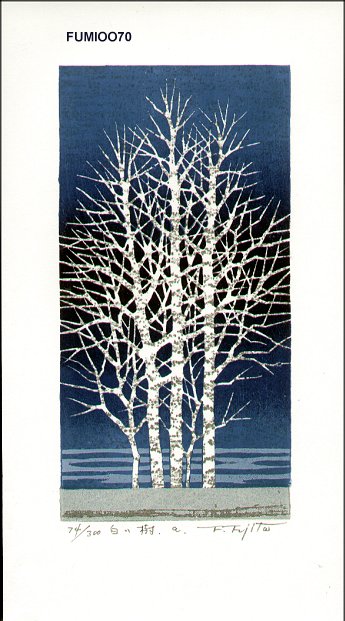
White Tree A
Woodblock print

Buddhas
Mokuhanga (Japanese woodblock)

Abstract
Mokuhanga (Japanese woodblock)