
Biography
Ogata Gekko (尾形月耕, 1859–1920) was one of the most prolific and versatile Japanese woodblock print artists of the Meiji era, producing an extraordinary body of work that encompassed landscapes, beautiful women, warriors, historical subjects, nature studies, and scenes of modern life. Celebrated series such as "One Hundred Views of Mount Fuji" (Fuji hyakkei) and his extensive war prints documenting Japan's military conflicts established him as one of the most visible and commercially successful artists of his generation.
Born Nakagami Masanosuke in the Kyōbashi district of Edo (modern Tokyo) in 1859, Gekko was largely self-taught as an artist — an unusual distinction in an era when most Japanese painters apprenticed under established masters. He began his working life decorating porcelain and rickshaws and designing flyers for the pleasure quarters, teaching himself to draw by copying older masters and sketching from nature. Around 1881 he took the surname Ogata at the urging of a descendant of the celebrated Rinpa painter Ogata Kōrin, and it was under the art name Gekko that he built his reputation. His lack of formal training in any single school gave him a certain creative freedom, allowing him to draw on diverse artistic traditions without the constraints of a particular lineage or orthodoxy.
Gekko first achieved widespread recognition through his designs for woodblock prints, working with several Tokyo publishers who catered to the enormous Meiji-era appetite for illustrated books and print series. His range was remarkable: he produced delicate kacho-e (bird-and-flower prints) alongside muscular warrior subjects, elegant bijin-ga (beautiful women) alongside documentary war prints, and serene landscapes alongside bustling scenes of Tokyo's modern transformation. This versatility made him one of the most commercially successful print designers of his time, though it also contributed to his later critical neglect, as art historians tended to favor artists with more focused, easily categorizable bodies of work.
Among Gekko's most celebrated achievements is "Gekko Zuihitsu" (Gekko's Sketchbook), begun in 1886, a series of elegant prints depicting a wide range of subjects drawn from daily life, nature, and classical literature. These prints demonstrate his exceptional draftsmanship and his ability to distill complex subjects into compositions of clarity and grace. Equally admired is his "One Hundred Views of Mount Fuji" (Fuji hyakkei), a series devoted to Japan's sacred mountain that unites his gift for landscape with a refined decorative sensibility.
Gekko was also one of the most prolific creators of war prints during the First Sino-Japanese War of 1894–1895, and he continued to document Japan's military campaigns through the Russo-Japanese War of 1904–1905. These triptychs and multi-panel compositions depicted naval battles, cavalry charges, siege operations, and other military subjects with a combination of dramatic energy and documentary detail that made them enormously popular with the Japanese public. While war prints were produced by many Meiji-era artists, Gekko's are distinguished by their ambitious compositions and their attention to the specifics of modern military technology.
Beyond prints, Gekko was active as a painter and illustrator. He contributed illustrations to newspapers and books, designed decorative objects, and produced paintings for exhibition. He exhibited with the Japan Art Association — where Emperor Meiji purchased one of his works in 1898 — and took part in numerous domestic and international exhibitions. He won a prize at the 1893 World's Columbian Exposition in Chicago, showed his work at the 1900 Exposition Universelle in Paris, and was awarded a Gold Prize at the 1904 Louisiana Purchase Exposition in St. Louis, at a time when Japanese art was attracting enormous international interest.
Gekko's artistic style combined elements of traditional Japanese painting with a selective incorporation of Western techniques. His compositions often employ classical Japanese conventions of spatial arrangement and decorative patterning, but with a naturalism and attention to light that reflects the influence of Western art. His line work is characteristically fluid and assured, capable of conveying both the delicacy of flower petals and the power of crashing waves or charging warriors.
Gekko died on 1 October 1920 in Tokyo, at the age of sixty-one. His enormous output — numbering in the thousands of designs — ensures that his work is widely available to collectors, though this same prolificacy has sometimes worked against his critical reputation. In recent decades, however, scholars have increasingly recognized the quality and significance of his best work, particularly the "Gekko Zuihitsu" and "One Hundred Views of Mount Fuji" series. His prints are held in collections worldwide, including the Library of Congress, the Museum of Fine Arts Boston, the British Museum, and the Art Institute of Chicago.
Key Facts
- Active Period
- 1859–1920
- Nationality
- 🇯🇵Japan
- Movement
- Meiji/Taishō Prints
- Works Indexed
- 383
Frequently Asked Questions
Ogata Gekko (尾形月耕, 1859–1920) was one of the most prolific and versatile Japanese woodblock print artists of the Meiji era, producing an extraordinary body of work that encompassed landscapes, beautiful women, warriors, historical subjects, nature studies, and scenes of modern life. Celebrated series such as "One Hundred Views of Mount Fuji" (Fuji hyakkei) and his extensive war prints documenting Japan's military conflicts established him as one of the most visible and commercially successful artists of his generation.
Ogata Gekko was active from 1859 to 1920. They were associated with the Meiji/Taishō Prints movement.
Ogata Gekko's work was shaped by the Meiji/Taishō Prints tradition in Japanese woodblock printmaking. Meiji/Taishō Prints: Meiji and Taishō era prints (1868–1926) bridge the transition from traditional ukiyo-e to the modern shin-hanga and sosaku-hanga movements.
Ogata Gekko's prints frequently feature figures, warriors, landscapes, portraits, bijin-ga, birds & flowers.
Original prints by Ogata Gekko can be found in collections including Japanese Art Open Database, British Museum, Cleveland Museum of Art, Chazen Museum of Art.
Series by Ogata Gekko
Woodblock Prints by Ogata Gekko (383)
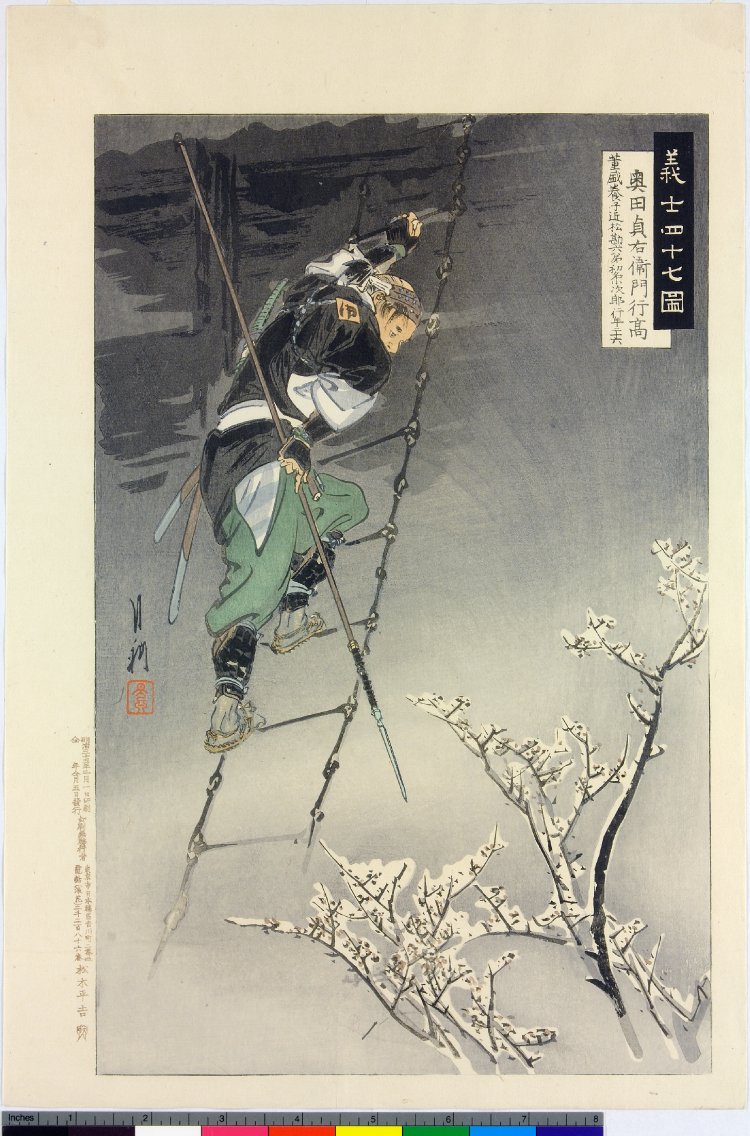
Okuda Sadaemon Yukitaka 奥田貞右衛門行高 / Gishi shijushichi zu 義士四十七図
Woodblock print

Honnoji, Amagasaki Kotokuji 本能寺/尼崎高徳寺 / Taikoki no uchi 太閤記の内
Woodblock print
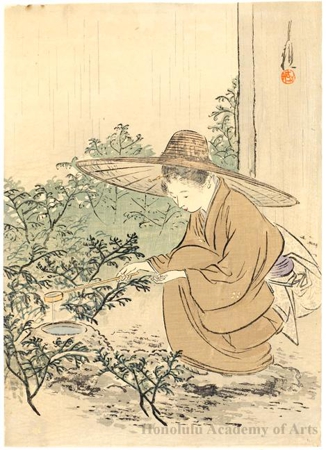
Opening the Teahouse
Woodblock print

Untitled
Woodblock print
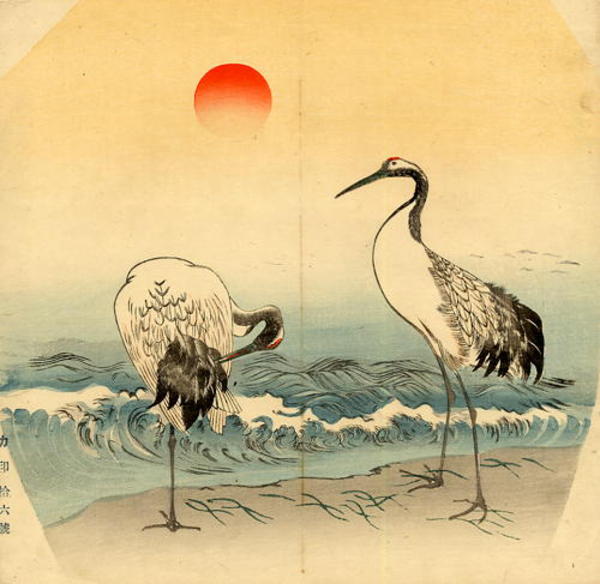
Fan Print: Kacho: Two Cranes
Woodblock print

Picture of the Surrender of Port Arthur (Ryojunkô kanraku no zu)
Woodblock print
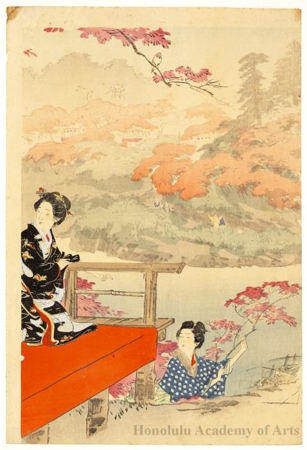
Red Leaves in Takinogawa
Woodblock print
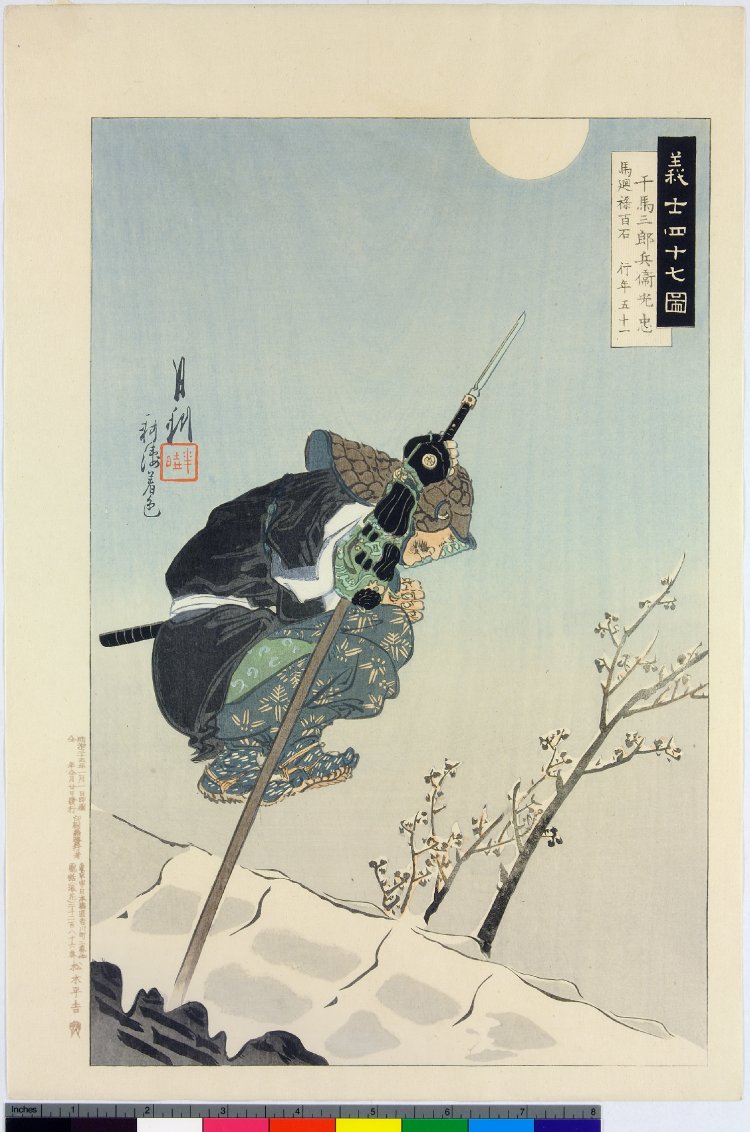
Senba Saburobe Mitsutada 千馬三郎兵衛光忠 / Gishi shijushichi zu 義士四十七図
Woodblock print

Ogata Gekko
Woodblock print
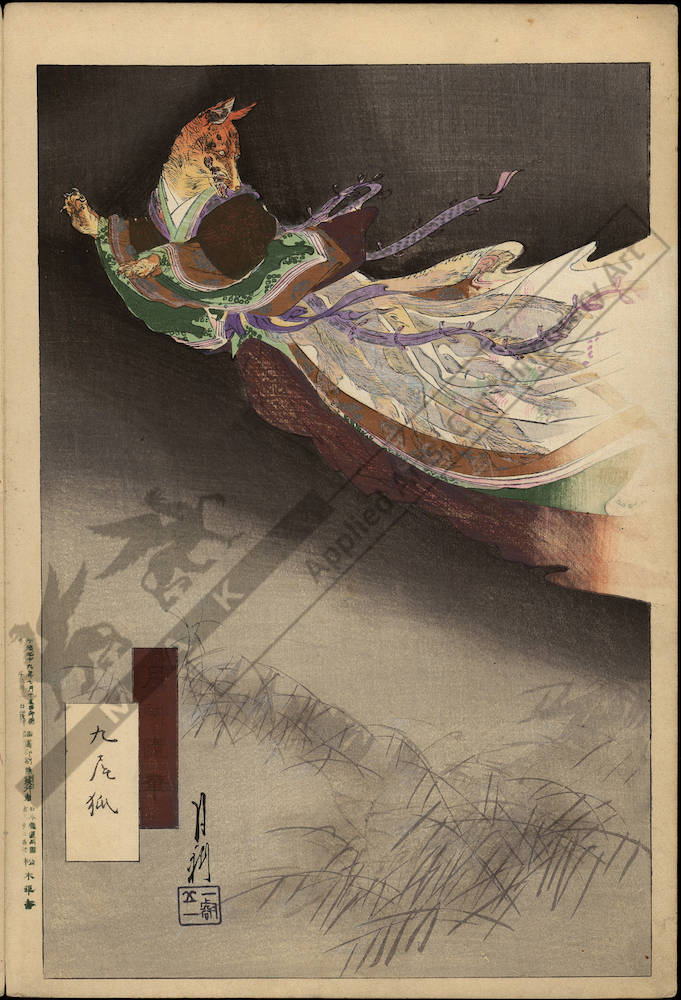
Nine tail fox
Woodblock print
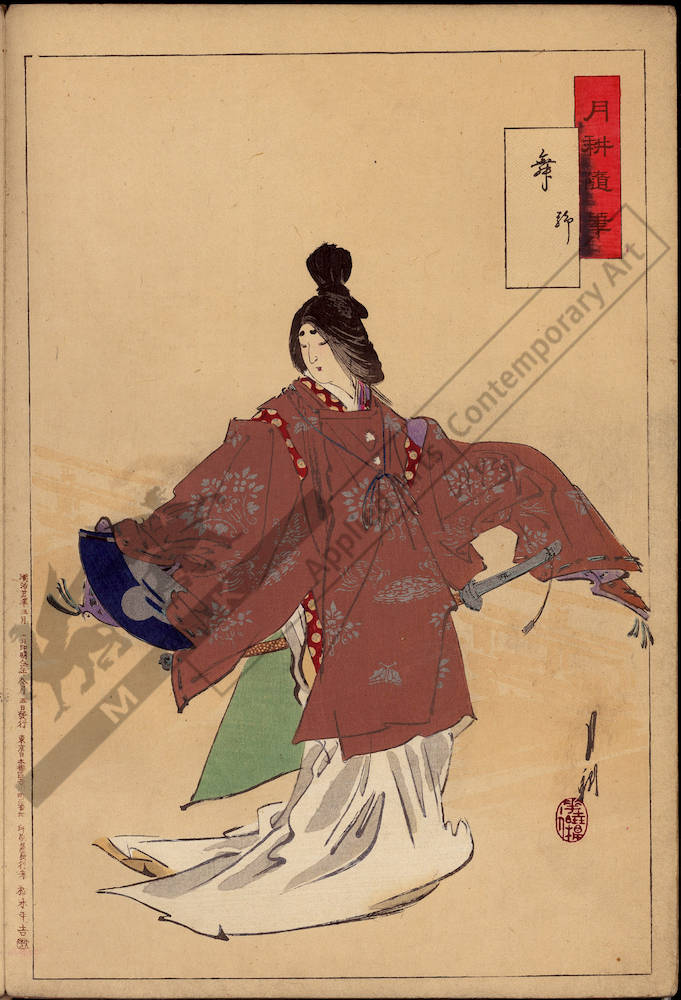
Shizuka’s dance
Woodblock print
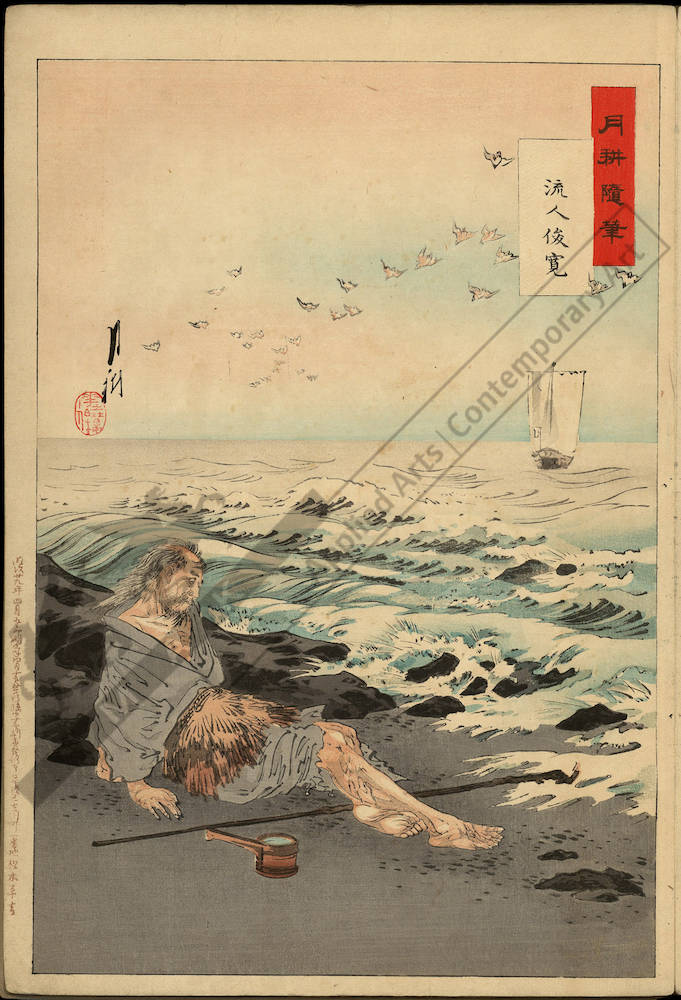
Shunkan in exile
Woodblock print
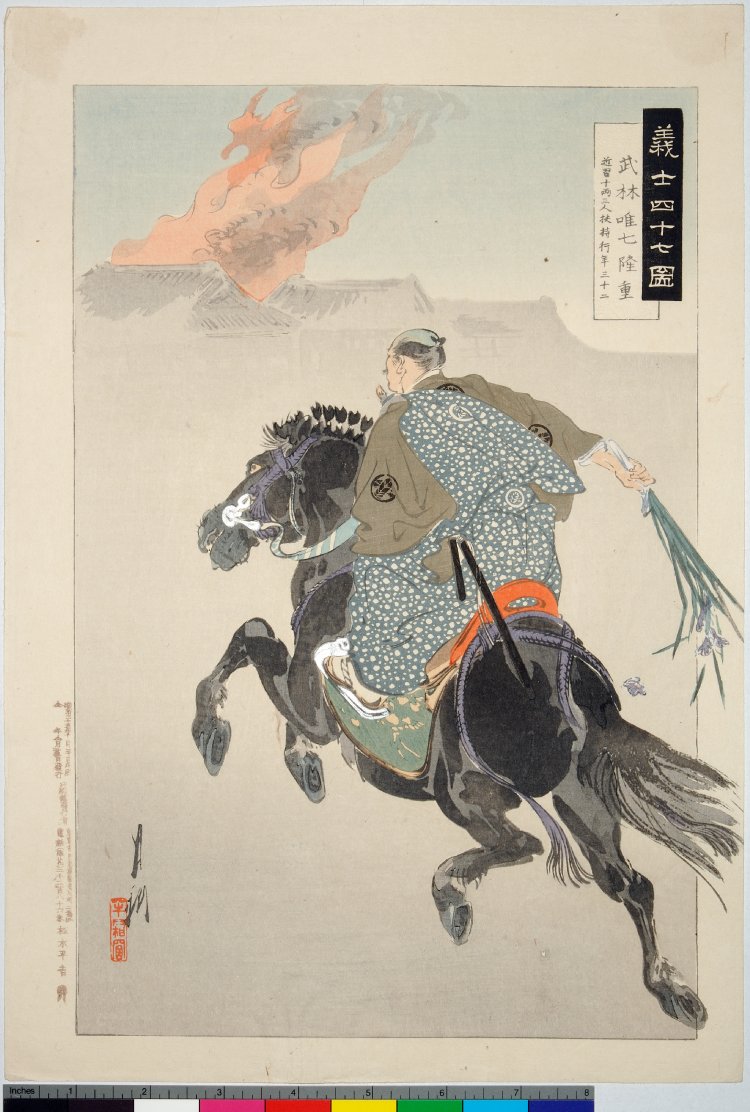
Takebayashi Tadashichi Takashige 武林唯七隆重 / Gishi Shijushichi zu 義士四十七図
Woodblock print
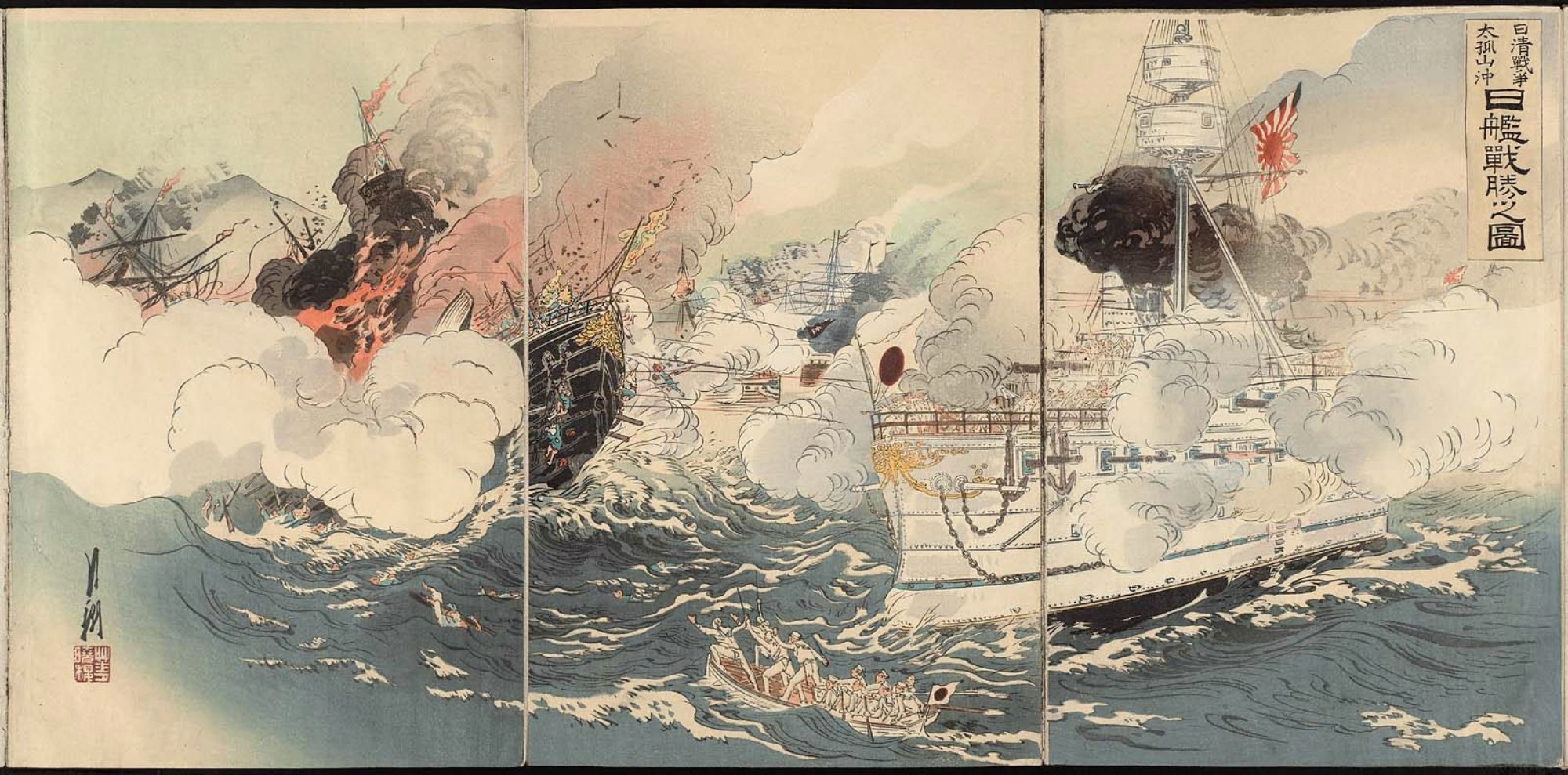
Sino-Japanese War: The Japanese Navy Victorious Off Takushan (Nisshin sensô Daikosan oki Nikkan senshô no zu)
Woodblock print
Triptych: Battle of Taikozan Oki: Victory for the Japanese Navy Offshore (Nishin sensō Taikozan Oki Nikkan senshō no zu)
Meiji period,
Woodblock printed "ōban"-sized triptych; ink and color on paper

Nakamura Kansuke Masatoki 中村勘助正辰 / Gishi shijushichi zu 義士四十七図
Woodblock print
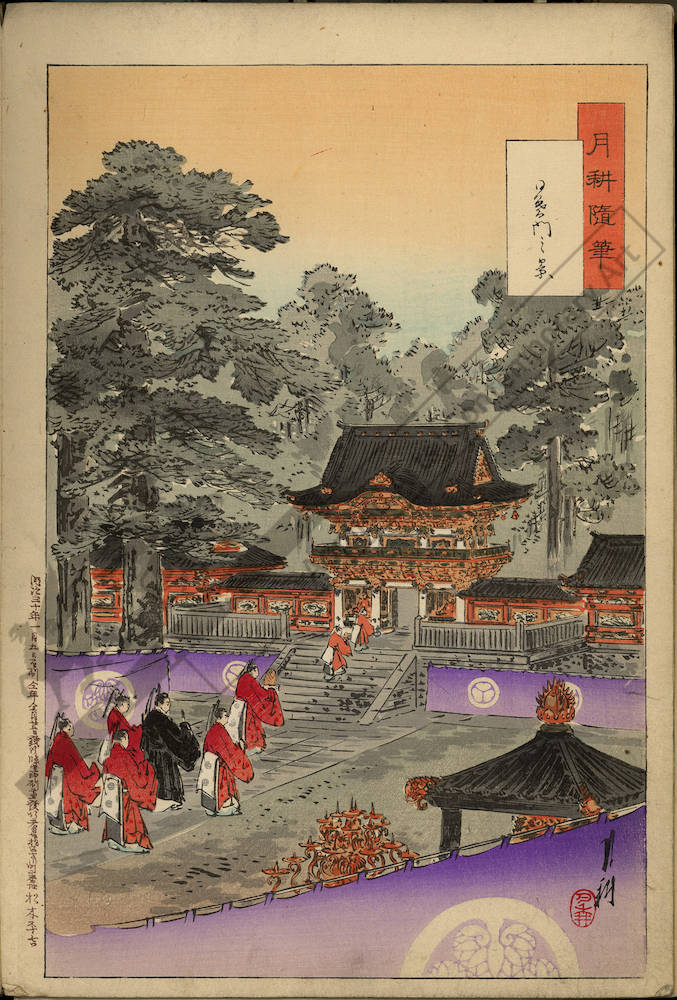
View of the Higurashi gate
Woodblock print
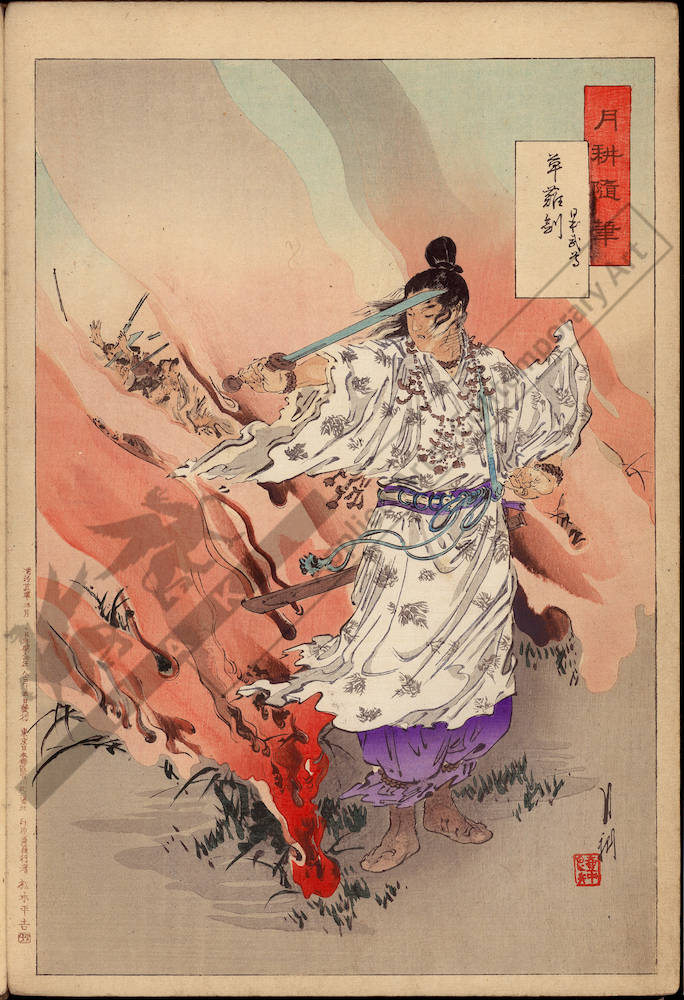
Yamato Take no Mikoto with his sword Kusanagi
Woodblock print
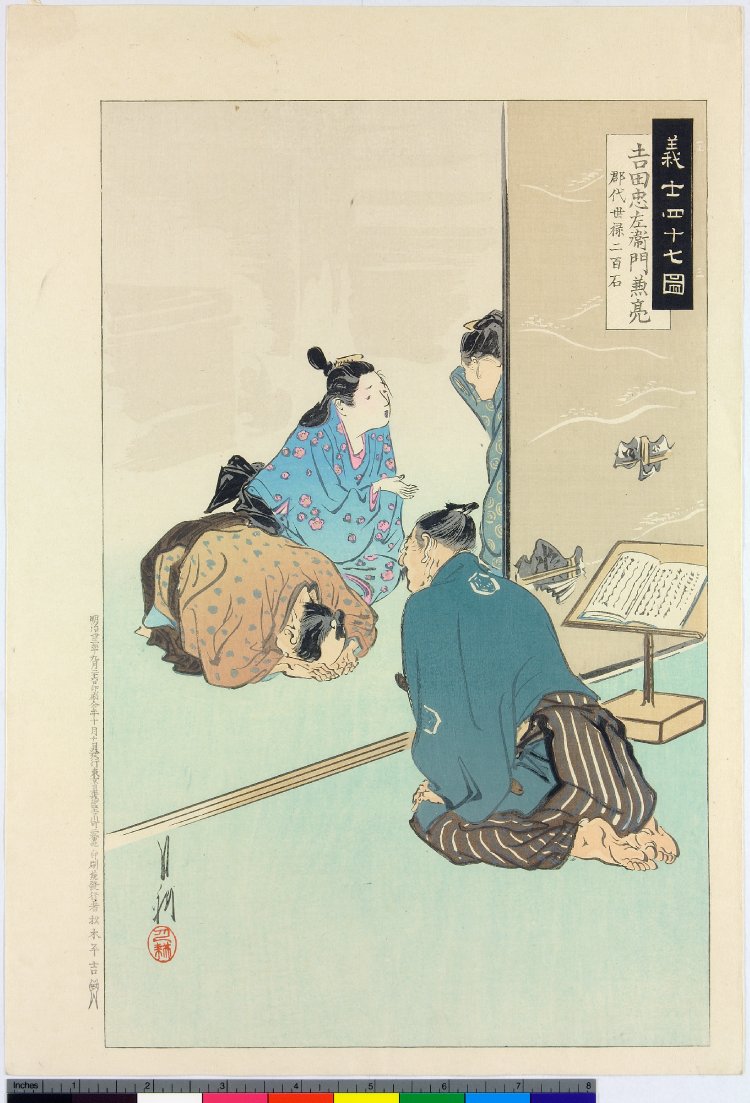
Yoshida Chuzaemon Kanesuke 吉田忠左衛門兼亮 / Gishi shijushichi zu 義士四十七図
Woodblock print
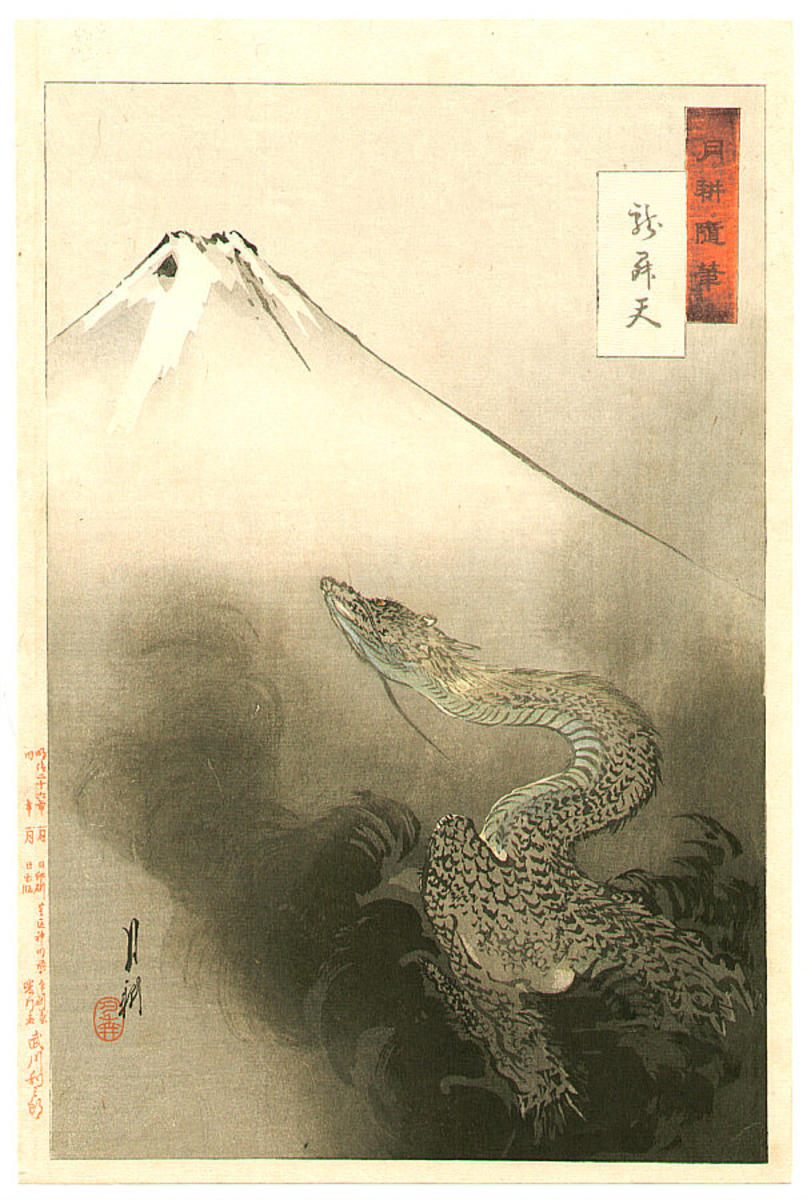
Ryu Shoten, Mt. Fuji and Dragon — 龍昇天
Woodblock print
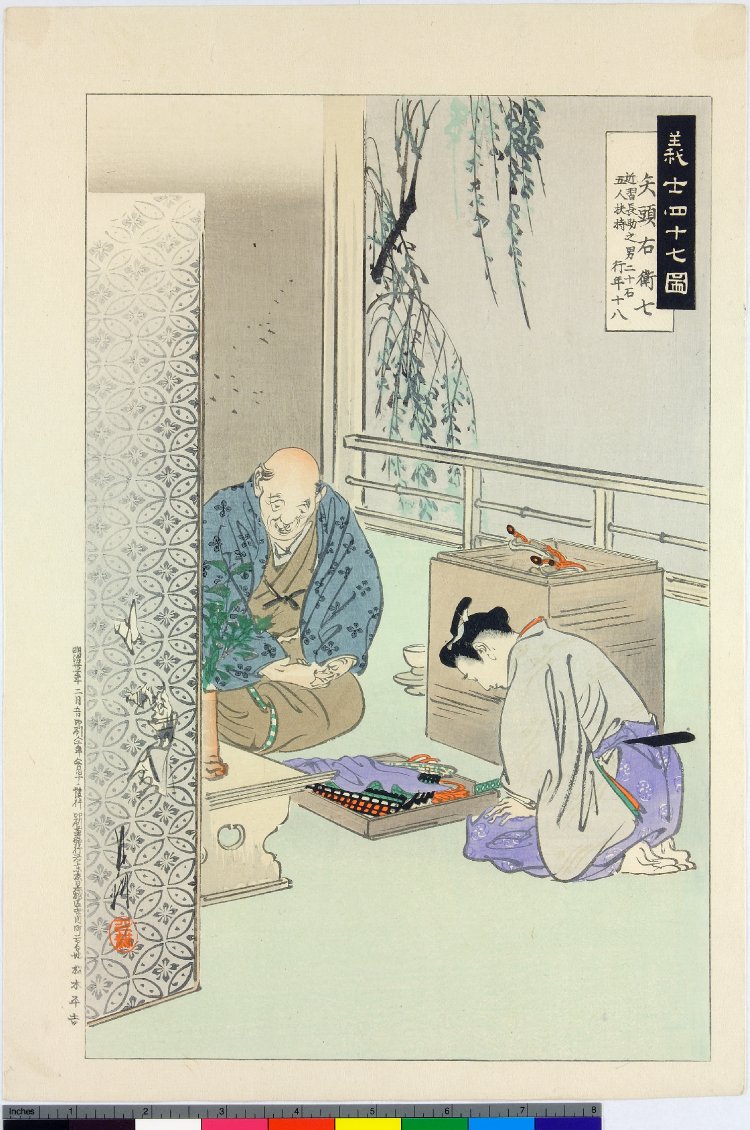
Yato (Yagashira) Emoshichi 矢頭右衛七 / Gishi shijushichi zu 義士四十七図
Woodblock print
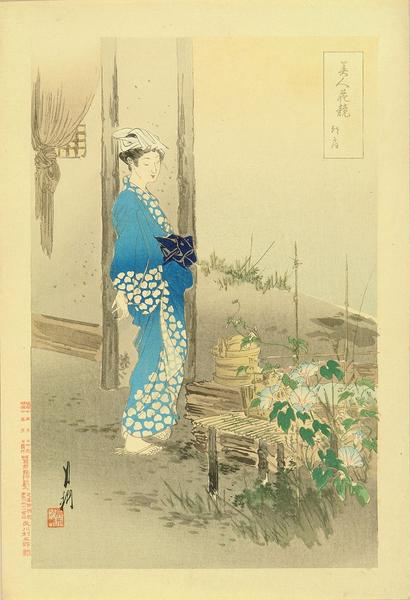
Moring Glories — 朝がお
Woodblock print
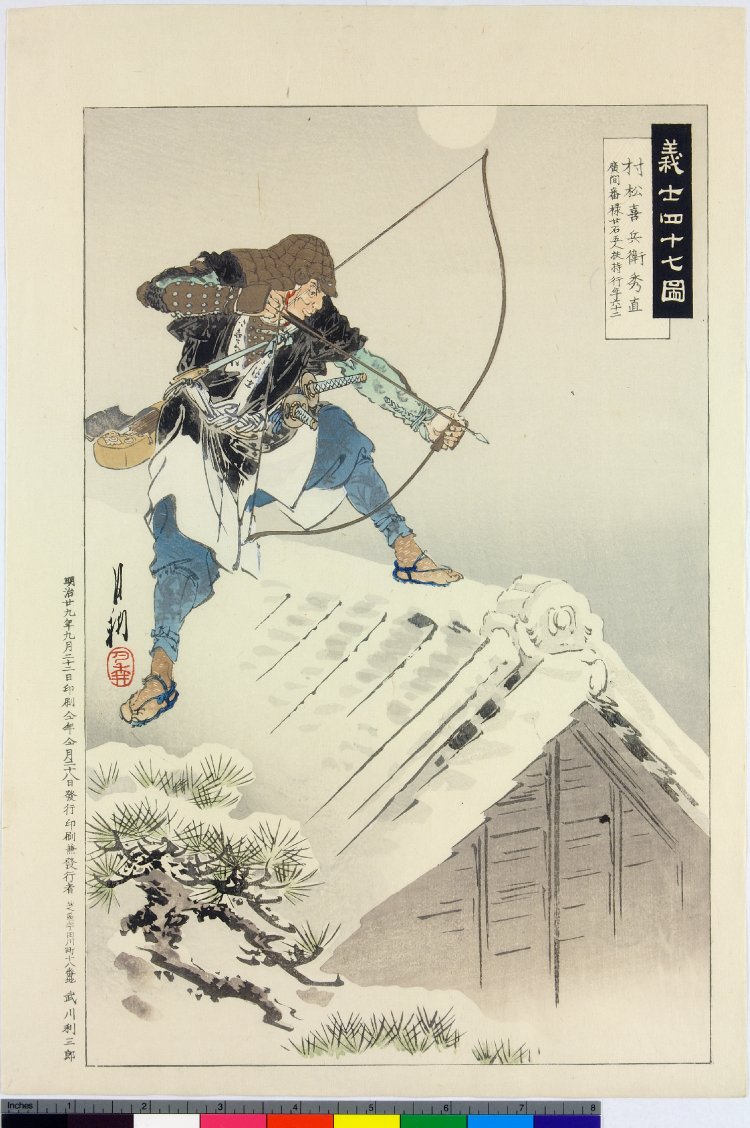
Muramatsu Kihei Hidenao 村松喜兵衛秀直 / Gishi shijushichi zu 義士四十七図
Woodblock print
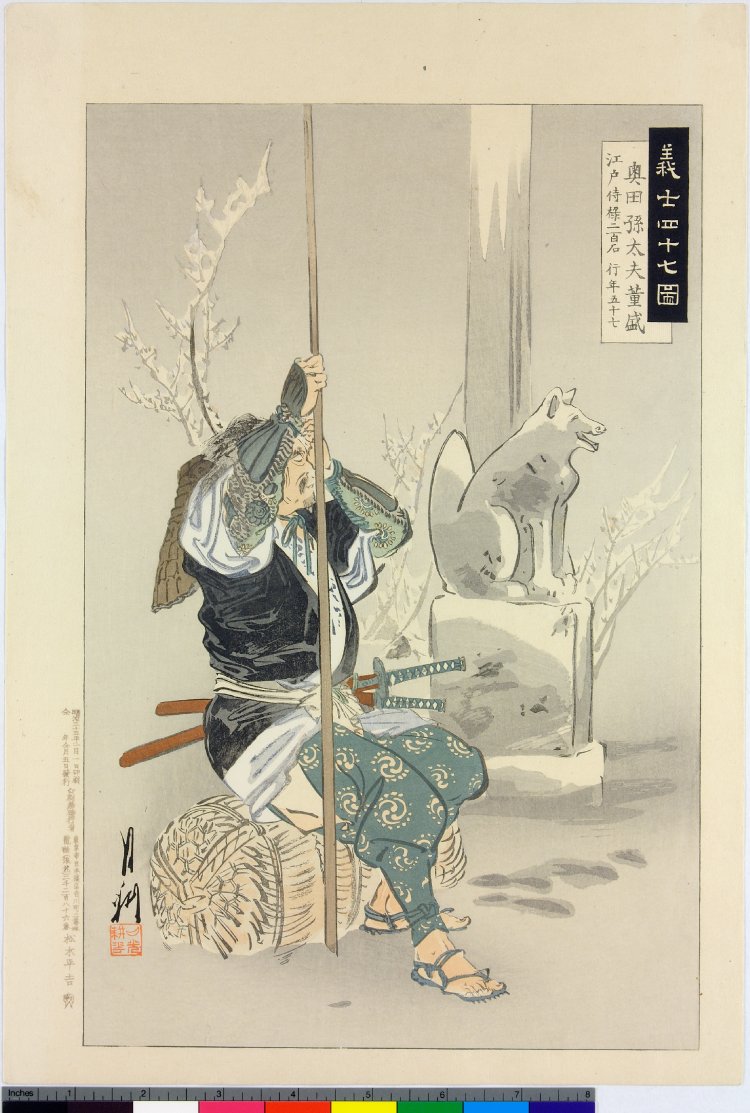
Okuda Magodayu Shigemori 奥田孫太夫重盛 / Gishi shijushichi zu 義士四十七図
Woodblock print