Biography
Tanaka Ryohei (田中良平, 1933–2019) was one of the most accomplished etchers in postwar Japanese printmaking, celebrated for his meticulous copperplate depictions of traditional thatched-roof farmhouses, rural lanes, and the quiet landscapes of the Japanese countryside. Born in 1933 in Takatsuki, near Osaka, he came to art as an adult rather than through formal academic training: he began studying etching under Yoshio Furuno in 1963 and soon settled on the medium as his primary means of expression, joining the Kyoto Etchers Group and exhibiting with the Japan Print Association, of which he became a full member in 1973.
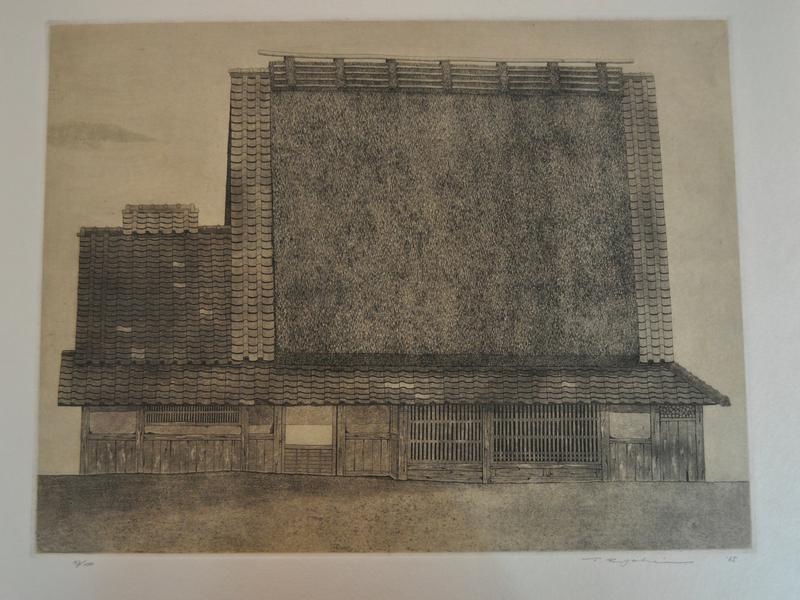
Tanaka's subject matter remained remarkably focused throughout his career. He returned again and again to the minka — the traditional folk houses of rural Japan, with their massive thatched roofs, darkened timber frames, and gardens enclosed by stone walls. Working from sketches made during travels through the countryside around Kyoto and other regions where vernacular architecture survived, he translated these scenes into etchings of extraordinary precision. His technique combined fine-line etching with aquatint to build tonal atmospheres of mist, rain, and diffused light, giving his prints a softness unusual in intaglio work.
The appeal of Tanaka's prints owed much to their elegiac quality. By the time he reached artistic maturity in the 1970s, many of the farmhouses he depicted were disappearing under Japan's rapid postwar urbanization. His etchings served as a visual archive of a vanishing Japan, carrying the same preservationist impulse that had motivated shin-hanga landscape artists a generation earlier. His views of thatched roofs and rural Kyoto scenes became staples of the Japanese print market.
Tanaka exhibited widely from the 1970s onward, winning numerous awards in Japan, Europe, and the United States, and building a devoted collector following at home and abroad. His prints are held in major public collections, including the Museum of Fine Arts, Boston, the Metropolitan Museum of Art, and the Cleveland Museum of Art. He continued working late into his life and died in 2019, leaving behind a body of work that stands as one of the most sustained and focused achievements in modern Japanese etching.
Key Facts
- Active Period
- 1933–2019
- Nationality
- 🇯🇵Japan
- Movement
- Sōsaku-hanga
- Works Indexed
- 180
Frequently Asked Questions
Tanaka Ryohei (田中良平, 1933–2019) was one of the most accomplished etchers in postwar Japanese printmaking, celebrated for his meticulous copperplate depictions of traditional thatched-roof farmhouses, rural lanes, and the quiet landscapes of the Japanese countryside. Born in 1933 in Takatsuki, near Osaka, he came to art as an adult rather than through formal academic training: he began studying etching under Yoshio Furuno in 1963 and soon settled on the medium as his primary means of expression, joining the Kyoto Etchers Group and exhibiting with the Japan Print Association, of which he became a full member in 1973.
Tanaka Ryohei was active from 1933 to 2019. They were associated with the Sōsaku-hanga movement.
Tanaka Ryohei's work was shaped by the Sōsaku-hanga tradition in Japanese woodblock printmaking. Sōsaku-hanga: ## What is sōsaku-hanga? Sōsaku-hanga (創作版画, "creative prints") was a twentieth-century Japanese print movement defined by a single commitment: the artist must design, carve, and print every work alone.
Tanaka Ryohei's prints frequently feature etching, village scenes, trees, architecture, snow scenes, temples & shrines.
Original prints by Tanaka Ryohei can be found in collections including wbp, Art Institute of Chicago, Minneapolis Institute of Art, Asian Collection Internet Auction.
Woodblock Prints by Tanaka Ryohei (180)
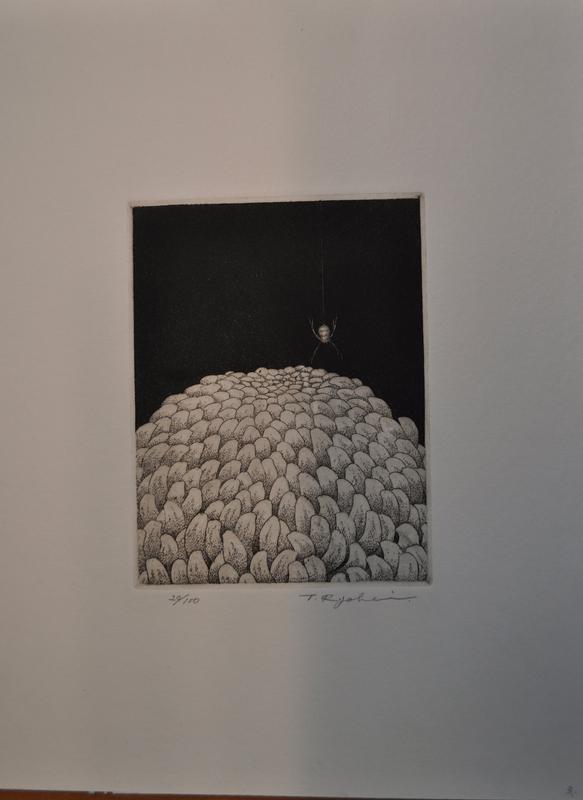
Chrysanthemum
1969
Etching and aquatint, ink on paper
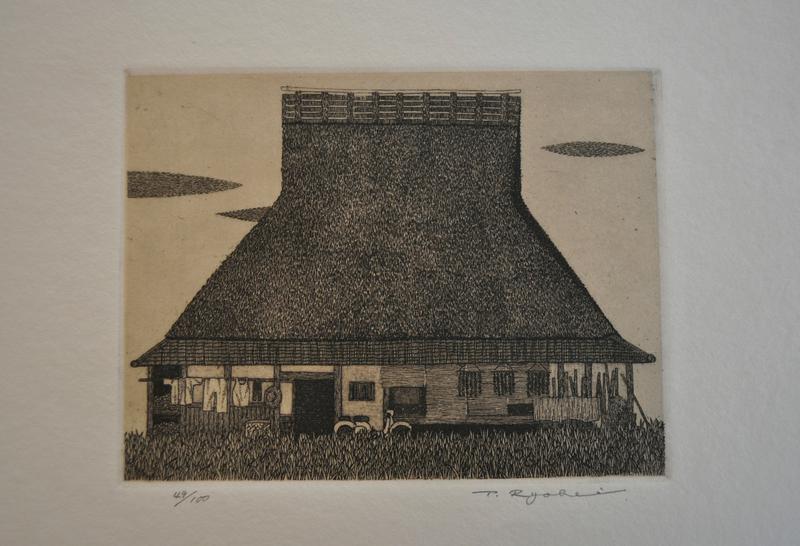
Thatched roof No. 7
1969
Etching and aquatint, ink on paper

Pansy
1969
Etching and aquatint, ink and color on paper
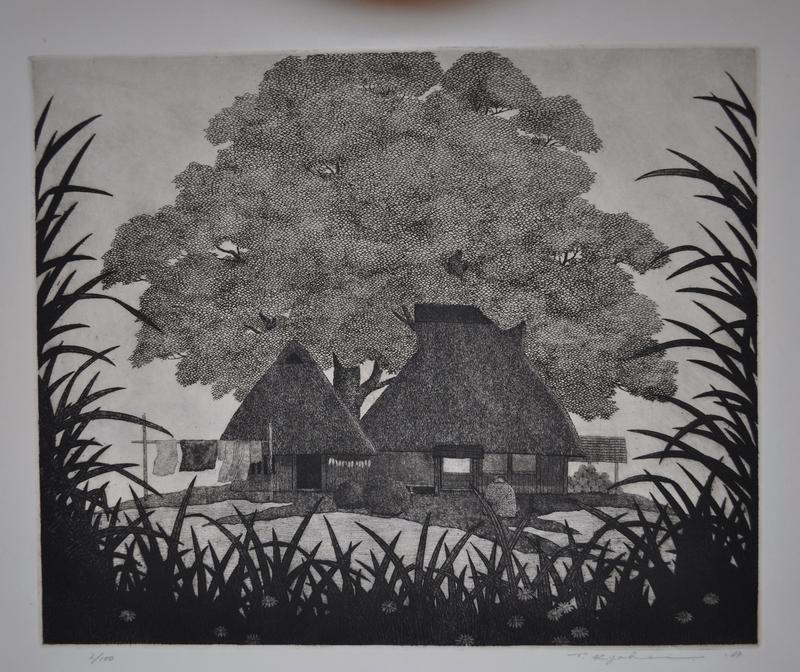
My old home
1969
Etching and aquatint, ink on paper
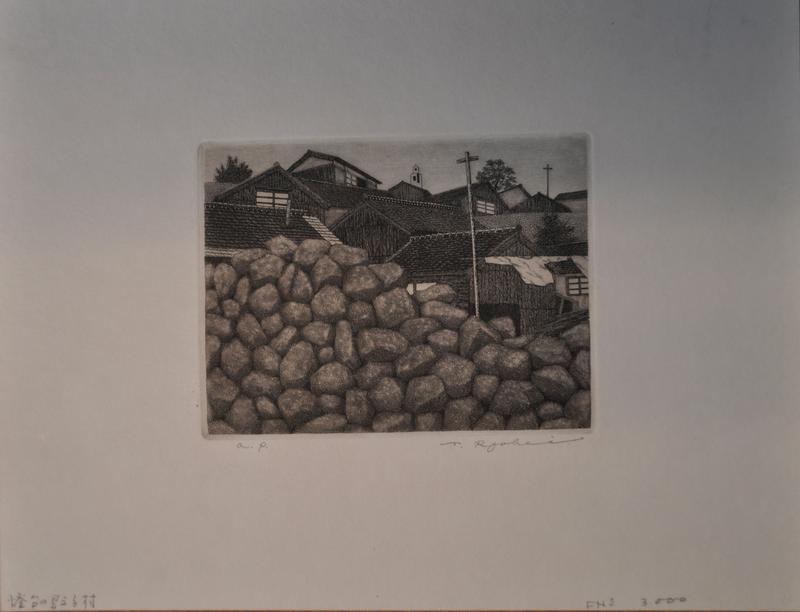
Village with lighthouse
1970
Etching and aquatint, ink on paper
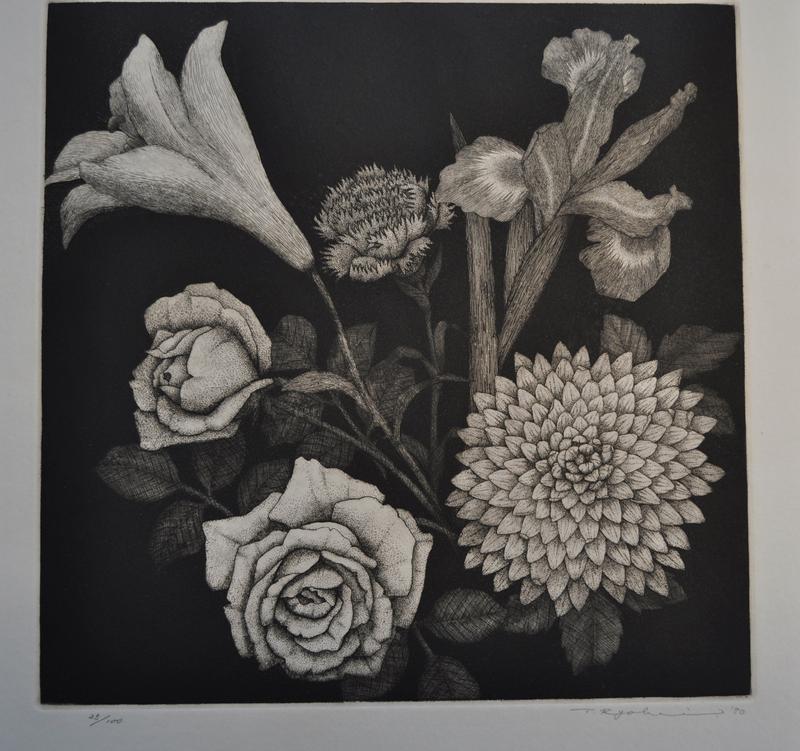
Flowers
1970
Etching and aquatint, ink on paper

An alley
1970
Etching and aquatint, ink on paper
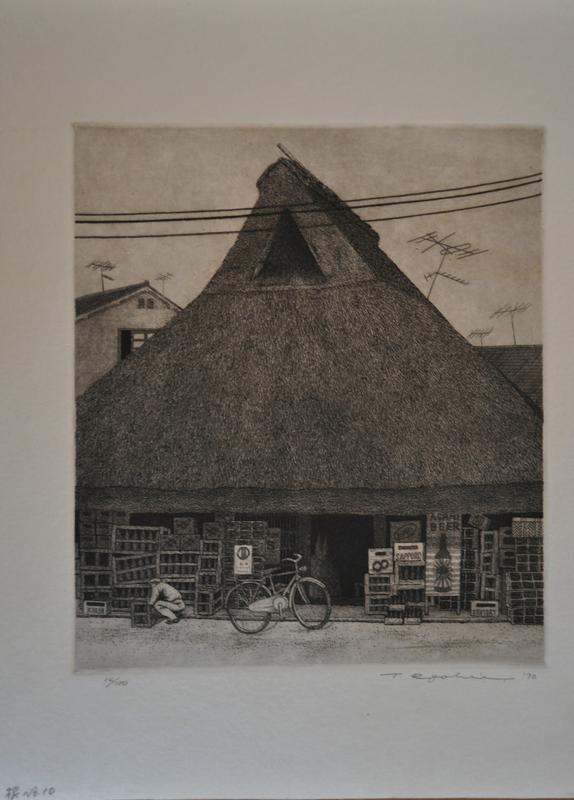
Thatched roof No. 10
1970
Etching and aquatint, ink on paper

Kobe No. 2
1971
Etching and aquatint, ink and color on paper

House (Ikkenya)
1972
Etching on paper; edition 54/100
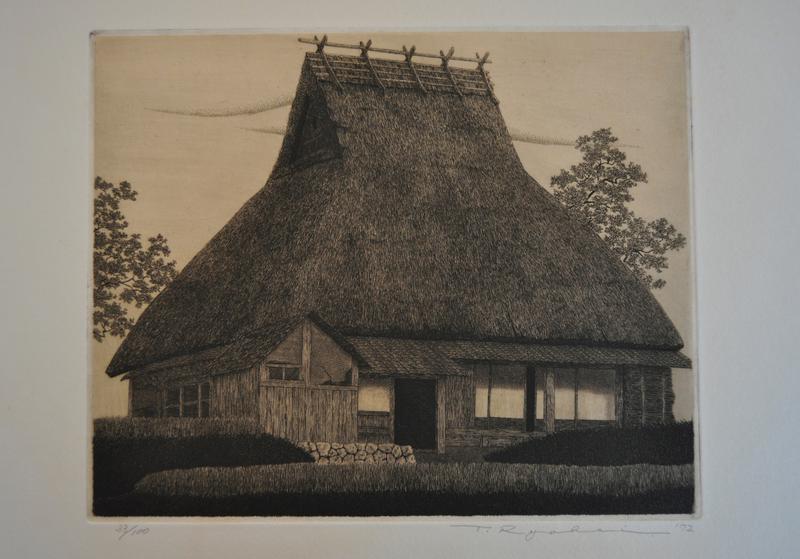
Thatched roof No. 13
1972
Etching amd aquatint, ink on paper

Sekigahara in Snow (Yuki no Sekigahara)
1976
Etching

Kanshuji Temple
1976
Etching

Wall No.3 (Kabe No. 3)
1976
Etching on paper; edition 6/100
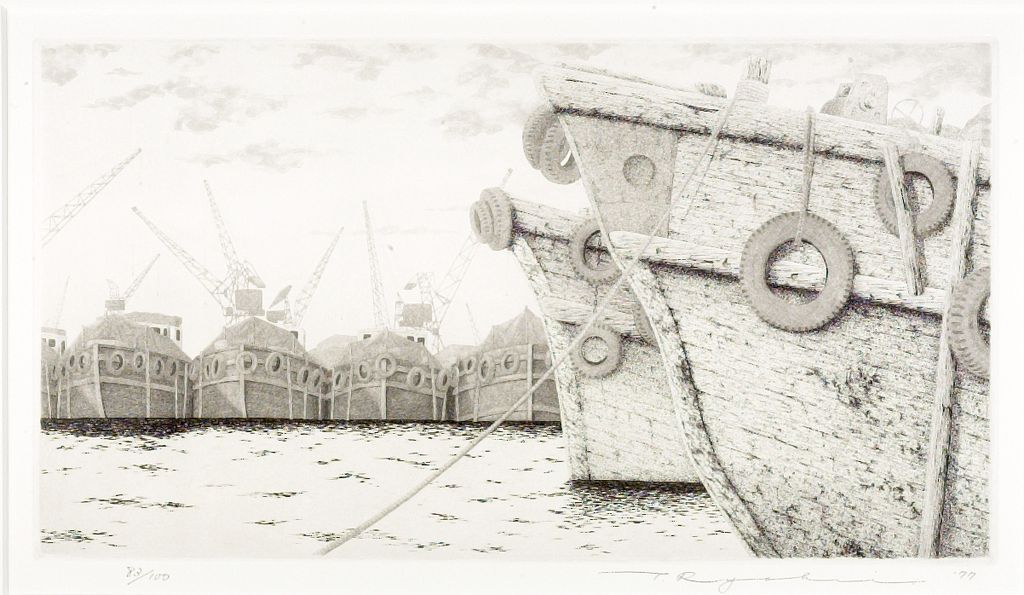
Barge Pool (Hashike damari)
Woodblock print

Persimmon Tree
1978
Color woodblock print
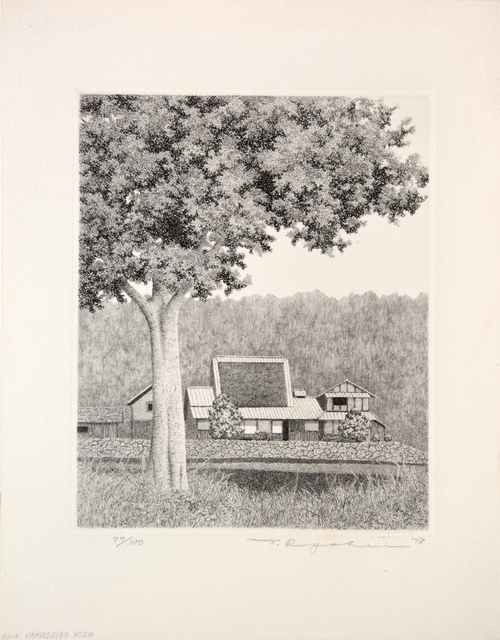
Yamashiro
1978
Etching

Summer Village
1980
Etching

Gansen-ji
1980
Etching

White Wall Reflection
1980
Etching

Snow is Coming No. 2
1980
Etching

House with a Shoji Door No. 1
1980
Etching

Mt. Ibuki
1980
Etching

Morning Dew
1981
Etching