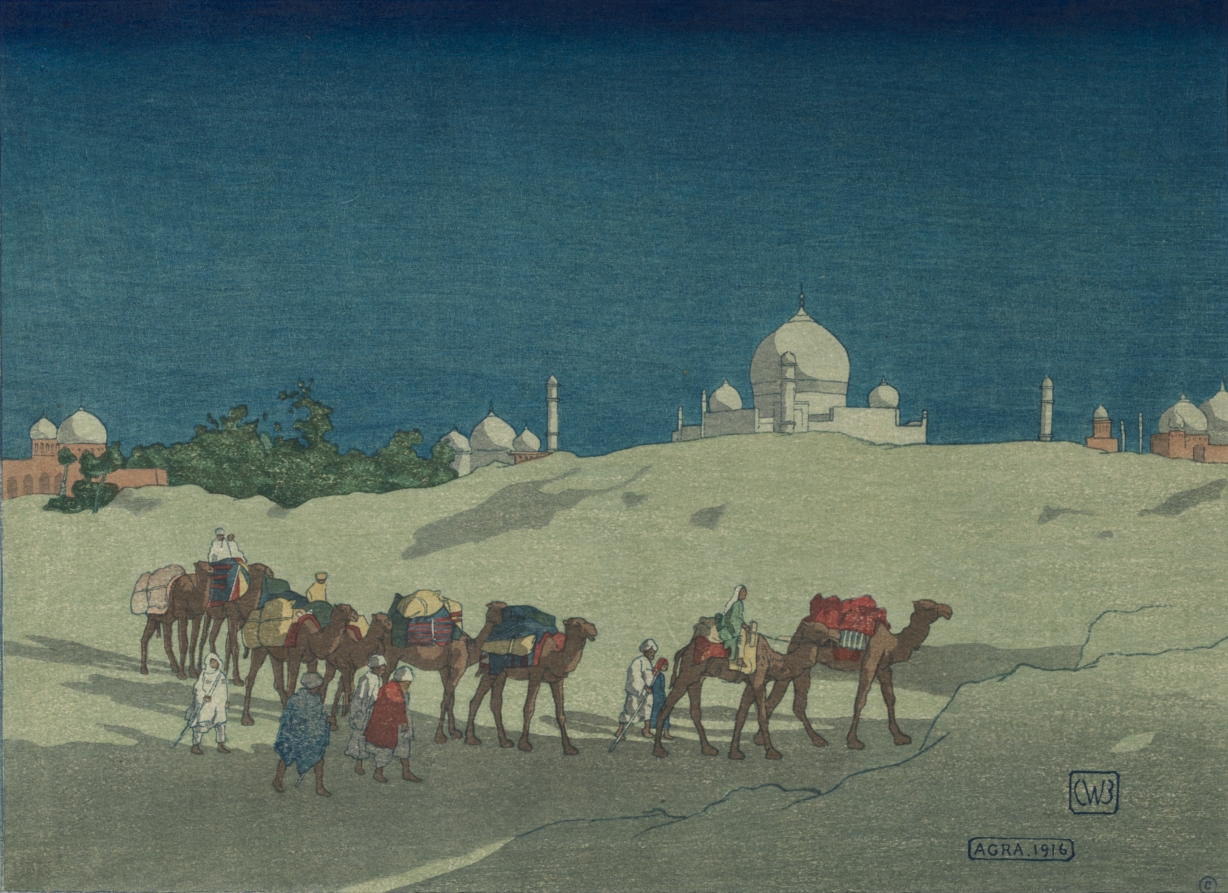
Agra
- Date:
- 1916
- Medium:
- color woodcut
- Source:
- Cleveland Museum of Art
Description
Agra, created in 1916, depicts the historic Mughal capital in northern India, a city dominated by the architectural legacy of the emperors who ruled from its red sandstone fort and built the Taj Mahal on the banks of the Yamuna River. Bartlett visited India as part of his extensive travels through Asia, and Agra's concentration of monumental Mughal architecture offered him subjects of extraordinary visual richness.
This color woodcut renders the city's distinctive visual character: the warm tones of red sandstone and white marble set against the flat, hazy landscape of the Indo-Gangetic plain. Bartlett, born in England and later based in Hawaii, brought a Western watercolorist's sensitivity to light and atmosphere to the Japanese woodblock technique he adopted after studying printmaking in Japan. His Indian subjects are among the most unusual works in the shin-hanga tradition, extending the medium's reach far beyond its customary Japanese geographic boundaries.
More Prints by Charles W. Bartlett

More Landscapes Prints

Lake Kugushi in Wakasa Province (Wakasa Kugushiko), from the series Souvenirs of Travel I (Tabi miyage dai isshu)"
Wakasa Kugushiko
1920
Color woodblock print; oban
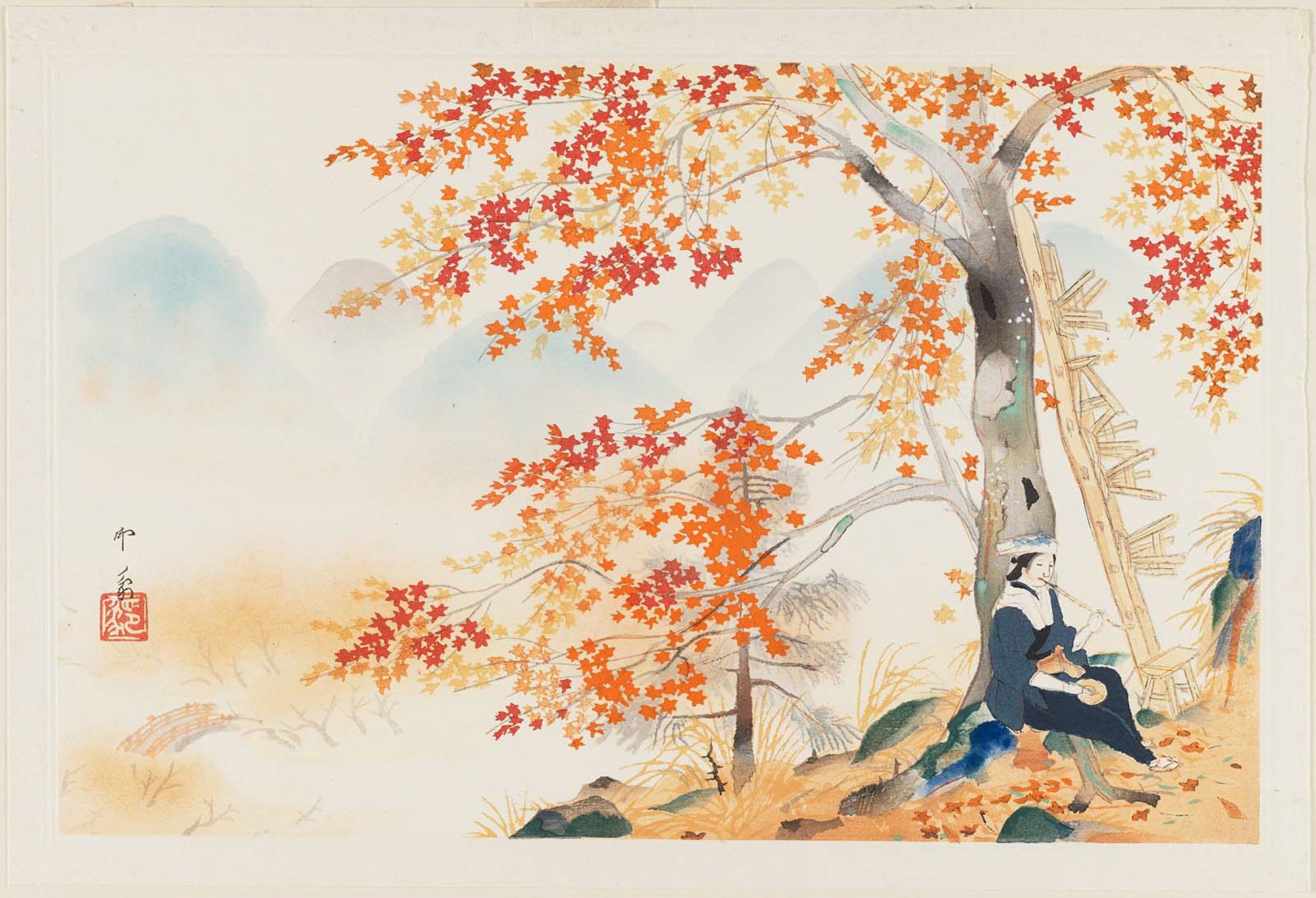
Autumn Maple Leaves at Takao, from the album Eight Views of Kyoto (Kyôto hakkei)
Woodblock print

The Beach at Kaiganji in Sanuki Province (Sanuki Kaiganji no hama), from the series "Collection of Views of Japan II, Kansai Edition (Nihon fukei shu II Kansai hen)"
1934
Color woodblock print; oban

Tea Kettle, section of a sheet from the series "Mirror of Stone Rubbings of Views of the Provinces" (Kohon meihitsu ishizuri kagami)
n.d.
Woodblock print; ishizuri-e, section of harimaze sheet
Featured in Collections
Curated cross-cuts that include this print.
Frequently Asked Questions
Agra was created by Charles W. Bartlett in 1916.
Agra depicts landscapes, architecture, and travel scenes.