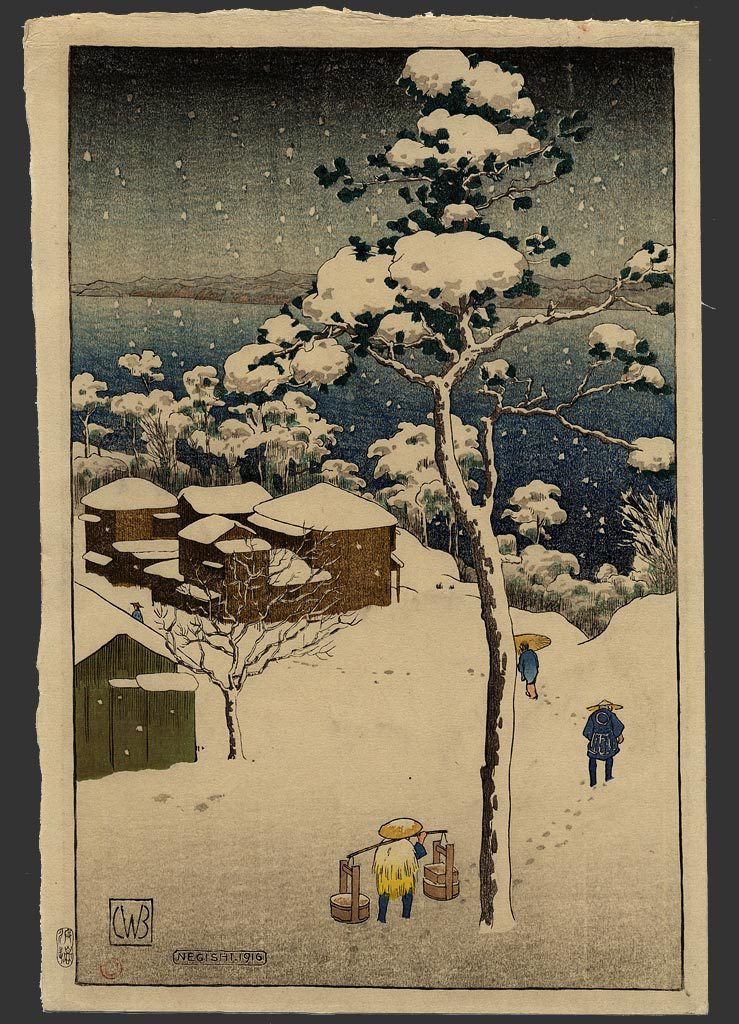
Negishi
- Date:
- 1916
- Medium:
- Woodblock print
- Format:
- Oban
- Source:
- Art of Japan
Description
Negishi, created in 1916, depicts the residential area in the Yokohama-Tokyo corridor that was known in the early twentieth century for its quiet, semi-rural character. Negishi had historical significance as the location of Japan's first Western-style horse-racing track, established in 1866 for the foreign community in Yokohama, and the surrounding area retained a green, open quality even as Tokyo expanded southward.
Bartlett's oban woodblock print records this transitional landscape between urban and rural Japan. The Negishi setting offered a subject quite different from the famous scenic spots and monumental architecture that dominated most travel-oriented prints. Instead, Bartlett depicts the everyday landscape of a lived-in Japanese neighborhood, with its mixture of traditional buildings, cultivated plots, and the gentle topography of the Kanto plain. This choice reflects Bartlett's residence-based familiarity with Japan rather than a tourist's itinerary of famous views.
More Prints by Charles W. Bartlett

More Landscapes Prints

Lake Kugushi in Wakasa Province (Wakasa Kugushiko), from the series Souvenirs of Travel I (Tabi miyage dai isshu)"
Wakasa Kugushiko
1920
Color woodblock print; oban
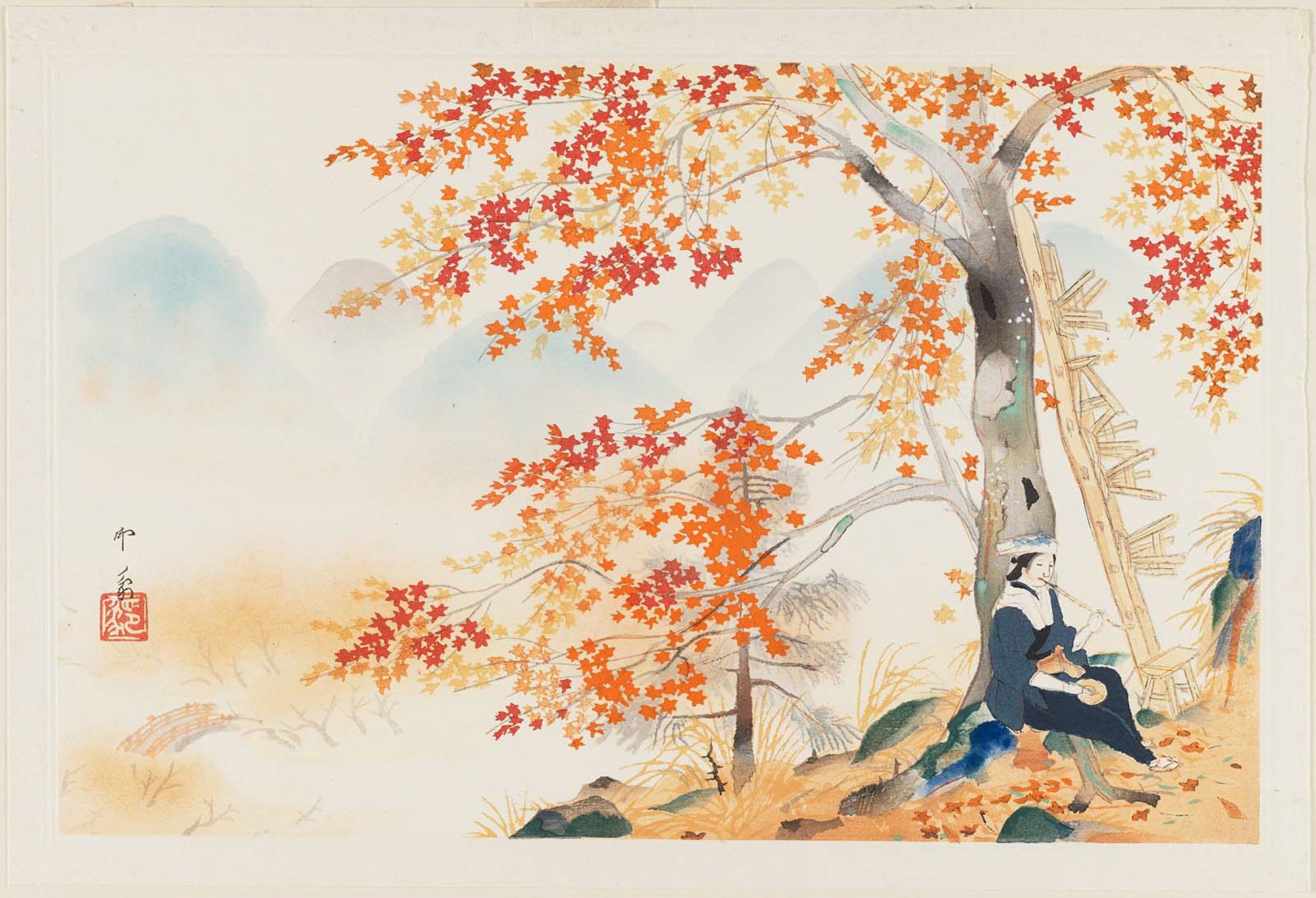
Autumn Maple Leaves at Takao, from the album Eight Views of Kyoto (Kyôto hakkei)
Woodblock print

The Beach at Kaiganji in Sanuki Province (Sanuki Kaiganji no hama), from the series "Collection of Views of Japan II, Kansai Edition (Nihon fukei shu II Kansai hen)"
1934
Color woodblock print; oban

Tea Kettle, section of a sheet from the series "Mirror of Stone Rubbings of Views of the Provinces" (Kohon meihitsu ishizuri kagami)
n.d.
Woodblock print; ishizuri-e, section of harimaze sheet
Featured in Collections
Curated cross-cuts that include this print.
Frequently Asked Questions
Negishi was created by Charles W. Bartlett in 1916.
Negishi depicts landscapes and village scenes.