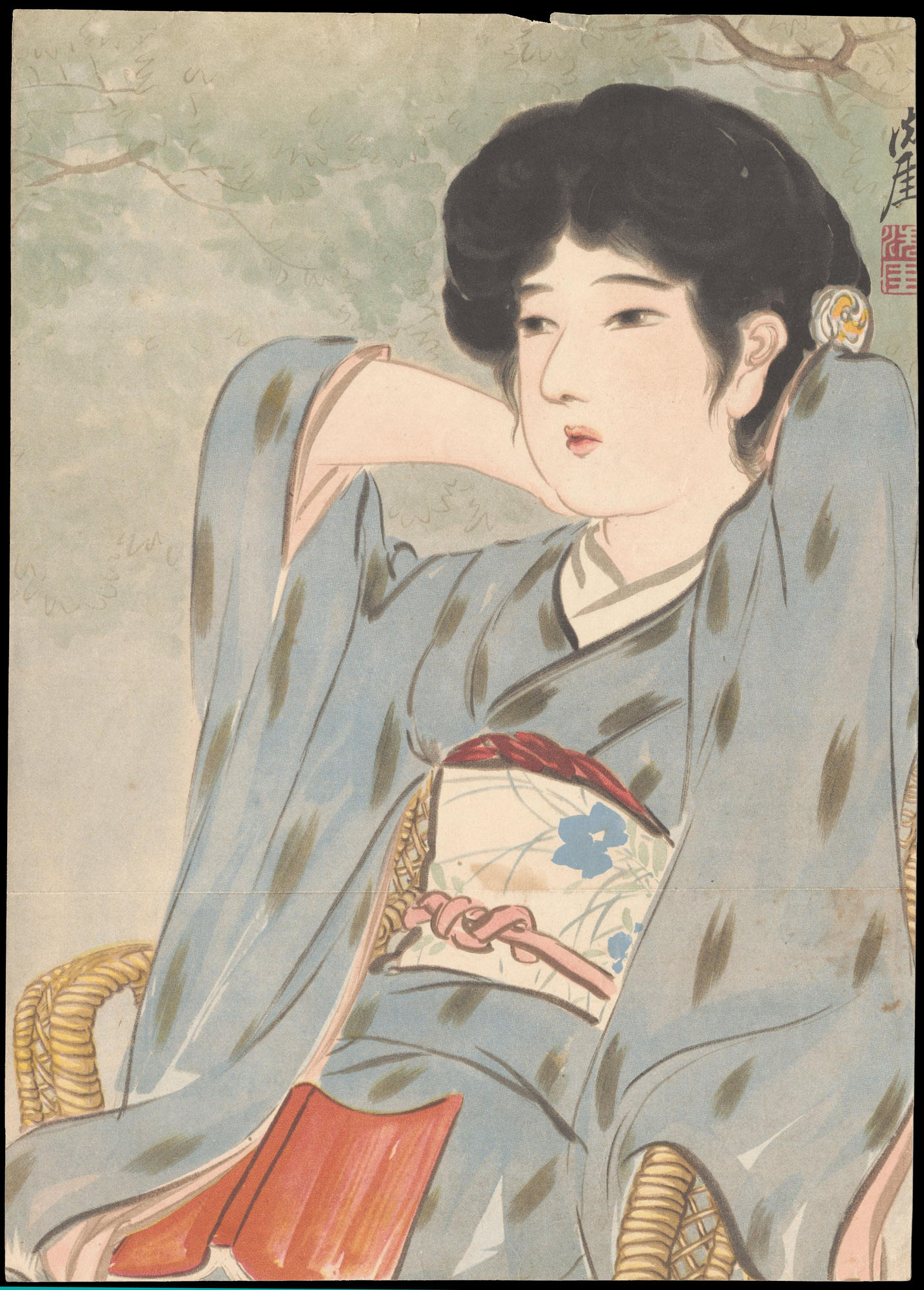
Bijin Relaxing (1)
by Igawa Sengai
- Medium:
- Woodblock print
- Format:
- Oban
- Source:
- Ohmi Gallery
Description
A woman with elaborately piled dark hair and a floral hairpin reclines in a wicker chair, her right elbow propped on its arm and chin resting against her hand as she gazes off to the side. She wears a grey-blue kimono patterned with dark leaf-like motifs over a white under-robe, with a cream obi decorated with blue flowers and tied with a red and pink cord; a section of red fabric shows at her lap. Behind her, a green tree with bare branches fills the background, and two red seals along with an artist's signature appear in the upper right corner.
More Prints by Igawa Sengai
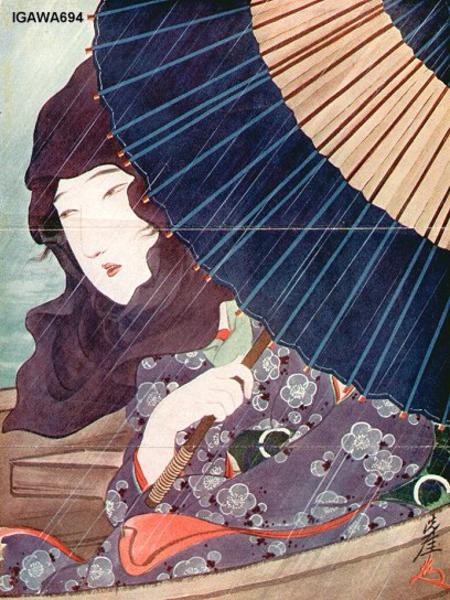
More Bijin-ga Prints
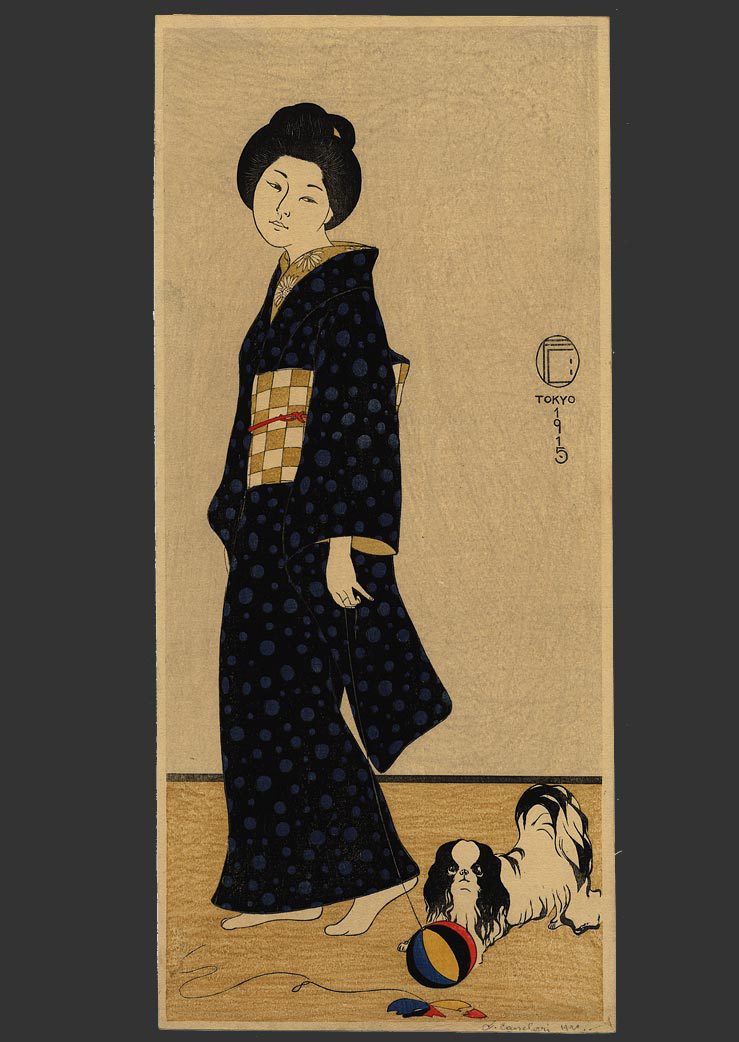
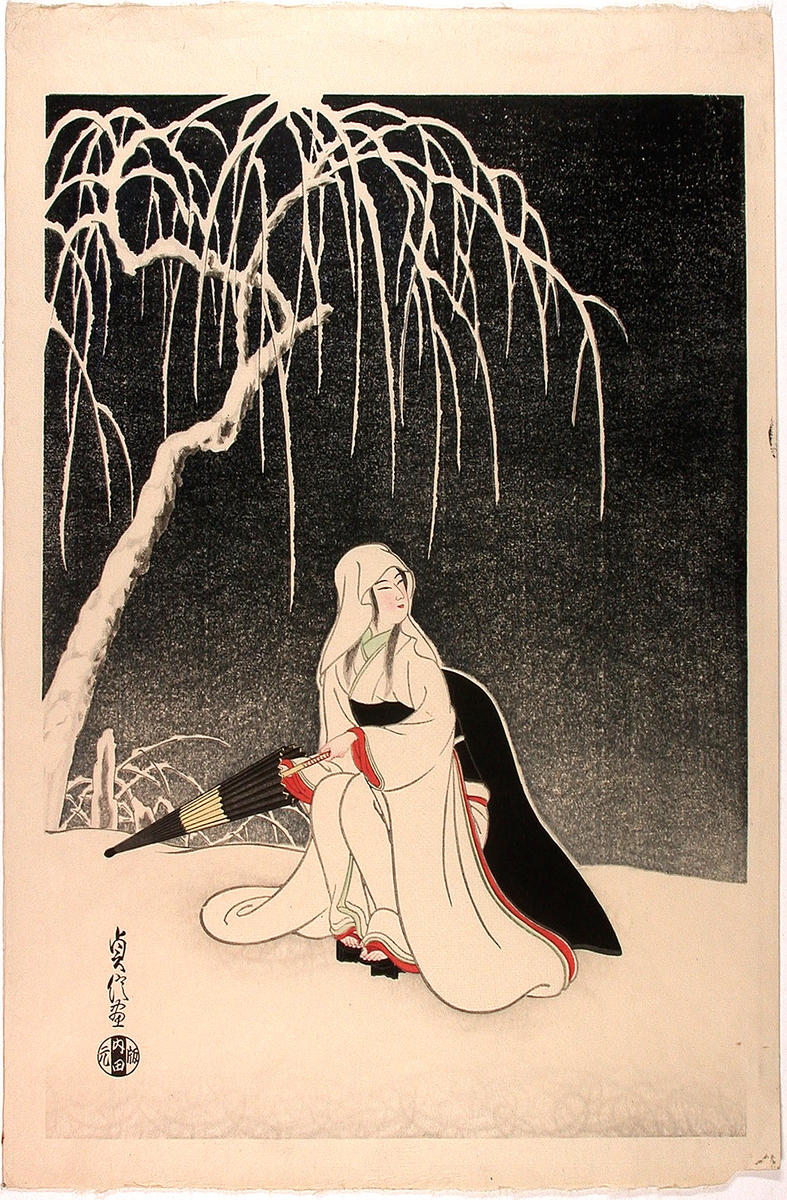

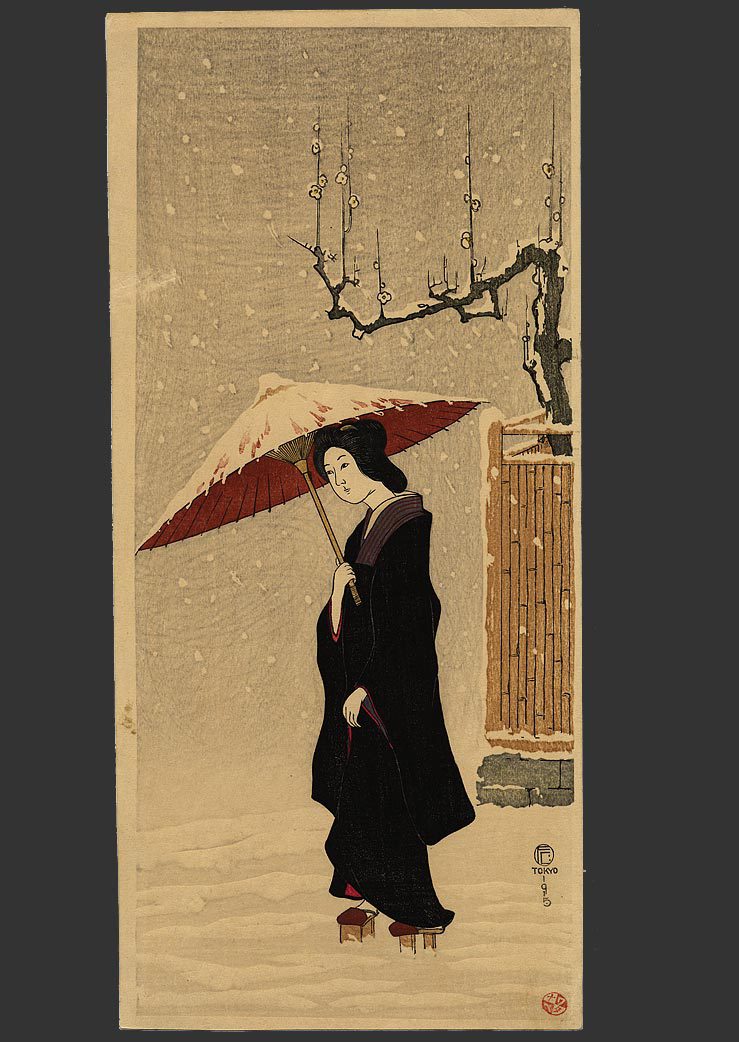
Featured in Collections
Curated cross-cuts that include this print.
Frequently Asked Questions
Bijin Relaxing (1) was created by Igawa Sengai (井川洗崖).
Bijin Relaxing (1) depicts bijin-ga.