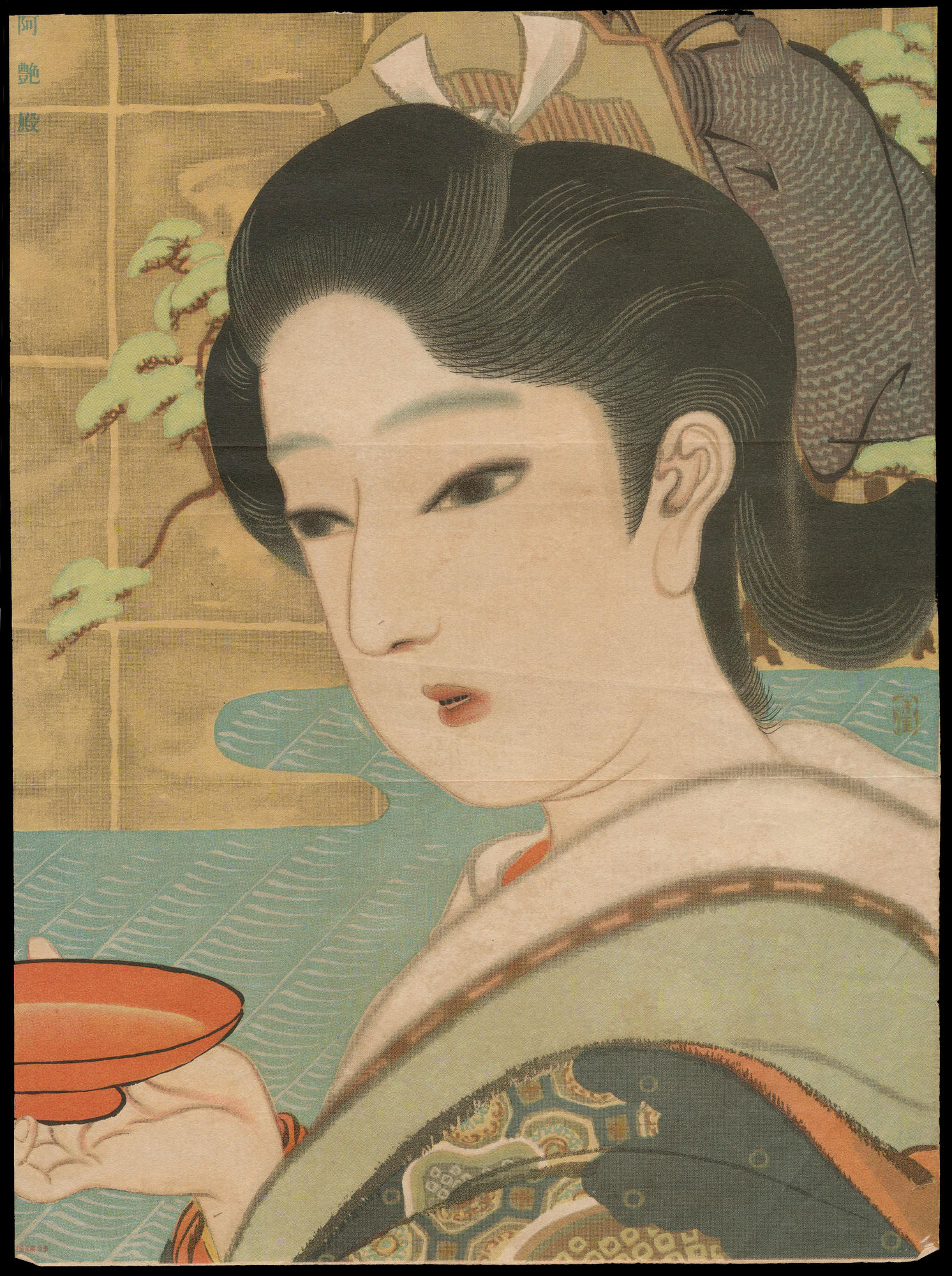
Bijin Waitress (1)
by Igawa Sengai
- Medium:
- Woodblock print
- Format:
- Oban
- Source:
- Ohmi Gallery
Description
A waitress in this oban woodblock print serves as an alternative to the aristocratic or courtly women who dominate the bijin-ga tradition. By depicting a working woman, Igawa Sengai broadens the genre's social range, presenting beauty in a practical rather than purely aesthetic context. A waitress in early 20th-century Japan might work in a teahouse, restaurant, or cafe, and her appearance would blend elements of traditional dress with the practical modifications required by her work. She might wear a shorter-sleeved kimono for ease of movement, with a tasuki cord tying back her sleeves while serving. The oban format accommodates the full figure in her working environment, possibly including elements of the interior: a tray, tea implements, or the edge of a table. The print humanizes the bijin-ga genre by placing beauty within the context of labor and daily life rather than idle contemplation.
More Prints by Igawa Sengai
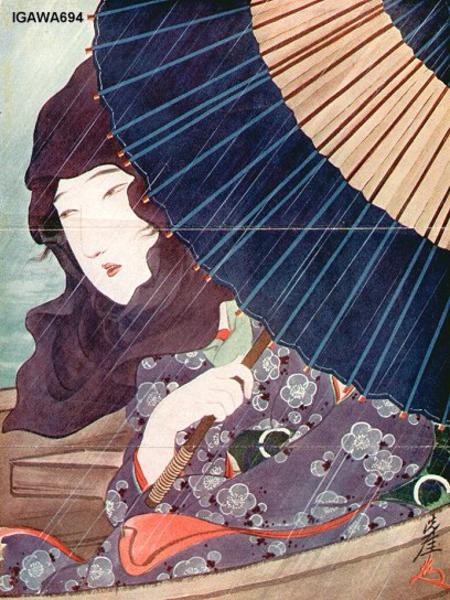
More Bijin-ga Prints
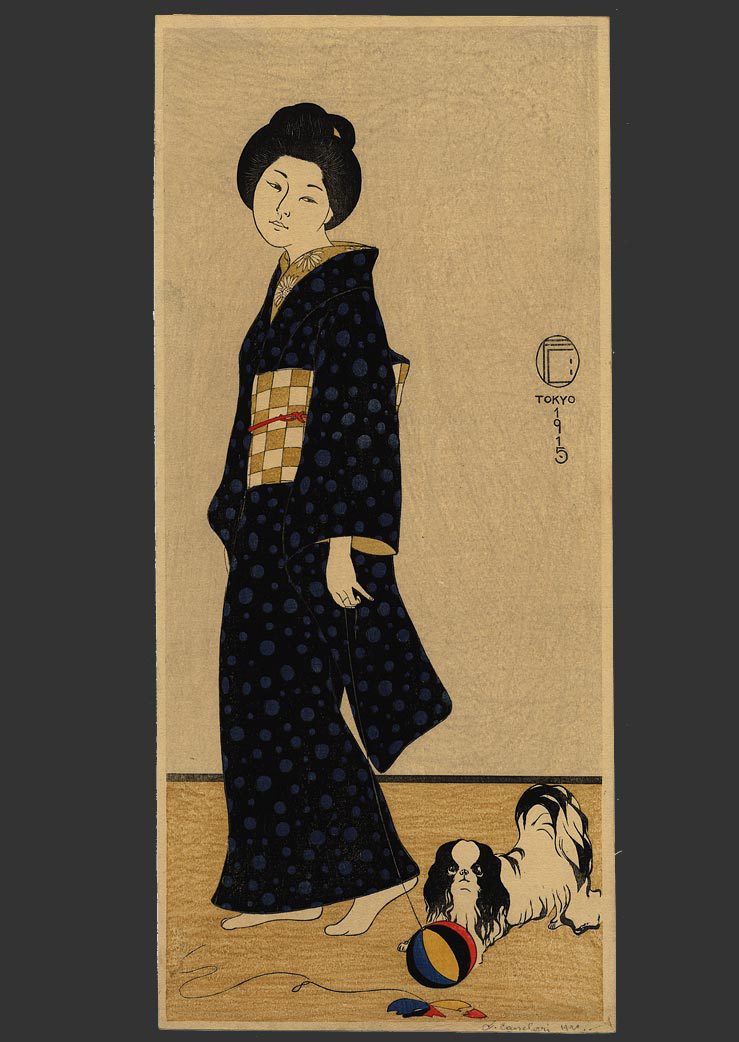
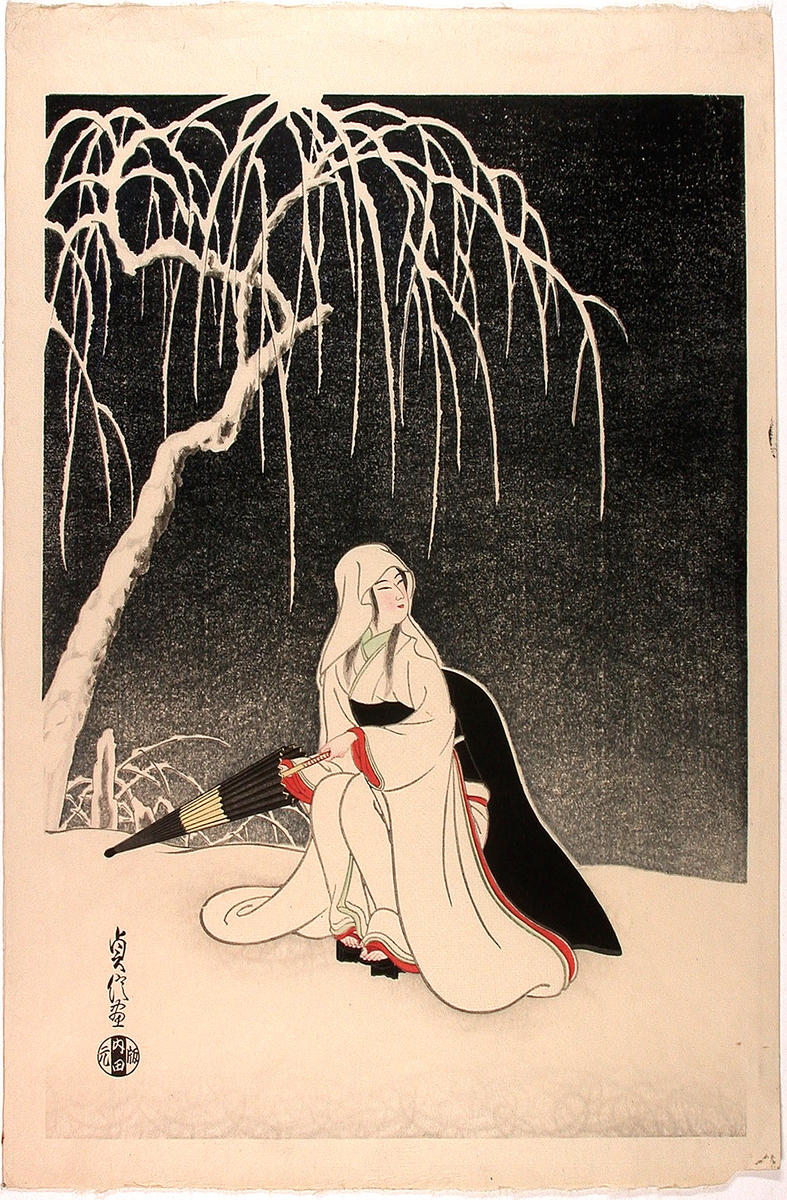

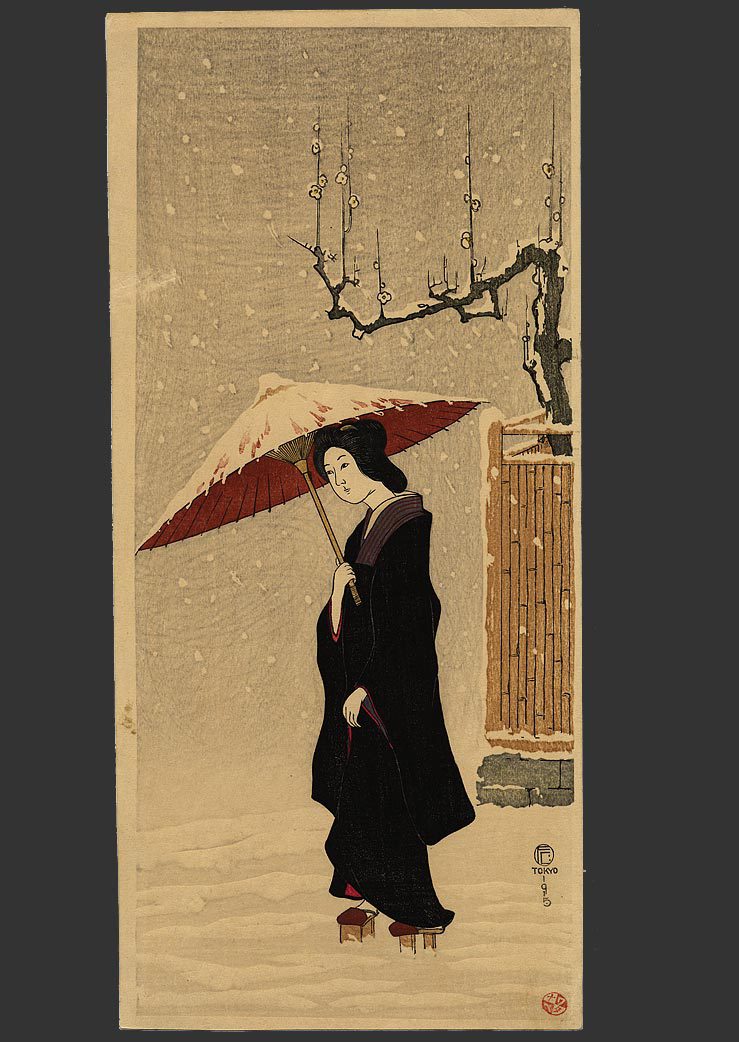
Featured in Collections
Curated cross-cuts that include this print.
Frequently Asked Questions
Bijin Waitress (1) was created by Igawa Sengai (井川洗崖).
Bijin Waitress (1) depicts bijin-ga.