
Clearing after a Snow in the Pines (Matsu no yukibare)
by Kawase Hasui
- Date:
- August 1929
- Medium:
- Color woodblock print
- Format:
- Oban
- Publisher:
- Watanabe Shozaburo
- Edition:
- Published by Watanabe Shozaburo
- Source:
- Art Institute of Chicago
Description
Clearing after a Snow in the Pines (Matsu no yukibare), published in August 1929, depicts pine trees in clear weather following a snowfall — the snow still weighing on the dark pine needles, branches bent under the white load, against a sky that has opened to brilliant clarity after the storm. The matsu no yukibare subject — pine clearing after snow — was a classical Japanese aesthetic motif combining the pine's symbolic resilience with the dramatic contrast between fresh snow and clear blue sky. The August 1929 release date for a snow subject indicates Hasui's winter print production schedule, with some prints released months after depiction.
More Prints by Kawase Hasui

More Snow Scenes Prints
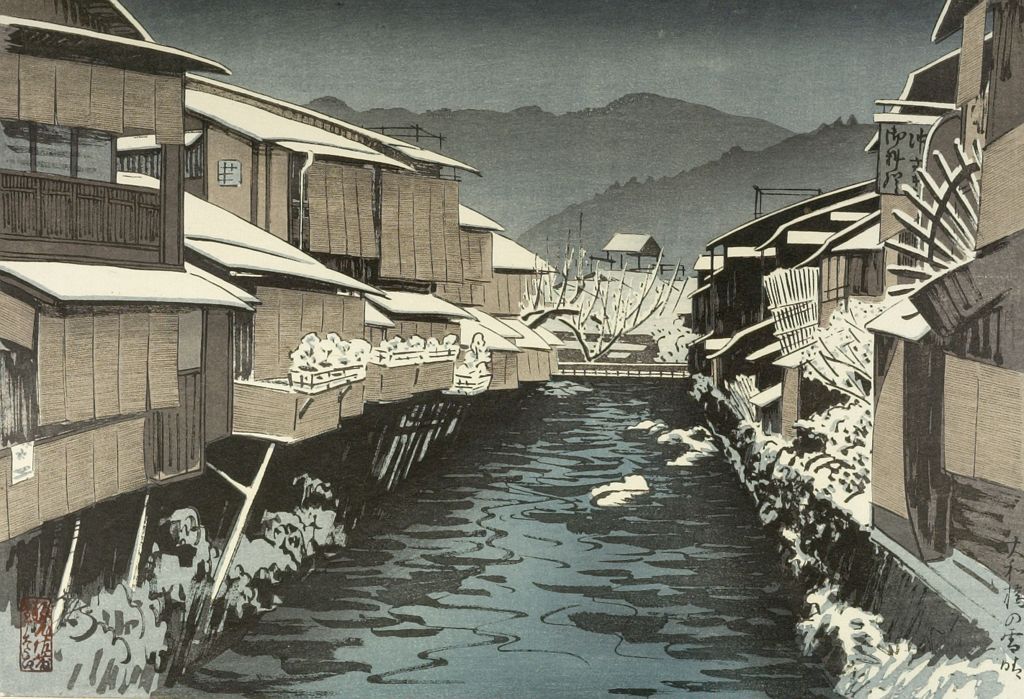
Fair Weather After Snow at Yamato Bridge, Kyoto (Yamato bashi no yukibare), Taishô period, dated 1924
Woodblock print

The Compound of the Tenman Shrine at Kameido in the Snow (Kameido Tenmangu keidai no yuki), from the series "Famous Places in the Eastern Capital (Toto meisho)"
c. 1832/38
Color woodblock print; oban

Miyajima in Snow (Yuki no Miyajima)
Yuki no Miyajima
1929
Color woodblock print; oban
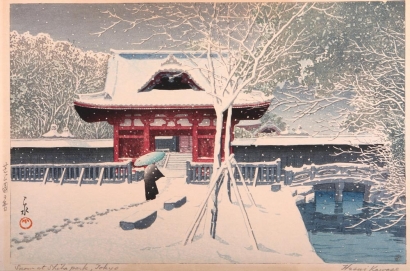
Evening Snow at Shiha Park, Tokyo
1932
Woodblock print
Featured in Collections
Curated cross-cuts that include this print.
Frequently Asked Questions
Clearing after a Snow in the Pines (Matsu no yukibare) was created by Kawase Hasui (川瀬巴水) in August 1929.
Clearing after a Snow in the Pines (Matsu no yukibare) uses Bokashi, on color woodblock print.
Clearing after a Snow in the Pines (Matsu no yukibare) was published by Watanabe Shozaburo (August 1929).
Clearing after a Snow in the Pines (Matsu no yukibare) depicts snow scenes.