
Lingering Snow at Senzoku Pond (Senzokuike no zanesetsu)
by Kawase Hasui
- Date:
- 1951
- Medium:
- Color woodblock print
- Format:
- Oban
- Publisher:
- Watanabe Shozaburo
- Edition:
- Published by Watanabe Shozaburo
- Source:
- Art Institute of Chicago
Description
Senzoku Pond in Tokyo's Ota ward is a small lake famous for its ancient lotus beds and the hillside temple that overlooks it. Lingering snow around its shores in this 1951 print leaves patches of white against the dark water and bare branches of the surrounding trees, the zansetsu condition giving the composition a muted, late-winter palette. The pond's modest size and intimate urban setting distinguish it from Hasui's larger lake compositions.
More Prints by Kawase Hasui

More Snow Scenes Prints
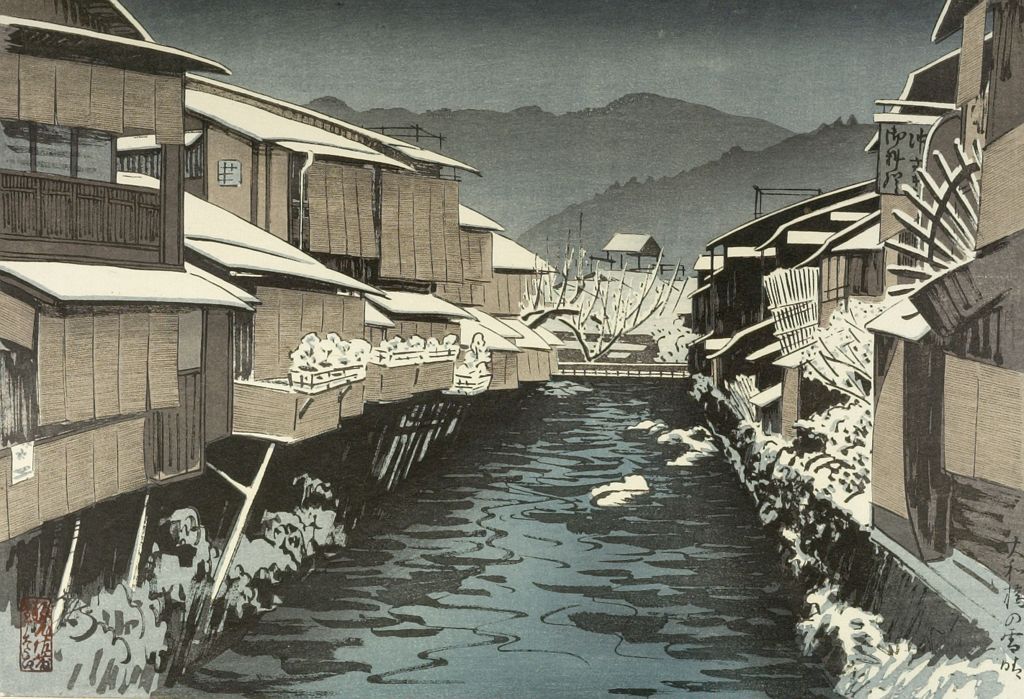
Fair Weather After Snow at Yamato Bridge, Kyoto (Yamato bashi no yukibare), Taishô period, dated 1924
Woodblock print

The Compound of the Tenman Shrine at Kameido in the Snow (Kameido Tenmangu keidai no yuki), from the series "Famous Places in the Eastern Capital (Toto meisho)"
c. 1832/38
Color woodblock print; oban

Miyajima in Snow (Yuki no Miyajima)
Yuki no Miyajima
1929
Color woodblock print; oban
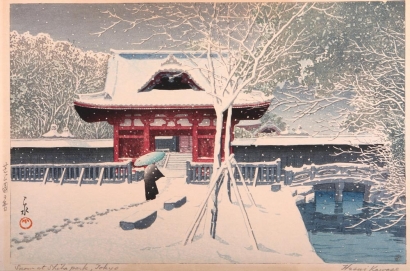
Evening Snow at Shiha Park, Tokyo
1932
Woodblock print
Featured in Collections
Curated cross-cuts that include this print.
Frequently Asked Questions
Lingering Snow at Senzoku Pond (Senzokuike no zanesetsu) was created by Kawase Hasui (川瀬巴水) in 1951.
Lingering Snow at Senzoku Pond (Senzokuike no zanesetsu) uses Bokashi, on color woodblock print.
Lingering Snow at Senzoku Pond (Senzokuike no zanesetsu) was published by Watanabe Shozaburo (1951).
Lingering Snow at Senzoku Pond (Senzokuike no zanesetsu) depicts snow scenes and rivers & lakes.