
Snow at the Shin Bridge, Nikko (Nikko Shinkyo no yuki)
Nikko Shinkyo no yuki
by Kawase Hasui
- Date:
- 1930; edition:178/350
- Medium:
- Color woodblock print; Oban
- Format:
- Oban
- Dimensions:
- 24 × 36.2 cm
- Publisher:
- Watanabe Shozaburo
- Edition:
- Published by Watanabe Shozaburo
- Source:
- Art Institute of Chicago
Description
Snow at the Shin Bridge, Nikko depicts the sacred Shinkyo Bridge — one of Japan's most revered architectural landmarks — draped in winter snow. Created in 1930 and published by Watanabe Shozaburo, this print captures the graceful vermillion arch of the bridge spanning the Daiya River gorge at the entrance to the Toshogu shrine complex in Nikko. Fresh snow covers the bridge's railing and the surrounding cedar trees, while the rushing water below remains dark and animated against the stillness of the winter landscape.
The Shinkyo Bridge, whose name translates as "Sacred Bridge," has stood at the entrance to Nikko's shrine and temple complex since the seventeenth century. According to legend, the bridge marks the spot where the Buddhist monk Shodo Shonin crossed the river on the backs of two serpents in the eighth century. Hasui's choice to depict this culturally resonant site in snow underscores his consistent interest in capturing Japan's most celebrated places under conditions that reveal their deepest beauty. The contrast between the bridge's warm red lacquer and the cool whites of snow creates a visual tension that draws the eye along the graceful curve of the arch.
Nikko was a subject Hasui returned to frequently, producing prints of various locations within the shrine complex and the surrounding natural landscape, including nearby Lake Chuzenji. This particular composition demonstrates his skill at integrating architecture and nature into a unified atmospheric vision. The falling snow is rendered with characteristic precision, each flake contributing to the overall sense of hushed tranquility. The gorge setting adds dramatic depth to the composition, with the steep rocky banks and dark water creating a strong vertical counterpoint to the horizontal sweep of the bridge. This print stands as one of Hasui's finest architectural studies, combining topographic accuracy with the poetic sensibility that distinguishes his greatest work.
More Prints by Kawase Hasui

More Landscapes Prints

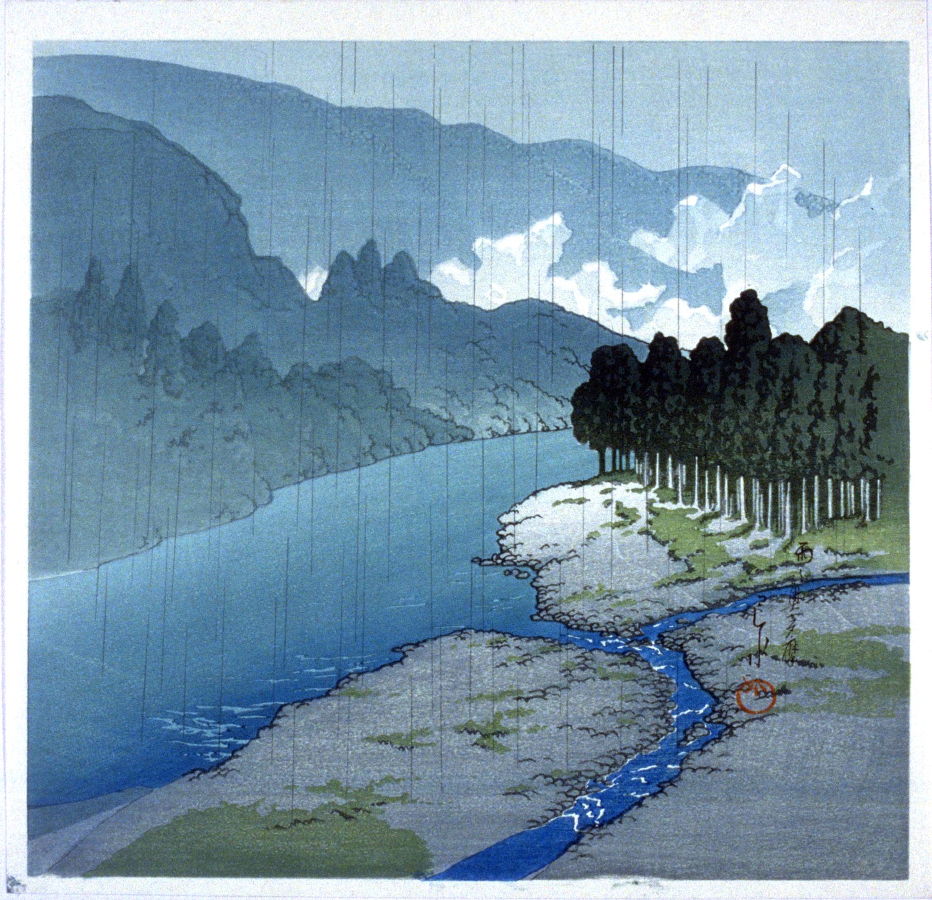
Lake Kugushi in Wakasa Province (Wakasa Kugushiko), from the series Souvenirs of Travel I (Tabi miyage dai isshu)"
Wakasa Kugushiko
1920
Color woodblock print; oban
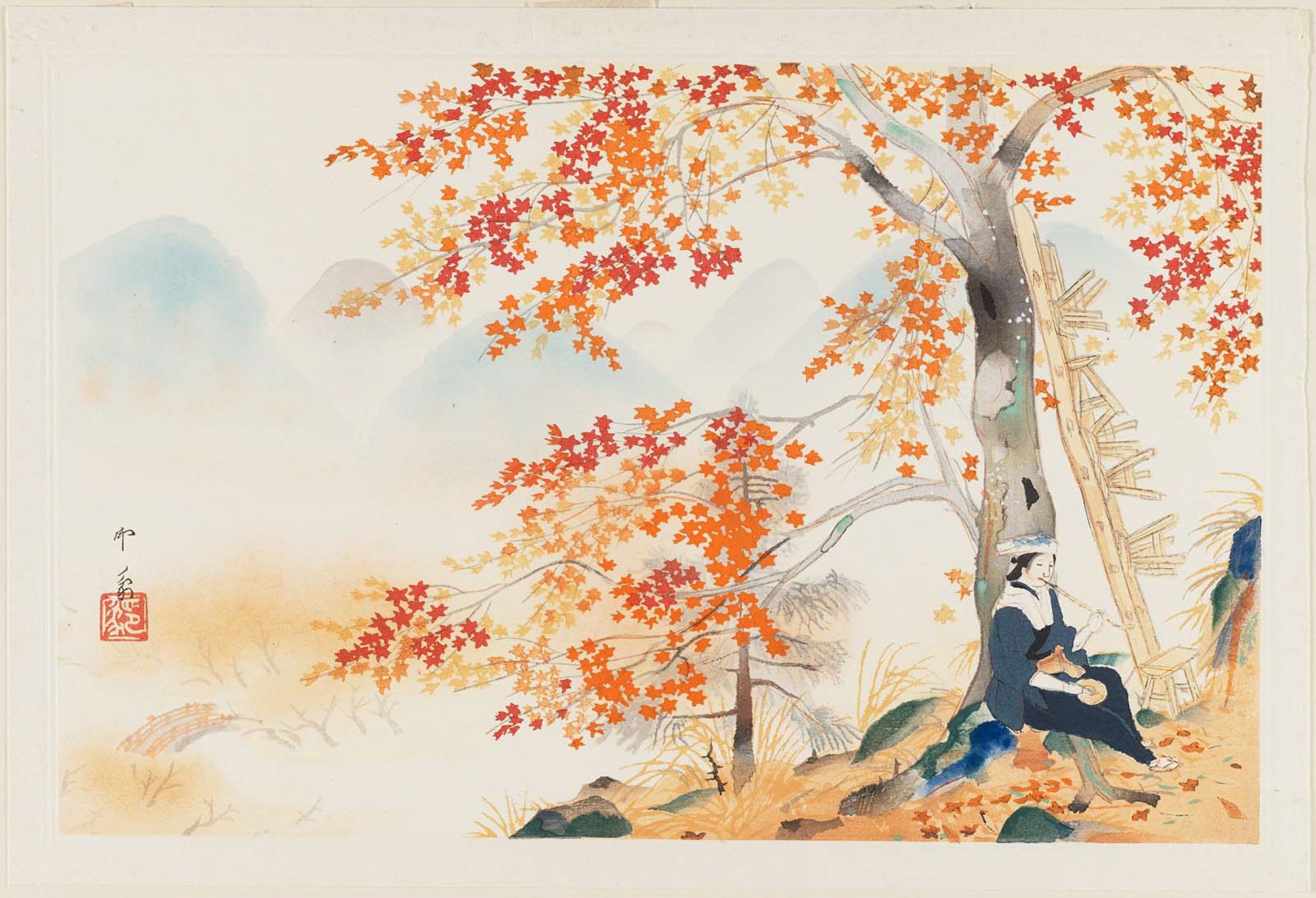
Autumn Maple Leaves at Takao, from the album Eight Views of Kyoto (Kyôto hakkei)
Woodblock print

The Beach at Kaiganji in Sanuki Province (Sanuki Kaiganji no hama), from the series "Collection of Views of Japan II, Kansai Edition (Nihon fukei shu II Kansai hen)"
1934
Color woodblock print; oban

Tea Kettle, section of a sheet from the series "Mirror of Stone Rubbings of Views of the Provinces" (Kohon meihitsu ishizuri kagami)
n.d.
Woodblock print; ishizuri-e, section of harimaze sheet
Featured in Collections
Curated cross-cuts that include this print.
Frequently Asked Questions
Snow at the Shin Bridge, Nikko (Nikko Shinkyo no yuki) (Nikko Shinkyo no yuki) was created by Kawase Hasui (川瀬巴水) in 1930; edition:178/350.
Snow at the Shin Bridge, Nikko (Nikko Shinkyo no yuki) uses Bokashi, Karazuri, and Nishiki-e, on color woodblock print; oban.
Snow at the Shin Bridge, Nikko (Nikko Shinkyo no yuki) was published by Watanabe Shozaburo (1930; edition:178/350).
Snow at the Shin Bridge, Nikko (Nikko Shinkyo no yuki) depicts landscapes, snow scenes, and bridges, set at Nikko.
Snow at the Shin Bridge, Nikko (Nikko Shinkyo no yuki) measures 24 × 36.2 cm (Oban format).