
Spring at Pubyong Pavilion, Modan Viewpoint, Pyongyang, from the series "Eight Views of Korea" (Chosen hakkei, Heijo no haru (Botandai Fusekiro))
by Kawase Hasui
- Series:
- Eight Views of Korea
- Date:
- 1939
- Medium:
- Color woodblock print
- Source:
- Art Institute of Chicago
Description
Spring at Pubyong Pavilion, Modan Viewpoint, Pyongyang (Heijo no haru, Botandai Fusekiro) was designed by Kawase Hasui in 1939 for the series Eight Views of Korea (Chosen hakkei) and is now in the collection of the Art Institute of Chicago. The woodblock print depicts a pavilion above the Taedong River near Pyongyang, in what was then colonial Korea under Japanese rule, with cherry blossoms in flower and the river curving past the bluff below. Kawase Hasui builds the composition around the silhouette of the wooden pavilion, framed by blossoming trees and set against a green hillside that descends to the water. The Eight Views of Korea applied the long-established East Asian theme of eight views, originally derived from Chinese painting tradition, to a contemporary itinerary across the Korean Peninsula. As with Kawase Hasui's Japanese landscape series, the prints were issued by publisher Watanabe Shozaburo, whose Tokyo workshop coordinated the shin-hanga, or new prints, movement and translated the artist's on-site sketches into multi-block color prints. The Pyongyang scene reflects the period's expanded geographic reach for shin-hanga subjects, while retaining the genre's characteristic emphasis on weather, season, and architectural setting. Kawase Hasui's handling of the cherry blossoms and gentle river bend gives the print the lyrical, contemplative quality that defined his mature work, and the inclusion of the pavilion situates the scene within a longer cultural tradition of celebrated viewpoints, here rendered in the disciplined collaborative idiom developed by Watanabe Shozaburo for the shin-hanga market.
More Prints by Kawase Hasui

More Landscapes Prints

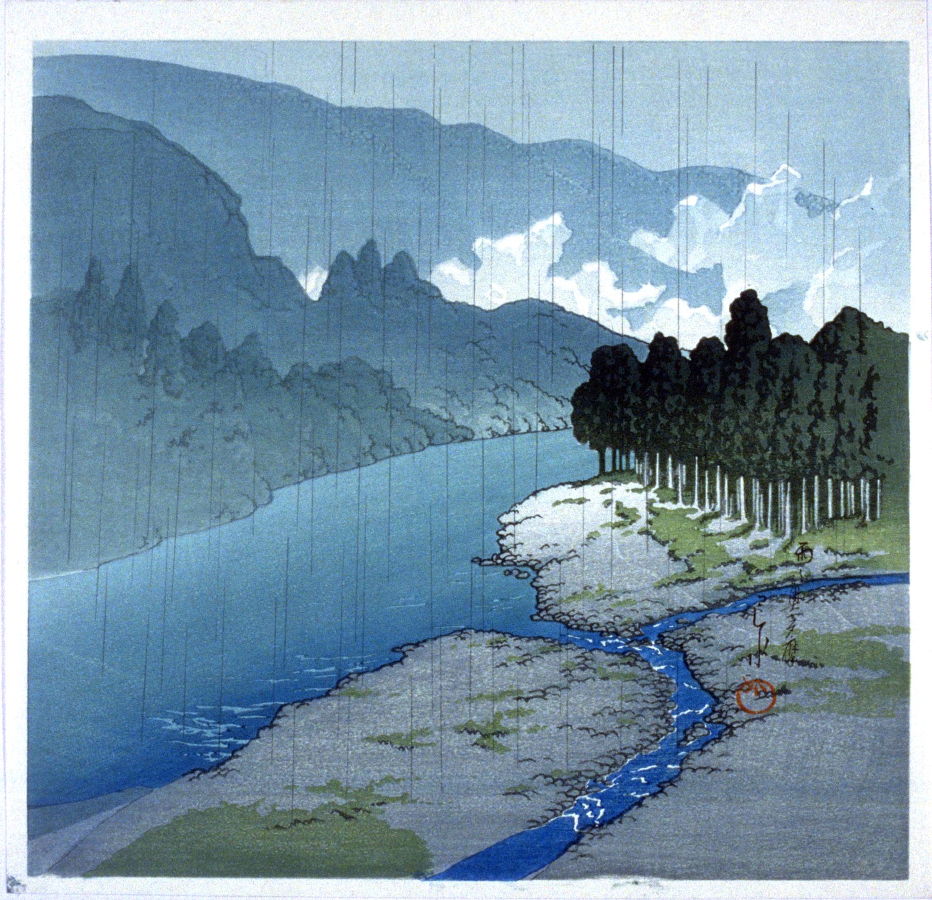
Lake Kugushi in Wakasa Province (Wakasa Kugushiko), from the series Souvenirs of Travel I (Tabi miyage dai isshu)"
Wakasa Kugushiko
1920
Color woodblock print; oban
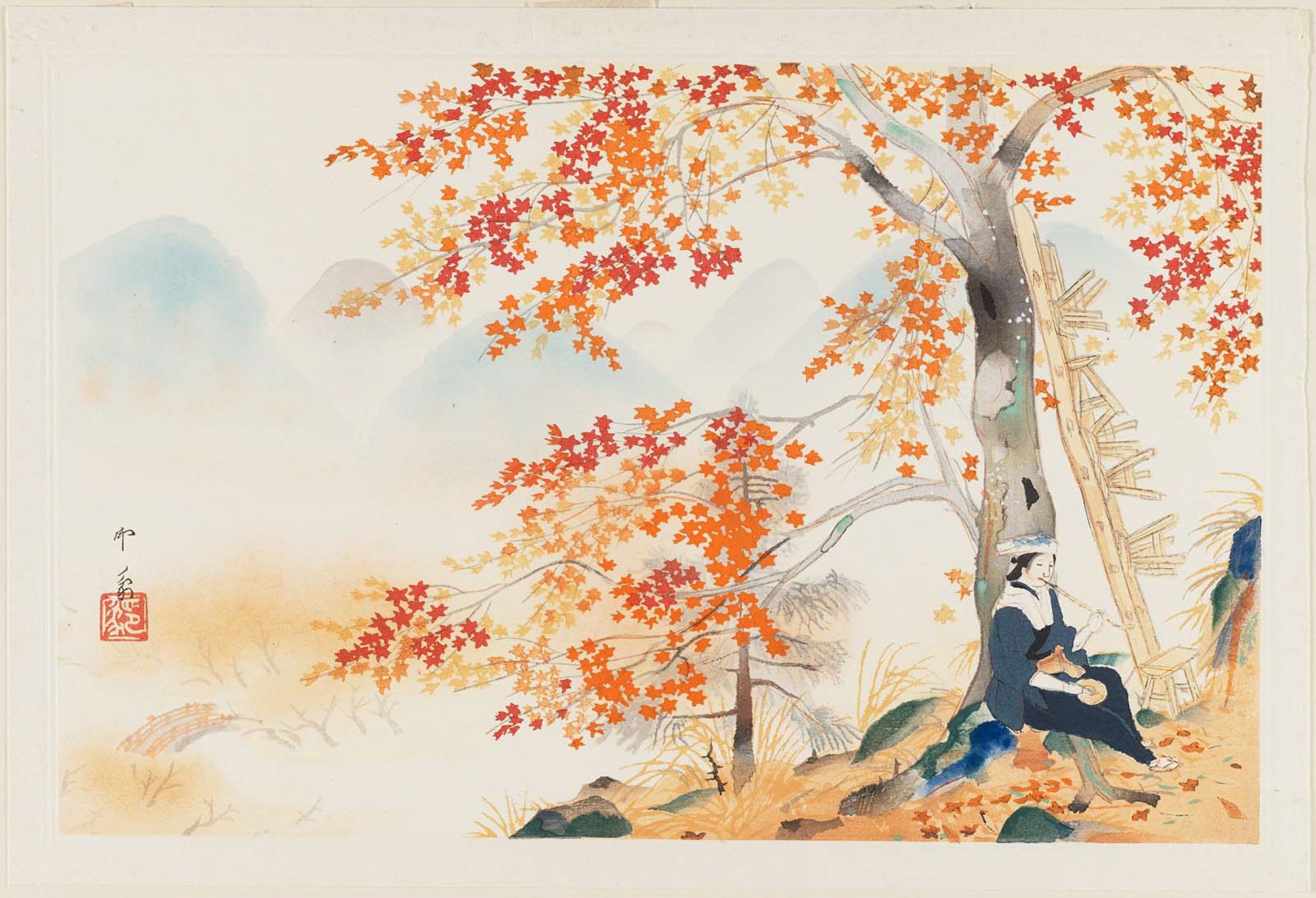
Autumn Maple Leaves at Takao, from the album Eight Views of Kyoto (Kyôto hakkei)
Woodblock print

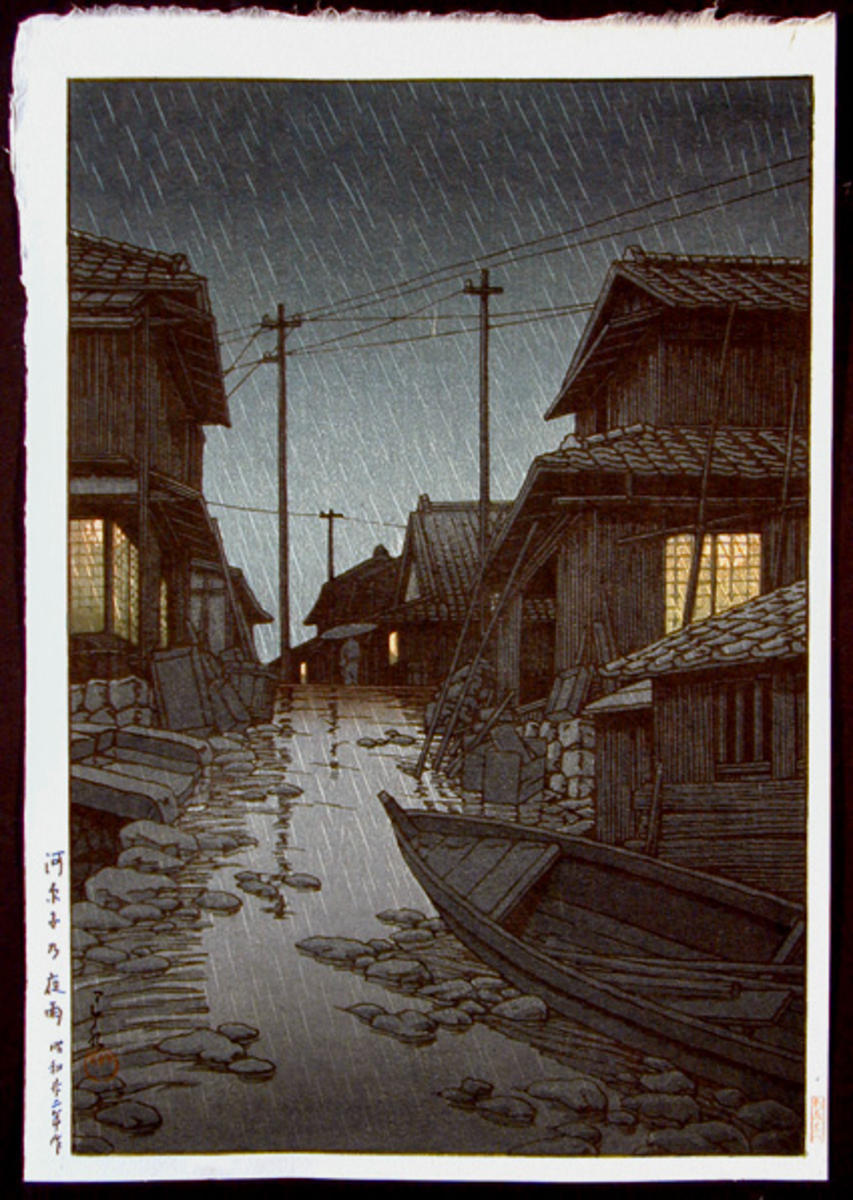
The Beach at Kaiganji in Sanuki Province (Sanuki Kaiganji no hama), from the series "Collection of Views of Japan II, Kansai Edition (Nihon fukei shu II Kansai hen)"
1934
Color woodblock print; oban

Tea Kettle, section of a sheet from the series "Mirror of Stone Rubbings of Views of the Provinces" (Kohon meihitsu ishizuri kagami)
n.d.
Woodblock print; ishizuri-e, section of harimaze sheet
Featured in Collections
Curated cross-cuts that include this print.
Frequently Asked Questions
Spring at Pubyong Pavilion, Modan Viewpoint, Pyongyang, from the series "Eight Views of Korea" (Chosen hakkei, Heijo no haru (Botandai Fusekiro)) was created by Kawase Hasui (川瀬巴水) in 1939.
Yes — Spring at Pubyong Pavilion, Modan Viewpoint, Pyongyang, from the series "Eight Views of Korea" (Chosen hakkei, Heijo no haru (Botandai Fusekiro)) is part of the Eight Views of Korea series by Kawase Hasui.
Spring at Pubyong Pavilion, Modan Viewpoint, Pyongyang, from the series "Eight Views of Korea" (Chosen hakkei, Heijo no haru (Botandai Fusekiro)) uses Bokashi, on color woodblock print.
Spring at Pubyong Pavilion, Modan Viewpoint, Pyongyang, from the series "Eight Views of Korea" (Chosen hakkei, Heijo no haru (Botandai Fusekiro)) depicts landscapes, spring, and architecture.