
Mt Fuji from Taisekiji Temple
- Medium:
- Mokuhanga (Japanese woodblock)
- Image courtesy of
- Saru Gallery
Description
Taisekiji, the head temple of Nichiren Shoshu in Shizuoka Prefecture, faces directly toward Mt Fuji from its position at the foot of the mountain. The subject returned Koizumi to his birth prefecture — he was born in Shizuoka before moving to Tokyo — and joins the long tradition of meisho-e featuring Fuji from named viewpoints, descending from Hokusai's Thirty-Six Views and Hiroshige's Thirty-Six Views of Mt Fuji. The composition likely places the temple's architecture in the middle ground with Fuji rising behind, employing bokashi to render the gradient of sky and the snowcap on the peak. As across his output, Koizumi cut and printed every block himself, fulfilling the sosaku-hanga ideal even when the subject — Fuji from a named place — sits squarely within the shin-hanga landscape repertoire and the older meisho-e lineage that defined Edo-period printmaking.
More Prints by Kishio Koizumi
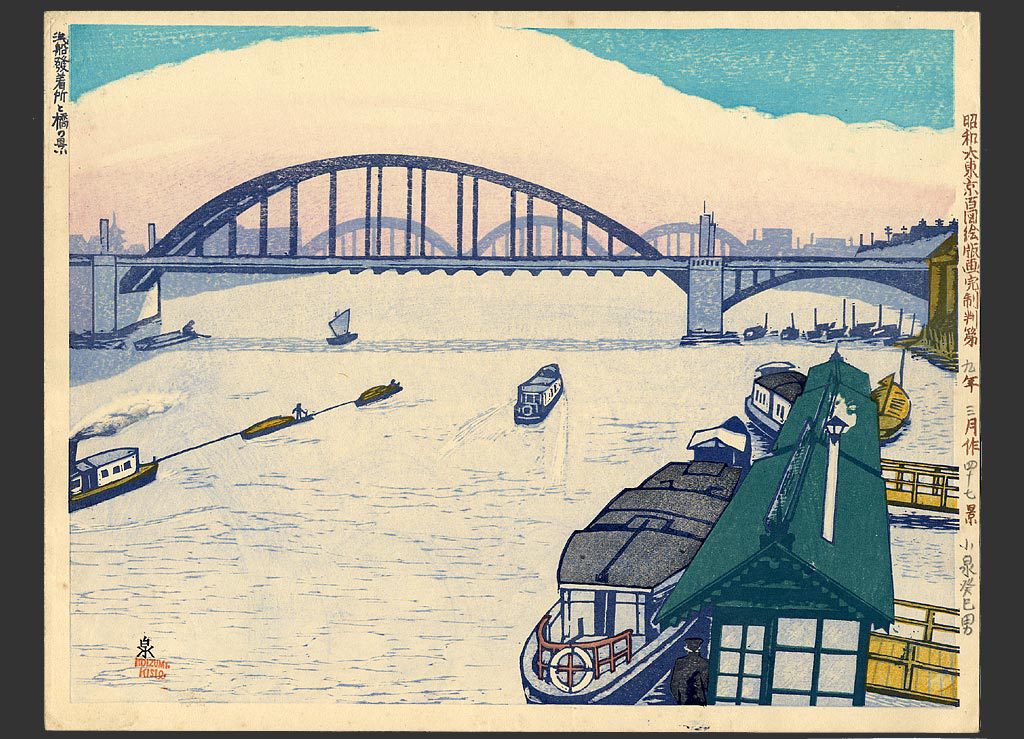
Untitled (kishio-koizumi)
Woodblock print
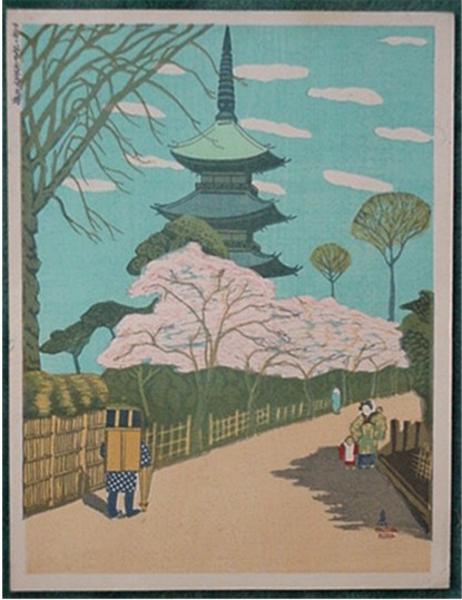
Unknown, spring scene
Woodblock print

Raft In Yoryoko River
Mokuhanga (Japanese woodblock)

Autumn Color along the Moat at Hanzo Gate (Hanzomon go-horihata no aki iro), from the series "One Hundred Views of Great Tokyo in the Showa Era (Showa dai Tokyo fukei hyaku zue hanga)"
1934
Color woodblock print; oban
More Temples & Shrines Prints
Fushimi Inari Temple
伏見稲荷
Woodblock print

The Compound of the Tenman Shrine at Kameido in the Snow (Kameido Tenmangu keidai no yuki), from the series "Famous Places in the Eastern Capital (Toto meisho)"
c. 1832/38
Color woodblock print; oban
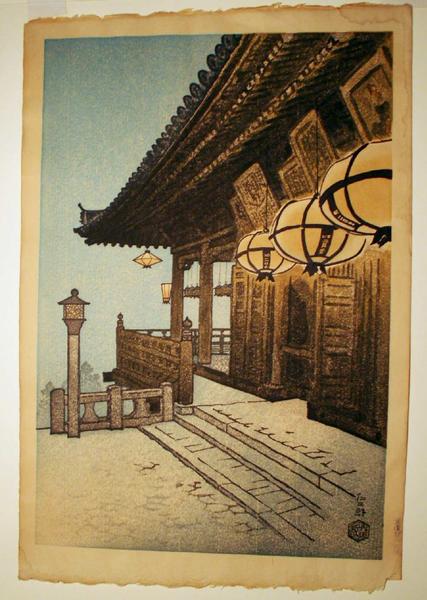
Temple with lanterns
Woodblock print

A Section of the Byodo Temple at Uji (Uji Byodoin no ichibu), from the series "Souvenirs of Travel, Second Series (Tabi miyage dai nishu)"
Uji Byodoin no ichibu
1921
Color woodblock print; oban
Featured in Collections
Curated cross-cuts that include this print.
Frequently Asked Questions
Mt Fuji from Taisekiji Temple was created by Kishio Koizumi (小泉癸巳男).
Mt Fuji from Taisekiji Temple depicts temples & shrines and mount fuji.