
Taki River and Otonashi River at Kongôji Temple
- Medium:
- Mokuhanga (Japanese woodblock)
- Image courtesy of
- Saru Gallery
Description
The print depicts the meeting of the Taki and Otonashi rivers near the Kongoji temple grounds. Compositions of this kind typically use an elevated vantage to set the architecture against the receding ribbons of water, with bokashi describing the depth of the surface and the shaded ravine walls. The doubled river subject permits Koizumi to display the woodblock's capacity for water rendering — small directional cuts in the keyblock for the current, layered transparent passes for the shifting tone of the stream. Temple-and-river compositions belong to the meisho-e and shin-hanga landscape vocabulary, and their appearance in Koizumi's output reflects his hybrid position: the topographic, place-named subjects of shin-hanga combined with the sosaku-hanga discipline of self-carving and self-printing. He designed, carved, and printed every block himself, the print emerging entirely from his hand without the workshop division of Edo-period production.
More Prints by Kishio Koizumi
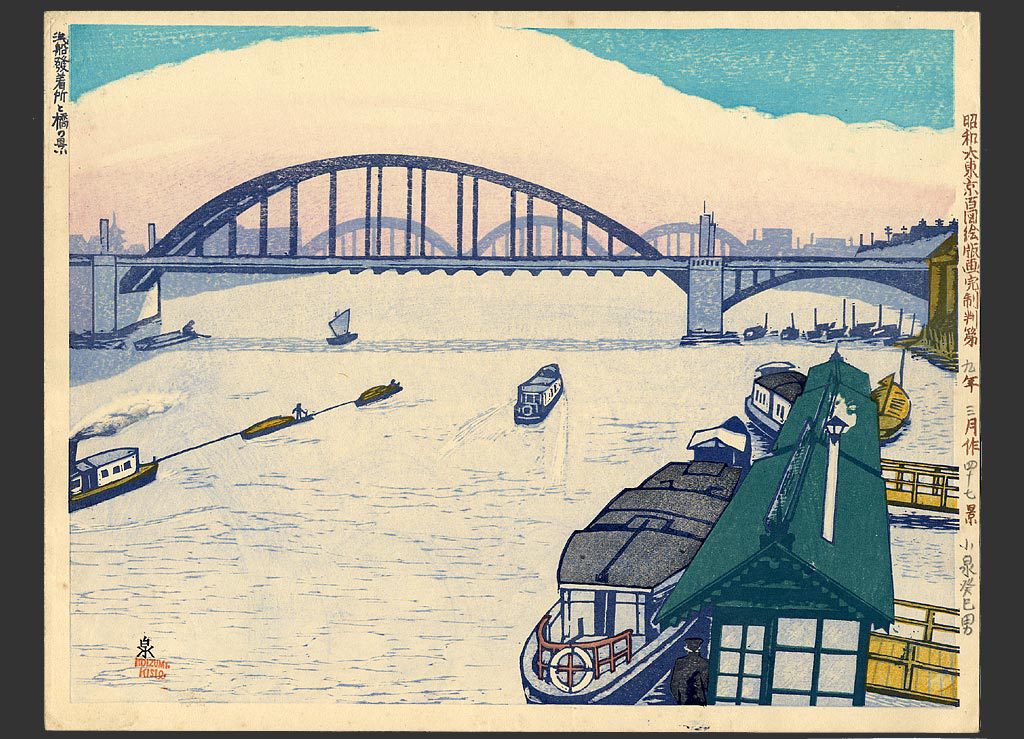
Untitled (kishio-koizumi)
Woodblock print
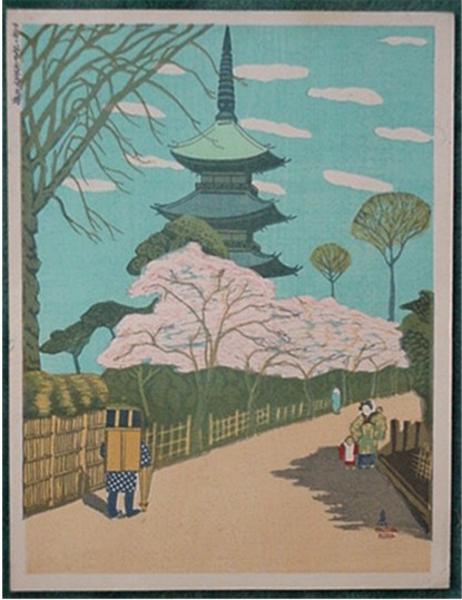
Unknown, spring scene
Woodblock print

Raft In Yoryoko River
Mokuhanga (Japanese woodblock)

Autumn Color along the Moat at Hanzo Gate (Hanzomon go-horihata no aki iro), from the series "One Hundred Views of Great Tokyo in the Showa Era (Showa dai Tokyo fukei hyaku zue hanga)"
1934
Color woodblock print; oban
More Temples & Shrines Prints
Fushimi Inari Temple
伏見稲荷
Woodblock print

The Compound of the Tenman Shrine at Kameido in the Snow (Kameido Tenmangu keidai no yuki), from the series "Famous Places in the Eastern Capital (Toto meisho)"
c. 1832/38
Color woodblock print; oban
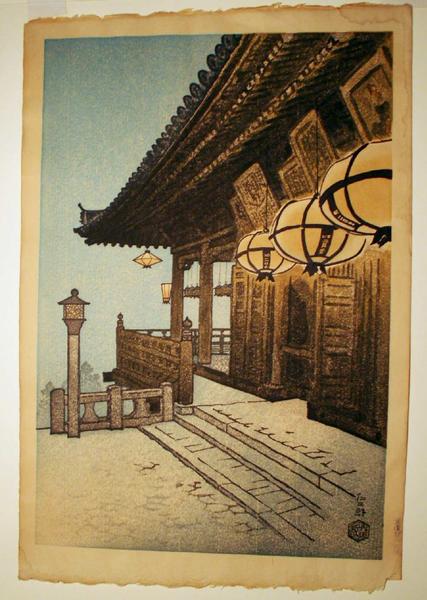
Temple with lanterns
Woodblock print

A Section of the Byodo Temple at Uji (Uji Byodoin no ichibu), from the series "Souvenirs of Travel, Second Series (Tabi miyage dai nishu)"
Uji Byodoin no ichibu
1921
Color woodblock print; oban
Featured in Collections
Curated cross-cuts that include this print.
Frequently Asked Questions
Taki River and Otonashi River at Kongôji Temple was created by Kishio Koizumi (小泉癸巳男).
Taki River and Otonashi River at Kongôji Temple depicts temples & shrines and rivers & lakes.