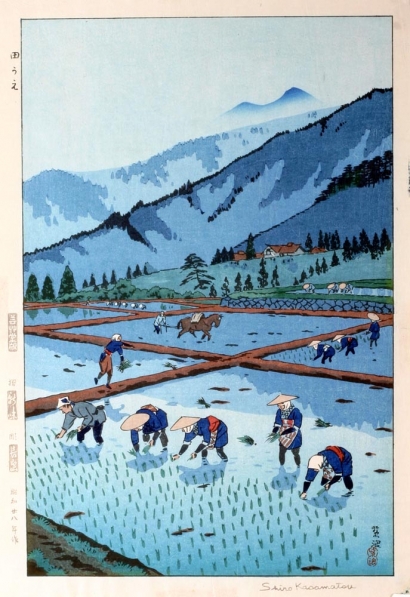
Rice Planting
- Medium:
- Woodblock print
- Format:
- Oban
- Publisher:
- Watanabe Shozaburo
- Edition:
- Published by Watanabe Shozaburo
- Source:
- ukiyo-e.org
Description
Workers wade through flooded paddies transplanting rice seedlings in the communal labor of taue — rice planting — the figures bending to push each seedling into the mud with practiced precision. Kasamatsu's rice planting prints observe the rhythmic, collective nature of this agricultural work, which in Japan was traditionally accompanied by music and prayer as well as physical effort. The flooded paddy's reflective surface doubles the figures and the sky above them, creating a composition of unusual visual richness.
More Prints by Shiro Kasamatsu

More Snow Scenes Prints
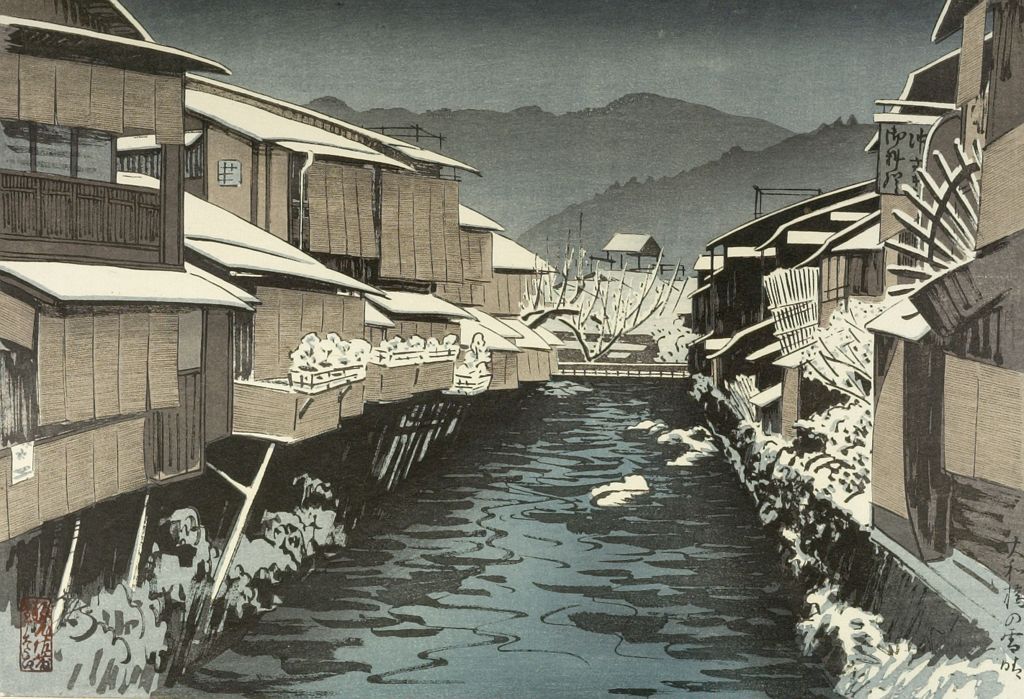
Fair Weather After Snow at Yamato Bridge, Kyoto (Yamato bashi no yukibare), Taishô period, dated 1924
Woodblock print

The Compound of the Tenman Shrine at Kameido in the Snow (Kameido Tenmangu keidai no yuki), from the series "Famous Places in the Eastern Capital (Toto meisho)"
c. 1832/38
Color woodblock print; oban

Miyajima in Snow (Yuki no Miyajima)
Yuki no Miyajima
1929
Color woodblock print; oban
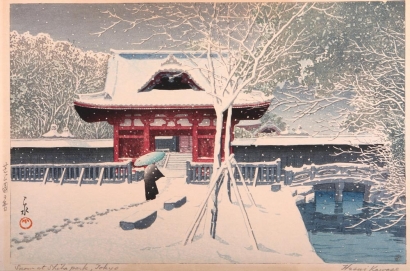
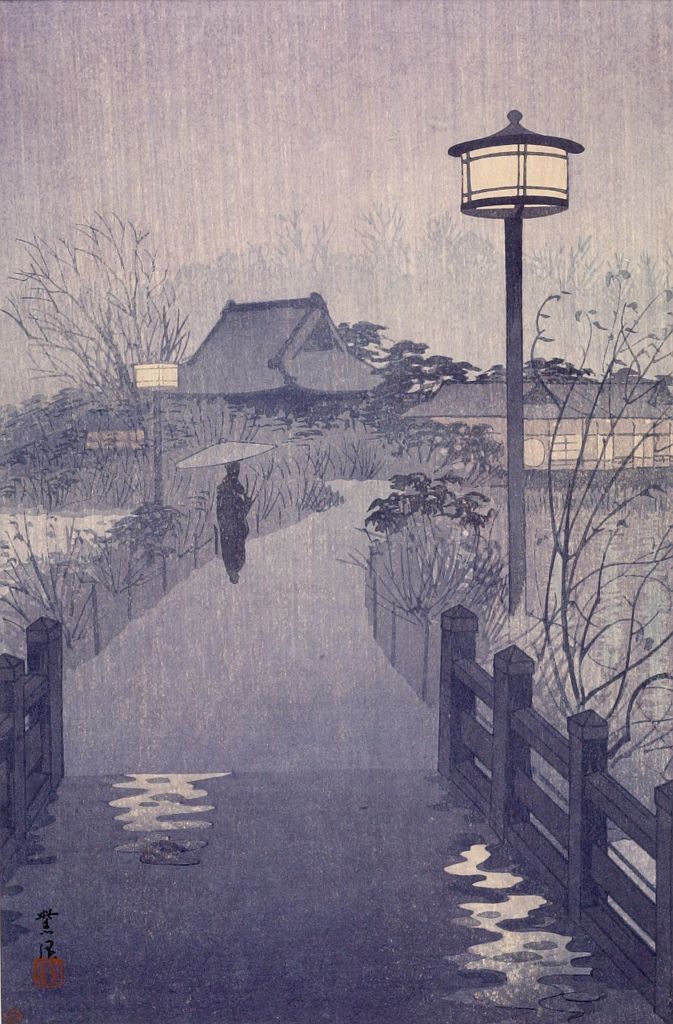
Evening Snow at Shiha Park, Tokyo
1932
Woodblock print
Featured in Collections
Curated cross-cuts that include this print.
Frequently Asked Questions
Rice Planting was created by Shiro Kasamatsu (笠松紫浪).
Rice Planting uses Bokashi, Nishiki-e, and Moku-hanga, on woodblock print.
Rice Planting was published by Watanabe Shozaburo.
Rice Planting depicts snow scenes and food & drink.