Niju-bashi Bridge
- Medium:
- Woodblock print
- Format:
- Oban
- Publisher:
- Unsodo
- Source:
- ukiyo-e.org
Description
Nijubashi Bridge — the "double bridge" leading to the inner grounds of the Imperial Palace in Tokyo, its iron bridge of 1964 reflected in the moat below alongside the stone bridge (Fushimi-yagura Bridge) behind it — is Tokuriki's subject in this print. The Nijubashi is among Tokyo's most photographed imperial landmarks, its formal setting and reflective moat creating the kind of composed, symmetrical landscape that Tokuriki's trained architectural eye could exploit with particular skill. The imperial context gives the bridge a ceremonial gravity.
More Prints by Tomikichiro Tokuriki
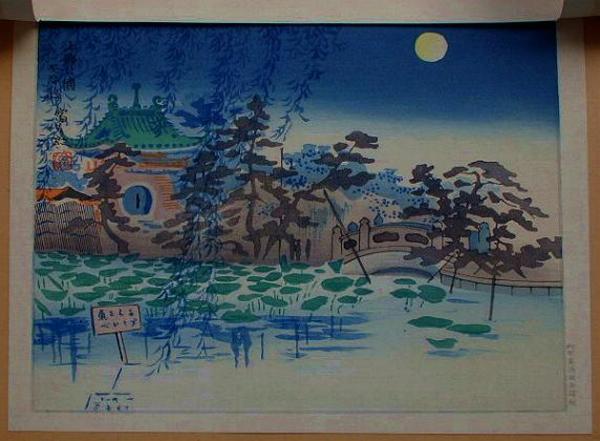
Heian Shrine in the Spring
Woodblock print
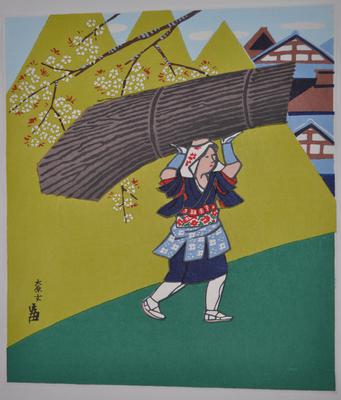
An Oharame Girl Carrying Firewood on Her Head
20th century
Woodblock print, ink and color on paper

April (Arashiyama Park, a Famous Scenic Resort)
四月 (嵐山)
second half 20th century
Woodblock print, ink and color on paper

June (Rainy Scene of the Sen-ke, Japanese Tea Ceremony Founder's House)
六月 (千家雨景)
second half 20th century
Woodblock print, ink and color on paper
More Bridges Prints
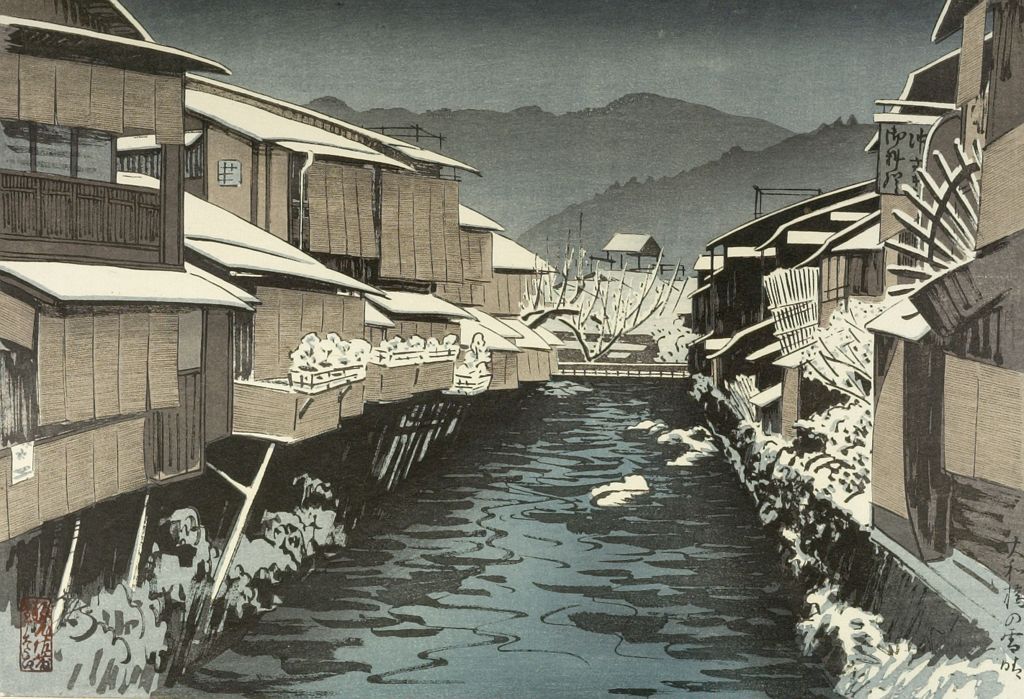
Fair Weather After Snow at Yamato Bridge, Kyoto (Yamato bashi no yukibare), Taishô period, dated 1924
Woodblock print
![Mount Fuji on a Moonlit Night, Kawai Bridge (Tsukiyo no Fuji [Kawaibashi]), from the series "Selection of Views of the Tokaido (Tokaido fukei senshu)" by Kawase Hasui](https://www.artic.edu/iiif/2/d0960668-1e73-339a-b182-fb995a54bff0/full/843,/0/default.jpg)
Mount Fuji on a Moonlit Night, Kawai Bridge (Tsukiyo no Fuji [Kawaibashi]), from the series "Selection of Views of the Tokaido (Tokaido fukei senshu)"
1947
Color woodblock print; oban

Shin Ohashi Bridge (Shin Ohashi), from the series "Twenty View of Tokyo (Tokyu nijukkei)"
1926
Color woodblock print; oban

Sacred Bridge in Nikko (Nikko Shinkyo)
1930
Color woodblock print; oban
Featured in Collections
Curated cross-cuts that include this print.
Frequently Asked Questions
Niju-bashi Bridge was created by Tomikichiro Tokuriki (徳力富吉郎).
Niju-bashi Bridge uses Nishiki-e, Moku-hanga, and Kento, on woodblock print.
Niju-bashi Bridge was published by Unsodo.
Niju-bashi Bridge depicts bridges.