
Kyoto Maiko
- Medium:
- Mokuhanga (Japanese woodblock)
- Image courtesy of
- Saru Gallery
Description
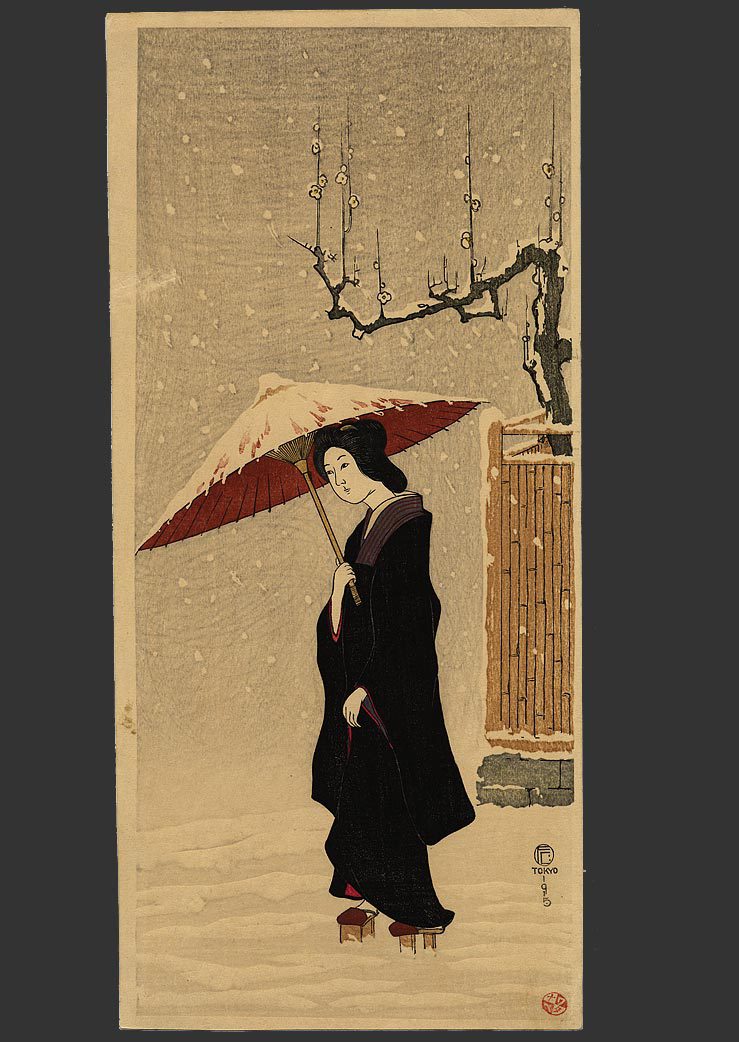
This bijin-ga places a Kyoto maiko in a setting more explicitly identified than in Tokuriki's untitled maiko studies, suggesting either a recognizable Gion lane, a teahouse threshold, or a seasonal cherry-blossom or autumn-foliage backdrop tied to a specific district festival. The figure's costume—pendant darari obi, layered kimono with seasonal motif, bira-bira kanzashi suspended from the hair ornament—identifies her stage of apprenticeship and the season of depiction, since maiko hairpieces and kimono patterns rotate through the calendar year. Tokuriki composes such figures through outline keyblocks defining facial features and kimono edges, with separate color blocks registering each pattern element of the textile. As a Kyoto native and twelfth-generation member of a printmaking family, his maiko subjects engage local subject matter that Tokyo-based shin-hanga artists addressed less frequently. Across his career he produced numerous variants of the maiko theme, contributing to the twentieth-century reframing of these figures as emblems of Kyoto's preserved cultural inheritance rather than active members of an entertainment economy still operating in his own lifetime.
More Prints by Tomikichiro Tokuriki
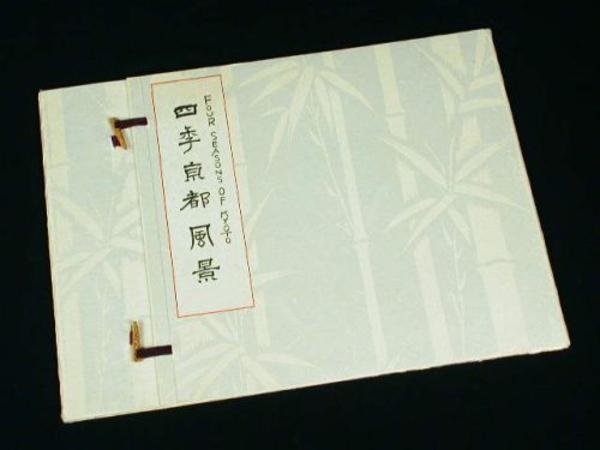
Heian Shrine in the Spring
Woodblock print
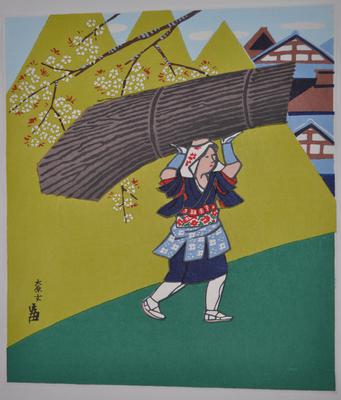
An Oharame Girl Carrying Firewood on Her Head
20th century
Woodblock print, ink and color on paper

April (Arashiyama Park, a Famous Scenic Resort)
四月 (嵐山)
second half 20th century
Woodblock print, ink and color on paper

June (Rainy Scene of the Sen-ke, Japanese Tea Ceremony Founder's House)
六月 (千家雨景)
second half 20th century
Woodblock print, ink and color on paper
More Bijin-ga Prints

Featured in Collections
Curated cross-cuts that include this print.
Frequently Asked Questions
Kyoto Maiko was created by Tomikichiro Tokuriki (徳力富吉郎).
Kyoto Maiko depicts bijin-ga.