
Maiko
- Medium:
- Mokuhanga (Japanese woodblock)
- Image courtesy of
- Saru Gallery
Description
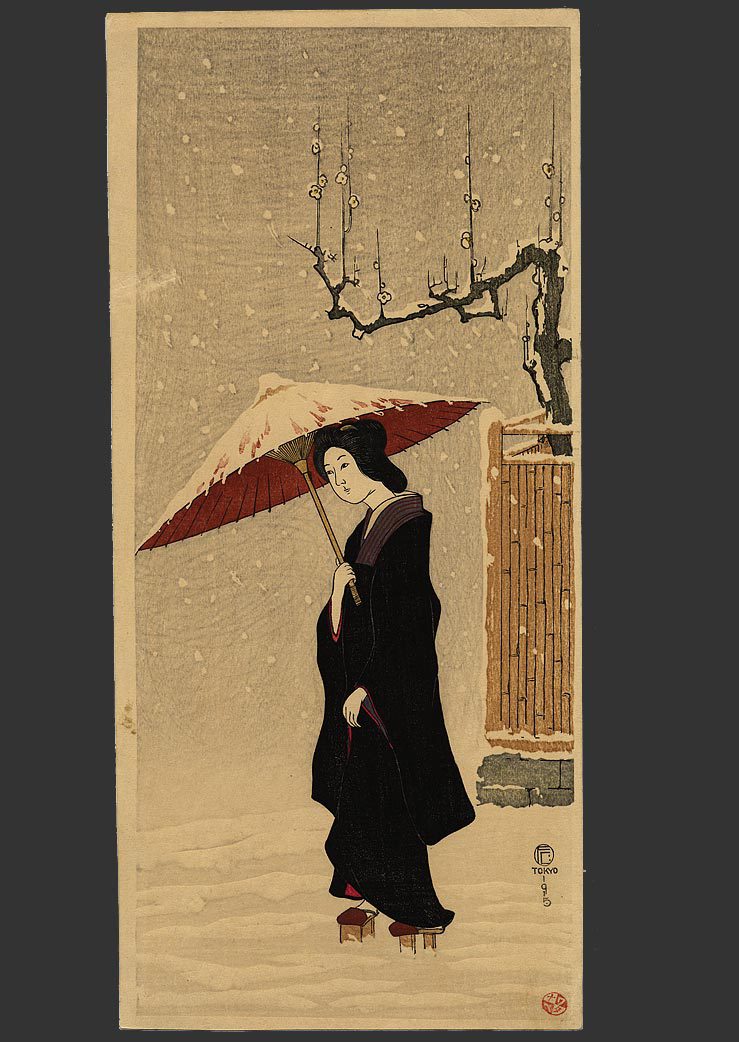
This bijin-ga depicts a maiko, an apprentice geisha in the Kyoto entertainment districts of Gion or Pontocho, identifiable by the trailing darari obi, elaborate kanzashi hair ornaments, and the distinctive okobo platform clogs and partially blackened teeth or red-painted lower lip particular to first-year apprentices. Tokuriki, a lifelong Kyoto resident, returned repeatedly to maiko subjects, and his treatment typically favors a contemplative pose—adjusting a sleeve, holding a fan, glancing aside—rather than the theatrical animation of Edo-period bijin-ga. The composition relies on flat color planes for the patterned kimono, with textile motifs cut into separate blocks for layered nishiki-e printing, while skin tones receive subtle bokashi gradation across cheek and neck. Within his broader oeuvre, maiko prints sit alongside his Kyoto temple and seasonal landscape subjects as part of a sustained visual record of the city's surviving traditional culture. Working through the mid-twentieth century, Tokuriki addressed an audience—both Japanese and foreign—seeking accessible images of a Kyoto whose customs were already understood as inherited rather than current.
More Prints by Tomikichiro Tokuriki
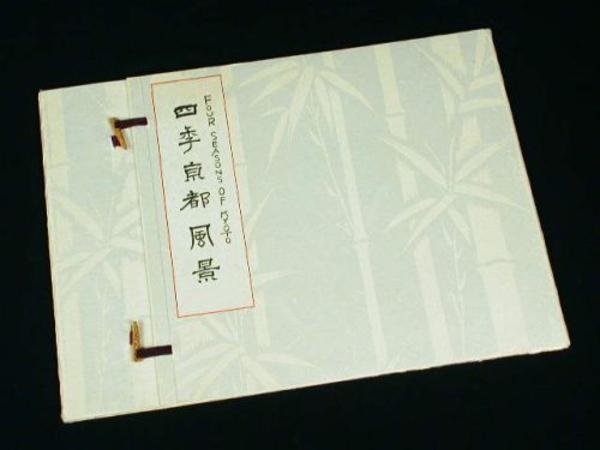
Heian Shrine in the Spring
Woodblock print
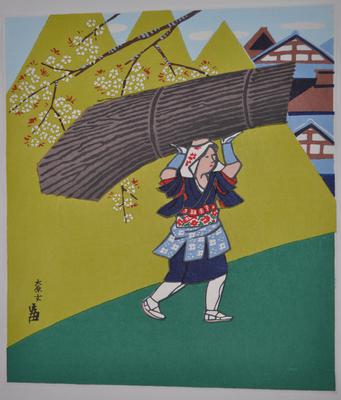
An Oharame Girl Carrying Firewood on Her Head
20th century
Woodblock print, ink and color on paper

April (Arashiyama Park, a Famous Scenic Resort)
四月 (嵐山)
second half 20th century
Woodblock print, ink and color on paper

June (Rainy Scene of the Sen-ke, Japanese Tea Ceremony Founder's House)
六月 (千家雨景)
second half 20th century
Woodblock print, ink and color on paper
More Bijin-ga Prints
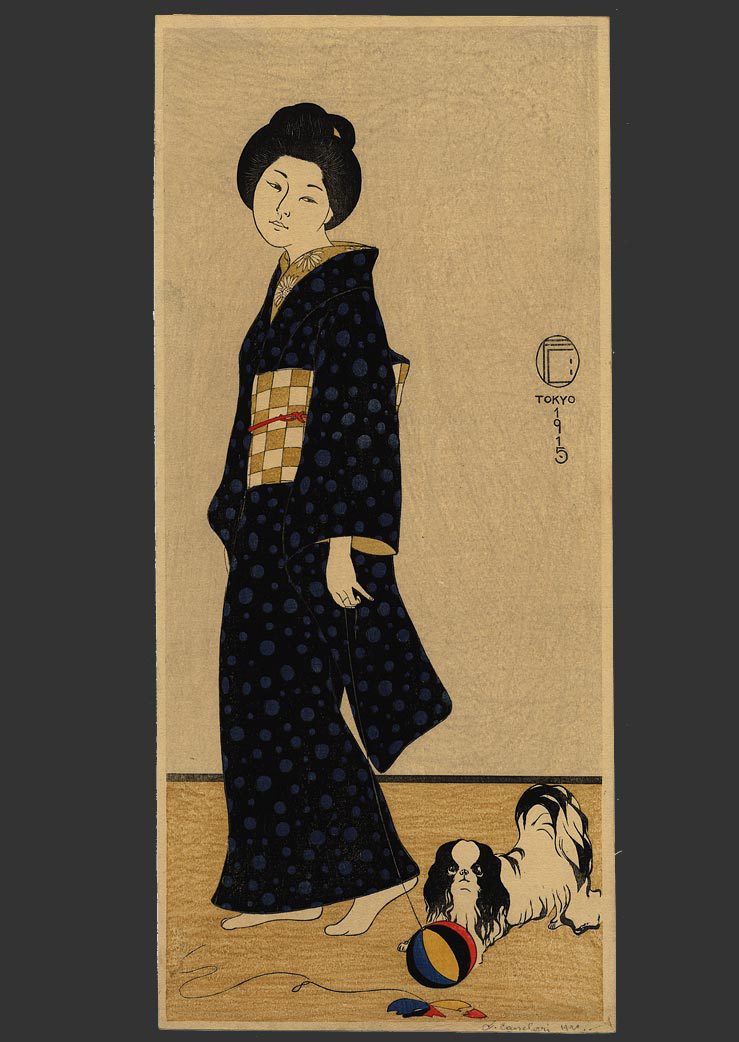
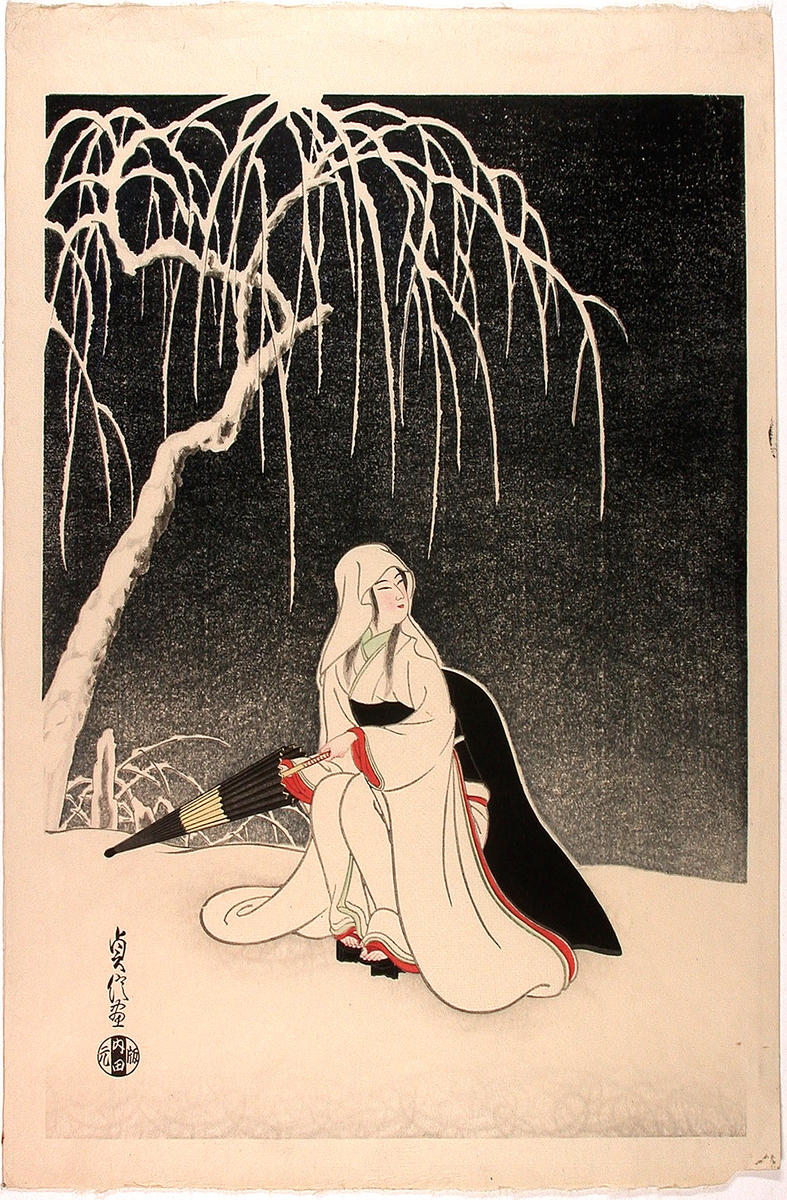

Featured in Collections
Curated cross-cuts that include this print.
Frequently Asked Questions
Maiko was created by Tomikichiro Tokuriki (徳力富吉郎).
Maiko depicts bijin-ga.