
Sanjo Bridge
- Medium:
- Mokuhanga (Japanese woodblock)
- Image courtesy of
- Saru Gallery
Description
Sanjo Ohashi crosses the Kamo River in eastern Kyoto and served as the western terminus of the Tokaido, the great Edo-period highway from the shogunal capital. Hiroshige's Tokaido Gojusan-tsugi closes with a view of this bridge, and Tokuriki's print belongs to the long tradition of Sanjo Bridge meisho-e that runs from the Edo period into shin-hanga. Compositions of this subject typically present the bridge in lateral view spanning the breadth of the sheet, with the river bokashi-graded beneath and the Higashiyama hills rising behind. Tokuriki was born in Kyoto into a twelfth-generation family of print artisans associated with Honganji, and the city's bridges, temples, and seasonal weather formed the core of his published output across more than seven decades. Sanjo Bridge appears recurrently in his Kyoto series, treated under varying weather and times of day in the manner of Hiroshige's serial reworkings of single sites.
More Prints by Tomikichiro Tokuriki
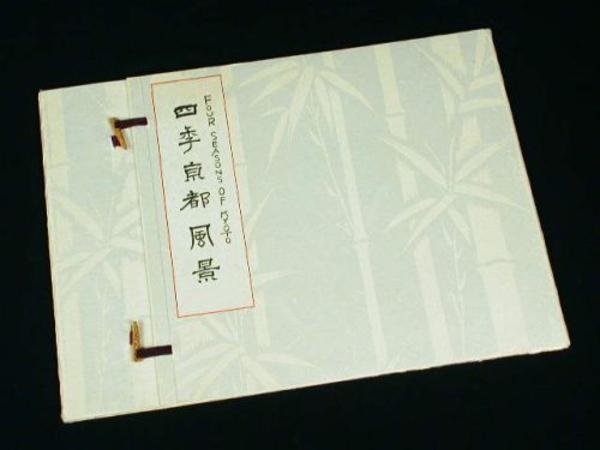
Heian Shrine in the Spring
Woodblock print
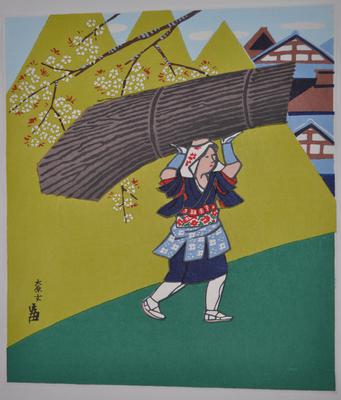
An Oharame Girl Carrying Firewood on Her Head
20th century
Woodblock print, ink and color on paper

April (Arashiyama Park, a Famous Scenic Resort)
四月 (嵐山)
second half 20th century
Woodblock print, ink and color on paper

June (Rainy Scene of the Sen-ke, Japanese Tea Ceremony Founder's House)
六月 (千家雨景)
second half 20th century
Woodblock print, ink and color on paper
More Bridges Prints
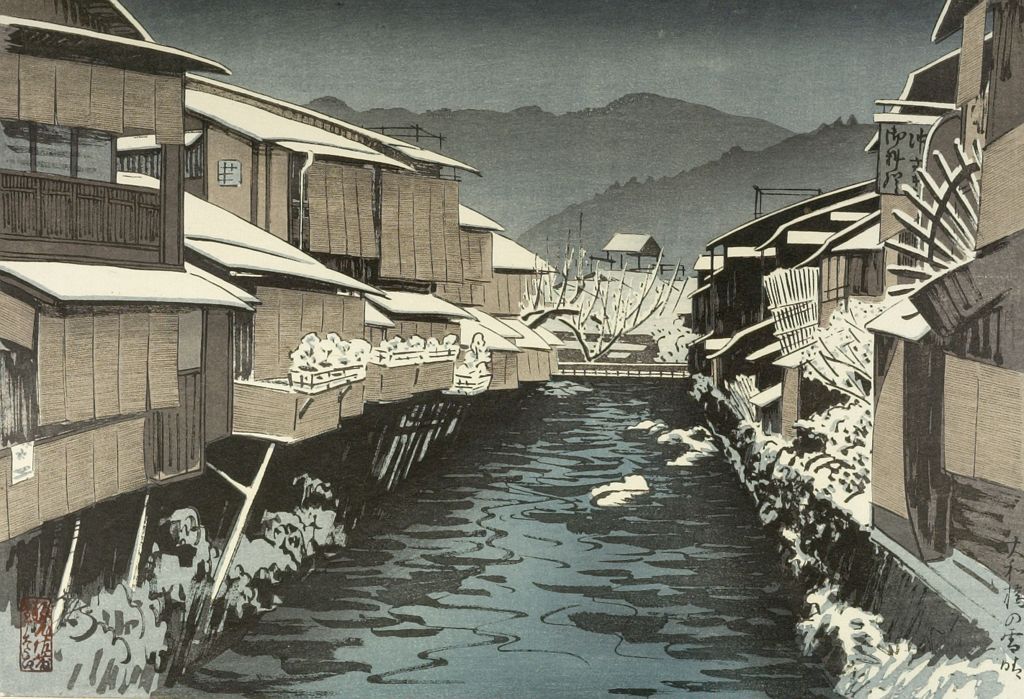
Fair Weather After Snow at Yamato Bridge, Kyoto (Yamato bashi no yukibare), Taishô period, dated 1924
Woodblock print
![Mount Fuji on a Moonlit Night, Kawai Bridge (Tsukiyo no Fuji [Kawaibashi]), from the series "Selection of Views of the Tokaido (Tokaido fukei senshu)" by Kawase Hasui](https://www.artic.edu/iiif/2/d0960668-1e73-339a-b182-fb995a54bff0/full/843,/0/default.jpg)
Mount Fuji on a Moonlit Night, Kawai Bridge (Tsukiyo no Fuji [Kawaibashi]), from the series "Selection of Views of the Tokaido (Tokaido fukei senshu)"
1947
Color woodblock print; oban

Shin Ohashi Bridge (Shin Ohashi), from the series "Twenty View of Tokyo (Tokyu nijukkei)"
1926
Color woodblock print; oban

Sacred Bridge in Nikko (Nikko Shinkyo)
1930
Color woodblock print; oban
Featured in Collections
Curated cross-cuts that include this print.
Frequently Asked Questions
Sanjo Bridge was created by Tomikichiro Tokuriki (徳力富吉郎).
Sanjo Bridge depicts bridges.