Kamakura (鎌倉)
10 prints by 7 artists
About Kamakura
Kamakura is a coastal town in eastern Kanagawa Prefecture, situated at the head of a small bay on Sagami Bay, surrounded on three sides by wooded hills and opening south to the Pacific. The town is historically important as the seat of the first shogunal government in Japan, established by Minamoto no Yoritomo in 1185 and lasting until the fall of the Hojo regents in 1333 during the broader Kamakura period of Japanese history. The Kamakura period saw the construction of the great Buddhist institutions for which the town is principally known, including the bronze Great Buddha (Daibutsu) of Kotoku-in cast in 1252 and standing approximately 11.4 meters high, originally housed within a great hall that was destroyed by tsunamis or storms in the late thirteenth and again in the fifteenth century, after which the bronze figure remained in its present open-air setting; the Tsurugaoka Hachiman Shrine, established by Minamoto no Yoritomo in 1180 and rebuilt in expanded form across the medieval and early modern periods as the cultic center of the new bakufu and of the Minamoto warrior cult; the Engaku-ji and Kencho-ji Zen monasteries founded in the late thirteenth century as the first major Rinzai Zen institutions in eastern Japan; the Hase-dera with its enormous wooden eleven-headed Kannon image; the Hokoku-ji with its bamboo grove garden; and a number of smaller temples and shrines distributed across the surrounding valleys. The five great Zen temples of Kamakura (Kamakura Gozan) formed the eastern parallel to the Kyoto Gozan within the medieval Rinzai institutional system. After the fall of the Kamakura bakufu in 1333 and the subsequent Nanboku-cho upheavals, the town declined to a fishing village, but the Buddhist institutions and the Daibutsu remained as objects of pilgrimage and travel literature across the Edo period, with the great bronze Buddha drawing constant visitors. For Japanese printmaking Kamakura appears in late Edo and Meiji meisho-e sets and prominently in the shin-hanga revival. Utagawa Hiroshige treated Kamakura in his Famous Views of the Sixty-Odd Provinces and in individual sheets of the surrounding Sagami coast, and Hokusai included views of the area in some of his minor print sets and printed-book illustrations. The shin-hanga revival of the early twentieth century returned to Kamakura repeatedly. Kawase Hasui produced numerous Kamakura compositions including views of the Daibutsu in snow and rain, Tsurugaoka Hachiman Shrine, the Hase-dera approach, and the surrounding coast, and Yoshida Hiroshi treated the Daibutsu in his individual landscape sheets including the celebrated Kamakura Great Buddha print in which the seated bronze figure is treated under varied lighting conditions in his characteristic variant-impression practice. Tsuchiya Koitsu, Asano Takeji, and the postwar Tokyo and Kanto-area sosaku-hanga circle including Sekino Junichiro contributed further compositions of the Daibutsu and the shrine. The visual character of Kamakura in prints is built on the dark green of the surrounding wooded hills, the great bronze figure of the Daibutsu seated against trees, the curving approach paths through the temple precincts of Tsurugaoka Hachiman, the seasonal phenomena of cherry blossom along the Dankazura approach in spring and autumn maple in the surrounding hills, and the maritime light of the bay and the Pacific coast. Modern Kamakura is a major weekend destination from Tokyo, reached via the JR Yokosuka Line in approximately an hour from central Tokyo, with the principal sites linked by walking routes through the central districts and the Enoden tram running along the coast to Enoshima and Fujisawa providing access to Hase-dera, the Daibutsu, and the surrounding beach.
Prints Depicting Kamakura (10)
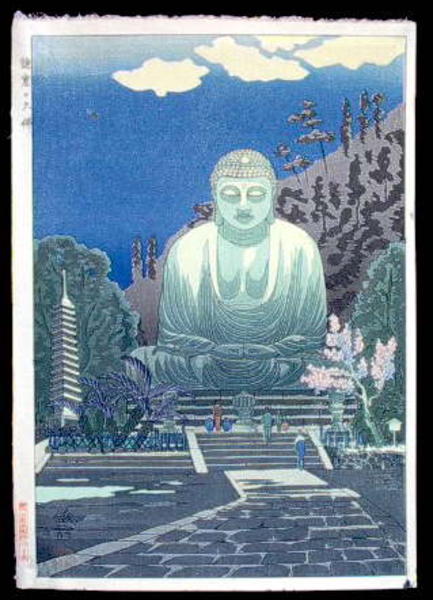
A Greate Image of Buddha in Kamakura
Woodblock print
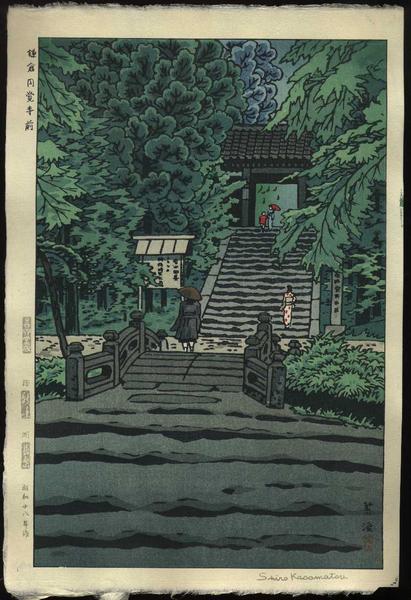
Front of the Engakuji Temple in Kamakura
Woodblock print
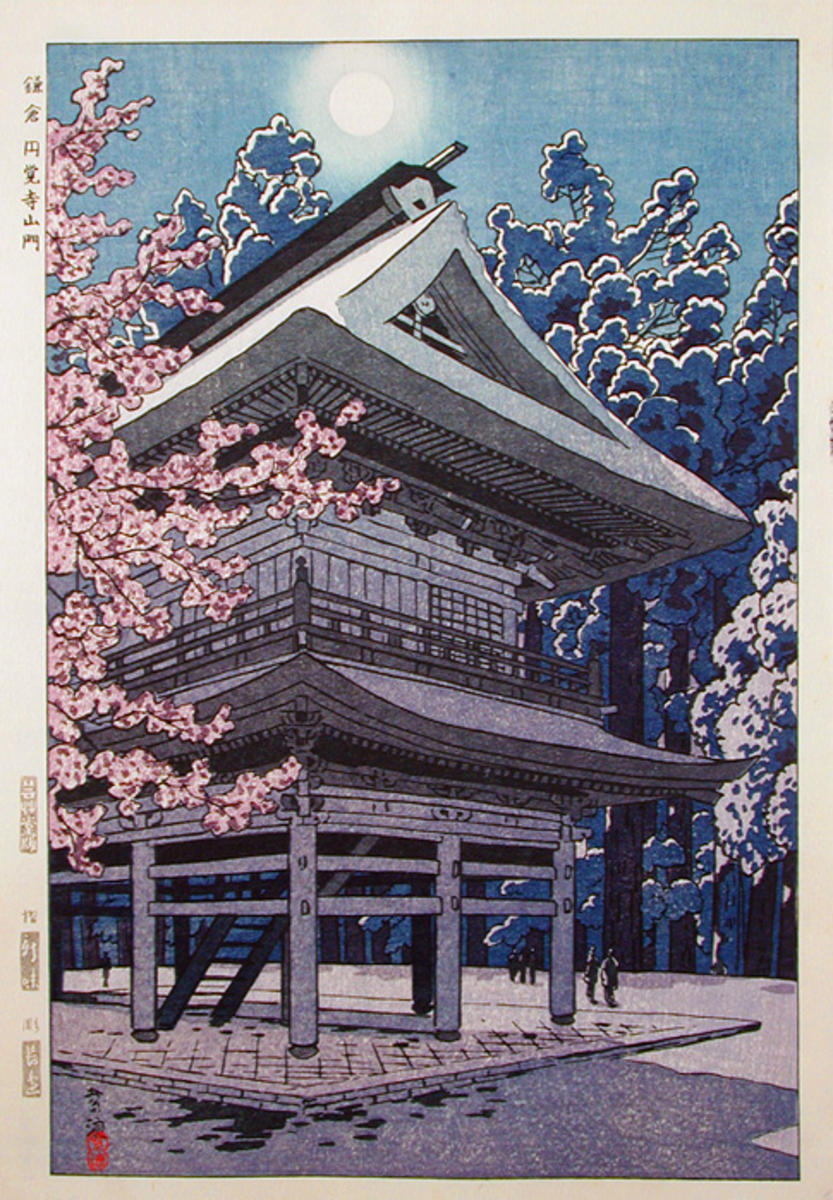
Gate at Enkaku Temple, Kamakura- Engakuji
Woodblock print
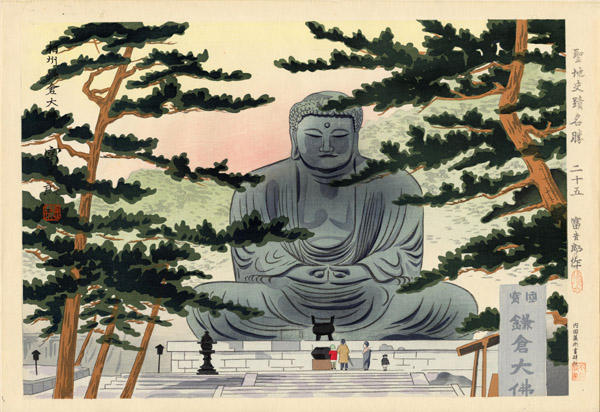
Great Buddha at Kamakura
Woodblock print
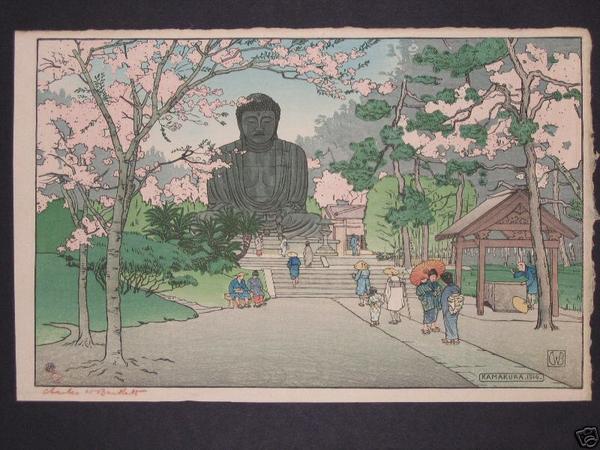
Kamakura
1916
Woodblock print
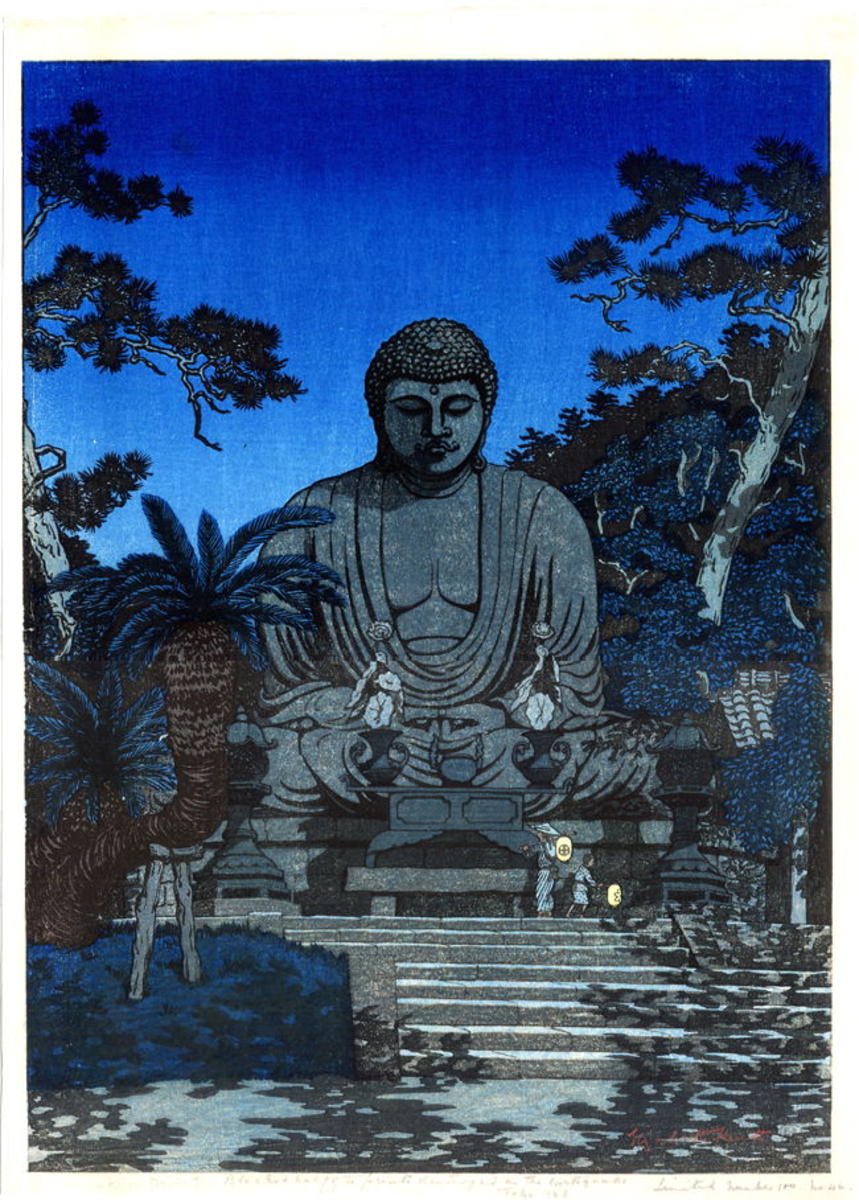
Kamakura Daibutsu
Woodblock print
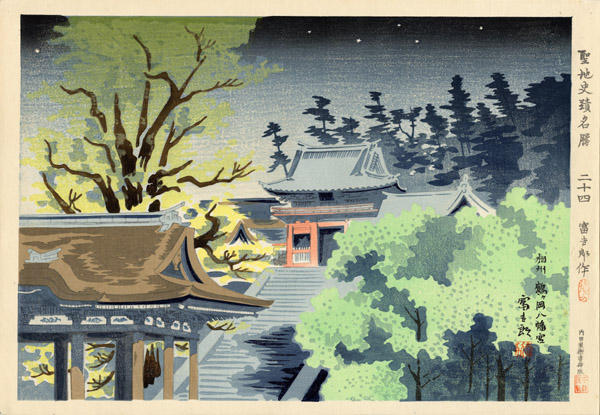
Kamakura Shrine - Famous, Sacred and Historical Places
Woodblock print

Kencho Temple, Kamakura (Kamakura Kenchoji)
1933
Color woodblock print; oban
![Praying for Rain at Ryozengasaki in Kamakura, 1271 (Bun'ei hachi Kamakura Ryozengasaki ame inoru), from the series "Concise Illustrated Biography of the Great Priest [Nichiren] (Koso go ichidai ryakuzu)" by Utagawa Kuniyoshi](https://www.artic.edu/iiif/2/4a497108-12ad-0923-2dba-6e9acef02ee5/full/843,/0/default.jpg)
Praying for Rain at Ryozengasaki in Kamakura, 1271 (Bun'ei hachi Kamakura Ryozengasaki ame inoru), from the series "Concise Illustrated Biography of the Great Priest [Nichiren] (Koso go ichidai ryakuzu)"
c. 1830/35
Color woodblock print; oban

The Great Buddha, Kamakura (Kamakura Daibutsu)
Kamakura Daibutsu
1930
Color woodblock print
Artists Who Depicted Kamakura (7)



Frequently Asked Questions
Kamakura is a coastal town in eastern Kanagawa Prefecture, situated at the head of a small bay on Sagami Bay, surrounded on three sides by wooded hills and opening south to the Pacific. The town is historically important as the seat of the first shogunal government in Japan, established by Minamoto no Yoritomo in 1185 and lasting until the fall of the Hojo regents in 1333 during the broader Kamakura period of Japanese history. The Kamakura period saw the construction of the great Buddhist institutions for which the town is principally known, including the bronze Great Buddha (Daibutsu) of Kotoku-in cast in 1252 and standing approximately 11.4 meters high, originally housed within a great hall that was destroyed by tsunamis or storms in the late thirteenth and again in the fifteenth century, after which the bronze figure remained in its present open-air setting; the Tsurugaoka Hachiman Shrine, established by Minamoto no Yoritomo in 1180 and rebuilt in expanded form across the medieval and early modern periods as the cultic center of the new bakufu and of the Minamoto warrior cult; the Engaku-ji and Kencho-ji Zen monasteries founded in the late thirteenth century as the first major Rinzai Zen institutions in eastern Japan; the Hase-dera with its enormous wooden eleven-headed Kannon image; the Hokoku-ji with its bamboo grove garden; and a number of smaller temples and shrines distributed across the surrounding valleys. The five great Zen temples of Kamakura (Kamakura Gozan) formed the eastern parallel to the Kyoto Gozan within the medieval Rinzai institutional system. After the fall of the Kamakura bakufu in 1333 and the subsequent Nanboku-cho upheavals, the town declined to a fishing village, but the Buddhist institutions and the Daibutsu remained as objects of pilgrimage and travel literature across the Edo period, with the great bronze Buddha drawing constant visitors. For Japanese printmaking Kamakura appears in late Edo and Meiji meisho-e sets and prominently in the shin-hanga revival. Utagawa Hiroshige treated Kamakura in his Famous Views of the Sixty-Odd Provinces and in individual sheets of the surrounding Sagami coast, and Hokusai included views of the area in some of his minor print sets and printed-book illustrations. The shin-hanga revival of the early twentieth century returned to Kamakura repeatedly. Kawase Hasui produced numerous Kamakura compositions including views of the Daibutsu in snow and rain, Tsurugaoka Hachiman Shrine, the Hase-dera approach, and the surrounding coast, and Yoshida Hiroshi treated the Daibutsu in his individual landscape sheets including the celebrated Kamakura Great Buddha print in which the seated bronze figure is treated under varied lighting conditions in his characteristic variant-impression practice. Tsuchiya Koitsu, Asano Takeji, and the postwar Tokyo and Kanto-area sosaku-hanga circle including Sekino Junichiro contributed further compositions of the Daibutsu and the shrine. The visual character of Kamakura in prints is built on the dark green of the surrounding wooded hills, the great bronze figure of the Daibutsu seated against trees, the curving approach paths through the temple precincts of Tsurugaoka Hachiman, the seasonal phenomena of cherry blossom along the Dankazura approach in spring and autumn maple in the surrounding hills, and the maritime light of the bay and the Pacific coast. Modern Kamakura is a major weekend destination from Tokyo, reached via the JR Yokosuka Line in approximately an hour from central Tokyo, with the principal sites linked by walking routes through the central districts and the Enoden tram running along the coast to Enoshima and Fujisawa providing access to Hase-dera, the Daibutsu, and the surrounding beach.
Hanga catalogues 10 prints depicting Kamakura (鎌倉), by 7 different artists.
Charles W. Bartlett, Elizabeth Keith, and Gihachiro Okuyama are among the 7 artists who depicted Kamakura in our collection.
Want to rate prints from Kamakura?
Sign up to start rating