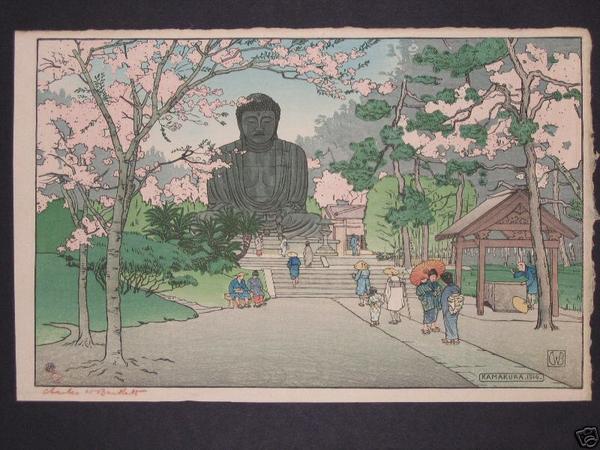
Kamakura
- Date:
- 1916
- Medium:
- Woodblock print
- Format:
- Oban
- Source:
- Japanese Art Open Database
Description
Kamakura, created in 1916, depicts the ancient seaside capital south of Tokyo where the first military government of Japan, the Kamakura Shogunate, ruled from 1185 to 1333. By Bartlett's era, the city was famous for its Great Buddha, the monumental bronze Amida Buddha that has sat in the open air since a tsunami destroyed its enclosing temple hall in 1498, and for its numerous Zen temples nestled among wooded hills.
Bartlett's oban woodblock print records this historically rich setting with the fresh perspective of a Western visitor. Kamakura's combination of ancient religious sites, natural beauty, and relative accessibility from Tokyo made it a frequent subject for Japanese printmakers, but Bartlett brought his own sensibility to the scene, shaped by years of painting European and Asian landscapes. The 1916 date places this during his productive Japanese sojourn, when he was creating prints of both Japanese and Indian subjects.
More Prints by Charles W. Bartlett

More Landscapes Prints

Lake Kugushi in Wakasa Province (Wakasa Kugushiko), from the series Souvenirs of Travel I (Tabi miyage dai isshu)"
Wakasa Kugushiko
1920
Color woodblock print; oban
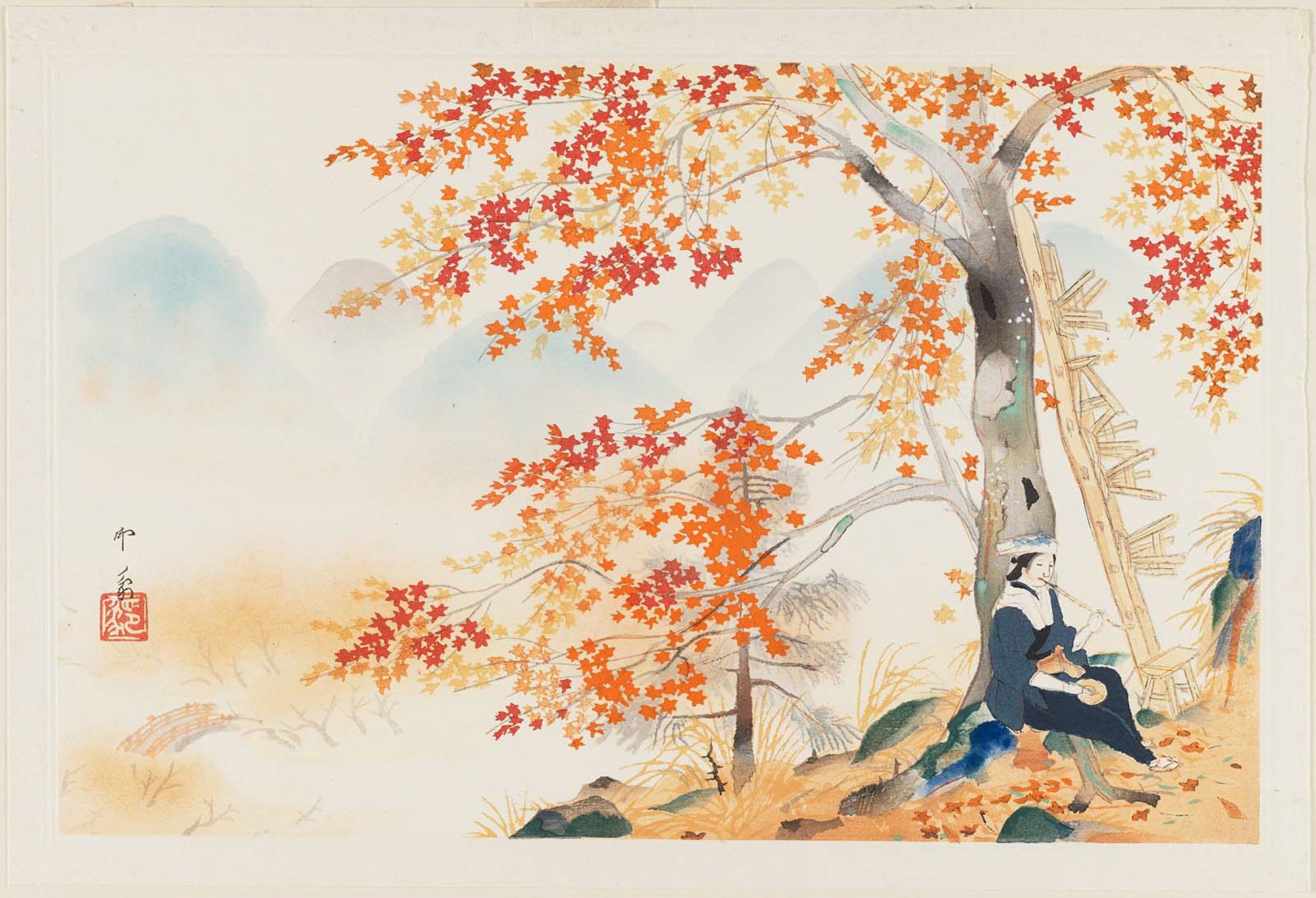
Autumn Maple Leaves at Takao, from the album Eight Views of Kyoto (Kyôto hakkei)
Woodblock print

The Beach at Kaiganji in Sanuki Province (Sanuki Kaiganji no hama), from the series "Collection of Views of Japan II, Kansai Edition (Nihon fukei shu II Kansai hen)"
1934
Color woodblock print; oban

Tea Kettle, section of a sheet from the series "Mirror of Stone Rubbings of Views of the Provinces" (Kohon meihitsu ishizuri kagami)
n.d.
Woodblock print; ishizuri-e, section of harimaze sheet
Featured in Collections
Curated cross-cuts that include this print.
Frequently Asked Questions
Kamakura was created by Charles W. Bartlett in 1916.
Kamakura depicts landscapes, religious, and travel scenes, set at Kamakura.